“What if I get stressed again at university? What are the coping mechanisms to make sure that I don’t end up, you know, failing again?” Freya Webber recalls the concern she had when she applied for her dream course at another university after leaving the University of Leeds

Webber is a first-year student at Leeds Trinity University. Before enrolling on her recent course, she studied social policy and crime at the University of Leeds. The reason she chose this major, as she states, was because she did History, Law and Sociology at A-level. Webber did not know exactly the course she wanted to study at the time, but she decided to give it a try since she got good A-level results in those subjects.
“Obviously after COVID I was so happy that I just got into university because those two years were horrible. I was just like, let me go for a course that I’ve done well in. And then I started it and there were certain topics which I loved because I was very passionate about inclusivity, diversity,” she shares.
When things began to go awry
Webber started feeling that the lectures were not engaging enough and there was not much academic support from the university. She explains: “We try to ask questions and they wouldn’t answer it in a way that we could understand. They were like, well, we can look over your work or a plan, but we can’t give you the resources that you actually need. But I need the foundation and understanding because if not, how am I supposed to write an essay?”
Webber then gradually lost her interest, as she describes her priorities “went out the window” after the COVID-19 pandemic. She wanted to go out and have fun instead of fully focusing on her studies. As she did not have much engagement with the university, the only thing she engaged with was the institution’s societies.
The UK higher education system faces the problem of dropout rates every year, which affects the quality of teaching, learning and the employability rate of both universities and students. The educational community holds responsibility for the reasons behind this issue. Research and improvements to the education system are crucial factors in altering the path of university dropout rates and decelerating its explosive growth in society.
“No two children are the same”
Abigail Marshall-Katung, a councillor and chair of the scrutiny board (infrastructure, investment and inclusive growth) at Leeds City Council, emphasises the importance of university support to students since each of them is a unique human being. In her view, while some people know exactly what they would like to do, there are also individuals finding out who they want to become along the way. Therefore, she believes universities should be able to give that “little leeway” to students who are not very certain about their choices, instead of penalising them just because they want to change their direction.
The councillor herself has had the experience of withdrawing from her course before. She shares: “I started as an economics student in my first year. By my second year, I found the course very vague and I moved on to business administration and education. So people start and that’s not what they want to study. And now my son started with computer science and artificial intelligence. By the second year, he says he doesn’t want artificial intelligence, he wants cybersecurity.”
Thus, Cllr Marshall-Katung highlights the significance of orientation, either when students come in their first weeks of the course or when they enter their foundation year. From her perspective, it is a stepping stone for so many people to actually ask themselves and know if that is the right course for them.

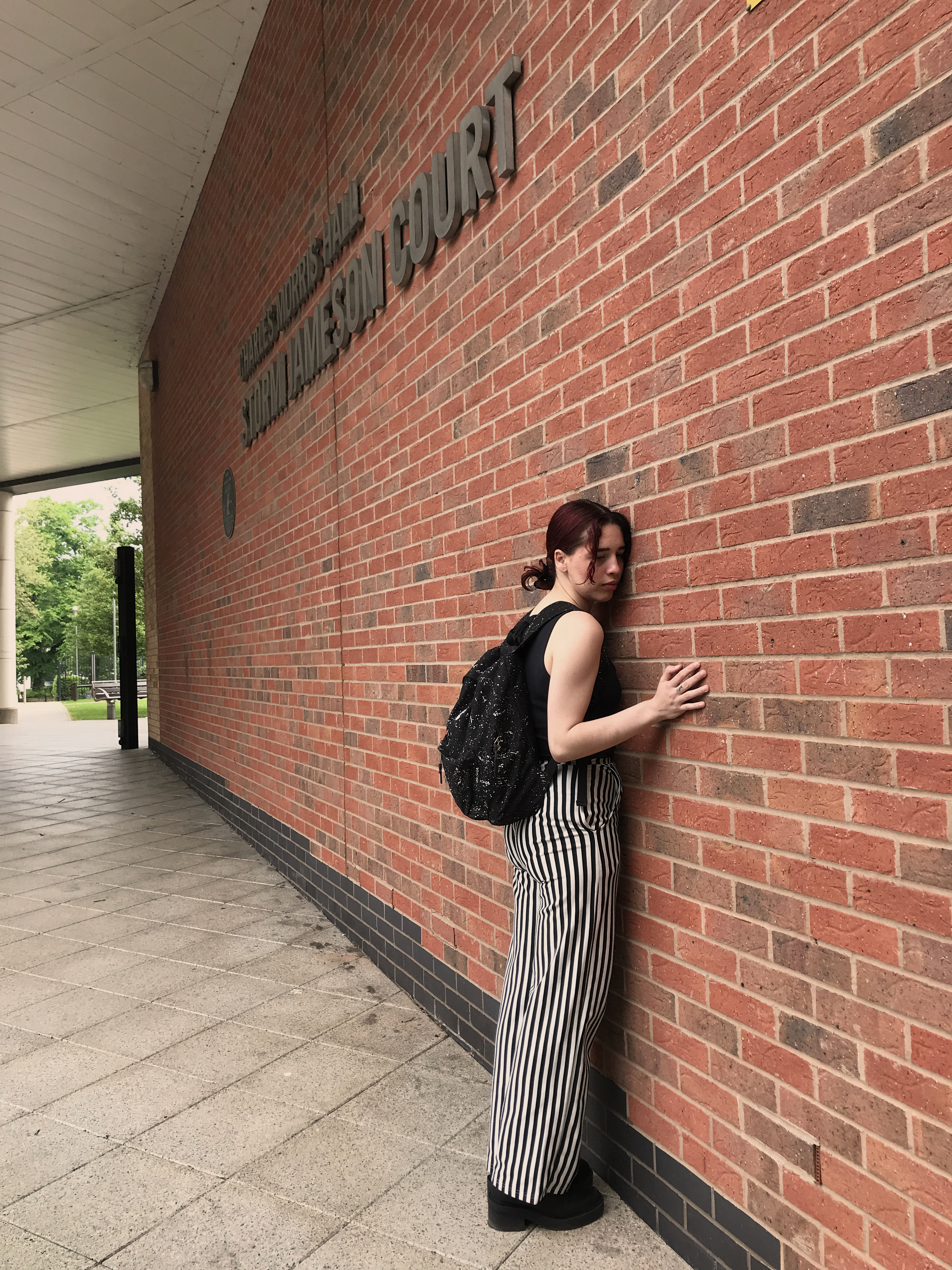

The nightmare turned into reality when Webber misunderstood the subject area and was found plagiarising in her assignment. The reason behind this incident, as Webber explains, was due to the fact that she did not receive enough support from her tutor during lectures. The university eventually gave Webber the first warning, leaving her scared at the time. This was the tipping point leading to her decision to drop out of the course.
“You know when you are not in the right mental headspace. I didn’t want to do this essay. I passed all my other modules but one. And then obviously I could not go into the second year. Thinking about it, I do not actually like this course. I do not want to do another, what, three years? Of course, I’m not enjoying it. So I dropped out,” the University of Leeds’ former student indicates.
Overcoming a bittersweet phase
During her gap year before enrolling at Leeds Trinity University, Webber participated in many activities in Leeds. She also met an “amazing friend” who helped her re-establish herself and her mental health. Webber travelled around the UK, including Blackpool and Liverpool. “I kind of got my sense of self back and enjoyed being young,” she smiles sweetly.
Nonetheless, she still had to face the reality. Webber applied for apprenticeships which she describes as “very interesting”. The 21-year-old felt that there was a lot of competition in the workplace. After trying to adapt to the office environment, she then thought university was the right route for her since she preferred the notion of “having somewhere to go”.
As Webber enjoys having the flexibility of a full-time student, she felt conflicted while being in an apprenticeship but also having a part-time job. She says: “If I look back at the apprenticeship, obviously I would settle in. But I’ve been working, learning and earning. That means my availability and flexibility wouldn’t be as much because I would have to come in every day and probably finish at 5pm. Then I’m going to be tired.”


Feeling confused and lost, Webber then created a “pros and cons list” of what she actually wanted to do and what would benefit her the most. She came to the realisation that doing a vocational course would be better for her. The course lasts four years but it allows her to study abroad for placement – an offer that her apprenticeship at that time could not make.
“I really wanted to go abroad. I didn’t want to let that chance go. So it was a year of me figuring out essentially what I wanted to do because I think I lost it after COVID. And I missed it. I missed having a day-to-day thing that I’d go and do. It was lovely having a year off, but at the same time, I have no purpose and I need a purpose,” she reflects.
That was the moment Webber decided she would study broadcast journalism at Leeds Trinity University. The student shares that she has always been very passionate about journalism, as it gives her the outlet to cover what she wants and voice her opinion. Webber is huge on being her authentic self, both in real life and in the public eye, without being offensive.
Embarking on a new journey
When Webber first went to Leeds Trinity University for her application interview, she told the interviewers about her situation at the University of Leeds. However, the responses from the university caught her off-guard. She recalls: “They were like, we are all for second chances and from what you have highlighted, you’d be a great student here. As soon as I got that interview with Leeds Trinity, I was like, wow, this is completely different. They are actually giving me support.”
Since Webber has also been suffering from mental health issues, Leeds Trinity University supports her by providing counselling services, with appointments and calls. She believes their assistance gives her opportunities to talk about her issues and come up with long-term solutions.
Mental health concerns are the main cause of early university dropout among students, and they are still 25% more likely to mention this as the main reason for withdrawing from courses. A spokesperson from Leeds Trinity University states that the university takes great satisfaction in fostering a strong feeling of community, concentrating on one-on-one assistance and having an engaging staff for student support and wellbeing. As they expand their new campus to Leeds city centre in the 2024 academic year, the university is committed to keep creating and enhancing the current learning, mental health and academic support services.
The university’s representative adds: “Leeds Trinity University is committed to providing students with an excellent education and support for their chosen field. As a career-led university, we focus on supporting students to develop their personal and professional skillsets to flourish in life and work, whichever path they choose to take when they finish their studies with us.”



The student journalist cherishes every moment she gets to do her favourite job
One of the main factors that made Webber choose journalism is the opportunities she has to “get dressed up” and meet new people. She thinks journalism incorporates all the elements she loves doing which are writing, editing, and communicating.
Webber shares excitingly: “It’s such a wide spectrum of opportunities. When you go into journalism, you don’t know what you’ll be doing. In five years, you could be a presenter on a news show. You could be a host on a podcast. You could be in Spain covering stories. There’s just so much available that every day is something new. And that’s what I like because I get bored very easily and I just need it. So every day I’ll be like, oh, what’s happening today.”
The soon-to-be journalist believes she has learnt a lot through journalism because news evolves frequently. Thus, she feels it benefits her in a way that she gets used to constant changes and adapting new information on a daily basis.

While studying broadcast journalism, Webber gets the sense of belonging to a community which is trying to “actually help the world and get information out there that people need to hear”. The 21-year-old thinks people are taking accountability for their actions these days and justice is being served. This makes her proud as a journalist because it means she can be part of that fight.
“I’ve seen certain things because of the kind of stories you have to cover in training. You have to go through, like suicide reporting. You’re way more self-aware as a journalist and you are more observant. You see things more and you just feel like you’re way more ahead than other people, but not in a bad way,” Webber states.
Since there is so much availability on social media, she feels like it is harder sometimes to get an interview due to the large number of messages, calls and emails people receive. However, Webber tends to look at the positive side more than the negative aspect. She expresses her happiness about the decision to study at Leeds Trinity University, as it helps reignite the burning passion in her. She recommends anyone wanting to start their journalism path to enrol at the university due to its “amazing with high quality” equipment and support.

Universities are vital as they help students build a solid foundation to reach their potential. According to Cllr Marshall-Katung, the role of universities is to enhance students’ knowledge and abilities. Since Leeds is one of the biggest cities in the UK, she emphasises the importance of the partnerships between Leeds City Council and educational institutions, especially when it comes to investment, infrastructure and inclusive growth strategies.
Cllr Marshall-Katung also notes the fundamental factors that universities need to have. She says: “So for me, universities need to move with the trend when it comes to innovation and research, they have to make sure that they move with the times and make sure that they provide an environment conducive for students.”

 Photographic Journalism
You must be logged in to post a comment.