To many, golf is more than just a sport. It’s the four hours in the day when they can put their phones away, switch off from the troubles of normal day life and just be present in the moment. Renowned for the copious amounts of hours spent perfecting every minute detail of the golf swing, it is one of the only sports where it can be more mentally tough than physically.
Being able to hit a golf ball is one thing, but being able to play golf is another. The ability to forget previous mistakes and that the most important shot is always the next one is what makes the best players so impressive. But beyond the scorecards are the untold stories of these players. What led them to pick up a club? What drives them to dedicate themselves to a sport of such fine margins? How did they overcome adversity?
It’s not unusual in golf for players to have to call an abrupt end to their dreams of picking up a green jacket at Augusta or lifting The Claret Jug at The Open. So many players fall and disappear from the professional game and are forgotten about by fans quicker than they can shout fore right.

Ex-US Open winner Michael Campbell couldn’t mentally deal with the pressure of success and living up to the name. That was the pinnacle of his career, but his outgoing character took a sharp decline as he said in his retirement statement, ‘nobody ever tells you how to get down.’
With everyone being encouraged to speak out and express their feelings and pasts in today’s society, I wanted to uncover how aspiring players balance the stresses of life with time spent playing and what their journeys have been like. I went to Horsforth Golf Club to watch one of the biggest matches in Leeds Beckett Golf’s history as the side looked to make the final of the national cup for the first time. I spoke with a few players who have untold stories about what got them to where they are now.

The Leeds Beckett first team are made up of some of the most promising players from across the country and have come to gain a degree but also further their abilities on the course. Many of the players not only compete in BUCS highest league and national competitions but also play for their home clubs’ scratch teams.
Paul McGahan, nicknamed Frenchie, is one of longest longest-serving players and has been named captain for this season. Having started playing golf at the age of five, he’s renowned across the university golf scene for his laid-back approach to the game, but is able to switch into a different person when playing competitively. “The confidence in my ability has come from an early age, I don’t feel pressure. If I go behind in a match, I let my opponent feel like he’s got the upper hand, but little do they know that coming from behind makes drives me into a different gear.”
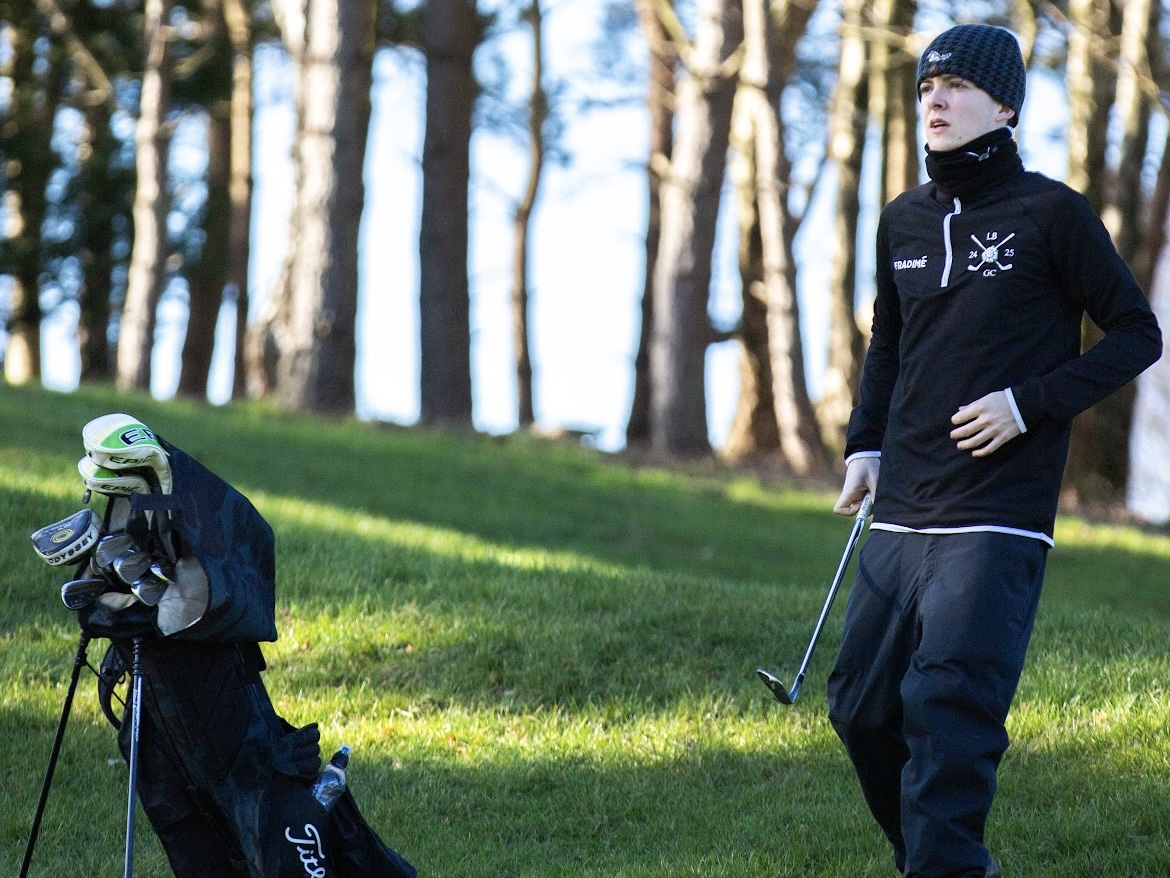
Paul was tipped as one of France’s brightest stars as he progressed through the ranks at one of the most prestigious clubs in Europe, Le Golf National. Born just outside of Paris, it only looked like his career was going to end up in the professional game. Sponsors were flooding in, he was ranked top ten amateurs in the country, but his life completely changed just before Christmas in 2021. A tragic car accident led to the passing away of two close family members, and he was forced to move to England to live with his aunt.
He didn’t pick up a golf club for over a year and left his bag back in France as a sort of tribute to who he was before. “No words can ever describe those few months. Everything was in place for me, I almost felt destined to make it. But everything I played for was snatched away from me. The reasons I wanted to succeed were gone. The thought of hitting a shot and not seeing my family on the side of the fairway was tough,” Paul explained.

It took him over two years to come to terms with what happened and to get back to reigniting his love for golf. He borrowed a friends set of clubs and started taking himself back to the driving range. “Being at a golf club has always been my safe place, surrounded by my team and people who give up their time for me to get better every day.”
“I almost felt I owed it to my family; they were my biggest fans and they wouldn’t have wanted me to give up the thing that made us all so happy.”
“I just had to reinvent myself and enjoy the peace of a course again. Understand I’m not going to go to the level I was once tipped to be at, but back myself to get back to the best I can be. Once I lost the caring bit, I got the buzz back, and a carefree me on the course is a dangerous one.”
In his first year at Leeds Beckett, he was in and out of the team in the first few months, but the coaches soon realised his potential and he had to be trusted to pick up points. Since then, he’s been a constant in the purple and black for the past three years, picking up 30 wins in 34 games and playing a crucial part in a different role as leader for what could be the team’s most successful season to date.
Watching Paul lead by example as he teed off, in the pure silence and serenity of the first, was impressive to say the least. A shot that never changed trajectory, almost on a rope down the middle of the fairway. As the first group got underway, the magnitude of this game could really be felt. Leeds Beckett and Liverpool had some fiercely contested matches earlier on in the season, with it one a piece on aggregate, so the chance of progressing to a final where the venue is a former Open course, Royal St George’s, wasn’t one to be passed by.
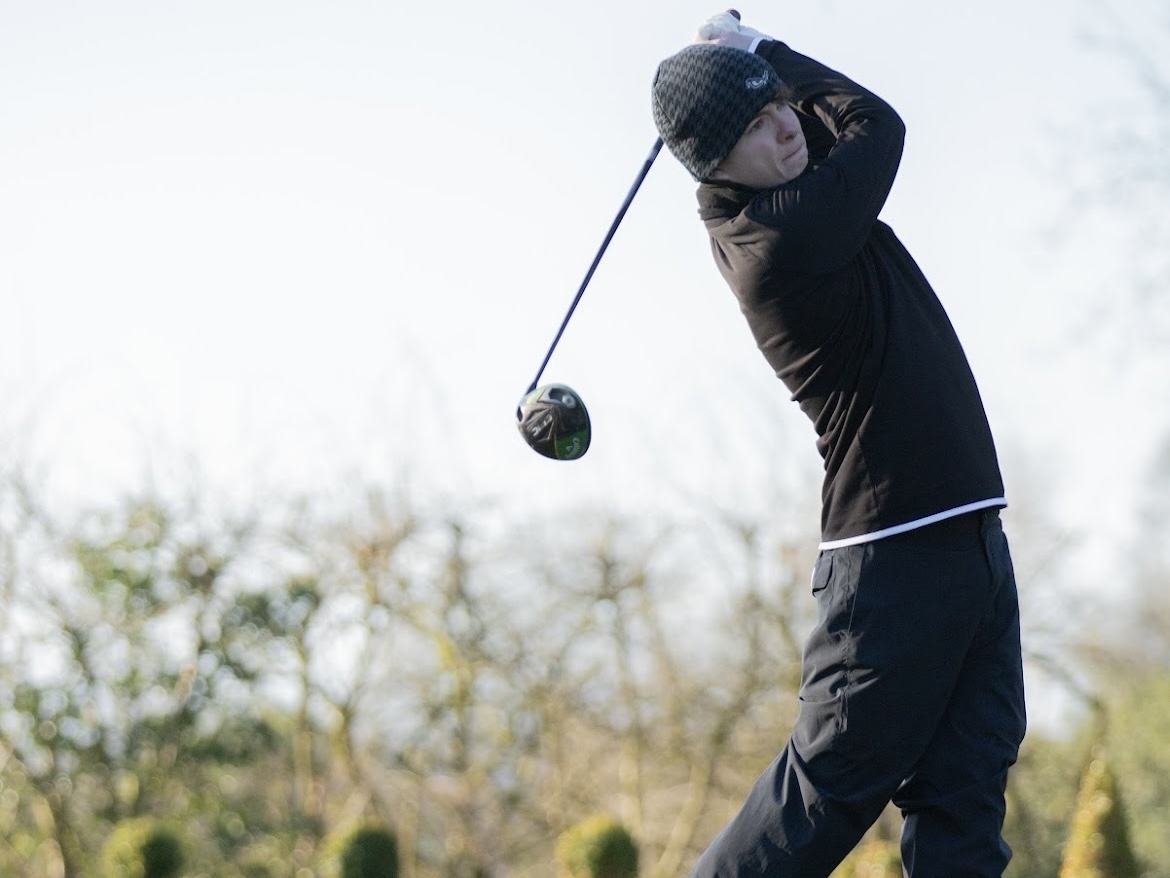
Beckett were under the cosh early in the round with their opponents starting quicker and carrying this momentum through until the turn. With the score currently 4-2 down after nine, a moment of magic by Josh Donaghey holeing out from 170 yards out, proved to be the trigger for Beckett’s comeback, as an outpouring of emotion towards his teammates echoed across the neighbouring holes. The side in purple started turning the tide back in their favour and went on a nearly perfect five-hole stretch, eventually coming out victorious in a monumental 5-1 win.
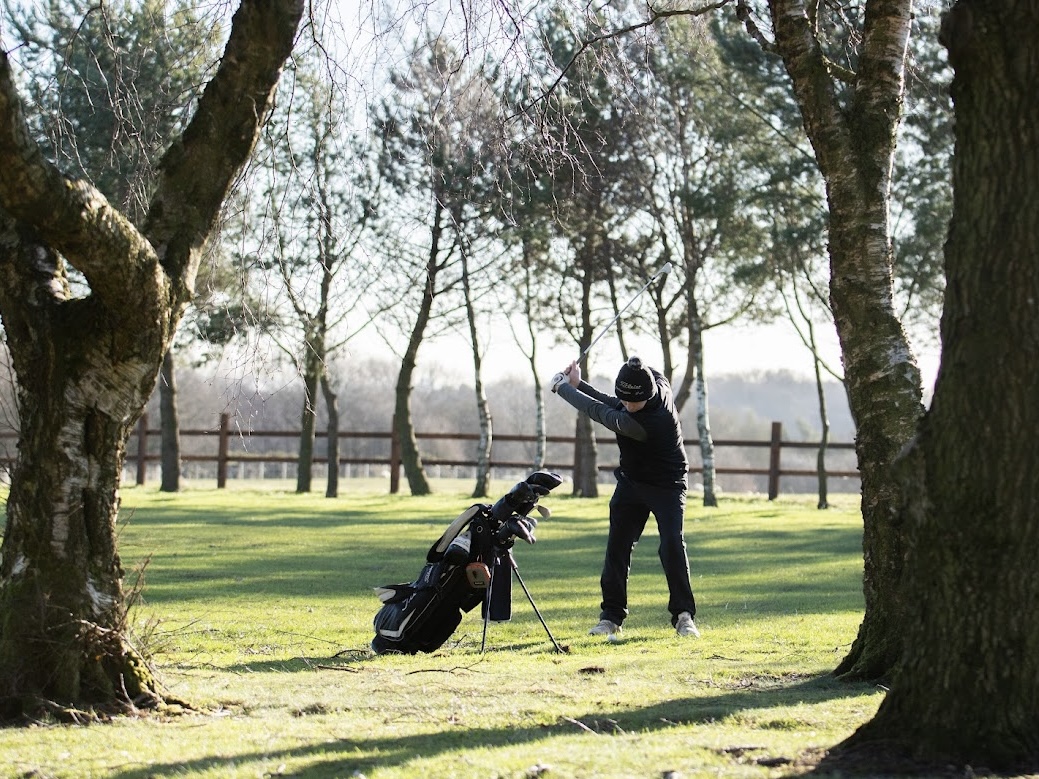
It has been a long season for Beckett, having travelled hundreds of miles up and down the country, leaving in the early hours of the morning through bleak winter to showcase their skills. A few shock losses earlier on in the league campaign hampered the chances of a double and took its toll on the players. The pressure was increased tenfold, and with being the favourites to win the league it meant people were looking at the side with doubts.
As much as golf is an individual game and only the player can change the outcome of their match, the team aspect is just as important. “We play for ourselves, of course, but an individual point contributes to the bigger outcome. You don’t want to be the player who makes other players’ victories meaningless.” Paul explained.
With university golf, a big difference is that mixed teams (both males and females) can compete in the same competitions, and one player from Beckett has taken to playing against the men with no issues.
Ellie Bailey joined the team this season. She was born into a golf-oriented family with all three older sisters competing at a national level. Then her father is a PGA-qualified coach who has taught some A-list celebrities and several players now on scholarships across the globe. So, it was inevitable that picking up a club was only a matter of time. “My earliest memories were on a golf course, it felt like most of my childhood was spent at St Andrews in the tropical Scottish climate it’s so renowned for! Ellie jokingly said, and it wasn’t long before, instead of people watching her siblings they wanted to watch her play.

Ellie started playing competitive golf at the age of 12, playing for her home club, Kirby Muxlow. But quickly, coaches realised she was progressing at an impressive rate, and at 16 got picked for England squads, playing on a national stage and following in her siblings’ footsteps.
But this was the issue. Ellie loves golf, but she never loved it that much that she wanted to dedicate her life to it. The endless hours spent on the driving range, all the social events missed with friends at school, and she felt lost in her sisters’ shadows after all they’d achieved.
“I wasn’t enjoying it at all. I was a teenager, and I felt that golf was taking over my life. My dad pushed and pushed me, but the fear of disappointing him meant I never said how I truly felt. People knew me for my sisters, and it was like no one recognised the work I was putting in but thought the success I was having had just been handed to me.”
Ellie explained the turning point four years ago: ‘I broke my arm falling off the monkey bars at the park, and don’t get me wrong, it was the most painful thing, but I couldn’t help but be relieved it gave me a break from the game.”
A year later, Ellie was able to swing a club fully again, pain-free, but it wasn’t without hours of rehab and physio on it. However, one bad competition and a harsh talking to from her dad were just too much. “I couldn’t do it anymore, I snapped. I had all intentions of never picking up a golf club ever again. I was sick of the game and had no love for it anymore.”
Coming to university, Ellie felt she needed to be part of a society to get the best experience possible. At first, there was a real reluctance to start playing again due to the overriding emotions a tee box brings back. But the golf was never the issue, it was the playing with pressure that was.
“I decided to go to trials with a sort of what have I got to lose attitude. The biggest pressure was meeting new people and fitting into a tight-knit group. I was the only girl, but I let my abilities do the talking, and quickly I felt extremely comfortable with everyone. I think the fact I beat a few of them helped!”

Apart from the recurring injury issue with her arm, Ellie has had an almost faultless season with only one loss so far. “I lost my first match, and I thought am I cut out for this level, but I came back with something to prove the week after and haven’t looked back since.”
“Being able to play with freedom is what I’ve always wanted, and I feel very grateful for the team to make me feel like a key part, but in a positive way. Being a woman in a male-dominated environment can be hard, but being able to play in big semi-finals like today makes it worthwhile.”
Both Paul and Ellie agree that despite periods when you fall out of love with golf, there must be a reason why it always brings you back. “When it’s all you’ve known, you can forget what made you enjoy it in the first place, and sometimes it takes a bit of adversity and a break to reflect on that.”
“It can be draining, it’s a sport you can’t neglect and balancing life and work with it can be tough. But when the sun is shining, you’re focused on just where that ball is going next. Nothing else in the world seems to matter at that point, and that disconnect from normal life gives us something not many other things can.” Explained Paul and Ellie.

Beckett finished runners up in the Northern Tier Premier and still have a piece of silverware up for grabs, but for a team with a new look this season, the exciting thing is the potential it has for the next few seasons and where the players could end up after that.
Ellie’s and Paul’s stories highlight that unless told, people won’t know their reasoning for playing the game. But that with a good group of people and a supportive environment, it allows people to thrive again.
By Joe Parsons

 Photographic Journalism
You must be logged in to post a comment.