The spectacle of mankind beating each other up for sport has been entertaining us since the first civilisations. Wrestling is widely thought to be the world’s oldest sport, first being depicted approximately 15,300 years ago in cave paintings in Southern France. Boxing wasn’t far behind, believed to have originated in ancient Mesopotamia in 3000 BC.
Today, there are hundreds of sports in the world where fighting is a major component. Although fighting is usually illegal and thus discouraged outside of a sporting context, and despite the inherent risks of pain, injury, brain damage, or even death, not to mention the potential guilt of harming another person, there’s something about it that fascinates and excites us humans.
One of the oldest and most brutal variations of combat sport is Muay Thai, often referred to as “The Art of Eight Limbs” due to its use of fists, elbows, knees and legs. Its exact date of origin is uncertain, since much of its written history was destroyed in the 14th century when the Burmese (Myanmar) attacked Thailand and destroyed the written, ancient knowledge stored in the many temples of Siam. However, we do know that Muay Thai has been used as a form of military training for centuries, teaching young men how to use their entire body as a weapon to defend the kingdom. Since the late 20th and early 21st century, its popularity has skyrocketed worldwide, largely due to its utilisation in MMA, another sport which has become mainstream in the last twenty years.
For over a decade, Muay Thai has been taught just outside Leeds City Centre at Kiatphontip Gym, founded by legendary fighter and coach Jompop Kiatphontip. Over the years, he and his team have trained several fighters who have reached the prestigious ONE Fighting Championship, one of the sport’s major promotions.
Freddy Walters, 18, is another of the gym’s young prospects, with a 10-0-1 competitive record. He’s currently training for a fight out in Bangkok, Thailand. Despite his young age, he has over seven years of experience in Karate and another seven in Muay Thai. The involvement of children in these activities may be controversial to some, but to Walters himself, these sports have shaped him into the young man he is today.
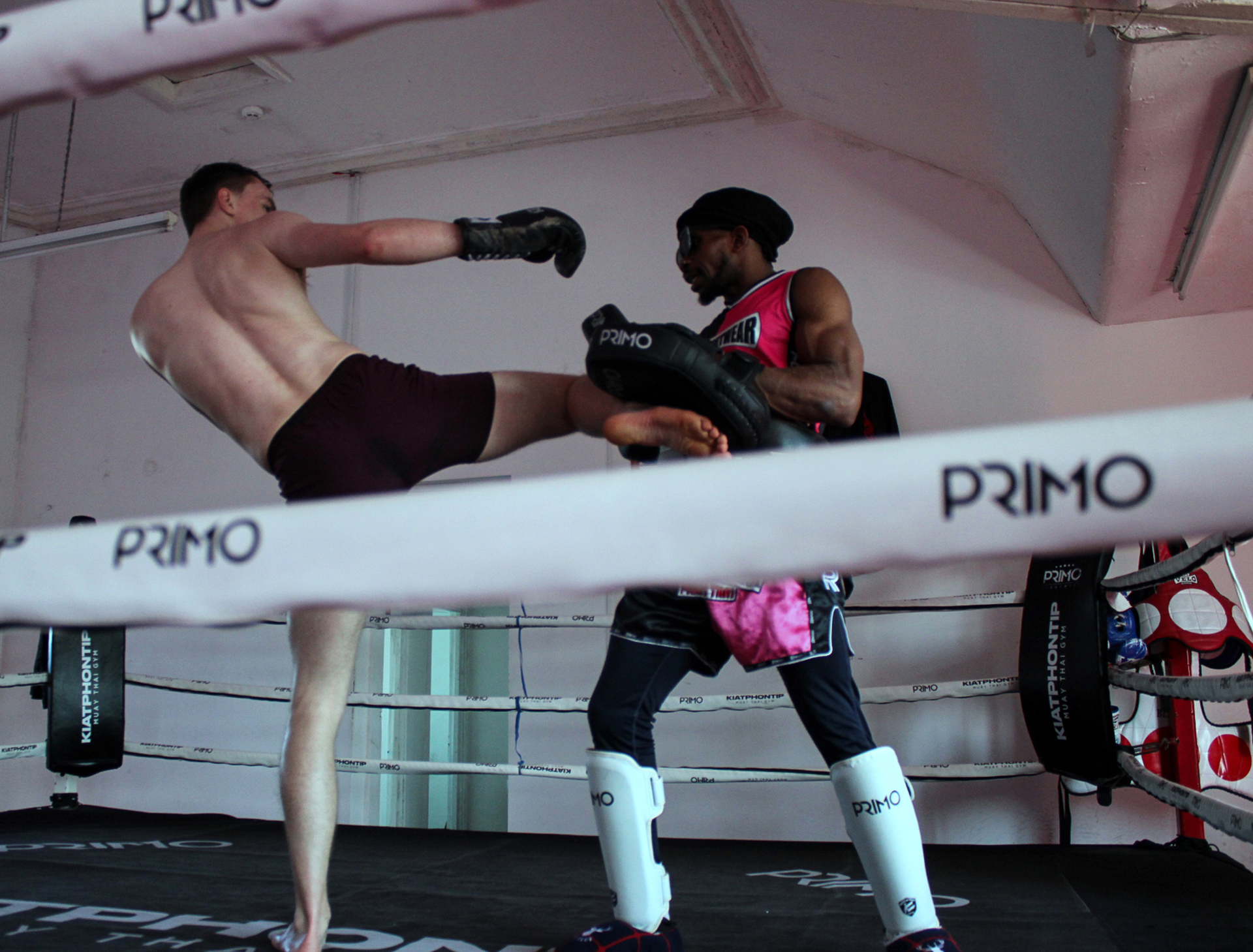
“It’s (Muay Thai) given me confidence. I’ve just started university, and looking at job applications and things like that, but everything seems less scary when nobody’s punching you in the face.
“When you’re used to walking out in a boxing ring in front of thousands of people and somebody there is going to try and hurt you, everything else seems a bit of a step down. So it gives me real self-confidence in life and a belief in my ability to do things.
“When I first started this, there was a sense of fear and everything like that. But as you get more experienced, the nerves subside and it becomes more exciting, more enjoyable. I never really think about getting hurt. I just think about going and doing what I like and enjoy doing.”
Training and fighting in Thailand is a common practice for foreigners who have an interest in the sport. There, Muay Thai isn’t just a hobby or a pastime, but a sacred part of the mainstream culture. This is because the sport is treated as a way of life, and offers fame and a viable way out of poverty. Many Thai boxers start fighting competitively from as young as six, and many will have hundreds of fights throughout their career.
Walters has had a small taste of this lifestyle, spending several months living in a training camp in Thailand.
“I went out last year after finishing my A-levels. I went out for six weeks. We literally lived at the gym, you stayed in a room with a bathroom, which was right behind the boxing ring. So when you’d wake up in the morning, as soon as you step out your door, you’re in the gym.
“You don’t have the stress of work, uni, or your family life and things like that. You just go and you embrace Muay Thai training two times a day.
“It’s a lifestyle out there, rather than a hobby.”
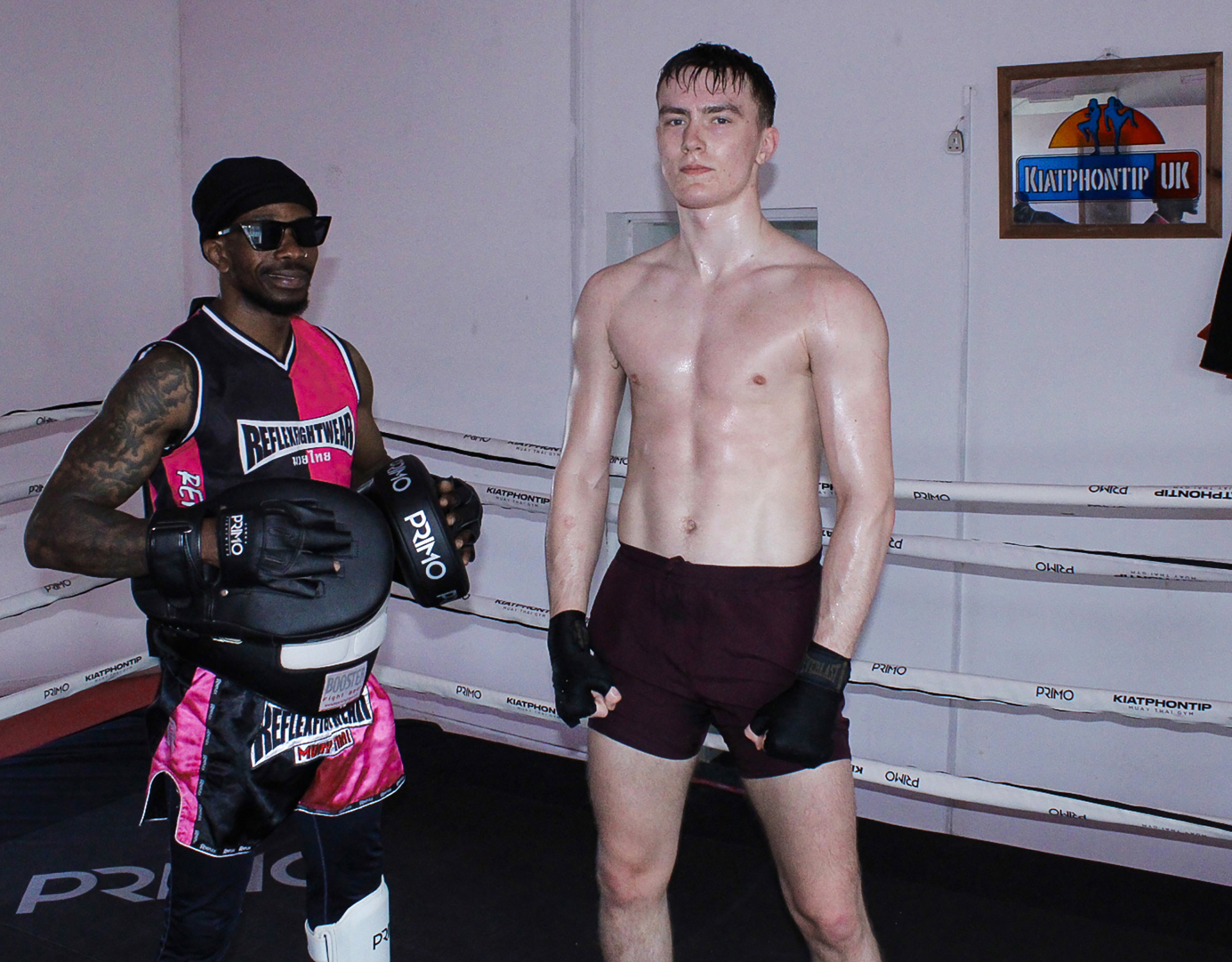
Back in Leeds, many of Walters’ fellow trainees also have their sights set on the professional stage. Felix Nnochiri, 21, after just a year and a half of training, is one of those people. Like many people in recent years, his love for the sport began when he saw its techniques used in the UFC, before a friend suggested they start training at Kiatphontip. This friend has since quit, but what keeps Nnochiri going is not any desire for violence, but the feeling of personal triumph that training gives him.
“After a good sparring session, you do feel a bit euphoric. You feel strong. You feel like you can kind of take on anybody.
“I mean, sometimes you feel beat. You feel kind of demoralised. Sometimes you even question why you’re still doing it when you get beat up, but because the highs are so high, you know, that’s what keeps you going.
“I want to go as far as possible. I want to at least get to the tournament called the MTGP (Muay Thai Grand Prix), which is the step before you get to ONE Championship, with the top Muay Thai fighters in the world. There are quite a few fighters in my gym who have already done that, and I can take them. So I know I can get there.”

There isn’t a lot of money in British Muay Thai, which makes it difficult for aspiring fighters to consistently dedicate enough time to it. A possible way around this for those with a lot of experience is by taking up coaching on the side. Jake Perryman, the soon-to-be head coach of Leeds Beckett Muay Thai, is in the early stages of this path. Having struggled with his mental health and alcohol in the past, he feels that this ‘addictive’ passion has given him a more productive lifestyle and new goals to strive towards.
“I stopped drinking alcohol nearly 1000 days ago. It was just before the academic year started. I didn’t really know what to do myself. I’d done a little bit of Thai boxing on and off over the years, but nothing special, no fights or anything. And I just decided right as I stopped drinking to just turn up to a few classes, and then to start turning up to every class.
“Then I just thought ‘I think this is it’, I’d always been interested in competing and stuff, but my relationship with alcohol stopped that. And then once the drinking stopped, the Thai boxing started.
“I’ll be a professional one day. I’m 28, I’ve got about 10 more years of this in me, I think. And that’s one big fat macrocycle.”

His transition into coaching began when he was unexpectedly let go from his role at a SEN school. After selling his motorcycle, he used the money to purchase the equipment needed to become a PT at a local PureGym, including £700 a month to rent space in the facility. Despite working at a deficit before overtime and ‘just surviving’ in his own words, he plans to increase his reputation with a level 3 strength and power qualification with British Weightlifting.
“I’m not interested in getting big. I’m interested in getting strong, so I’m more of a strength and conditioning guy. I’d much rather breed athletes than help people get big, and because next year, I’m going to be the head coach at Leeds Beckett Thai boxing. It’s all going to tie into each other.”
“Once I do this weightlifting course, and I can kind of advertise myself as a real strength and conditioning, weight lifting, Thai-boxing, athlete-breeding machine, then I think things will really kick off.
“But currently I do have a lot of impostor syndrome, like, I haven’t lived this life, and I’m taking people’s money to tell them how it’s done. I feel like I have a lot of learning to do before I can teach anyone else. So there’s also a psychological process of trying to let that go and sort of be like, ‘No, I do this. I am worth it, and I’m good at what I do.’”

Despite the many positives this lifestyle can bring, the risk of serious physical injury cannot be ignored, especially in competitive matches. An infamous example took place in a 2022 ONE Fighting Championship match between Liam Harrison and Nong-O Hama. A brutal low kick by Nong-O sent Harrison to the floor and left him with a torn ACL, MCL, and meniscus, which took him two years to recover from.
Famous Thai coach Kru Bonpot, during an interview with Humans of Fighting, touched on the fear of pain, simply saying that “Muay Thai is pain; If you no like, you cannot do Muay Thai.”
When you look at it like that, it’s no surprise that there are fighters out there who are influenced by past trauma and troubling mental states, which Perryman was able to offer detailed insight into.
“I think a big similarity in the sort of psyche of a lot of fighters is that a lot of them are kind of weird. And that might sound a bit pretentious, like, ‘Oh, I’m so weird and different.’ But I mean the ones that go in there wanting to get hurt.
“I think not all, but a lot of fighters are quite traumatised people, and they’re almost turning that self-destructive behaviour into something creative. So if they weren’t hurting themselves by enduring the ring and enduring the fighting, they’d be destroying themselves with a substance or a lifestyle that would eventually kind of wind up hurting them anyway. So I think a lot of the time they get in there because they feel like they deserve it, and they think it’s the life that they deserve”.
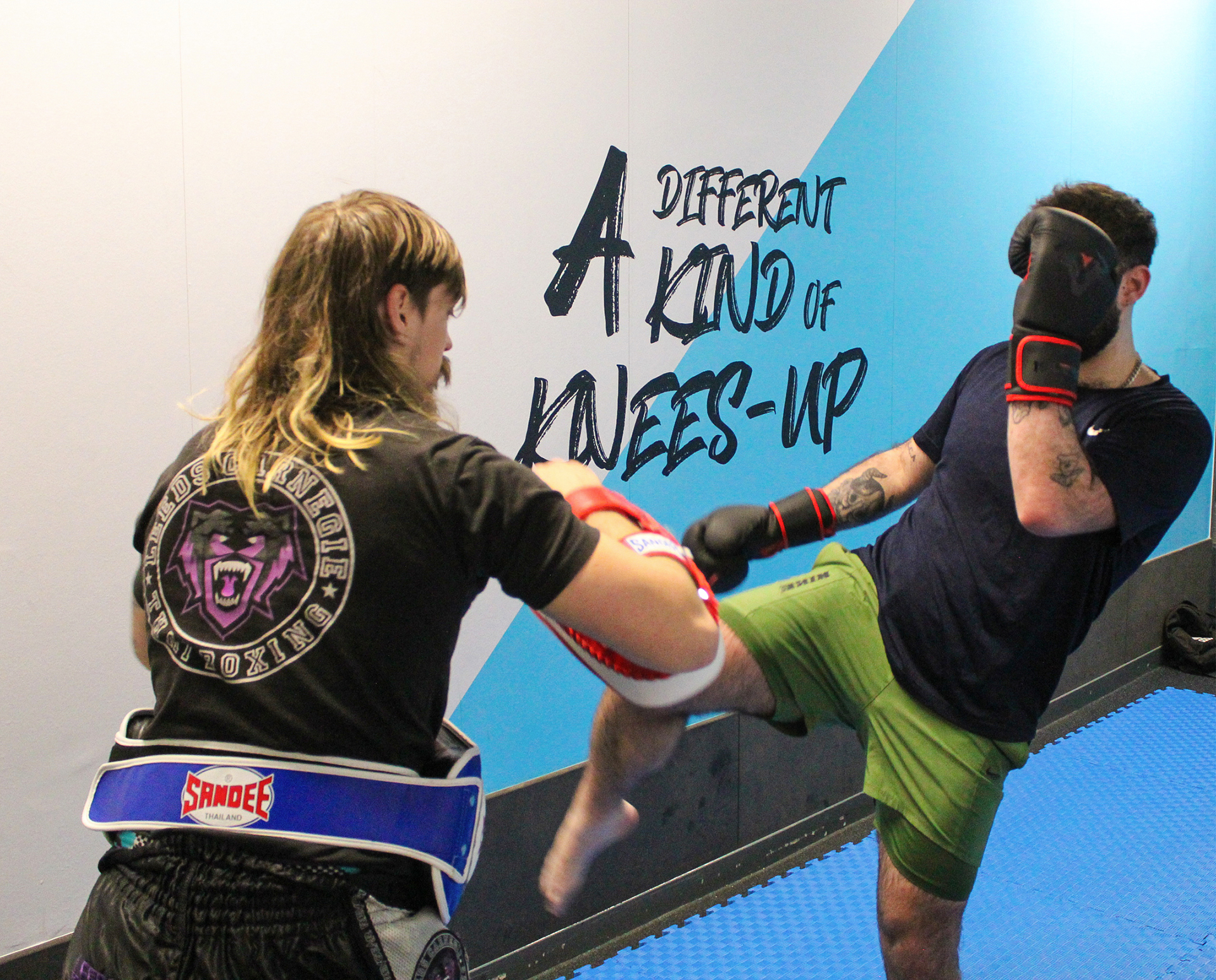
Not everyone enjoys the brutal, stand-up striking combat seen in Muay Thai, and there’s an equally fast-growing martial art by the name of Brazilian Jiu Jitsu (BJJ) which offers an alternative. BJJ was formed in early 20th-century Brazil, after Japanese judo expert Mitsuyo Maeda passed his knowledge onto the Gracie brothers. Over time, the five brothers tweaked the techniques taught by Maeda, prioritising ground-based combat over the more difficult stand-up fighting seen in Japan. Carlos Gracie opened up his own “Gracie Jiu-Jitsu” schools in the 1920s, before the family spread their style to the US in the 70s, which by then was known as “Brazilian Jiu-Jitsu”. It wouldn’t receive real UK notoriety until the 1990s, when Royce Gracie would utilise the martial art in the first few years of the UFC, going 11-0-1 in the first five tournaments. Its effectiveness was obvious, and more gyms began to open worldwide as interest grew.
The philosophy behind the martial art is that it allows for a much smaller, weaker fighter to take on a bigger, stronger opponent by taking the fight to the floor, and immobilising them through grappling, takedowns and submissions. It’s for this reason that the open weight category exists in competitive tournaments.
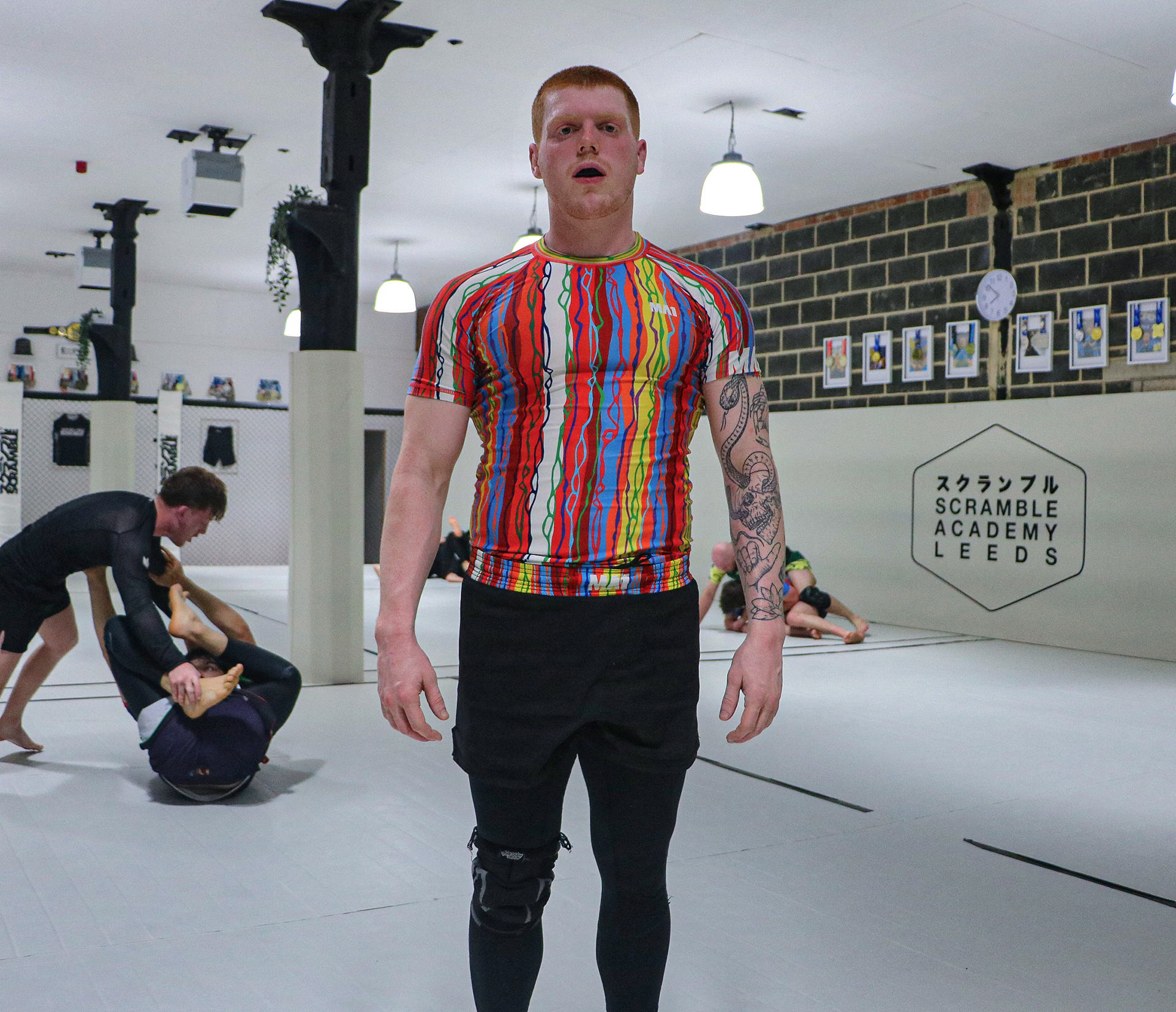
About a ten-minute drive from Kiatphontip gym is ‘Scramble Academy’ in Armley. A martial arts gym which, in its main ‘open mat’ room, offers BJJ training to all skill levels and age groups, seven days a week. One of the more experienced members is Rob Portman, who was inspired to become a Jiujiteiro after he and his brother saw it being used in the UFC. Since then, he’s both fought and coached others in between training.
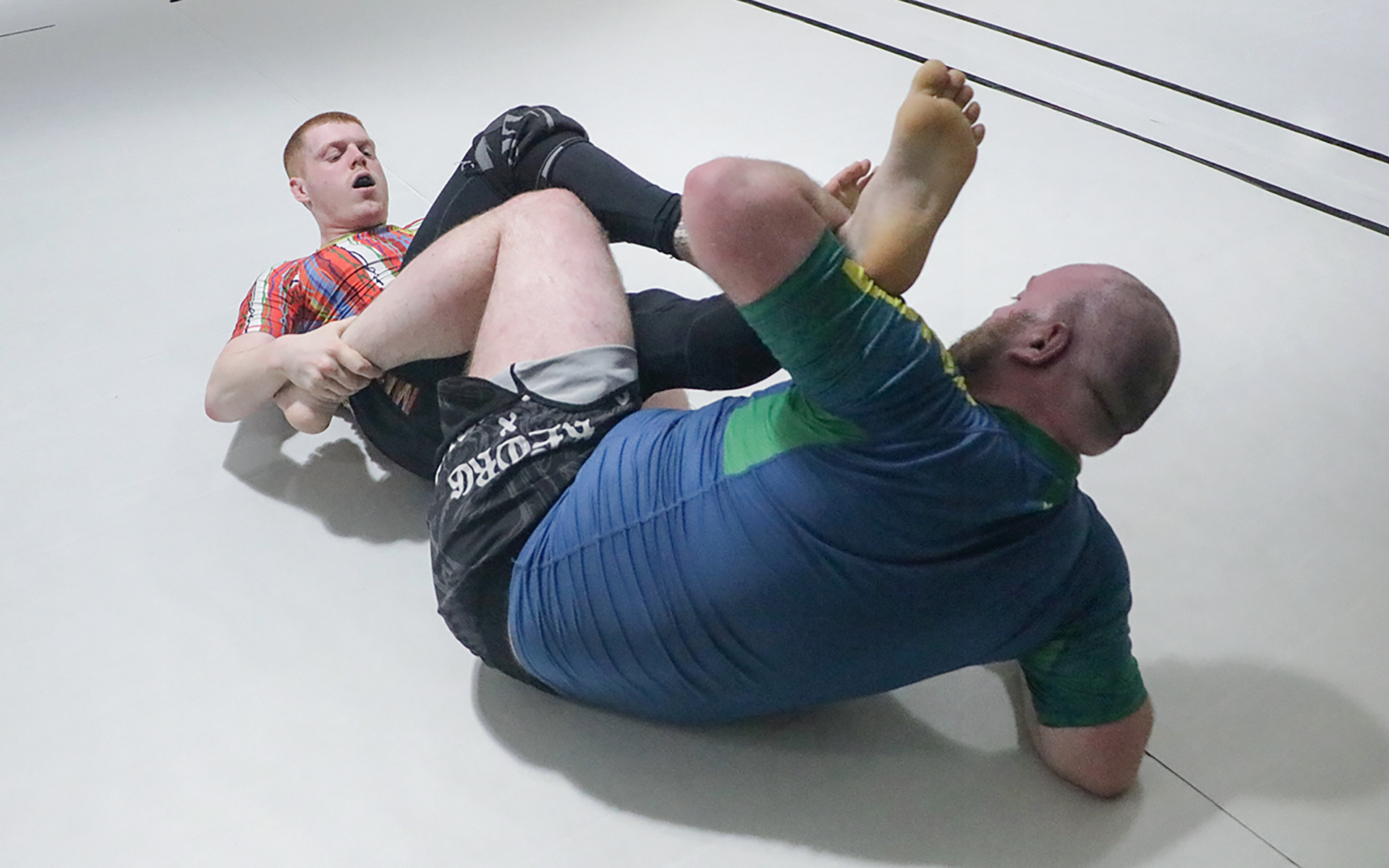
“I haven’t competed for a while, but over the past few years, I’ve probably had over 50 matches of just Jiu Jitsu. I wanted to do Thai boxing at the beginning, but then I was just realised that getting kicked in the face and stuff wasn’t the most fun. So, yeah, I’ve just stuck with Jiu Jitsu.
“At the minute though, I’d class myself as a coach. I don’t compete anymore because I’m injured all the time, but I’ll coach the kids’ classes here, and then if the main coach, or the Professor per se, isn’t here, I’ll cover for him when he needs me to.”
Despite BJJ being a completely different martial art, the aspects that drive his passion are very similar to the Muay Thai fighters: this being the opportunity for solo triumph and self-improvement, but also for self-criticism upon defeat, and the burning desire to make amends that comes with that.

“I used to play team sports like football and rugby, but I didn’t enjoy them. Selfishly, if we
lost, I would never feel like I’d lost. I blamed it on my team, whereas in this (BJJ), there was no excuse. I liked the fact that if I won, it was because of me, or if I lost, it was because I lost.
“I also love the fact that you’re just always learning and that never stops. There’s always new stuff, or people start beating you with something new, and that’s just kind of addictive.
“It’s awful when you lose, though. What makes it worse is that you’re picking yourself apart before you even compete. You’ll be in a training camp every single day for two months, and you’re just scrutinising yourself in the gym; if you lose a round, it doesn’t feel like you’re just losing a round in the gym. It feels like ‘if I compete like how I was in the gym on that day, then I’m gonna lose’. And then at this level, you have to fund yourself to go to these clubs. So if it’s abroad, or if it’s down in London, you’re then forking out a load of money that you’ve had to save up for. And if you lose, it’s not just like, ‘Oh, I just lost because I was bad.’ It’s like, ‘I’ve also lost loads of money.’
“But then it kind of drives me. It makes me want to get back in because I hate the fact that someone else is better than me, so it makes me want to get back in and get better. But I’ve also seen people who get so demoralised that they just get fed up with the sport, it’s a lot to put yourself out there and then essentially realise you’re not good enough to be the best.”
According to EuroNews, an estimated 300 million people now consider themselves fans of Mixed Martial Arts, with the United Kingdom being one of the countries where it’s most popular.
Whatever the reasons, the popularity of MMA, and the specific martial arts it consists of, is increasing, with no signs of slowing down. Humanity’s everlasting love for combat sports continues.

 Photographic Journalism
You must be logged in to post a comment.