How a historic sports club in the Northeast of England navigates 125 years of its existence. 

Novocastrians RFC is one of the oldest surviving and still standing rugby clubs in the Northeast of England. Formed in the year 1899 by a band of former pupils at the Royal Grammar School in Newcastle Upon Tyne, they recently celebrated their 125th year of existence as they kicked off the 2024/2025 rugby union season in September.  

But how does a club that was formed on the whim of a few former students come to be the hub of rugby and social activity that it is today just over a century later?
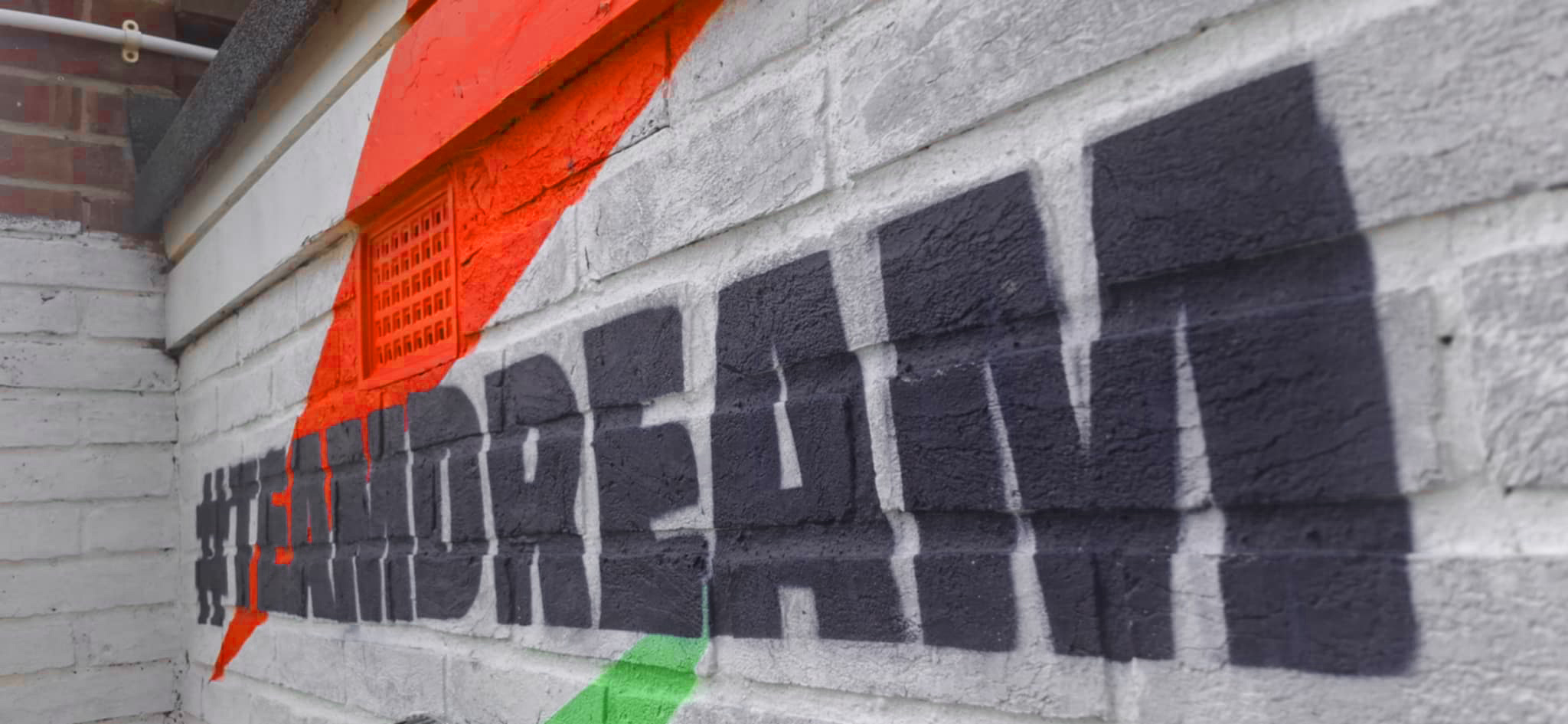
The rugby club, based in a prime location in the city, has long been popular with schoolchildren of all ages and abilities and it boasts some of the best engagement with the youth of the city than any other club in the area. Historically, the men’s squad have been known to field up to four senior sides in years gone by as well as an occasional ‘vets’ side, whilst the ladies also boast an impressive 2 sides, leading the way in women’s rugby across the region. 

But the real magic doesn’t come from the pitch, it comes from the work of the people behind the scenes that keep this seemingly impossible machine always moving. 

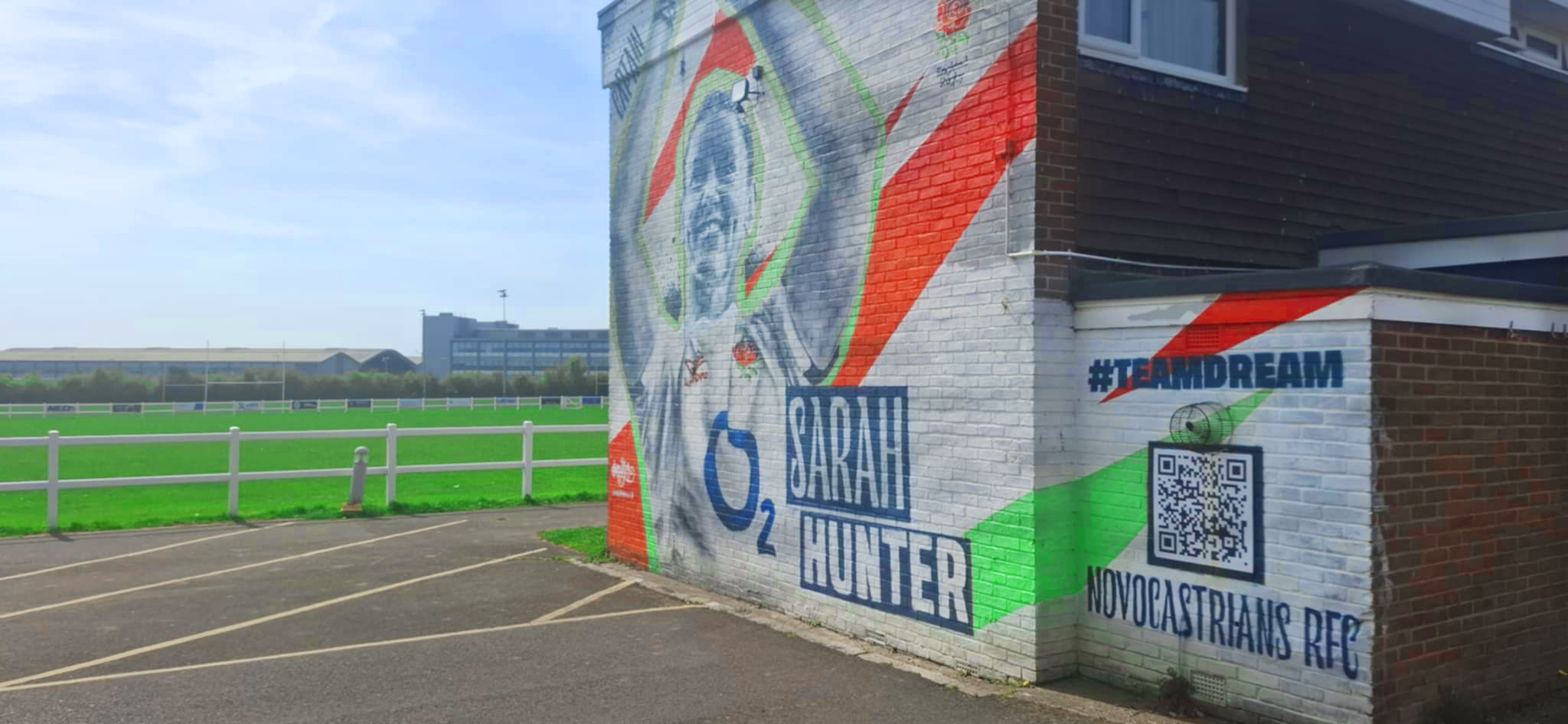
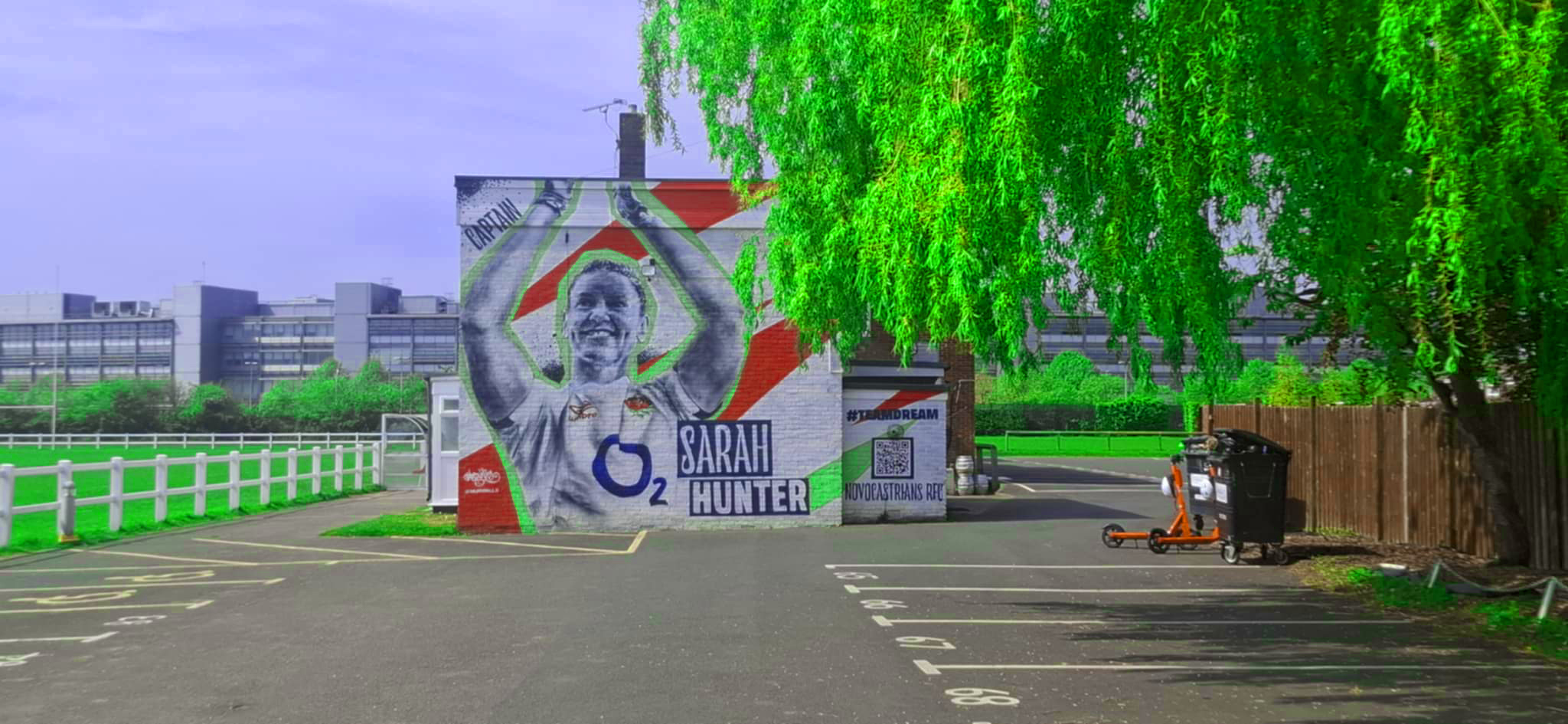
Despite boasting some impressive alumni that have worked their way through the ranks of the club in recent years, such as the likes of John Elders, an ex-captain of the club and former head coach of England Rugby and Sarah Hunter, a former England rugby captain who led her country to glory at the 2014 world cup. The club still manages to hold an exceptional focus on the community aspect of the game, with volunteers in their dozens hosting weekly fundraising activities ranging from a simple bake sale to make money during match days at the club. To setting up and creating annual firework shows that attract hundreds, if not thousands of spectators from around the city and neighboring areas.
Most recently the club and it’s behind the scenes workers organised a second ‘beer festival’ building on the huge successes of an identical event they put together a year ago from today. After experiencing a wave of hundreds of excited drinkers through the clubhouse doors last year on a warm spring’s day in April, things were bound to only get bigger and better as they prepared themselves for opening day on the 25th of April. The men’s 1st XV who had recently made it into the second round of the national cup were hoping for a home draw on Saturday 26th so that they could ‘aid’ in the consumption of any leftovers, of which there wasn’t any! Unfortunately for the club the fixture was drawn as an away game, but the players returned victorious from their fixture to a round of applause awaiting them at the ever-supportive clubhouse and its staff. 
Speaking to Tom Dias the honorary club secretary about the recent successes of the club he said, “It’s been amazing to have the club performing so well across the board in the last few months building up this event, from the 1st team squads on both the Men’s and Women’s teams through to the junior sections it feels like everyone involved with Novocastrians has been thriving recently.” This comes after the Men’s side of the club recorded their best ever finish in modern history finishing second place in their respective league very narrowly missing out on promotion to a strong Sunderland team, a campaign that will live long in the memories of many supporters.  

Dias went on to say that, “success on the field brings so much more opportunity to the community, and it means that we are able to attract more people to come down and give rugby a try. We even had a team travelling up from near Nottingham just to enjoy the celebrations!” 
The festival itself was, of course, a raging success. Hundreds of players ranging from the ages of 15 all the way through to the veterans of the club took part in some form of rugby throughout the day to the cheers of the crowd watching on from the balcony who thought they would get a head start on the full barrels. Some exceptional entertainment rounded up the crowds into the main bar towards the end of the night with music being supplied by the exceptional Old Man Goat band who kept the party going deep into the night. 

But, of course, clubs like these don’t survive purely on big events once a year, they rely on   full buy-in from each and every club member to play their part and ensure that there are future legs for the next generation to stand on, not just enjoying the highs but embracing the lowest of lows and overcoming them. Celebrating a diverse and large range of people involved with the club, each with different professions and skills, this means that there is always someone willing to lend a hand when needed.  

Currently working as a barrister at Trinity Chambers, Alex Littlefair, specializing in personal injury claims, used to be the captain of the club and looking back at his playing career he noted that it was, ‘One of the best things he has ever done’ and despite being an incredibly high achieving individual working at the top of his game he has always been able to find time for a club that was in turn able to find time for him.  

The 43-year-old recently completed a 350-mile bike ride starting from his club, then passing by his place of work by the Newcastle Quayside all the way to Old Colfeians Rugby Club over the course of 3 days from the 10th – 12th of April earlier this year. Speaking to Trinity Chambers before the ride he said, “One of my friends did some research and found out that day 2 is longer than any stage of this year’s Tour de France. However, there are no mountains, and I am not racing. I hope all the training I’ve been doing pays off and the weather is kind. I’m going to be joined by friends and family on the way. 
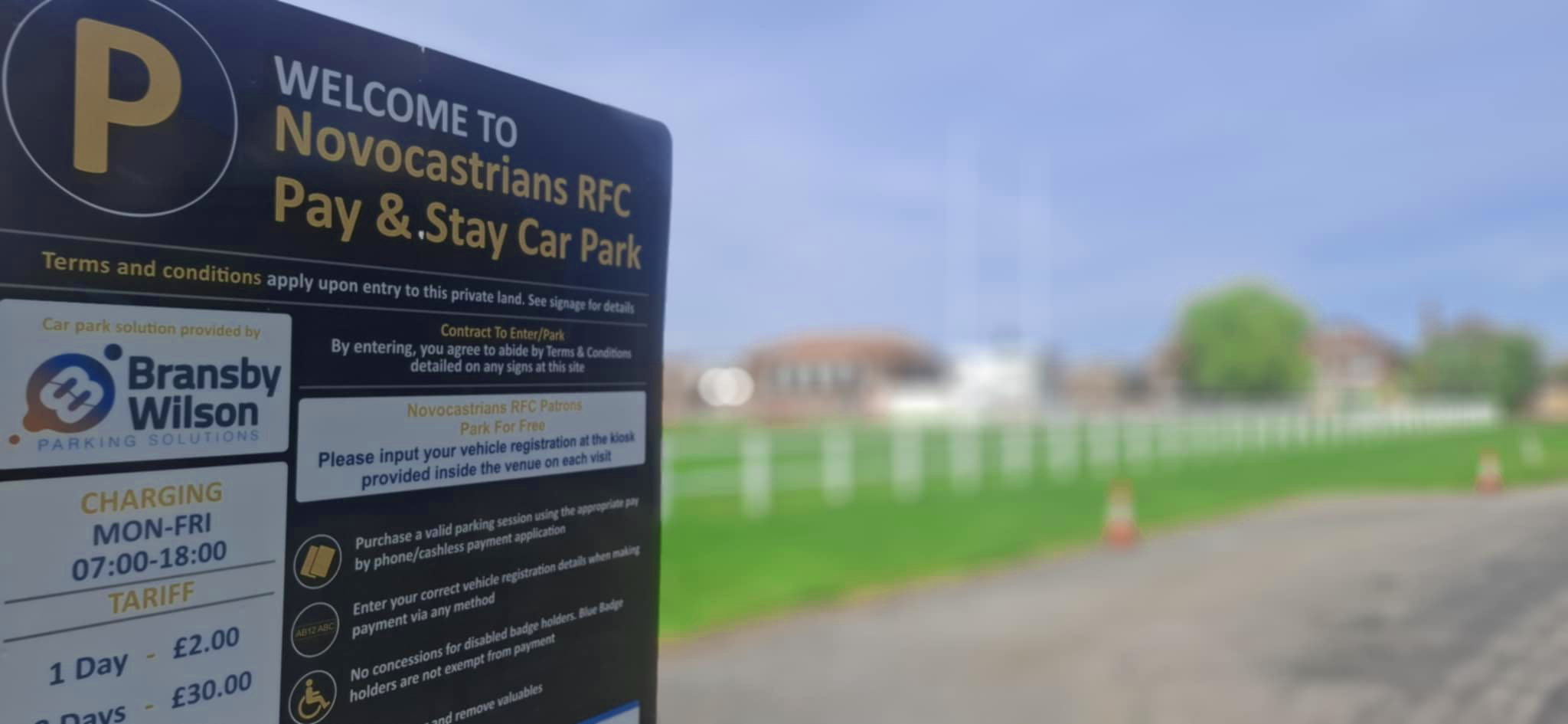
As it currently stands, Alex has raised more than £5,000 for his cause, raising money for a rare genetic disease that sadly took the life of Rycroft Alport Foster, the child of a close friend of Littlefairs, at the age of just 16 months. Had it not been to for the incredible support of the Novocastrians Rugby Club, the monumental effort from Alex may not have been so widely supported, instead a community that helped contribute to more than 100 individual donations showed their ability to come together as a club to help a brilliant cause for one of their own. 

Alex was also recently able to be in attendance for another historic day for the club on Saturday the 3rd of May as Novocastrians took on unbeaten league leaders Sunderland away from home in a fixture that many had already written the small side from Newcastle off the books long ago. A win would see the team progress to the semi-finals of the Papa John’s national cup, a feat that no side in the club’s history has ever managed to achieve before, and despite hurls of abuse from the sidelines, despite playing on an alien pitch far from home and despite the odds being forever stacked against them, the tight nit squad bound together by the full support of some energetic travelling supporters pushed their old rivals to the end and came up victorious in a historic victory. 

However, despite the highs of progressing forward in the competition, the club was hit with another hurdle to overcome. Despite being drawn as the away side in their last 3 cup fixtures the team was hit with the brutal news that they would be subject to a 7 hour round trip away for the next round, despite the team they would face having played their previous game at home.  

With prospects of a bus trip down costing upwards of £2000 it seemed like all those profits raised just weeks earlier by an event that took months to put together would be thrown out the window to help support the players on their journey down south. But a club, still struggling to keep its showers working at times, came together all as one when its members needed it most to provide an unforgettable experience for the players, coaches and supporters combined. Members came together to contribute various amounts of money to fundraise for a bus to take the players to and from their opponents’ clubhouse. Director of rugby Nick Cotterill said, “Thanks to the generosity of our 125 members we now have a bus booked to travel to the semi final”. 
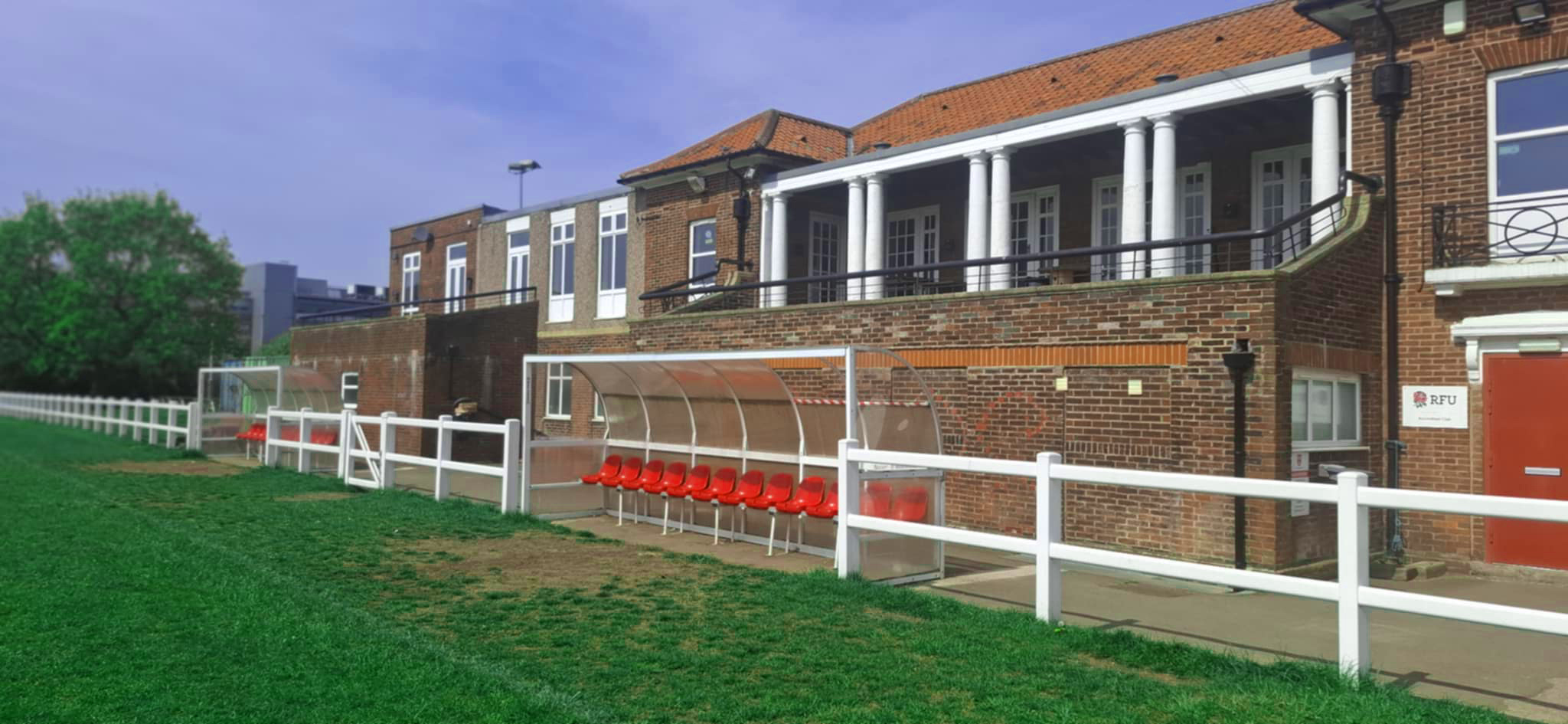
One member of the club who has contributed more than any other member can say they have is that of current bar manager Jan. Upon hearing the news, she was delighted and over the moon to be able to contribute to the successes of the club off the pitch by managing the behind-the-scenes action ensuring the bar was always fully stocked. She even went as far to say that, “If we do make it through the semifinal and into a final at Twickenham I will be on my holidays in Tenerife. So, you best believe I will be coming down to watch and support anyways, I will be jumping on a plane straight to Gatwick and then catch the next flight back to resume my holiday and of course all the lads will be welcome to join me!” 

Jan, a longstanding and much-loved member of the club will step down at the end of the playing season as she moves towards a well-deserved retirement. As the idea of a retirement party surfaced, members of the 1st team through to the old standing veterans of the club pounced at the opportunity to give her a brilliant sendoff that they believe she thoroughly deserves.

But what does this story actually all boil down to in the end? Well, it’s a story about passion for a sport firstly but secondly and more importantly, it’s a story about how sport can create such a closely knit group of people from varying backgrounds and tie them together in ways that would have never seemed possible. From homegrown players to university students, from those in the navy to those in the office, sports and the clubs that help support them do more than just host games on a weekend, they have the potential to build a community from scratch to support and help them as they navigate life together. And that is what Novocastrians RFC is all about after 125 years of existence. 
Workshop 6 Reflection – Ben Jubb

In week 6 we focused on the specifics of post-production of imagery in photojournalism going through the two main channels of either Adobe Photoshop on our laptops or computers or alternatively using a free app called Snapseed on our mobile devices.

I did download Snapseed and have an experiment with its various functions but ultimately for the workshop task I decided to take the approach of using Adobe Photoshop because I plan on using a loaned camera for my final project instead of my mobile phone camera.

My final project will be based on planned out and still objects, not necessarily moving targets such as in a sporting game. Therefore the first image I chose was something that was similar to that of the style of photo I intend to take for my final piece.

This image had nothing to do with my final project or its theme however it was an effective image for further understanding the ins and outs of the various functions and adjustment layers that Adobe Photoshop does offer. The image (of a shoe) was taken with the flash on, and so I decided I wanted to make the image slightly darker whilst also attempting to bring out the brighter features of the shoe, essentially with the goal of highlighting the shoe and making the background less relevant. I do think it had success, comparing both the before and after versions it is clear to see that with the use of curves especially, I was able to highlight the green and orange features of the shoe whilst dimming the darker background, almost as if the ‘F-stop’ number of the camera lens was on the lower side of the scale. The camera settings were set to normal, however thanks to the manipulation of the image and editing I was able to achieve an image similar (but not exactly like) to one that was taken with a professional camera with F-stop settings, which I thought was pretty important to remember in case I don’t get a second chance with a particular shoot and it doesn’t go perfectly well.

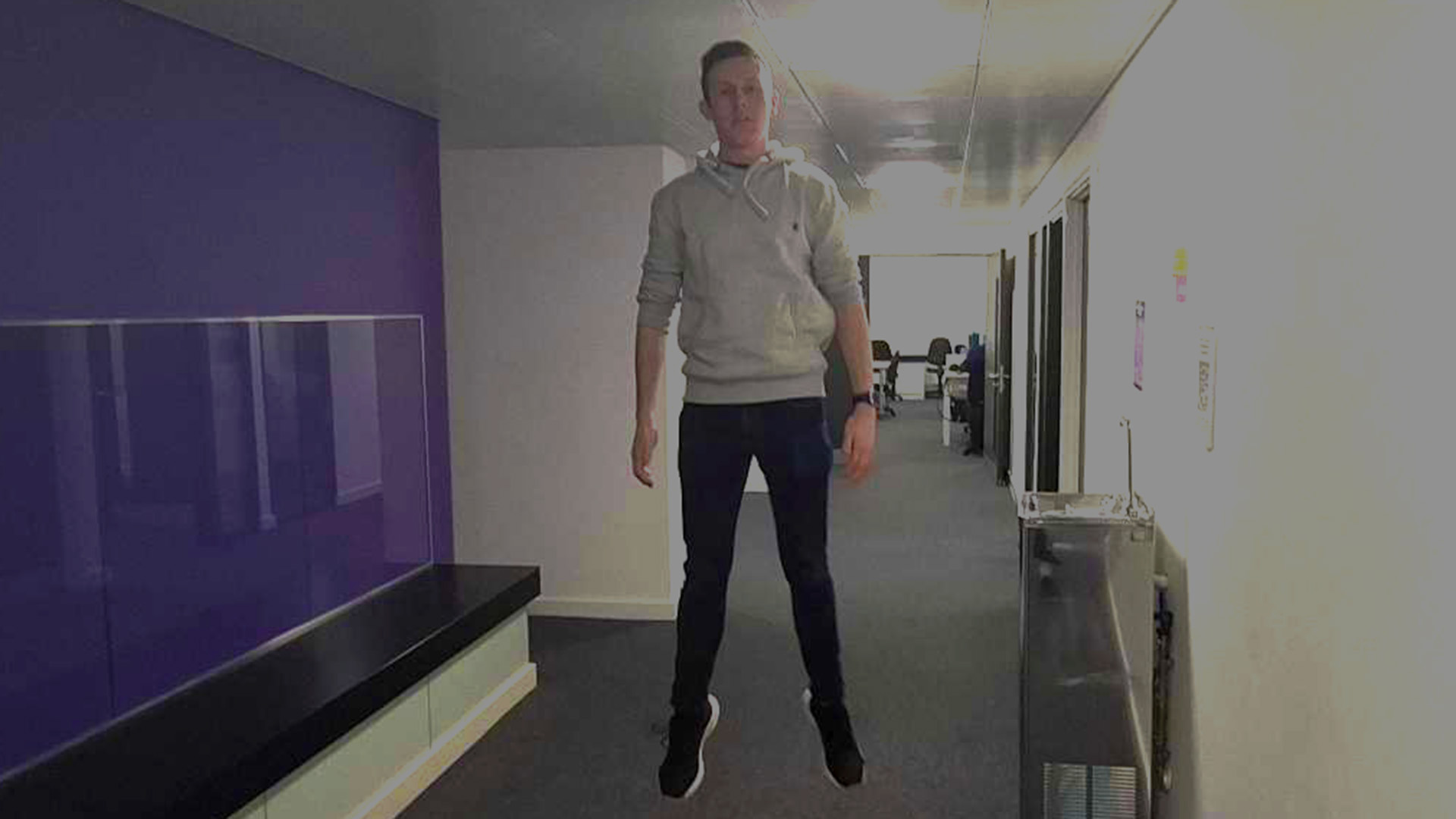
The second image I selected was something more relevant to the course over the past couple of weeks or so, it was an image taken in the corridor just outside of the classroom of another student jumping, playing with different shutter speeds. The image had a large amount of ‘noise’ to it and various reflections of the corridor lights in different places. Whilst I wasn’t able to do much to the image to improve it, it instead served more as a reminder that some images can only have so much done to them post production, and highlighted the importance of properly setting up a shot.

Workshop Task 6 – Ben Jubb

Above is my first original image that I took and then chose to use as my ‘practice’ for editing using adobe photoshop. I decided to use this photo for two main reasons. The first being that it was taken in portrait mode and would then require editing down into landscape for online use. The second reason being that the flash was turned on so I wanted to play around with manipulating the image to make it turn out in a darker way.

The second image as shown above, has been cropped to fit an appropriate ratio, despite their being white border, and to edit this image I have used the curves adjustment layer on Adobe photoshop to reveal a darker tone to the background and focus of the image which I think highlights more detail in the shoe itself, (the writing and mesh at the front of the shoe in particular). I also played around with the ‘levels’ setting and managed to stop the base of the shoe (dark green area) from becoming too dark and then becoming irrelevant in the image.

The second image I selected was mainly because it was relevant to the course and was one I took of another student last week when learning more in depth about shutter speeds. The image itself was not a great image to edit considering the bright lights and reflection around the hallway it was taken.

The image above is the edited version. Whilst I was aware that the image didn’t have too much that could have been done to it in the first place, my focus on this image was less to ‘improve’ the image and more to experiment with the effects of different adjustment layers on photoshop. The main layer I used was the ‘curves’ setting and my aim was to attempt to cancel out each light at the top of the hallway individually, using the ‘light spikes’ in the curves setting. It had relative success.

Workshop 5 Reflection – Ben Jubb – Shutter Speed & ISO Research

This week’s task was centered around working with, what would be shutter speed on a camera, and then applying the learned knowledge in the first portion of the workshop to replicate on our mobile phone cameras. As well as this we were asked to try and apply different levels of the International Standardisation Organisation (ISO) to our work. Doing this would affect the light sensitivity of the camera, and the higher we set this the more light sensitive our camera would be.

Shutter speed, was pretty much exactly how it sounded. On a standard camera a faster shutter speed will create a shorter exposure and slower shutter speed which gives the photographer more exposure. If you are trying to take a photo to capture the specific movement in a shot, (e.g A golf ball being hit off a tee) then you would want the lowest shutter speed possible. On the contrary, if you wanted to catch a moment in an action, (e.g A raindrop falling into a larger body of water) and almost freeze frame the image, then you should use a higher shutter speed.

The concept of shutter speed was developed by William Henry Fox Talbot in the early 19th Century. In 1851 he attached a page of the London Times to a wheel that rotated in front of his camera. This resulted in a readable image exposed for about 1/2000th of a second.

As for ISO, it began with the use of film and the need to measure its sensitivity to light. The ISO system was introduced in 1974 to replace the American Standards Association (ASA) and Deutsches Institut fur Normung (DIN) and subsequently became the International Standardisation Organisation for light sensitivity in both film and digital photography.

A lower ISO number (100) should be used on a camera that has access to great lighting and is typically used outside on a sunny, bright day. This setting is designed to shoot the sharpest image possible. However on the opposite end of the spectrum, a higher ISO number (800+) should be used during shoots where lighting is sub-optimal or darker conditions, typically indoors or at night. Photos taken with this setting are thought to generate ‘noise’ due to the image being artificially brightened due to the lack of good light. Common middle ground is typically found in the range of 400-800 when taking images in a mix of bright and low light environments.

Workshop Task 5 – Ben Jubb – Shutter Speed

This first image that I took was off one of my classmates jumping in the air, and using the burst mode I was able to capture a couple of images that represented the action fairly well. The image is not perfect and still has traces of blur, however all in all I think it turned out fairly well, but if I was going to do this again I would probably take it from a bit closer up.

The second image I took was not as straight forward, after playing around with my Samsung phone camera I was pretty confident it wasn’t going to be able to replicate the live photo effect of that on an I-phone camera. So, instead I used another students phone camera and then created a long exposure effect by asking him to move his head back and forth fairly quickly, keeping the rest of his body still. The attempt had mixed results, whilst it captures the movement of the head very well, it also creates the effect further down the body which was not intended.

Workshop 4 Reflection – Ben Jubb

In week 4, after completing the extra credit task I decided to also write up a reflection on the week. Considering that most of my explaining of how I completed the task was written up on the actual task sheet, this weeks reflection will be shorter than others. This week’s workshop was focused around different F-stop numbers to use on a camera. Whilst I didn’t personally have a camera to use I managed to find a similar effect on my phone.

Initially this was actually a challenge, whilst my Samsung phone is compatible with ‘portrait mode’ it is not like a typical I-phone camera. Instead of blurring the background and focusing on the subject of an image with a low setting, it would do the opposite. Instead, this effect was achieved by using a higher setting on my phone camera, which was confusing to get to grips with initially but after some playing around I managed to figure things out.

Workshop Task 4 – Ben Jubb

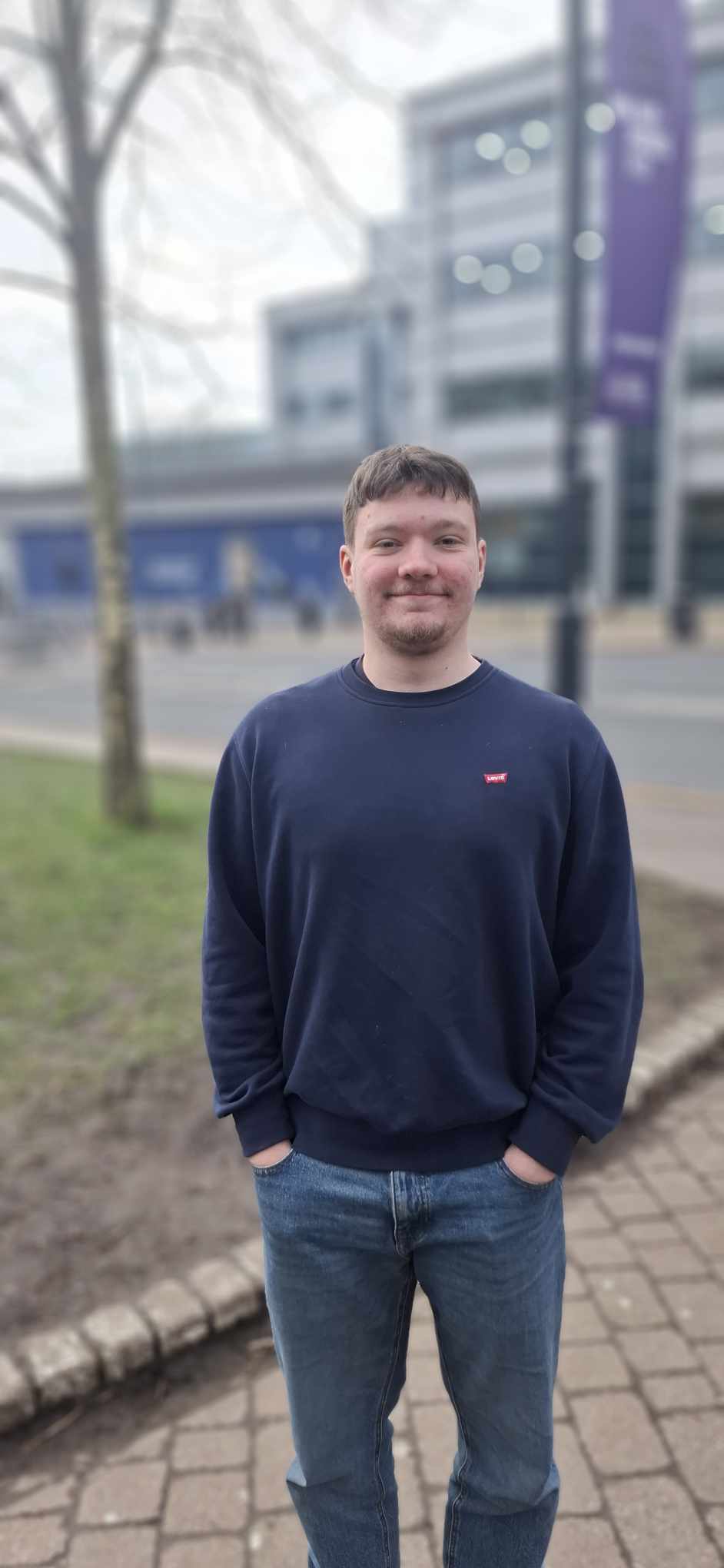
Whilst this weeks workshop was intended to be used with an Iphone camera I only had access to my own phone and Samsung camera, and whilst the settings were a fair bit different to the ones being explained during the workshop, portrait mode was still available as well as different levels of strength for focus on the camera. My first image displays a classmate in full focus with all of the background of the University building in the background. The aim of the image was just to capture his full body as the main focus. I think the results came out quite well, considering his whole body is in focus and the entire background is blurry. On a professional camera this would be an example of using a low f-setting allowing for more light and creates a narrower focus or a ‘shallow’ depth of field.

The second image that I took demonstrated the use of a completely opposite f-setting, using a higher f-setting. This image, unlike the first one, attempts to capture the university in the background as well as the student in front of it. The purple Leeds Beckett flag and logo flies in the background, and the image is taken from further away to make the student less of a focus in the picture, instead making him one small piece of the image, including the other students walking by in the background. I think the image went well, however in hindsight if I was to do it again I would wait until there were no passing cars and would also try and include the Rob Burrow image in the background too.

The final image, was probably the trickiest to take. I tried to use an f-setting that was in the middle of the previous two, and perhaps it was a consequence of using a phone camera, but the image turned out very similar to the first one. Whilst the background is less blurry the focus of the image remains similar to the first picture, but just to less effect. Whilst some of the immediate background (the pavement/curb) is not as blurry I would not use this setting again.

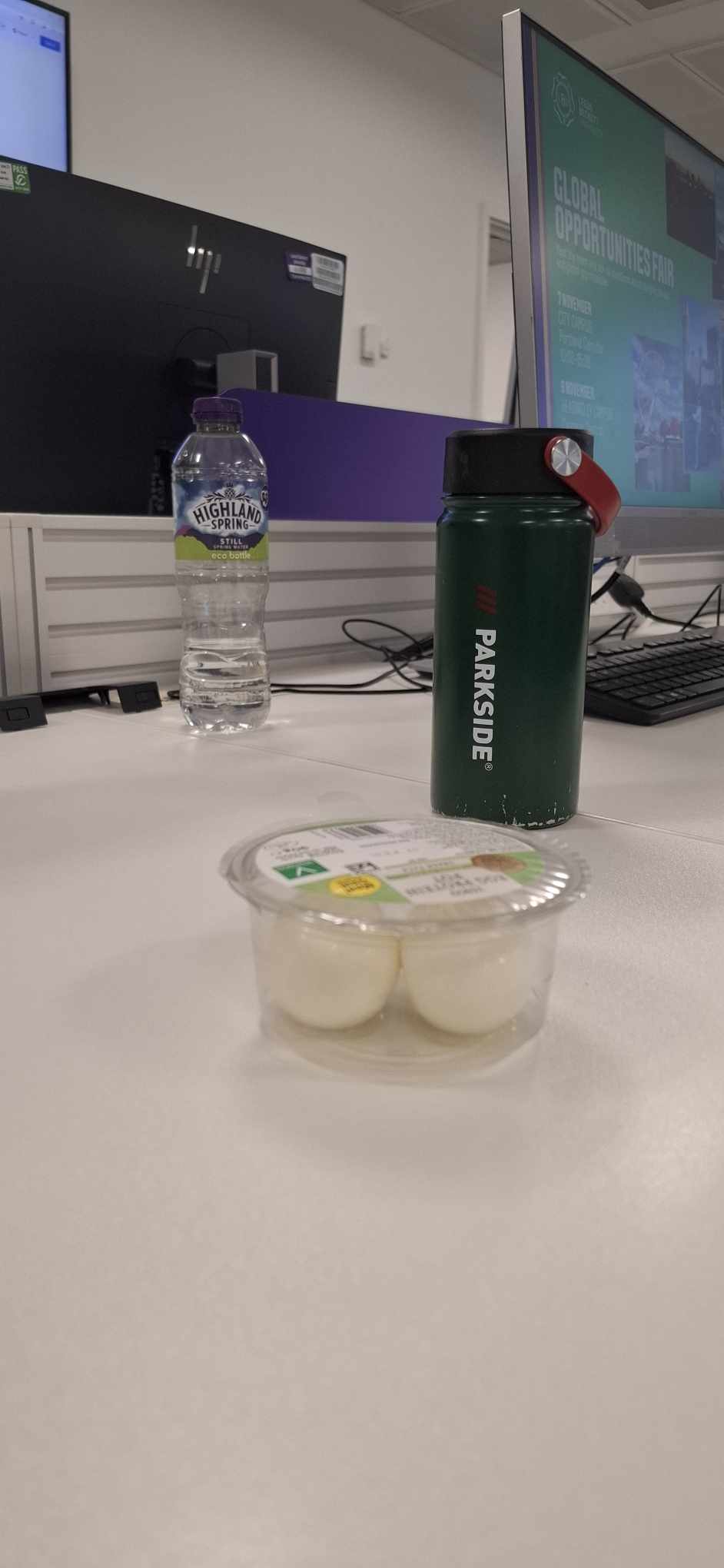
Finally, to finish off this task I attempted to take an extra two images of 3 objects standing on a flat surface to further demonstrate the effects of different f-settings.

The first image below, attempts to show all 3 images in a sharper focus using the highest f-setting to try and capture all 3 images in a sharper focus. The image was fairly successful showing the contrast of 3 different items in a high quality focus, however the front image writing remained fairly hard to read in comparison to the image furthest away.

The second image (below) takes an image where instead only the front item is in focus using a low f-setting. Interestingly now, despite the item at the front facing the wrong way, every single word is readable unlike the first image, and now the two items further back are impossible to read. An interesting observation, that the front object is now in a much clearer focus.

Workshop 1 Reflection – Ben Jubb

My first week of photojournalism got off to an unfortunate start, after contracting norovirus over the weekend it meant I missed out in participating with the first Photojournalism lecture and subsequently the first opportunity to complete the workshop task.

Given the intensity of the last term on the course, my focus was elsewhere in the following weeks and therefore meant I was delayed in creating a story around Leeds and catching up on the missed task.

However, this delay gave me time to consider options for alternative and exciting stories, and one that seemed to have real potential presented itself.

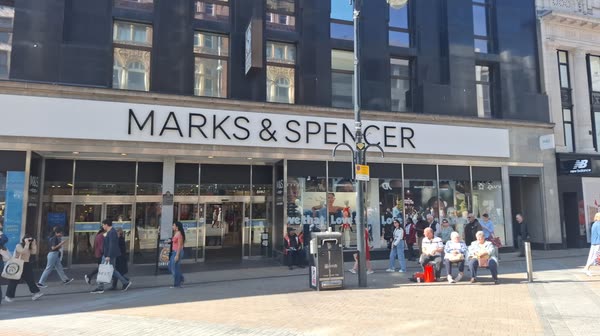
I was able to pick a good day and considering the lighting available got a fairly good first shot of the Marks and Spencer entrance way on Briggate Street. I was then also lucky enough to be able to be present alongside taking place of some protests within the store. An employee named Amana was tasked with helping customers if they needed any assistance getting items from shelves and so I asked her for her opinion on the situation and that is how the story came to be.

Overall I am happy with how my 200 word piece ended up, despite some delays it meant that I was still able to put together something even better than if I had perhaps just done it on the day.

Workshop Task 1 – Ben Jubb

Marks & Spencer Leeds Hit Further With Closures And Protests

Following the closure of it’s store in Wellington Street in Leeds city center on the 22nd March earlier this year, M&S hasn’t exactly experienced an easy ride in the retail business in the 2025 calendar year. Claiming earlier this year that they intend to expand and focus more into it’s ‘food only’ outlets and instead move away from it’s number of full line shops.

This new approach of tackling demand has however come with it’s fair share of drawbacks including the nationwide malware attacks that have impacted it’s stores nationwide but also problems arising a bit closer to home…

Mark’s and Spencer’s huge flagship Leeds store situated on the iconic Briggate street has been hit by a series of stand off protests organized by animal rights activists groups.

Protestors can be seen sat alongside the meat aisle in M&S
Protesters can be be seen sat alongside the meat aisle in M&S Leeds Briggate Street

The protesters were seen sat specifically alongside the meat aisle in the shop for hours, refusing to co-operate with staff or security until eventually the police promptly escorted them onwards.

One employee at the store, ‘Amana’ said, “I’m not sure what they think they are achieving by doing it, customers are already frustrated enough with the way things are a the moment and having to reach over a person’s head to grab dinner doesn’t help things”