Reflections

Week 1:

For the 1st task we had to go and find a story from the city taking photos and finding quotes to create it. I went to an indepedent coffee shop that had just opened a 4th location. Tom who was the barista inside allowed me to ask a couple of questions about the company and what they try to achieve. Unfortunately it was quite quiet at the time I went so couldn’t speak to anyone else or get a picture of the place full but I was happy with the photos I got for my piece just nextime make sure I get a photo of the person I’ve intereviewed. From the examples shown I think having a picture of the interviewee is important as it can really add to the story if the audience can picture the persons saying the quotes so doing this will make my pieces have more depth.

Week 2:

During this week we learnt about the different types of photo journalism and the ways they can be used to document or report on a story. The photos are usually the driving force behind the story – or they are at least of equal weight to the text. We were tasked to start researching the type we’d like to use for our assessment and to delve into the history of photo journalism, famous photo journalists alongside some of the most well known moments captured. Looking at all this I think its helped me decide to focus on reportage. Capturing pictures in a sports event really gives depth to the story of a match or even sometimes telling the story. The challenge will be having my images high quality enough to not have the ball blurred etc but its something I’ll need to be persistent with. Some sports photographers who’ve caught these iconic momments have made a name for themselves just through 1 photo and thats what I should be trying to replicate. Capturing split second momments that not many others managed to capture.

Week 3:

After going through all of our research from last week and discussing our choices of photos and what makes them such important momments captured in sports we were given a task to find three photos. The first challenge was to find a news photo that was staged and the history/reasoning behind it. It incredibly dangerous it was to set up that photograph but to capture the essence behind the height of the newly contruscted rockerfeller centre put lives at risk but thats what length the photographer went to. Then I had to find a picture that affects the story/event and I chose a picture of the second plane crashing into the twin tower during 9/11. When the first plane collided the public would’ve thought it was just a catastrophic accident but someone getting a picture of the second plane then meant it was no longer an accident but a planned terrorist attack. The photo made me think about how important photos are to a story and the way they are told for the rest of history. Finally it was a challenge to find a picture that could where the meaning of the photo could be disputed. I found one of the England squad in 96 that were slammed for having a wild night out shortly before the Euros that caused uproar for most but for some the meaning of it wasn’t that they’ve let the country down and should all be banned/fined but instead showed how close knit this group were and that afterall they’re also human. It made me reflect on how journalists/photographers can present a certain narrative for the public to jump on despite the story being spun into what they want to tell.

Week 4:

Reflecting on this week learning about focus, aperture and F-Stop were all relatively new terms to me and something I hadn’t really come across before. When taking a photo on my phone I just trusted the software and mechanics to create a good photo. I knew that choosing what was in focus was an option but I didn’t know how to simulate aperture to the fixed lense on an iphone .It was interesting using the F-Stop slider to change the depth of field when we were experimenting with taking photos. We took 3 photos with a model and background at 3 different F-Stop settings (highest, medium, lowest) and the results were really interesting. It showed if you use a low F setting, more light comes in – but less of the image is in focus. Whereas if you use a high F setting, you get much less light – but more of the image is in focus. One thing I need to think about when coming to taking photos for my assignment is possibly hiring a camera as I feel with my phone being one of the older generations the photos aren’t going to be of the highest quality but over the next few weeks I’m going to play around with F-Stop sliders and focus and really get to grips with taking a vairety of photos.

Week 5:

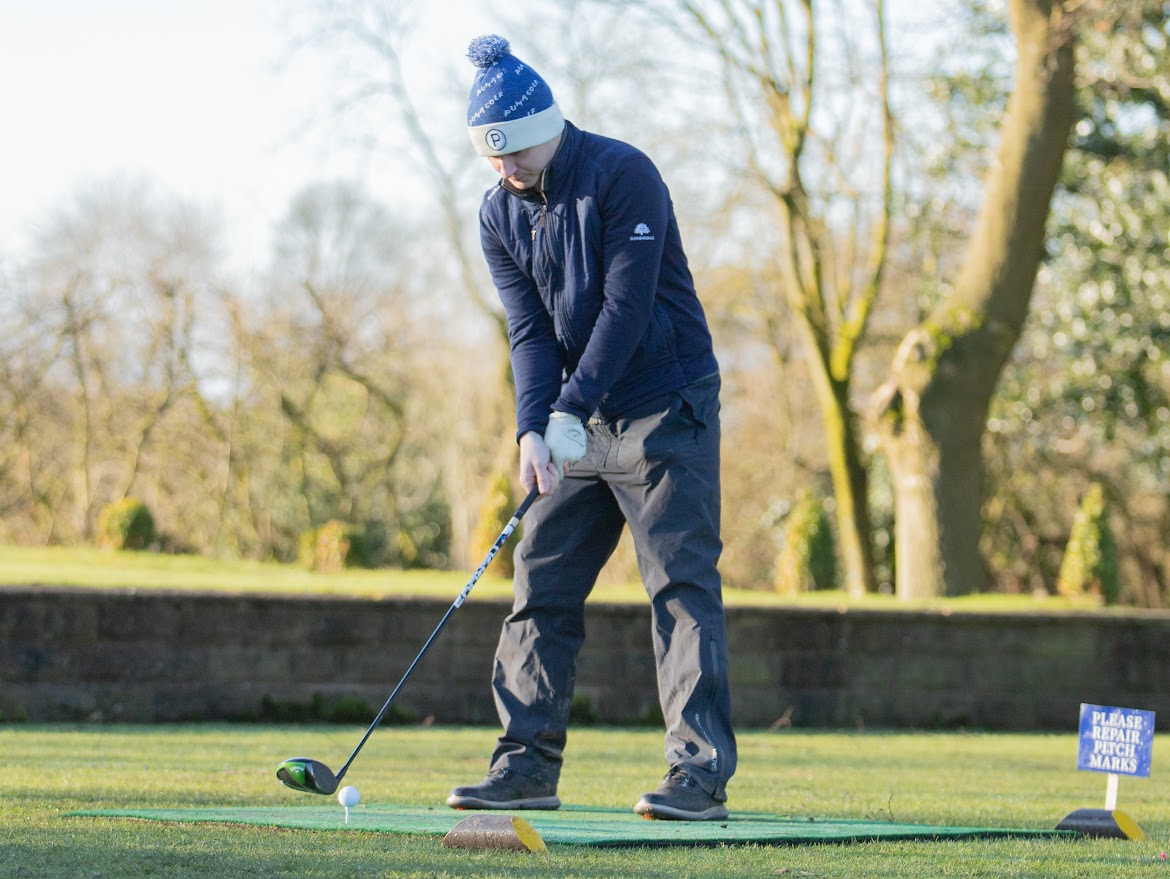
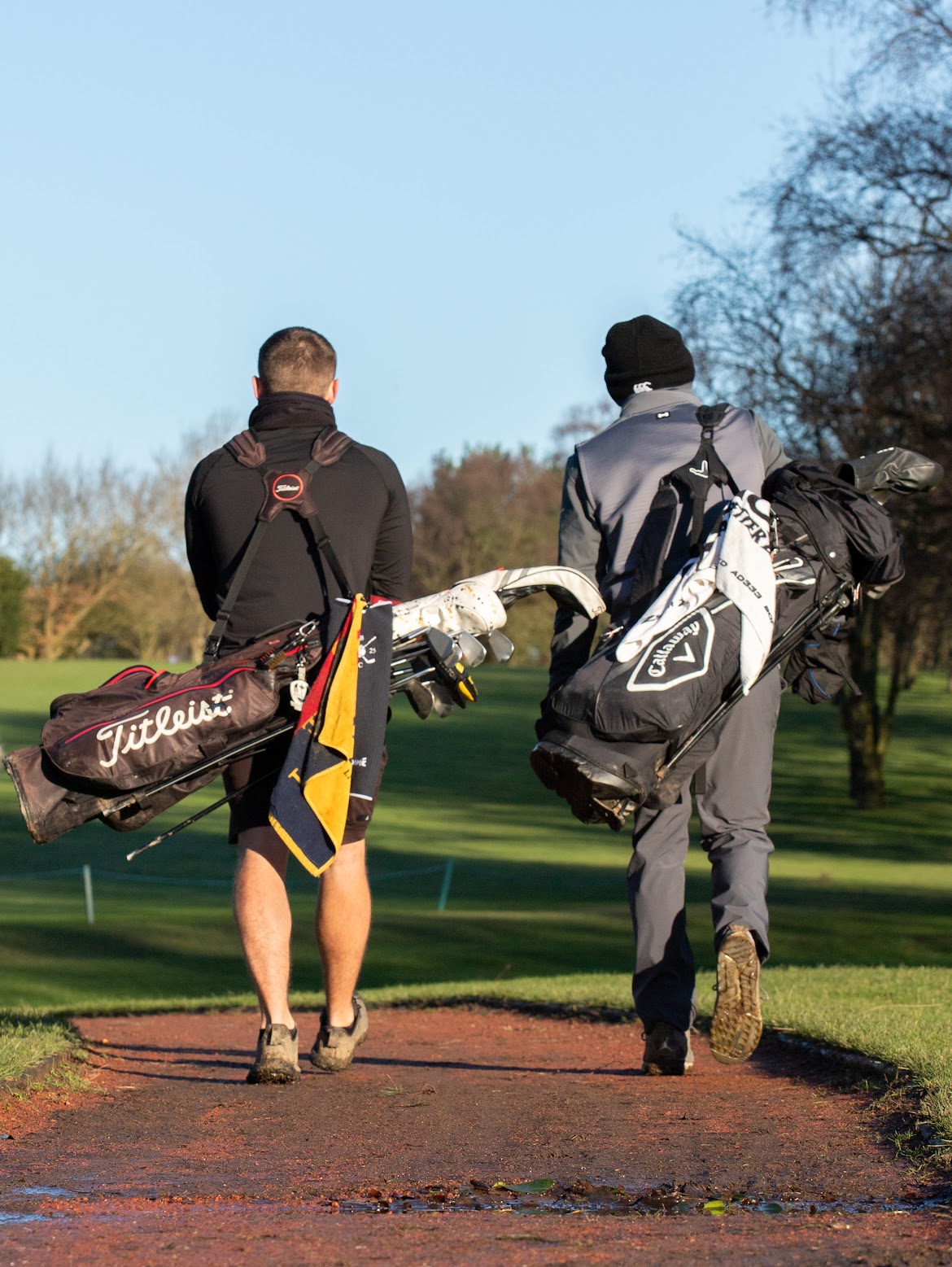
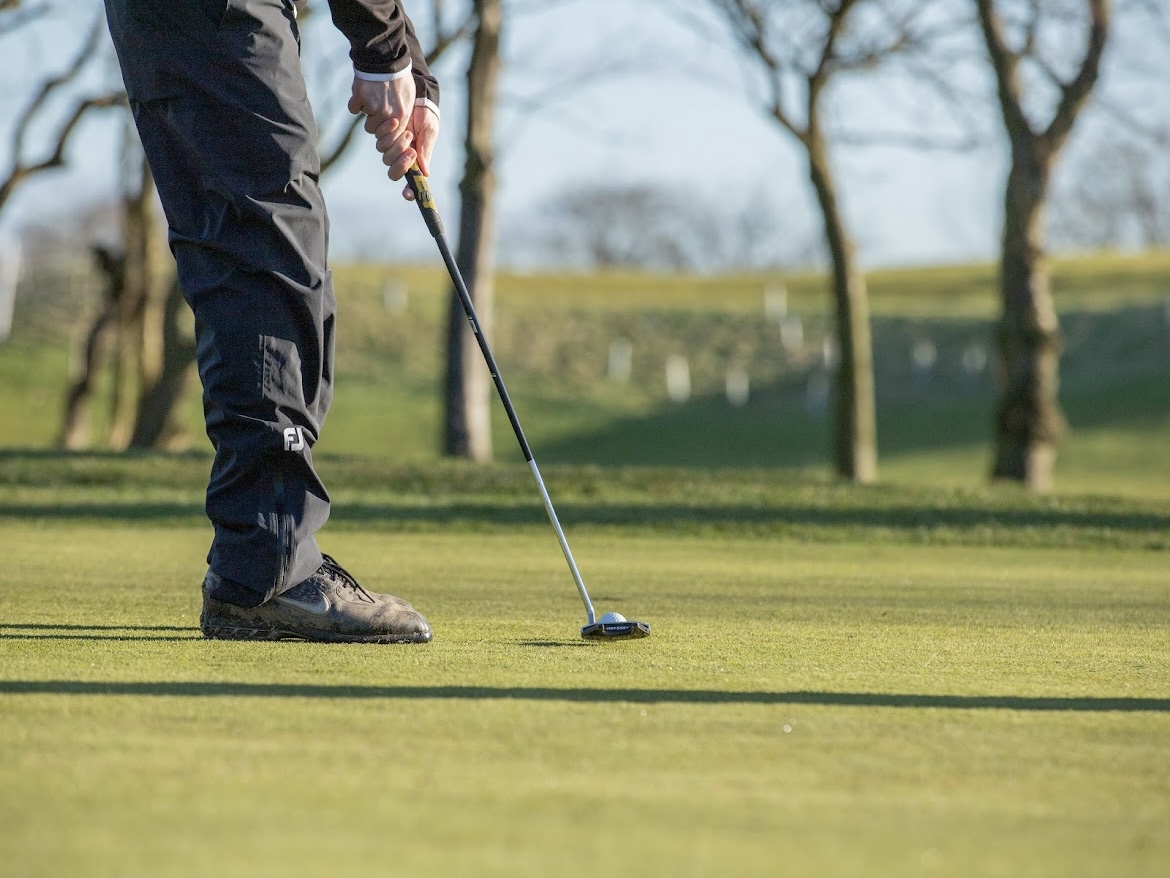
Each week I’m learning more and more about the capabilities of the camera in my phone and how I can adjust certain setting for a different creative output. Learning about shutter speeds and the burst setting today gave me some ideas for some shots I’d like to take for my final project and how this will benefit the final quality of the shots as it gives me a choice to choose from due to the shutter speed being so quickly. After doing some research a lot of sports photos use fast shutter speeds to capture split second and fast paced momments. The exposure triangle is all about finding the balance between ISO, Aperture and Shutter Speed. It takes time, practice, and patience to get comfortable with how they all work together. The best way to master this is by learning each setting first individually and I’ve been looking at each setting we’ve learnt about over the past few weeks more closely so that when I end up putting them all together it will provide a higher quality image. After looking into the shutter speed more I found that the best setting to get the best images is 1/1000 as this will allow the action shot to be frozen but in order to do this having good lighting is key in order for the image to remain crisp if it is not good lighting then the shutter speed should be lower. Although most sports photographers use a high shutter speed having a low shutter speed could also be used. So using this I could also use a slower shutter speed to create a motion blur in golf to capture the speed the players are swinging for my assignment piece.

Week 6:

Getting to learn about post photo production, colour correcting and cropping I think is an invaluable tool moving forward with this module. As much as some photos don’t always need edtiing, after playing around with a few i’d taken previously just the smallest of changes to the adjustment layers can enhance a photo completely. Sometimes in my photos I feel unintentionally I leave a lot of blank space so learning about cropping on photoshop will be extremely useful when it comes to editing my final images and getting a refresher about the rule of thirds/grids has given me something to think about in terms of variety. Photoshop although it seems a bit confusing at the start actually becomes quite easy to use once you know your way round it. Being able to delete layers quickly means for quite a quick editing process and having the original photo next to it really allowed me to see if the editing made a positive impact to the appeal and professional look of the photo.

Week 7:

Clearing up the difference between Raw images and JPEG was important today as I didn’t realize what made them so different and why only one is suitable for an online format. Taking a few practice images and playing around with the settings and the different formats over the next week I feel will benefit me when it comes to capturing the actual event for my project. A way of laying out all images taken on a contact sheet and picking out which photos I initially like and don’t, whilst choosing the ones I want to develop further. It’ll give me a clear direction on the concept for the article, its visual aesthetic and narrative to be told through the imagery. Changing the images from portrait to landscape is important as it means instead of just deleting them they can be edited into project worthy photos. I didn’t realize how using perspective crop to straighten an image would actually change the image so much. When testing it on some sample images straightening the images changes the perspective of the image and where your looking at it from.

Week 8:

When looking at close up photography and the different perspectives that can come from it it’s definitely led me to have a think about possibilities for my project. Because I will be shooting sports photos I think I need to use an actual camera rather than a phone as when taking some test shots it’s hard to really capture the fine details. Learning about the different lenses available could be of use to me as on a golf course I don’t really want to be too close to the action as shutter sounds etc might put the players off so shooting from a far with the same quality. Over the next few weeks its time to create a plan and a to do list that shows my progression through this module. It’ll give me an incentive to keep up to date and on track with the deadlines. I’ve been completing a bit of additional research as well to add to my knowledge which gives me a greater understanding of how the best sports photographers do what they do. If I plan effectively it’ll lead to a much smoother process in creating my story and if I can improve my photos in post production editing and have them sorted it’ll just be the words I need to write.

Beyond the fairway: untold stories of competitive golfers

To many, golf is more than just a sport. It’s the four hours in the day when they can put their phones away, switch off from the troubles of normal day life and just be present in the moment. Renowned for the copious amounts of hours spent perfecting every minute detail of the golf swing, it is one of the only sports where it can be more mentally tough than physically. 

Being able to hit a golf ball is one thing, but being able to play golf is another. The ability to forget previous mistakes and that the most important shot is always the next one is what makes the best players so impressive. But beyond the scorecards are the untold stories of these players. What led them to pick up a club? What drives them to dedicate themselves to a sport of such fine margins?  How did they overcome adversity?

It’s not unusual in golf for players to have to call an abrupt end to their dreams of picking up a green jacket at Augusta or lifting The Claret Jug at The Open. So many players fall and disappear from the professional game and are forgotten about by fans quicker than they can shout fore right.

Horsforth Golf Club in Spring sunshine

Ex-US Open winner Michael Campbell couldn’t mentally deal with the pressure of success and living up to the name. That was the pinnacle of his career, but his outgoing character took a sharp decline as he said in his retirement statement, ‘nobody ever tells you how to get down.’ 

With everyone being encouraged to speak out and express their feelings and pasts in today’s society, I wanted to uncover how aspiring players balance the stresses of life with time spent playing and what their journeys have been like. I went to Horsforth Golf Club to watch one of the biggest matches in Leeds Beckett Golf’s history as the side looked to make the final of the national cup for the first time. I spoke with a few players who have untold stories about what got them to where they are now.

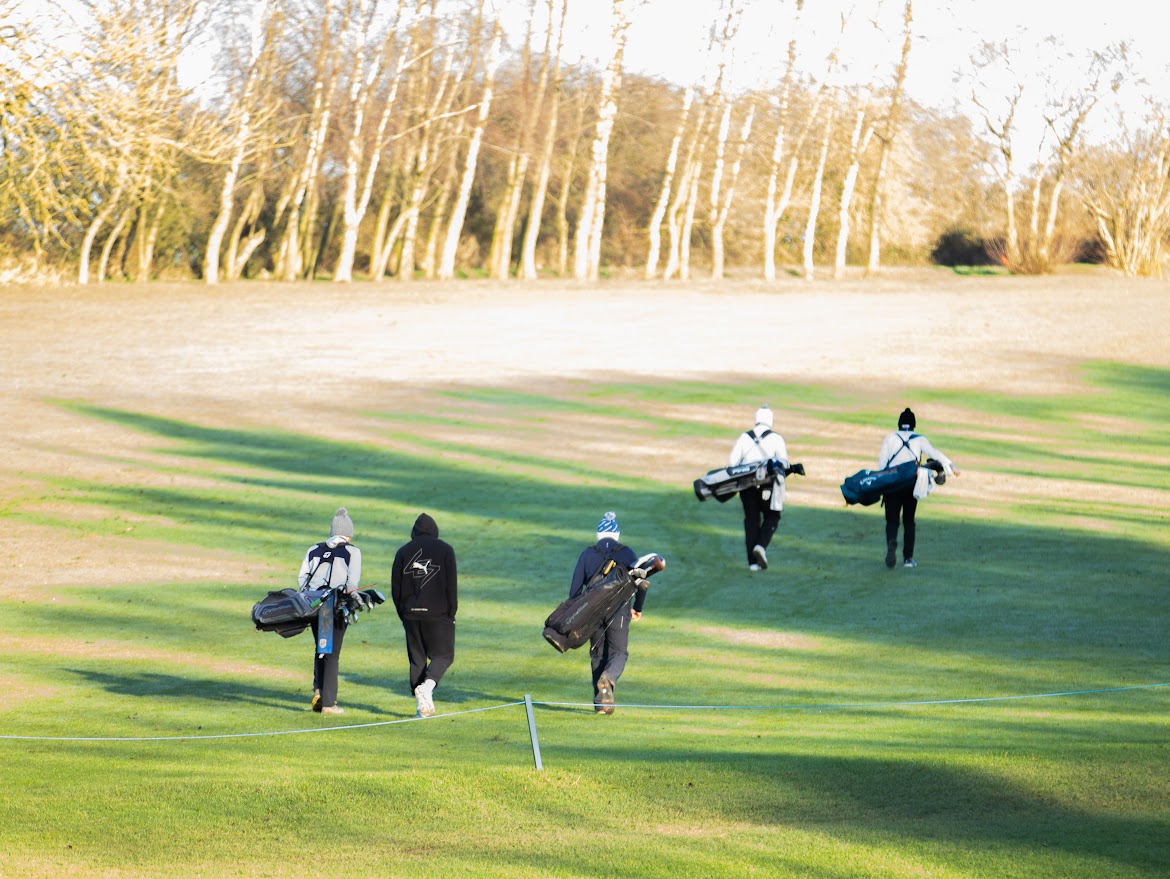
The final group heading down the 1st fairway

The Leeds Beckett first team are made up of some of the most promising players from across the country and have come to gain a degree but also further their abilities on the course. Many of the players not only compete in BUCS highest league and national competitions but also play for their home clubs’ scratch teams. 

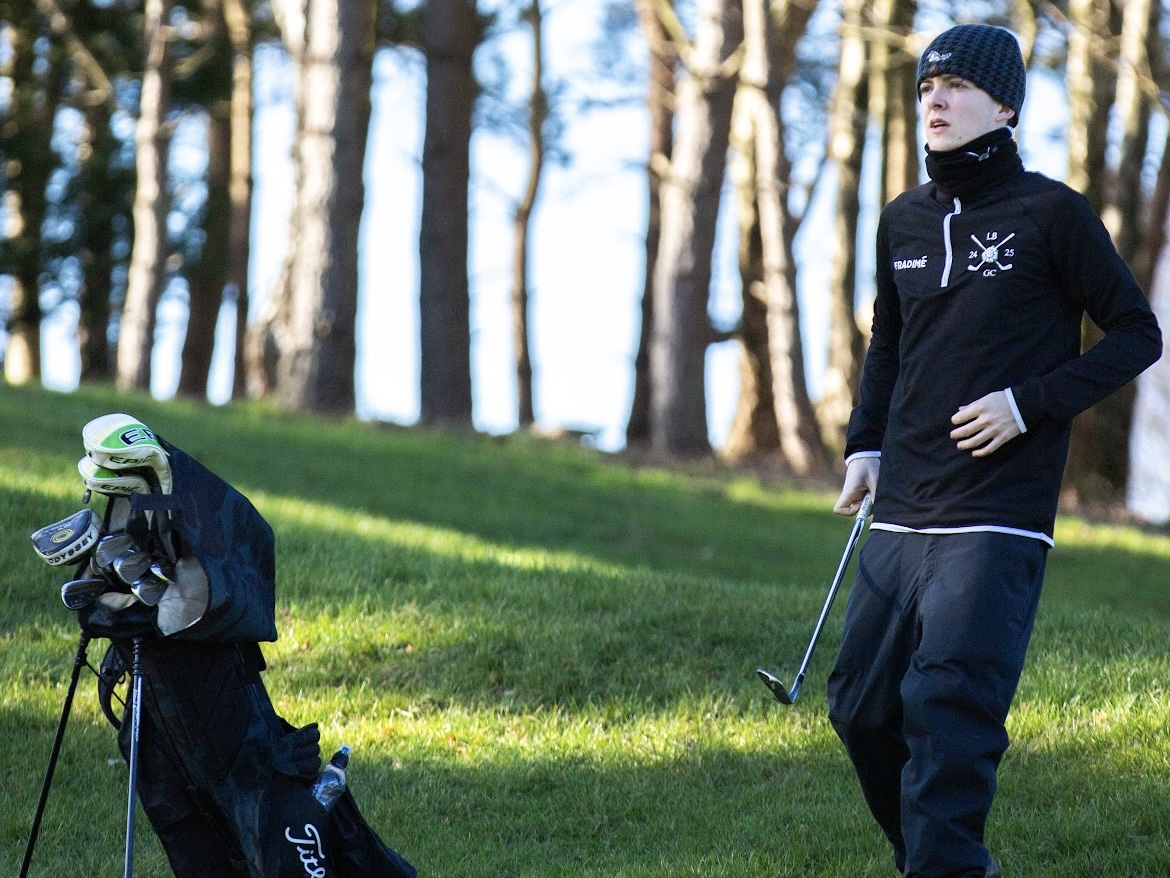
Paul McGahan, nicknamed Frenchie, is one of longest longest-serving players and has been named captain for this season. Having started playing golf at the age of five, he’s renowned across the university golf scene for his laid-back approach to the game, but is able to switch into a different person when playing competitively. “The confidence in my ability has come from an early age, I don’t feel pressure. If I go behind in a match, I let my opponent feel like he’s got the upper hand, but little do they know that coming from behind makes drives me into a different gear.”

A change of club needed for Paul as the wind started to pick up

Paul was tipped as one of France’s brightest stars as he progressed through the ranks at one of the most prestigious clubs in Europe, Le Golf National. Born just outside of Paris, it only looked like his career was going to end up in the professional game. Sponsors were flooding in, he was ranked top ten amateurs in the country, but his life completely changed just before Christmas in 2021. A tragic car accident led to the passing away of two close family members, and he was forced to move to England to live with his aunt.

He didn’t pick up a golf club for over a year and left his bag back in France as a sort of tribute to who he was before. “No words can ever describe those few months. Everything was in place for me, I almost felt destined to make it. But everything I played for was snatched away from me. The reasons I wanted to succeed were gone. The thought of hitting a shot and not seeing my family on the side of the fairway was tough,” Paul explained.

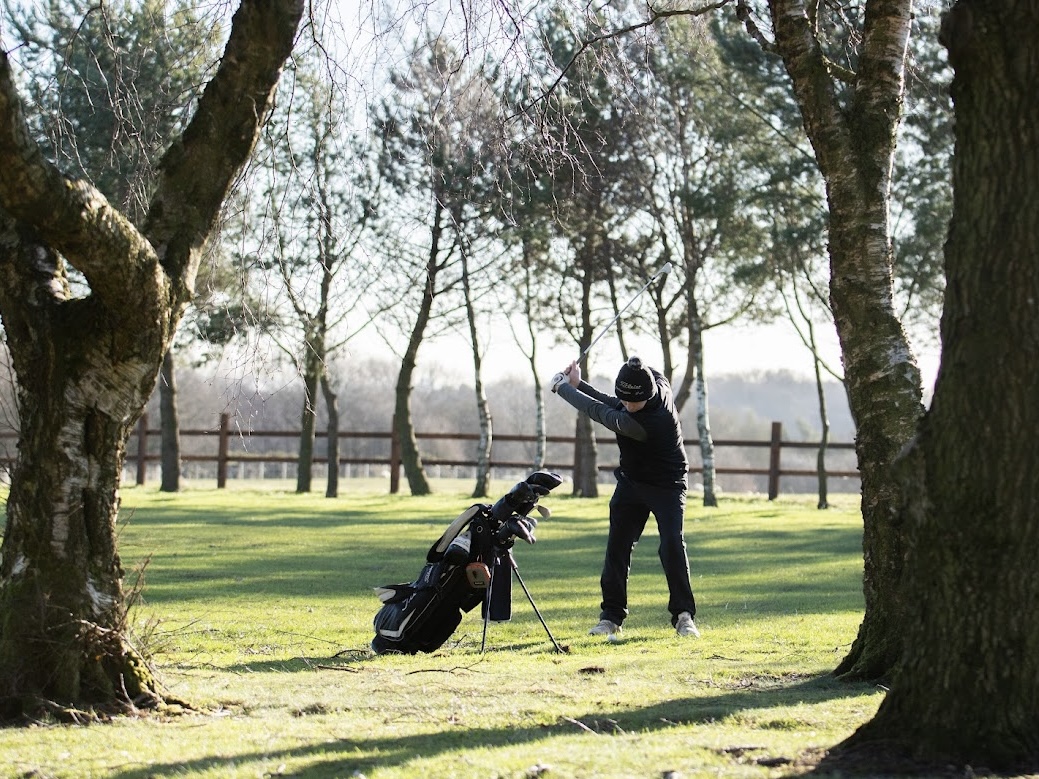
Paul with a touch of class out of the bunker on hole four

It took him over two years to come to terms with what happened and to get back to reigniting his love for golf. He borrowed a friends set of clubs and started taking himself back to the driving range. “Being at a golf club has always been my safe place, surrounded by my team and people who give up their time for me to get better every day.”

“I almost felt I owed it to my family; they were my biggest fans and they wouldn’t have wanted me to give up the thing that made us all so happy.”

“I just had to reinvent myself and enjoy the peace of a course again. Understand I’m not going to go to the level I was once tipped to be at, but back myself to get back to the best I can be. Once I lost the caring bit, I got the buzz back, and a carefree me on the course is a dangerous one.”

In his first year at Leeds Beckett, he was in and out of the team in the first few months, but the coaches soon realised his potential and he had to be trusted to pick up points. Since then, he’s been a constant in the purple and black for the past three years, picking up 30 wins in 34 games and playing a crucial part in a different role as leader for what could be the team’s most successful season to date. 

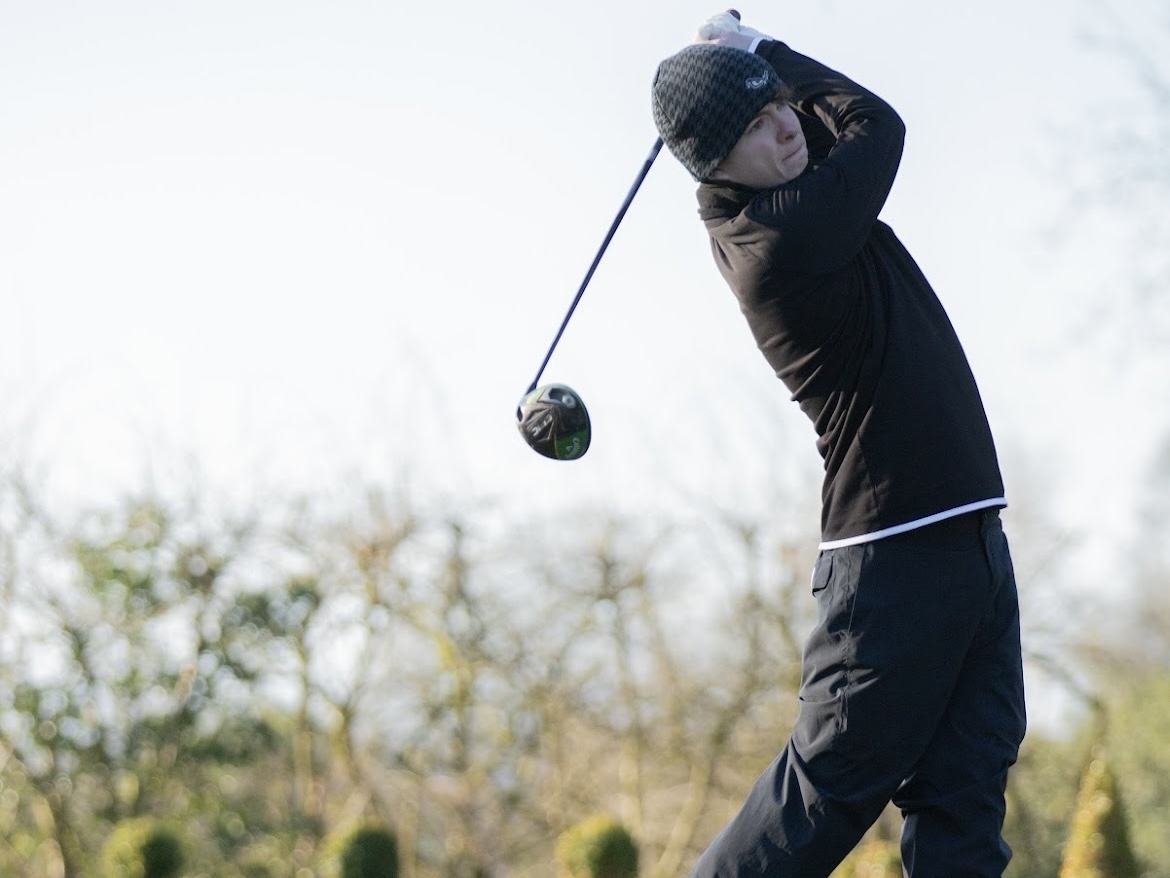
Watching Paul lead by example as he teed off, in the pure silence and serenity of the first, was impressive to say the least. A shot that never changed trajectory, almost on a rope down the middle of the fairway. As the first group got underway, the magnitude of this game could really be felt. Leeds Beckett and Liverpool had some fiercely contested matches earlier on in the season, with it one a piece on aggregate, so the chance of progressing to a final where the venue is a former Open course, Royal St George’s, wasn’t one to be passed by.

Paul nailing his driver, splitting the fairway in half

Beckett were under the cosh early in the round with their opponents starting quicker and carrying this momentum through until the turn. With the score currently 4-2 down after nine, a moment of magic by Josh Donaghey holeing out from 170 yards out, proved to be the trigger for Beckett’s comeback, as an outpouring of emotion towards his teammates echoed across the neighbouring holes. The side in purple started turning the tide back in their favour and went on a nearly perfect five-hole stretch, eventually coming out victorious in a monumental 5-1 win. 

Josh with a moment of magic making a crucial eagle from 170 yards

It has been a long season for Beckett, having travelled hundreds of miles up and down the country, leaving in the early hours of the morning through bleak winter to showcase their skills. A few shock losses earlier on in the league campaign hampered the chances of a double and took its toll on the players. The pressure was increased tenfold, and with being the favourites to win the league it meant people were looking at the side with doubts.

As much as golf is an individual game and only the player can change the outcome of their match, the team aspect is just as important. “We play for ourselves, of course, but an individual point contributes to the bigger outcome. You don’t want to be the player who makes other players’ victories meaningless.” Paul explained.

With university golf, a big difference is that mixed teams (both males and females) can compete in the same competitions, and one player from Beckett has taken to playing against the men with no issues.

Ellie Bailey joined the team this season. She was born into a golf-oriented family with all three older sisters competing at a national level. Then her father is a PGA-qualified coach who has taught some A-list celebrities and several players now on scholarships across the globe. So, it was inevitable that picking up a club was only a matter of time. “My earliest memories were on a golf course, it felt like most of my childhood was spent at St Andrews in the tropical Scottish climate it’s so renowned for! Ellie jokingly said, and it wasn’t long before, instead of people watching her siblings they wanted to watch her play.

Ellie keeping a close eye on where the ball was heading

Ellie started playing competitive golf at the age of 12, playing for her home club, Kirby Muxlow. But quickly, coaches realised she was progressing at an impressive rate, and at 16 got picked for England squads, playing on a national stage and following in her siblings’ footsteps. 

But this was the issue. Ellie loves golf, but she never loved it that much that she wanted to dedicate her life to it. The endless hours spent on the driving range, all the social events missed with friends at school, and she felt lost in her sisters’ shadows after all they’d achieved. 

“I wasn’t enjoying it at all. I was a teenager, and I felt that golf was taking over my life. My dad pushed and pushed me, but the fear of disappointing him meant I never said how I truly felt. People knew me for my sisters, and it was like no one recognised the work I was putting in but thought the success I was having had just been handed to me.”

Ellie explained the turning point four years ago: ‘I broke my arm falling off the monkey bars at the park, and don’t get me wrong, it was the most painful thing, but I couldn’t help but be relieved it gave me a break from the game.”

A year later, Ellie was able to swing a club fully again, pain-free, but it wasn’t without hours of rehab and physio on it. However, one bad competition and a harsh talking to from her dad were just too much. “I couldn’t do it anymore, I snapped. I had all intentions of never picking up a golf club ever again. I was sick of the game and had no love for it anymore.”

Coming to university, Ellie felt she needed to be part of a society to get the best experience possible. At first, there was a real reluctance to start playing again due to the overriding emotions a tee box brings back. But the golf was never the issue, it was the playing with pressure that was.

“I decided to go to trials with a sort of what have I got to lose attitude. The biggest pressure was meeting new people and fitting into a tight-knit group. I was the only girl, but I let my abilities do the talking, and quickly I felt extremely comfortable with everyone. I think the fact I beat a few of them helped!”

An up and down from Ellie with a delicate chip to take her match back to all square

Apart from the recurring injury issue with her arm, Ellie has had an almost faultless season with only one loss so far. “I lost my first match, and I thought am I cut out for this level, but I came back with something to prove the week after and haven’t looked back since.”

“Being able to play with freedom is what I’ve always wanted, and I feel very grateful for the team to make me feel like a key part, but in a positive way. Being a woman in a male-dominated environment can be hard, but being able to play in big semi-finals like today makes it worthwhile.”

Both Paul and Ellie agree that despite periods when you fall out of love with golf, there must be a reason why it always brings you back. “When it’s all you’ve known, you can forget what made you enjoy it in the first place, and sometimes it takes a bit of adversity and a break to reflect on that.”

“It can be draining, it’s a sport you can’t neglect and balancing life and work with it can be tough. But when the sun is shining, you’re focused on just where that ball is going next. Nothing else in the world seems to matter at that point, and that disconnect from normal life gives us something not many other things can.” Explained Paul and Ellie.

Sam Bernard and Jonny Underdown in discussion about what a big win it would be

Beckett finished runners up in the Northern Tier Premier and still have a piece of silverware up for grabs, but for a team with a new look this season, the exciting thing is the potential it has for the next few seasons and where the players could end up after that. 

Ellie’s and Paul’s stories highlight that unless told, people won’t know their reasoning for playing the game. But that with a good group of people and a supportive environment, it allows people to thrive again.

By Joe Parsons

Progress Updates

This week was quite a productive week in terms of progress for my final project. On Wednesday I went and started to capture some practice shots from a golf match taking place at Horsorth. I went into it trying to make sure I got a variety of shots that both are of high quality and progress the story I’m wanting to tell. I really enjoyed testing out different settings on a camera and am glad I went home to get a family members cannon camera as its a lot easier to quickly capture momments than a phone.

I found actually I took some shots I’m really pleased with and can start to work on the post production processes. I just needed to remember about taking shots in landscape rather than portrait so I’m going to have to back and crop some of them to fit the online format.

When I was looking at the best examples of sports photography they capture momments from all types of areas and distances rather than just straight on down the barrel. Perspective enhances images so I think there’s a real mix.

To do in the next week: 1) Go through and delete images I’m not using 2) Start using photoshop to start editing and creating photos that are ready 3) Start putting them in an order to how I want my piece to flow.

I think once I’ve finalised my 8-12 pictures I can start adding the text and my interviews to them meaning I’m on track for the deadline of the 6th.

Progress Update 2

This week has been a positive week in terms of progress. I’ve decided on the 8-12 pictures I think I’m going to use for my piece and have started adding text to the body of it. I’m about 500 words in and feeling positive about the directions its heading. I was a bit worried about how it would come together as a story before but once I started writing I quite like the flow of it and feel my photos do fit in well and add to the text.

Before next week my main focus is going to finish 1000 words off and then focus on post production of my photos and a bit of colour correction as feel like the brightness of them could be brought down a little bit.

Progress Update 3

So far week 3 has been most productive. I’ve finished writing 1500 words of my article with the introduction and first main interview done. I’ve started to place the pictures in order of where they’re going to be placed within the story. One thing I’m a bit dissapointed with is the amount of pictures for each interviewee I got as I think the ones I got for Paul had more choice than the ones I had for Ellie but I’m really happy with the quality of all of them.

I also need to start writing up some captions for my images that help progress the story as when looking through examples of good sports articles alongside images on sky sports and bbc etc they all do this really well.

Trying to shift my focus between photojournalism and journalism project has been a challenge as there’s so much going on but I focussed on this piece this week and feel its been productive.

I genuinely think my photographs would be publishable at a good company and considering I wasn’t familiar with camera before I picked one up and started playing around until I got the best outcome I’m pleased.

I’ve also added a feature image that links well with the title and that’s one thing I’m brain storming about how to end as i’ve got the start of it.

In the next week or so I’m aiming to upload all my finished photos and write up the last few hundred words so I can read back through and just make sure I’m finally happy with it.

Week 5 – Shutter speed (and ISO)

For the first picture I took a picture of Ellis in action with minimal blur. Taking this photo in burst mode meant I got 9 pictures of the movement to choose from. This frame froze the moment and came out pretty crisp despite the quite face paced movement of Ellis on the swing. We use a fast shutter for fast action and sports shots where we want to see all the details in sharp focus. With a fast shutter, the camera might struggle to properly expose the scene even with a fully open aperture. If this is the case then the only thing you can do is increase the ISO. The aim should still be to use the lowest ISO setting you can get away with.

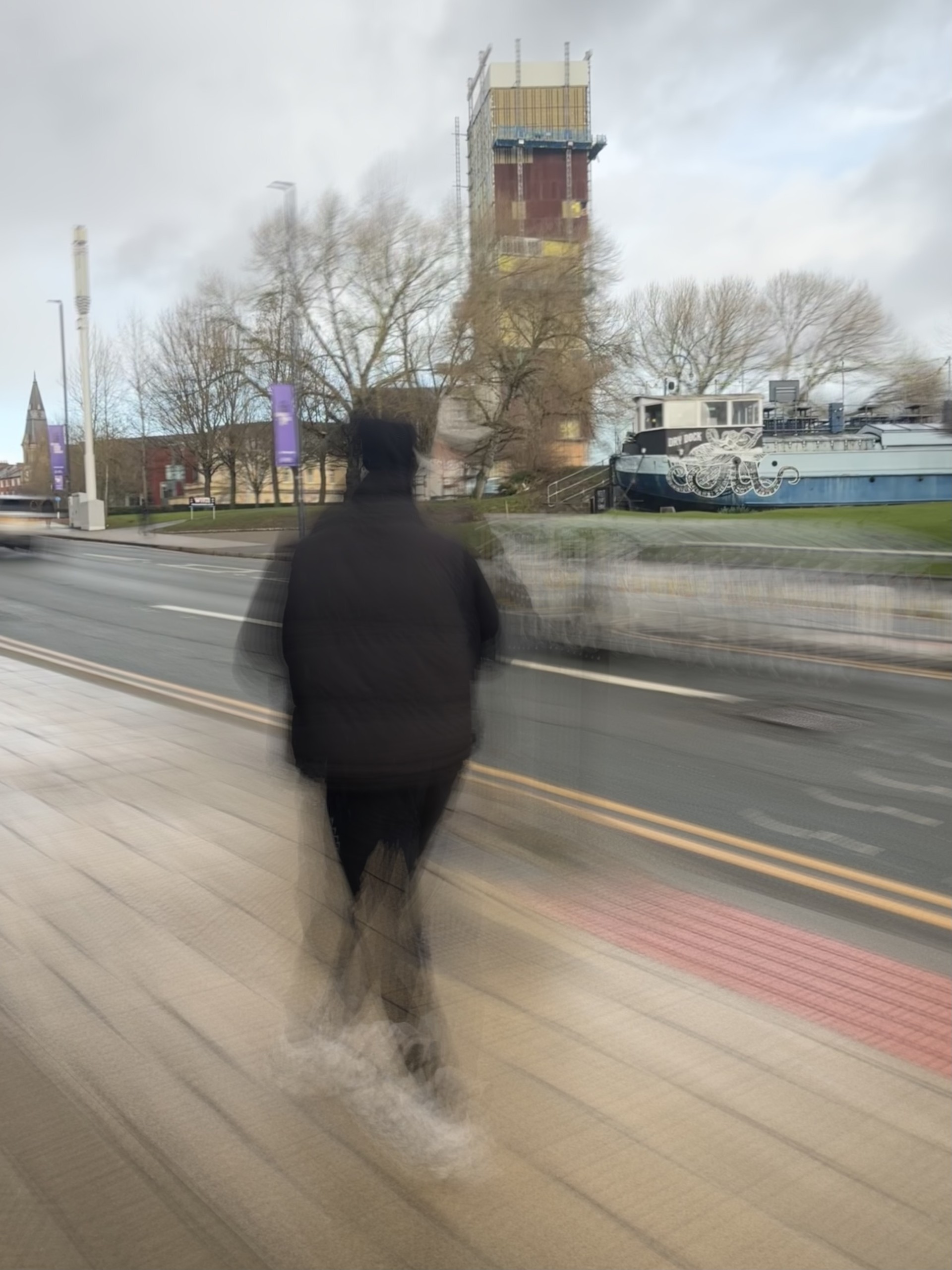
The live photo effect had a option to change it to long exposure and this is the result. A perfect picture using this affect needs a balanced shutter speed, aperture, and ISO settings as well as a steady hand (usually a tripod is used) to avoid added unnecessary movement. The use of slow shutter speed allows for more movement in the photo as shown by me walking and the still buildings in the background and using a slow shutter speed speed to sharply capture the stationary elements of images while blurring, smearing, or obscuring the moving elements is becoming more popular. The intent is to create a photo that somehow shows the effect of passing time and I think I’ve captured that.

If I were to take action shots of players playing golf the higher the shutter speed the better the image may look as I could capture the ball in shot as well as the player. But also a slow shutter speed could allow me to have other players in action blurred in the background whilst the main subject is still.

Extra Research:

Shutter speeds are measured in fractions of a second and seconds. 1/250, 1/60, 1/8, etc. The faster the shutter speed, the less time light has to get in. The slower the shutter speed, the more time light has to get in.

Just like aperture, shutter speed does affect the amount of light coming in your camera. However, shutter speed also controls how your camera captures motion. Shooting with fast shutter speeds freezes motion. This is the best option when photographing busy people or any situation where things may be moving and you want to freeze the motion.

Shooting with slower shutter speeds allows more motion or movement in your photos. This means that you will get motion blur in your images. While some photos benefit from motion blur and that is the intention of the photographer for creative purposes, typically you want to avoid it in regular day to day photos.

Week 6 – Post Production Task

I have decided to use and edit these photographs as they are ones that I have taken previously and feel that can be improved upon. Post Production is an essential stage for finalizing images because it can change the quaility of an image completely. These adjustments improve the overall aesthetic, making the image more professional and visually appealing.

Before Editing
After Editing

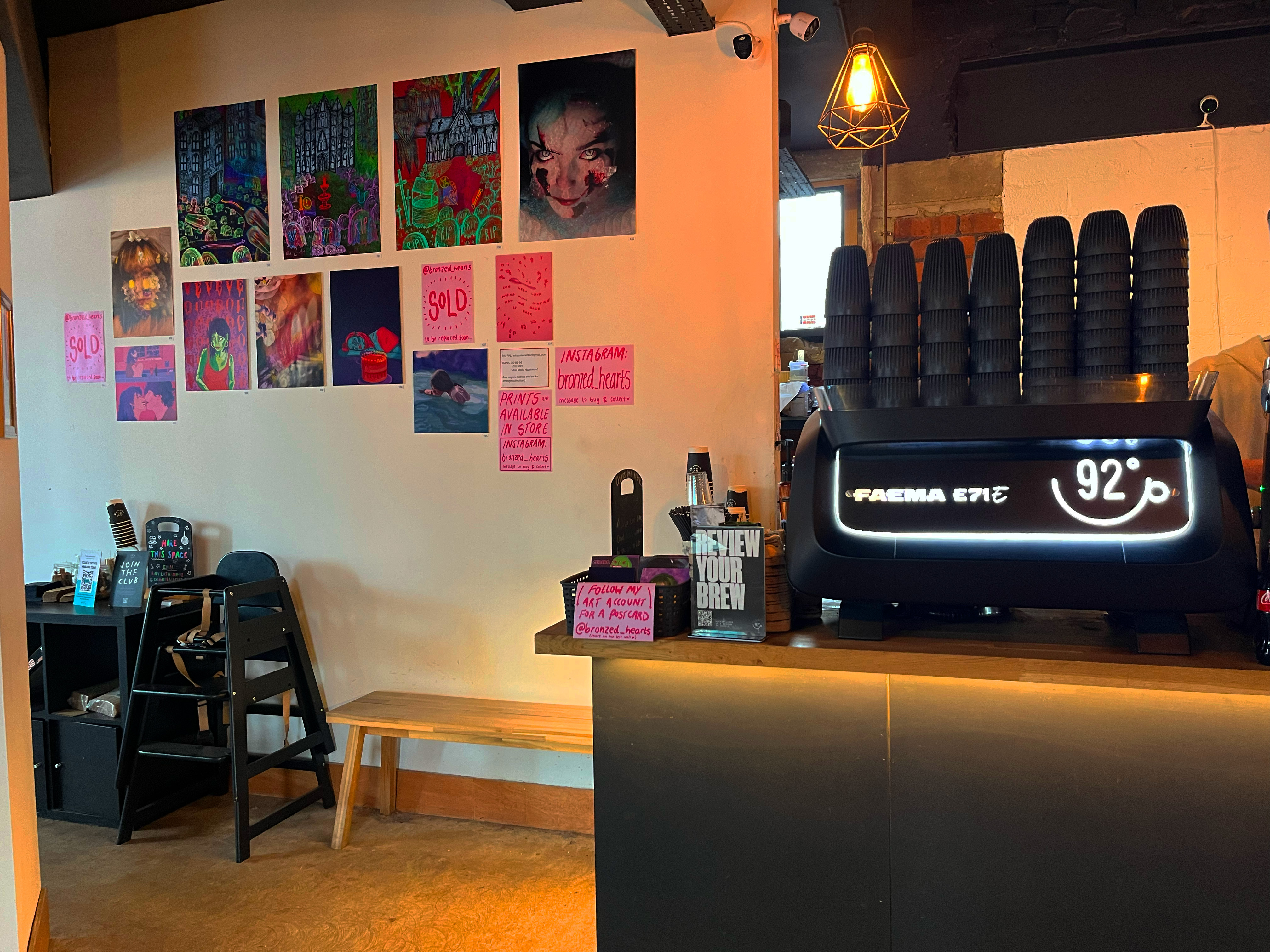
For the image above I felt it would be a good image to edit as the original just felt a bit cold and dim. If I saw a picture of the first photo online it wouldn’t feel very appealing or give me that urge to visit this coffee shop so on photoshop I decreased the brightness and increased the contrast and saturation to create a warmer feel. Doing this made the light above the machine alongside the companies logo stand out a lot more and contrast the white wall behind it. Overall it just looks like a more polished photo with the outlines of letters and numbers really evident rather than just blending in.

Before Editing
After Editing

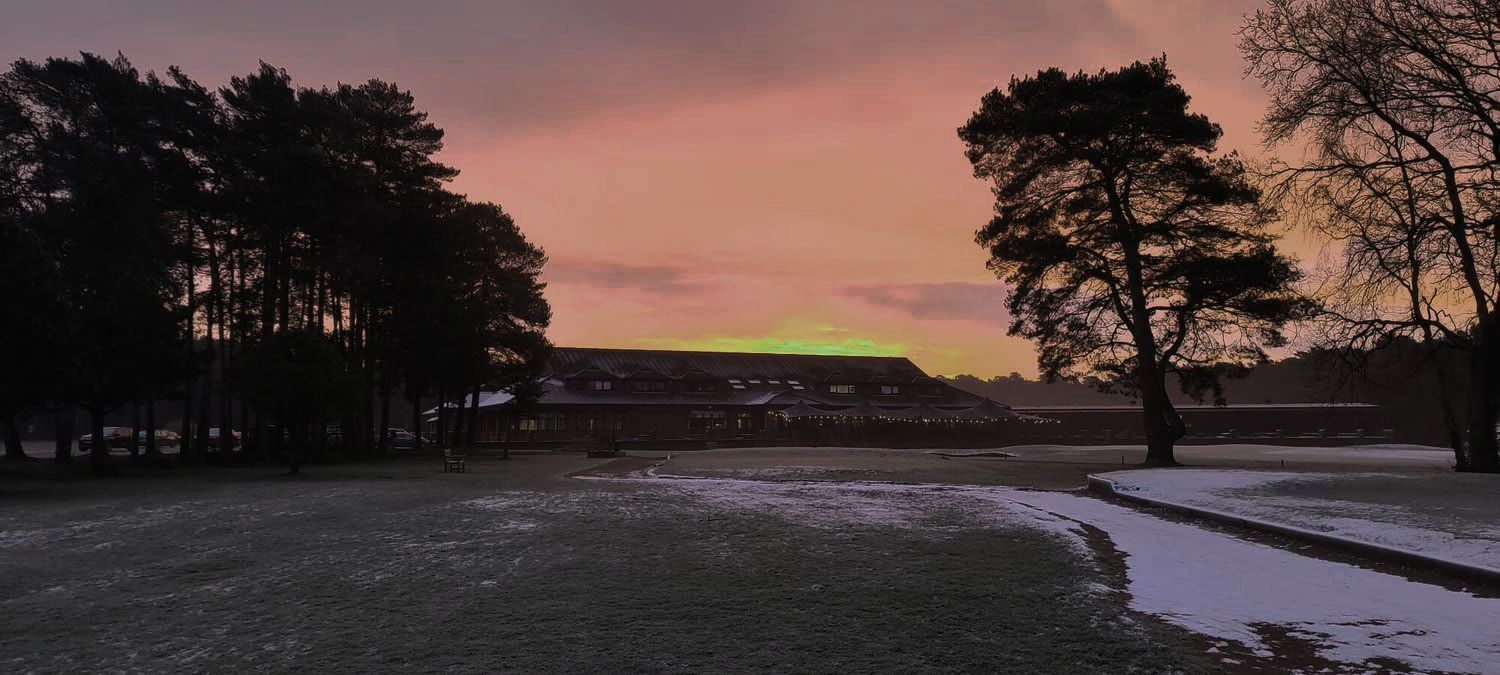
For this image I didn’t feel it needed improving as such but instead just altered to fit a narative I was trying to write in a previous piece. The original picture is of a sunrise over the golf club at home on a day where the course was shut because of the weather so it sort of juxtaposed the mood. But after playing around with the adjustment layers I decreased the saturation and brightness but increased the contrast so it almost now creates an image that looks like the sun is setting. I think it really brings the trees to the forefront of the picture and creates a cleaner looking photo.

Week 7 – Cropping and Amendments

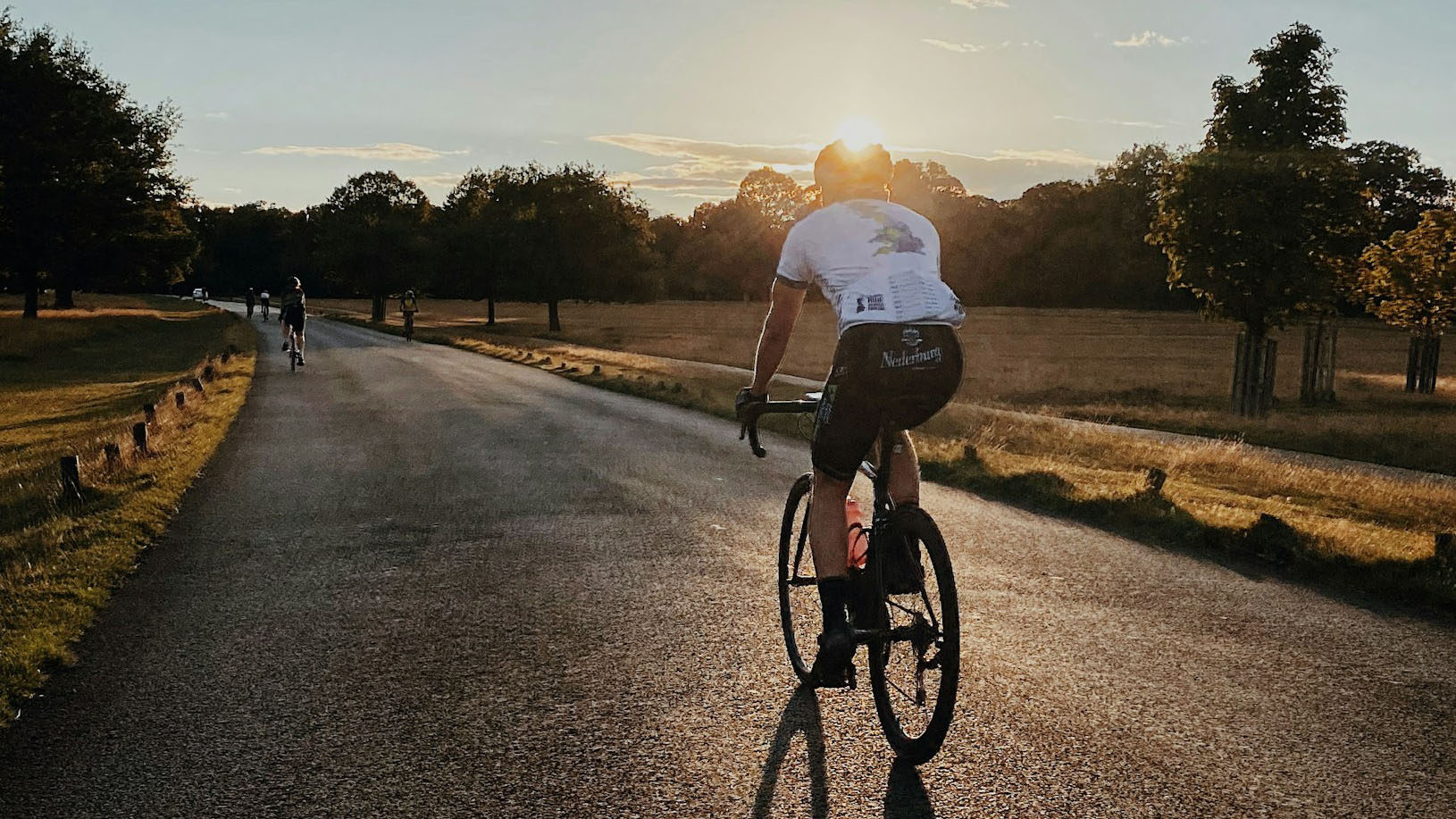
When cropping this image from portrait to landscape it was important not to crop out any of the important elements of the photo that carry the story. Using the rule of thirds the cyclist is still the main aspect of the photo whilst maintaining the feel of the background and horizon. In the portrait image it involved a lot more of the road behind the cyclist and made the cyclist feel a lot further away so cropping it to landscape I feel has improved the image.

For this image using perspective crop I straightened the image to take some of the uneven ceiling of the subway out of the picture as I just felt it was a lot of empty space that didn’t really ad much to the picture. This was also the case for the floor where the main building of the subway should be the focus.

Week 4 Task – F Stop

Picture 2 – F7.1
Picture 3 – F16.1

During this task I tried to find a location where there was good lighting and a background that could really show off the difference in the F-Stop images. When getting the first photo the F-Stop was adjusted to F1.6 so more light was coming in but you can see Ellis is really the focus but looks more like he’s been photoshopped in there. With the background being more a blur than in focus it shows how the depth of field is changed.

The second photo was a mid F- Stop at 7.1 the picture was definitely becoming clearer but not completely in focus and crisp. It starts to bring the background more into the image and isn’t so much in contrast to Ellis but rather adds to the image. On a phone the aperture is fixed at around f/2.  But because the phone sensor is so small, phones still have quite a deep depth of field.

With the depth of field in the last image being very deep and the aperture very small it begins to bring the full image into full focus. Because of the F-Stop being so high less light is let in definitely results in a clearer picture than the lowest F-point but I think a median between mid-high aperture would create the clearest photo.

Extra Task

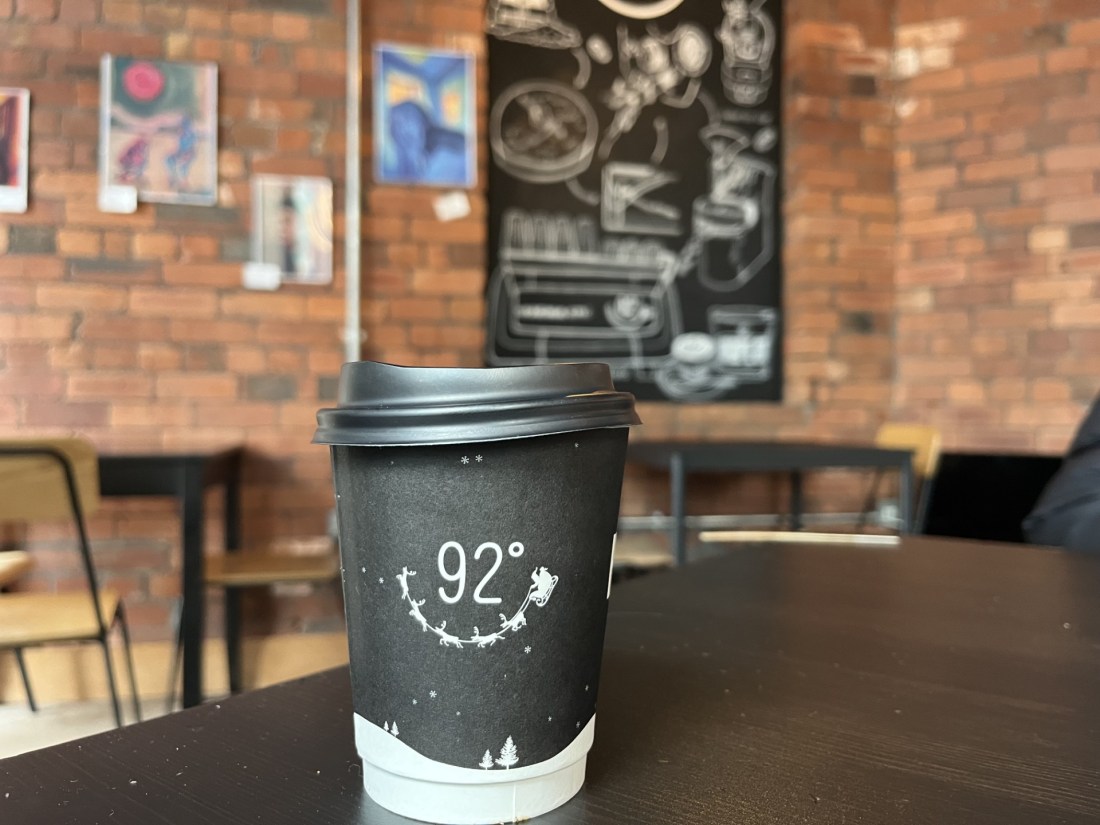
For this extra credit task, I had to try and take a photo where the object (coffee cup) was the focus and the background was blurred and then do the opposite where the background is the focus of the picture. For the first picture I used a long depth of field and smaller aperture (a higher F-number). For the second shot I used a shallow depth of field and larger aperture.

Independent coffee shops on the rise: 92 Degrees opens 4th cafe in Leeds

Quality beans and expert baristas lead to a perfect coffee

Having had success at three previous locations 92 degrees has recently opened a new cafe on Call Lane.

With a coffee to start the day a must in most people lives, on every corner in Leeds you’ll find a cafe to visit. Cooperate chains such as Cafe Nero and Starbucks bring in a lot of trade just for their reputation but indepent coffee shops are becoming more and more prominant on the high street.

92 degrees opened their first cafe on Claypit Lane in 2020 in a prime location opposite the Leeds Beckett University campus. With it proving to be a popular choice the founders decided to expand across the city and now have multiple locations thriving due to their quality of coffee and the experience they provide their customers.

A cozy ambience created by the warm lighting of Cafe 92
As soon as you enter the cafe you get a warm welcome at the front

Tom Holmes, a barista in their new opening said: “we put people first, always. From partnering with local businesses to working with our brilliant suppliers to showcasing local talent in all of our shops through music, art and fun.

According to Public Sector Catering, new research shows 86.3% of the city’s 584 coffee shops are independent which is a positive indication personally run buisneses are being supported and aren’t at risk of being overpowered.

With a high quality coffee, a welcoming atmosphere and a place for all to enjoy. 92 degrees will be hoping to emulate their succeeses in one of the buisiest spots in the city.

https://www.publicsectorcatering.co.uk/news/independent-coffee-shop-scene-thriving-leeds-according-survey#:~:text=New%20research%20has%20revealed%20the,city’s%20584%20coffee%20shops%20independent.