Leeds infrastructure has just received a much welcome boost after launch of ‘Beryl Bikes’ across the city.
The company, based in Poole, offers electric bike stations that are available for the public to rent, they are active in over 20 cities across the country and are now available for Leeds commuters as a cheaper, greener alternative to other public transports.
Customers simply have to download an app, create an account and pick a payment plan, including weekly passes, or simply pay as you go for 10p a minute. Then they are free to ride for as long as the bike is charged, and must return it to any beryl station once finished.
Early feedback on the bikes is extremely positive, with the company already being in talks with expanding the service by adding bays as far as New Pudsey and Meanwood. There has often been criticism of Leeds’ existing public transport so the new e-bike system is sure to be welcome edition in West Yorkshire.
In the 2020 lockdowns, one of the world’s oldest games saw a massive boost in players. A perfect storm arose to bring a massive influx of players to the game of chess, easy online capabilities when most people were stuck at home. A rise of chess streamers and most importantly, a massive Netflix production in ‘The Queen’s Gambit’. Chess saw record players, games and revenues heading into 2021.
The Queen’s Gambit was mutually beneficial for Chess and Netflix, detailing an underdog story about a young girl who rises to the very top of the chess world, it may have led some viewers to believe it is one of the few sports where both genders are on a level playing field. However, that is not quite the case.
Intuitively, it may seem silly to have separate men and women’s tournaments for a game as physically simple as chess. But the game has been a gendered one since its inception, and the topic of changing this is an extremely controversial one amongst the game’s elite.
The US chess federation currently classifies just 13% of players as female, with there being roughly 2x as many men’s tournaments s there are female and open. As well as this, an enlightening 2022 report commissioned the FIDE (International chess federation) uncovered that women generally play worse against men than other women, and mens’ style completely changes when playing against the opposite gender, including playing much riskier openings and taking much longer to resign. Of the top 100 ranked chess players globally, only 3 are female.
The same report gave a recommendation to FIDE to start introducing ‘soft quotas’ to open tournaments to begin to combat the lack of female representation in the game. Though the report made sure to specify that these quotas can do little to mitigate the effects of a ‘pipeline problem’, meaning there are not enough girls interested in the first place, but can go a lot of the way to changing stereotypes and discouraging girls from leaving the sport later in life. In 1990, FIDE mandated that all division 1 French clubs must bring in 1 new female player for every 8 male players. Following this, there was a dramatic increase in Elo (rating) of the Top 12 women, a closing of the gender gap in Elo for top players and a large increase in number and share of female players (Trickle Down Effect).
(Not part of image count)
This divide takes the same shape that many do, in short. Boys and girls maintain similar numbers of players up until the age of 11, from then, the number of girls starts slightly dropping off, followed by a steep decline from the age of 16. Magnus Carlsen, former world champion and a man many think to be the greatest player to ever live, was praised for speaking out on these issues back in 2011 speaking to ‘the national’ he said.
‘What I know from travelling around the world is that girls and boys are equal in enthusiasm about the game of chess at an early age, So, I think the gender gap happens later and, I think, that’s where chess has a lot to work on because more women than men drop out. More work needs to be done because you’re losing a lot of talented female players.”
‘Something to Prove’
After decades of denial and dismissal, in 2024, most players now acknowledge that there is a very real divide between genders, but seemingly, the debate has shifted to what causes this divide? And whether this divide is even a problem? Laila Gould is an up-and-coming female player competing in the Bradford chess scene. She has been playing competitively since the age of 11 and has experienced firsthand many of the difficulties facing her and her peers.
‘It’s always something (the divide) that’s at least in the back of my mind when I’ve been to tournaments and mixed clubs. When I was younger, I would try to play the men as much as i could, I was really desperate to sort of, make I point I suppose. To be honest at the time i probably wasn’t even sure what point I was trying to make, i just felt insecure and like an outsider and I guess I was a little bit angry about it.’
‘I don’t play anywhere near as much as I used to these days, when I do its normally against girls, not that I’m avoiding men, but I only really play in my established group of friends and not as competitively anymore. I never really made a conscious decision to stop playing competitively, it just got lower and lower on my list of priorities. I can’t say for sure what would have kept me around too, I think maybe anyone not at the top of their clubs is pretty likely to just get disheartened in the end, and for whatever reason it wasn’t ever really girls at the top.’
In recent times the debate has generally whittled down to biological vs social reasons causing the divide. One of the main points of the latter is the complete lack of female role models in the sport. While this has been somewhat improved in the last few years with the rise of chess streamers such as Alexandra Botez, it remains true that when looking to the most famous players of the game, there is simply a lack of female talent. However, FIDE have made more of an effort to combat this recently, such as committing resources into growing chess as a spectacle and the previously mentioned quotas. This method is supported by the fact that shortly after ‘The Queens Gambit’ Premiered on Netflix, Chess.com saw the biggest spike in new female registrations than ever before.
‘I mean, I absolutely loved it as a TV show, and I’m not surprised it did so much for chess, I’m surprised how in depth it went to, like in terms of discussing openings and gambits and more technical aspects of the chess, so in that sense I liked that it didn’t patronize the audience which it would have been very easy to do given how great the drama was done in the show’
It’s important to consider the compounding effect that encouraging young girls to pick up and stick with chess can have. The more representation any aspiring young girls see, the more chance there is of those same girls growing up to represent the sport to the next generation, and the more chance the chess community has of growing the game and maybe even encouraging the next Judit Polgar.
Judit Polgar is as close to being ‘objectively’ the best as it is possible to be within any sport. As one of the first female superstars of the game. She broke the record of Robert James ‘Bobby’ Ficher when she became the youngest ever Grandmaster at the age of 15 years and 4 months. She defeated some of the best players in the game including Gary Kasparov and Magnus Carlsen. She is the only woman to ever be ranked in the international top 10 for classical chess. Reaching No.8 in July 2004. The Hungarian notoriously hates discussing gender in chess, but still acknowledges the divide, telling publication ‘032c’ in 2020 –
‘If a talented seven-year-old boy receives feedback, the coach will say things like “Wow, you’re so fantastic, you can become the next Magnus Carlsen.” But if it’s a girl, the coach will say things like, “You can become the Women’s World Champion.” That’s like saying the boy can become a Nobel Prize winner and the girl can get a PhD.’
The more controversial side of the argument falls on those who believe this split is caused simply by biological differences like in traditional sports. The aforementioned FIDE report did point to certain studies that indicate boys are comparatively better at science and math than girls are, but emphasized that these are far from conclusive results, and it would be a huge stretch to say these have a direct effect on the divide we see.
‘I’m obviously not a biologist so there may be some truth to it, but i think it’s a very pointless talking point and completely unproductive when it comes to actually fixing this divide, but to be honest i think many of the people choosing to focus on these aspects have absolutely no interest in actually fixing the issues they claim to care about. Games and sports are completely made up of biological advantages and disadvantages, so I think every chess tournament should be open, and if a woman can’t qualify or do well then, they will lose on merit, rather than just flat out not being allowed to compete, I know that tournaments and leagues are increasingly becoming open for all, but I think it will be best for the sport if gendered games don’t exist anymore.’
‘Different standards’
It may seem strange that this is an issue talked about so contentiously in the chess community, after all, lots and lots of sports have divides between the genders both in terms of athletes and audiences. However, Gould can see why many look at the sport under a microscope when it comes to global issues.
‘It makes sense to an extent, I think outsiders view chess as a game of pure intelligence and nothing else, so they think that it should be setting an example in terms of gender equality essentially because it’s so different and simple compared to other sports. But that’s not true, like most sports you need to read and prepare for your opponent. You need to learn to perform under pressure, need to know when to attack, when to defend, it’s got more in common with traditional sports than most people might think. So yes, it’s important to encourage more girls into the game from a young game, i don’t think it’s fair that chess gets held to a different standard than football or rugby for example.’
Since the 2020 boom, it’s fair to say chess popularity has regressed to the mean in terms of growth. This has led to massive losses for a lot of people who potentially had very lucrative careers on the table during the pandemic who are now facing a dwindling viewership, and a lot of streamers, commentators, analysts and content creators are no longer able to sustain themselves on chess work alone. So, even from an economic standpoint, getting more people to play and watch chess is vital to the advancement of the sport going forward. And from a business standpoint, the biggest un-tapped market, is women. So, while the moral side of the argument can, and will, continue to be debated. Closing the gender gap may be the sport’s best chance of securing its future.
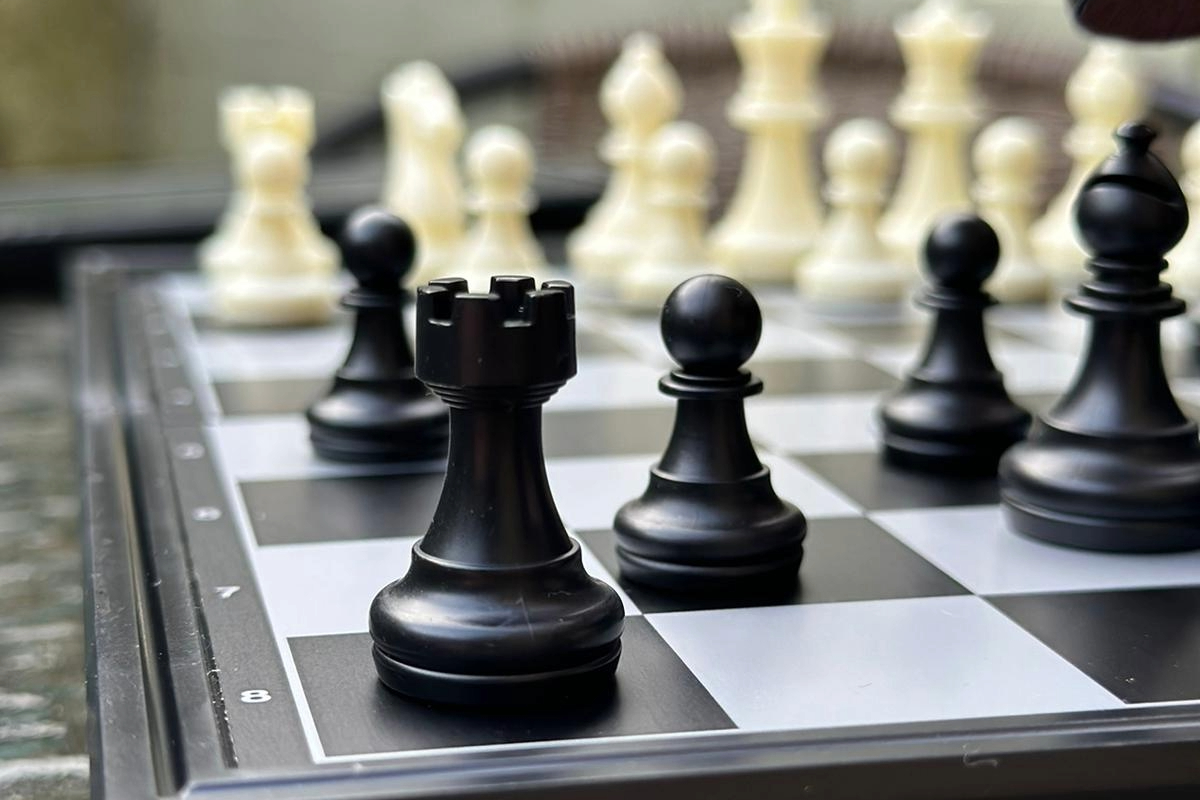
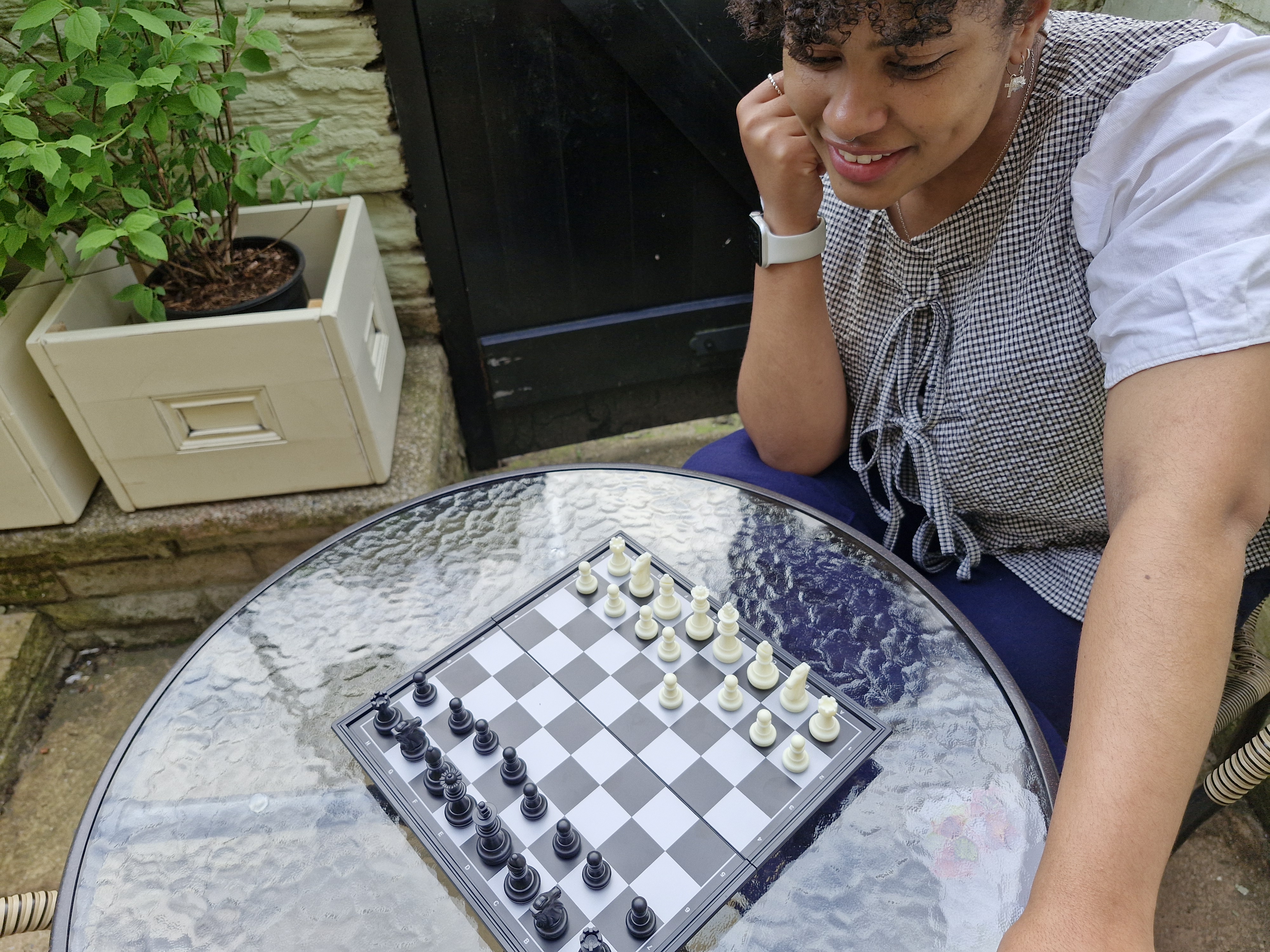
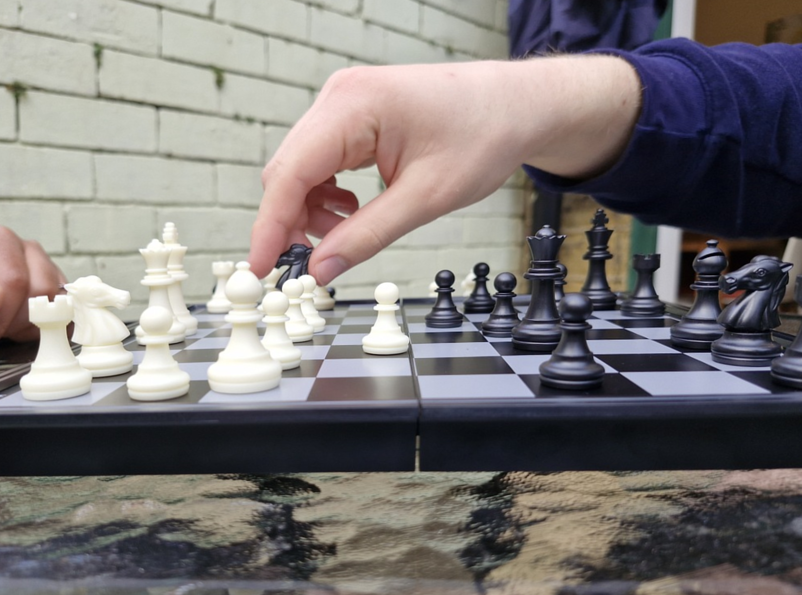
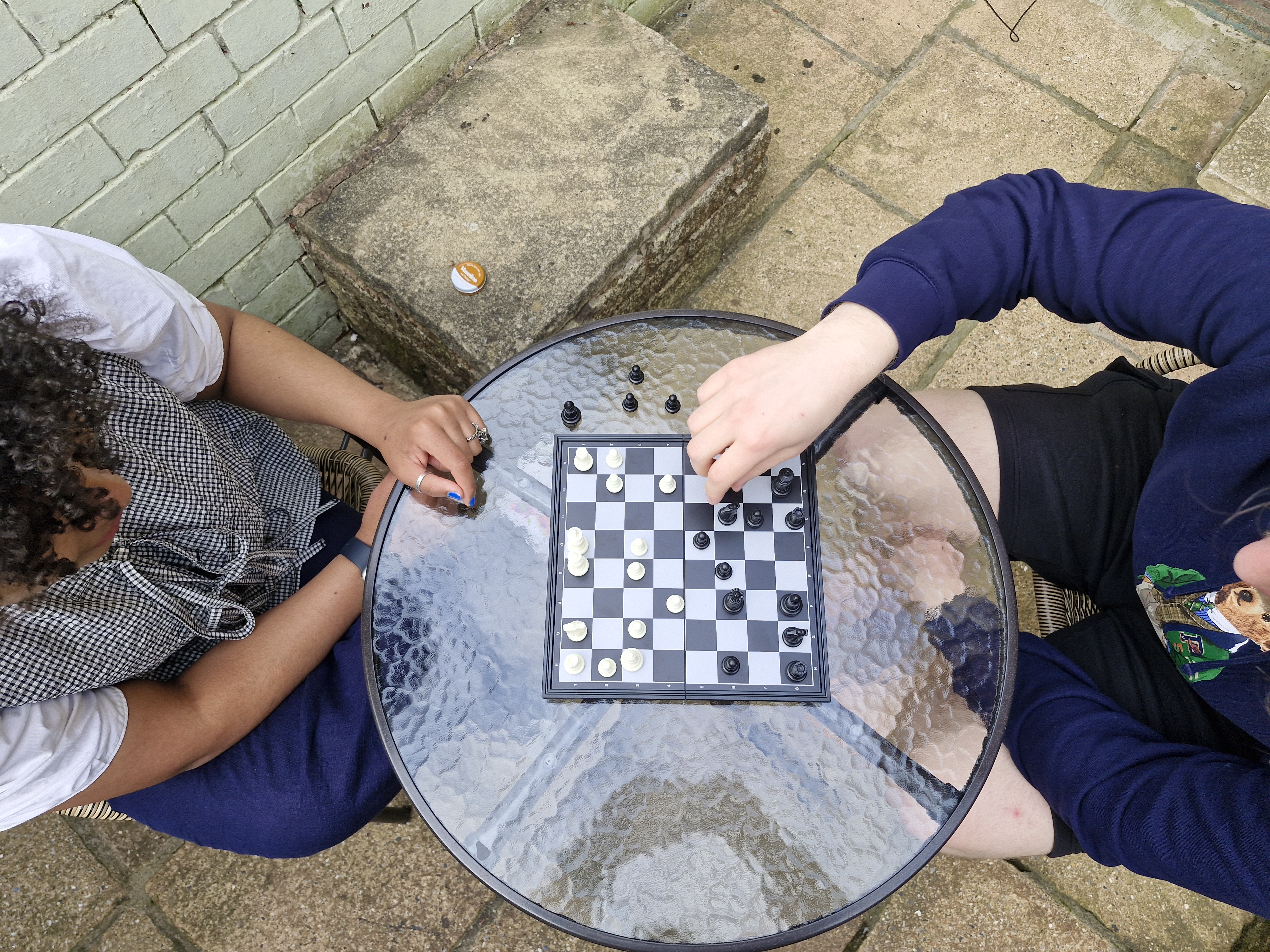
Final Update – After this is posted, i will have completed all the weekly workshop tasks (Most retrospectively) I have gathered quite a few images that i am still in the process of selecting for my final piece, but have already conducted my interviews and i am ready to start writing it up.
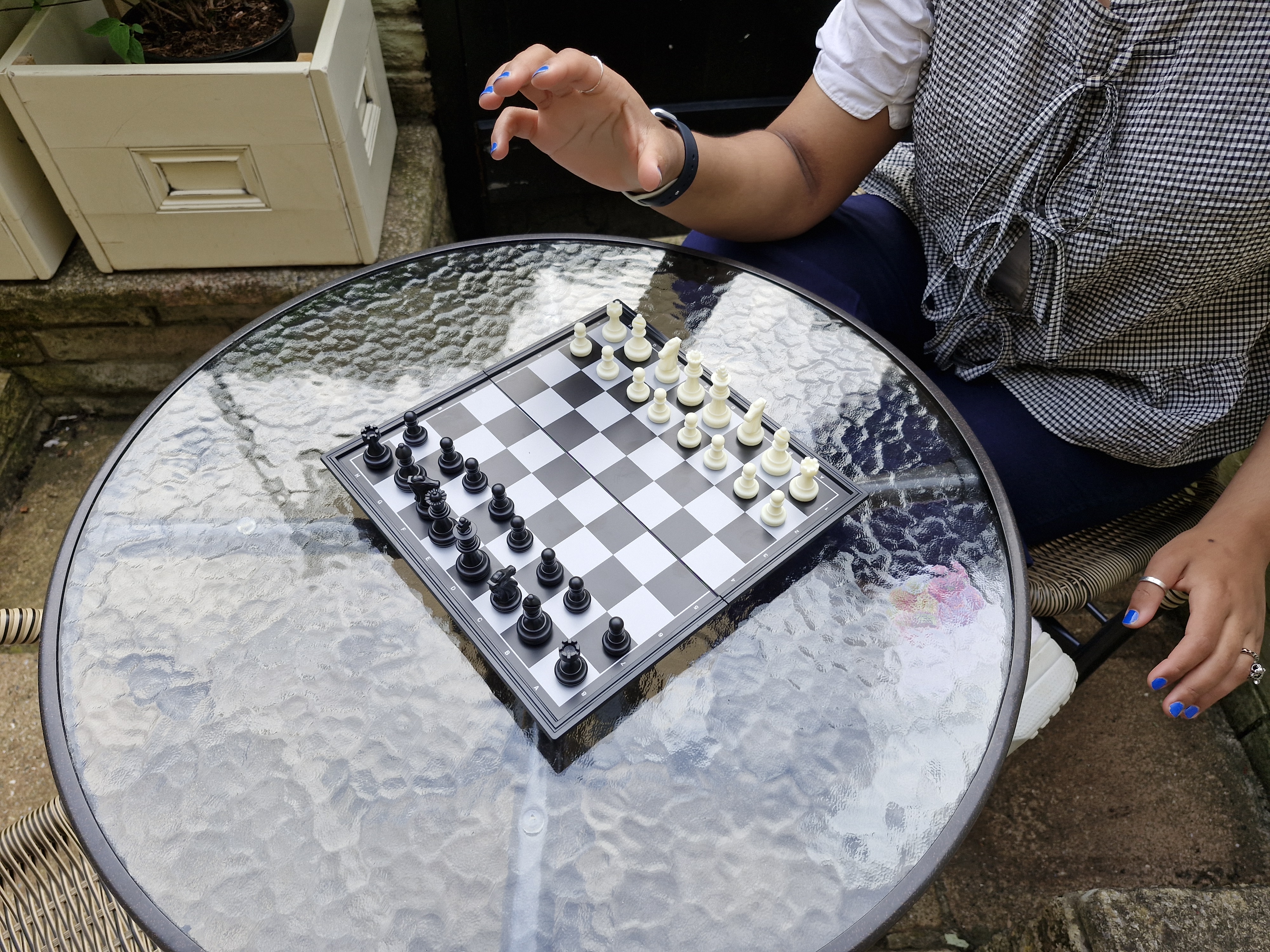
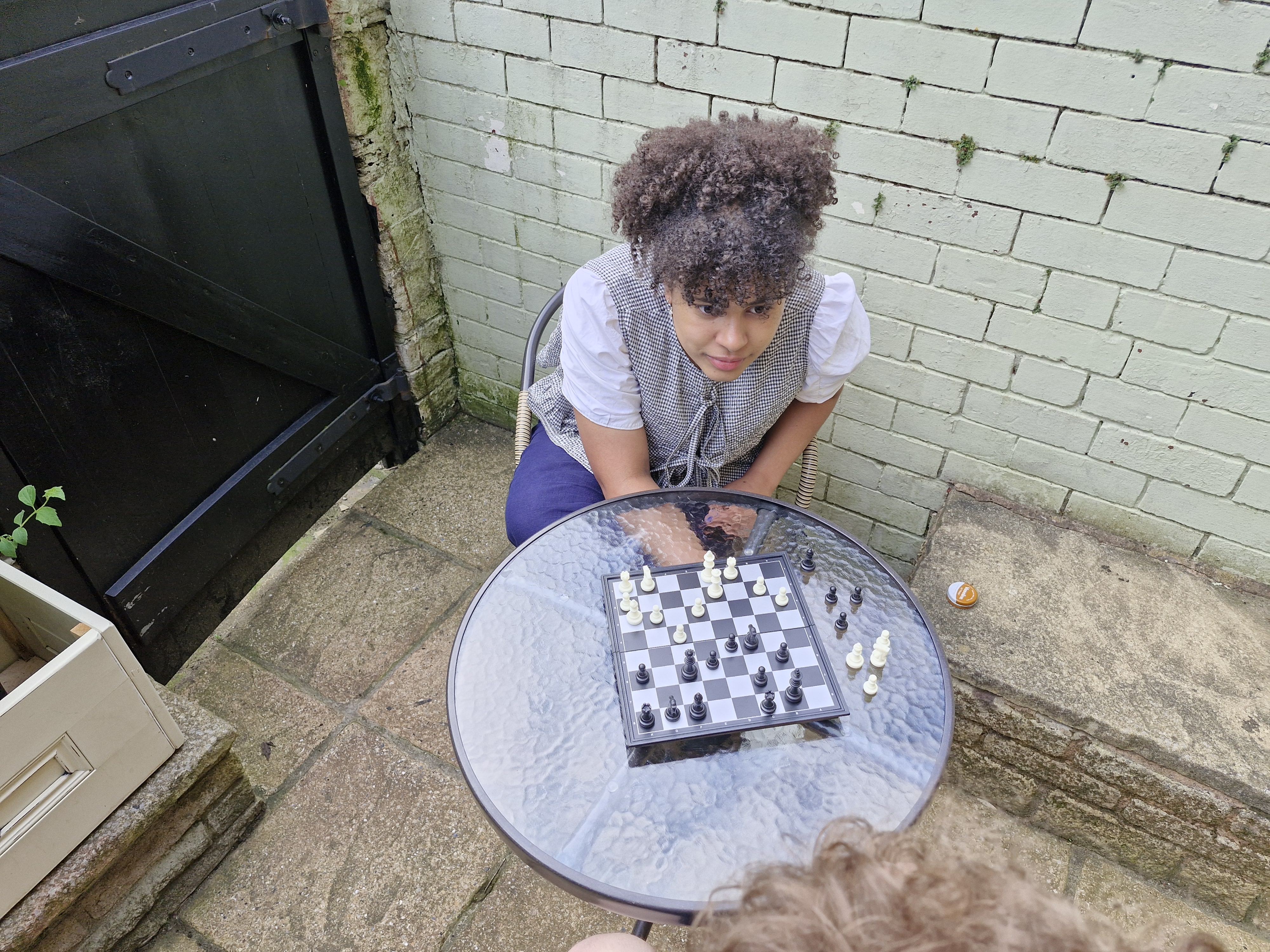
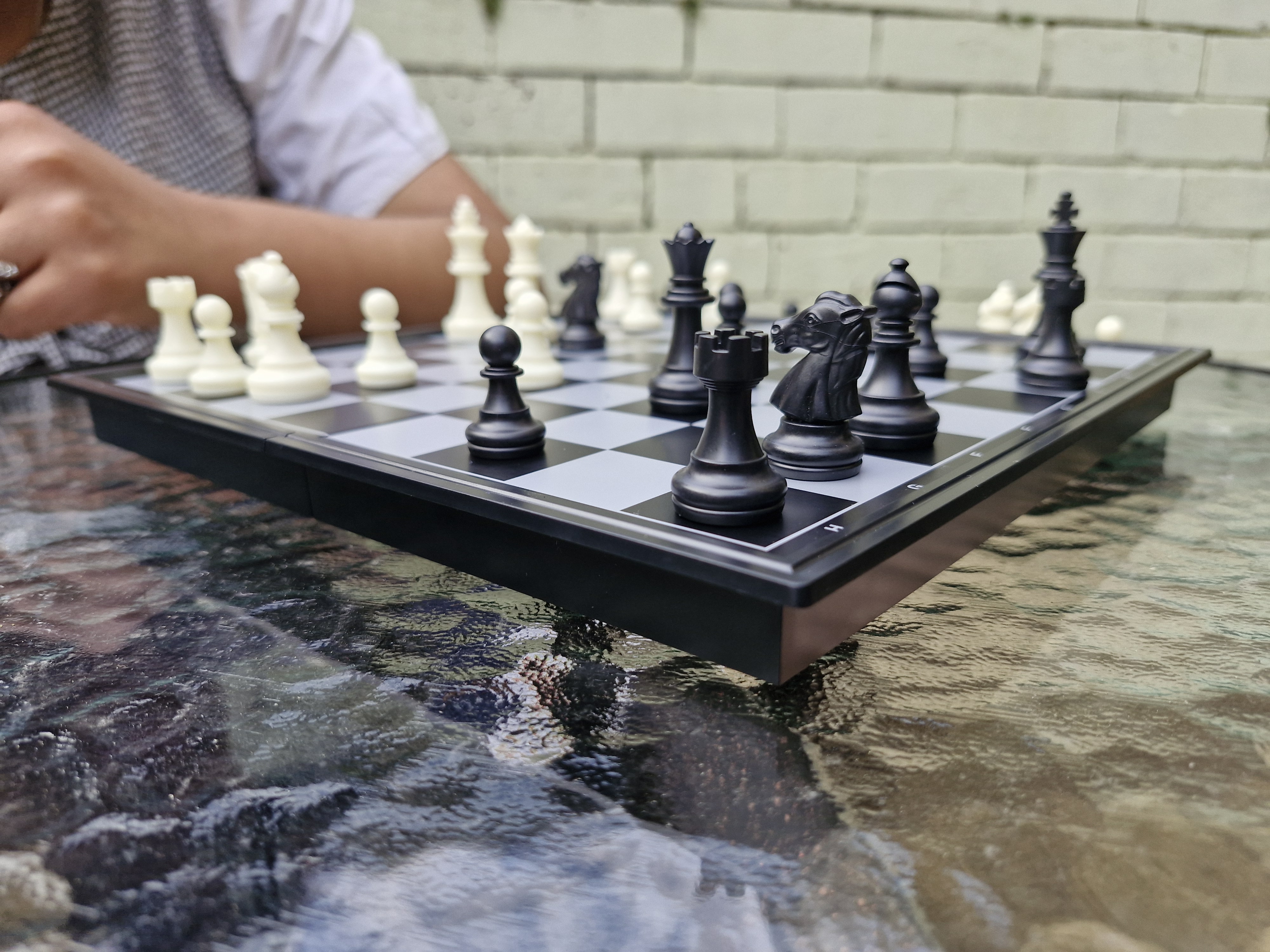
I feel that i have made a good choice choosing to do my final piece on chess as i found there were a lot of creative angles and shots i could get to include, as well as making for a quite an interesting read i hope.
After i have picked the shots for my final piece i will edit and optimize them in photoshop and finally look to upload on saturday hopefully. I will include below some of the images i am in the process of choosing from. Most would benefit from increased contrast and adjusted saturation due to being taken outside on a very bright day
The first Image here uses a much slower shutter speed compared to the latter, to create and emphasize more of the movement in the second resulting in a more dynamic image that portrays movement much clearer .
Before – Photo is too bright – subject does not stand out enoughAfter – increased colour saturation and hue to make bikes ‘pop’ more in the image Before – PImage is a bit boring and is the wrong shape needed for my pieceAfter – image is more vibrant after messing around with hues and is the correct size for final project







 Photographic Journalism
You must be logged in to post a comment.