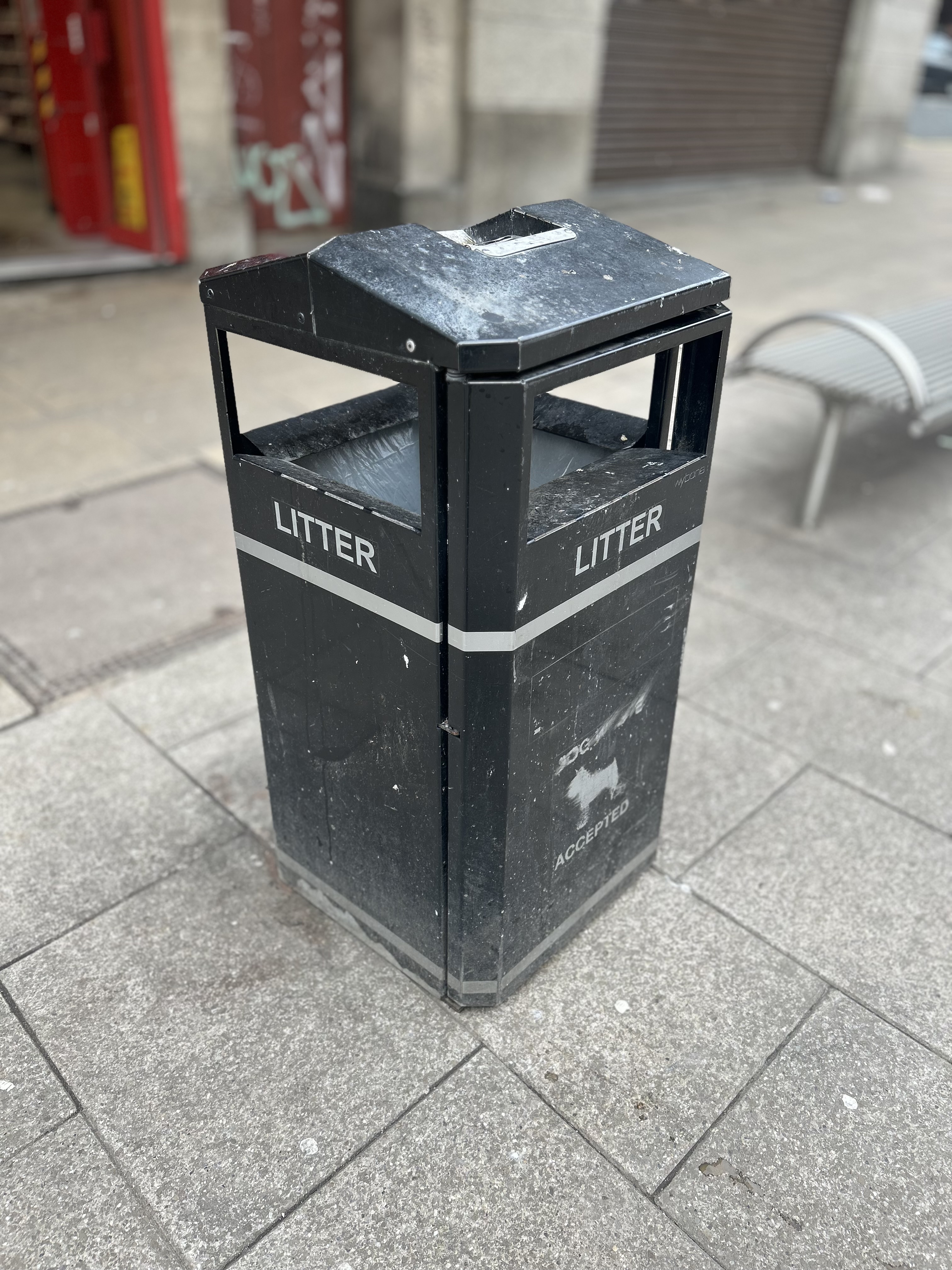
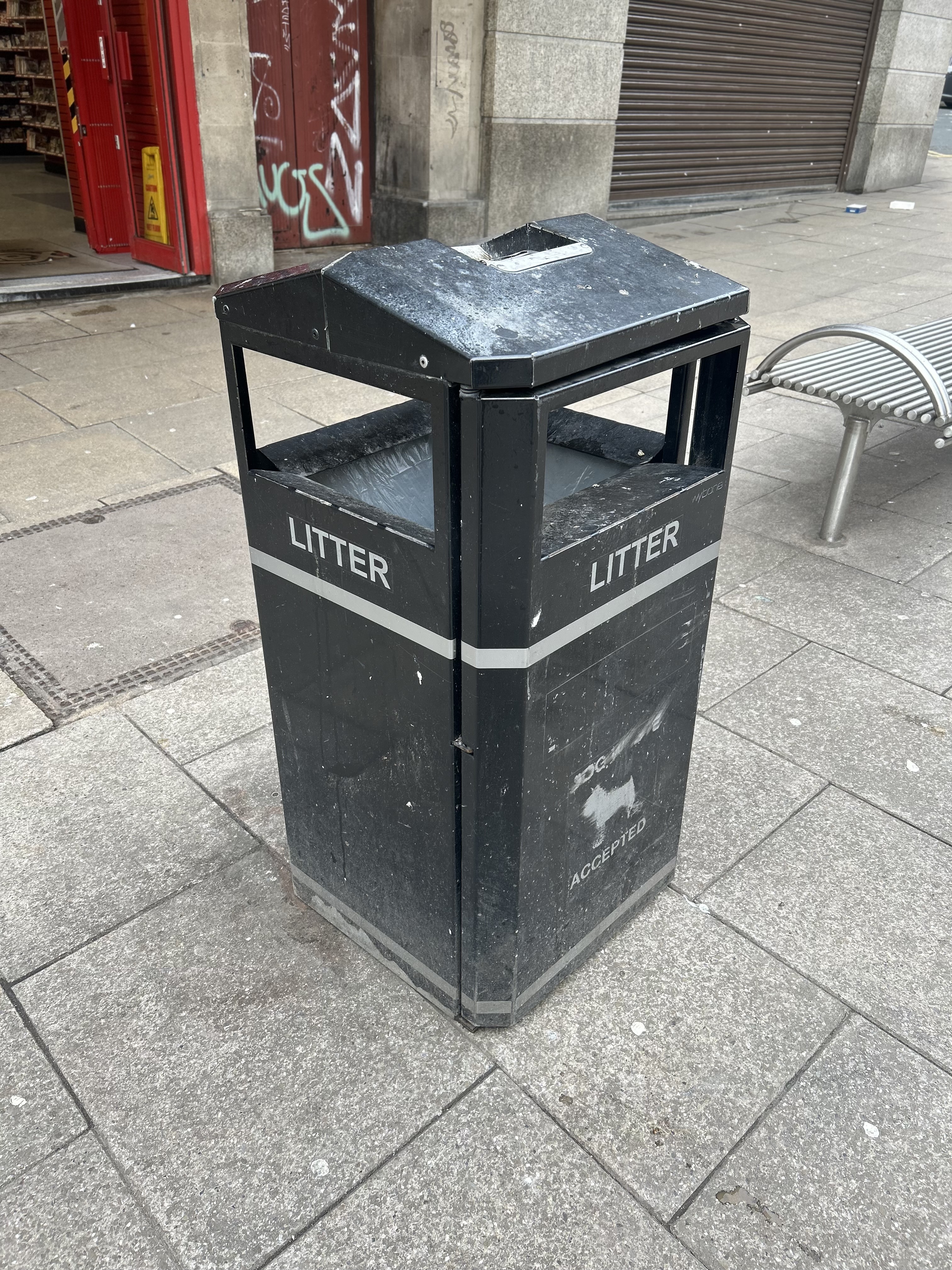
The first photo had the aperture set to the lowest value, f/1.4. This means the most amount of light is being let in. The background of the photo is very soft due to this. All the photos were taken on an IPhone 14.
The next photo had the f value set to 5.6, the middle of the scale, the background still has a softness to it and the bin retains most of its sharpness. However, the background can be made out more clearly than in the initial photo.
The final photo of the bin has the f value set to the maximum f/16, this has sharpened up the whole image, there is no more softness in the image and all the details can be made out. The bin no longer pops out of the image as everything is the same sharpness.
Personal growth and other symbolism are a key part of why people may choose to get tattoos with meaning.
Kayleigh Rees has been getting tattoos since she was 18 years old. Some of her tattoos have meaning while others are simply for aesthetics. Her latest additions, vines and symbols on her fingers potentially are the most meaningful to her.
She said: “The leaves represent personal growth, it’s been a pretty mental few months for me and I wanted to get something to represent getting through that period.” The actual design of the tattoo was inspired by minimalist art and also wood engraving art from the 1700s.
Rees also said that she had a few more tattoos, including one of Nirvana’s iconic 1993 album cover “In Utero.” She got this one for her Dad as it is one of his favourite albums.
Many people in Leeds have tattoos and the city is home to several notable tattoo shops where interested people can go to consult artists and get the design of their dreams. Karma Arts, just off of Briggate is where Rees got her newest tattoos done. She said: “It’s a great spot and I’d recommend it, although it’s a bit expensive you get really nice work.”
This is the original image that I took at a concert. It is in portrait and needs editing for it to pop and make sure the band is the focus of the image.
This is the edited photo, put into landscape and edited for colour correction. This helps it stand out and look more appealing on the page. The different tones of colour can completey change the atmosphere of an image, using more pinks in the background helps the lead singer pop more from the background.
Using the burst function on my iPhone I took 32 burst shots of Joseph jumping. This allowed me to select the photos I liked the best. There was a lot of dynamism to the photos which made for some exciting shots. There is some blur to the images as there is a lot of movement. This helps convey the energy of the shoot. Burst shots are very useful for sports photography, to get the perfect, in-motion, shot.
Coffee is the second most traded commodity in the world, just behind crude oil. Since its discovery (supposedly in Ethiopia, where a goat herder noticed that his goats had become hyper after eating the coffee berries), coffee has been a crucial part of human culture. Today, over a billion people drink coffee everyday (according to coffeedasher.com), as a society, many people would feel their day is incomplete without that first “cup of joe.” (American slang which comes from the idea that coffee is the average working man’s drink, therefore a common name like Joe is used). However, many people have only scraped the surface of how the humble coffee bean finds itself transported across the globe into supermarkets, cafes, etc.
Whiteheads have been roasting coffee even before Coca Cola was invented
The first step (after the berry has been grown and harvested), is a roaster getting in touch with a broker. The roaster will have a selection of beans to choose from, tailored to match the coffee blends they wish to produce. Ian Peach has been a coffee broker for over 40 years; he’s worked with a variety of businesses and sourced millions of tons of coffee during the course of his career. Speaking on his job role he explained: “In effect, I am the intermediary between the origin producer and grower and the final industry buyer… we arrange the shipment of the coffee, from origin destinations out to European destinations… when the coffee arrives at the relevant ports we arrange the transport.”
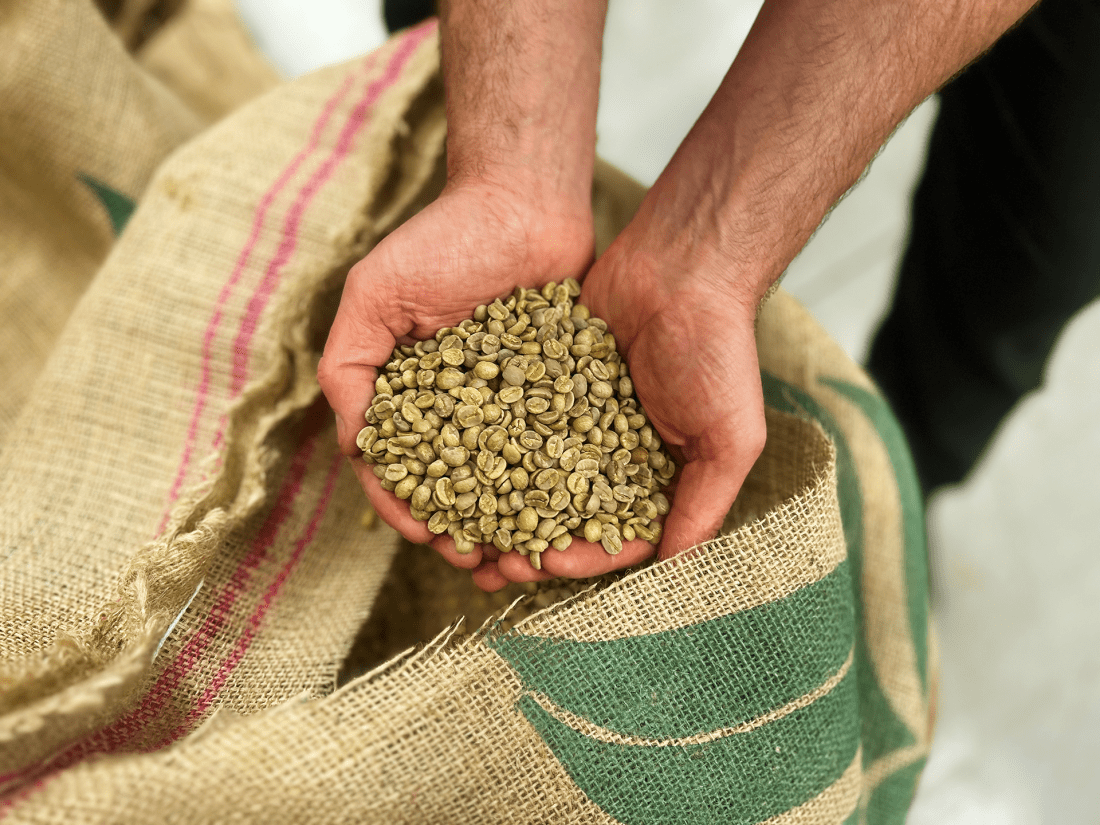
Ethiopian Arabica waiting to be roasted, it is primarily used for specialty coffee
Peach went on to explain his day-to-day tasks in his role. As a broker much of Peach’s job involves communicating, whether that be with the origin farms, transport companies or domestic roasters. Each aspect of the coffee’s journey must be held to a high standard to ensure orders arrive on time and are the quality expected. Peach said: “My day tends to start relatively early by getting some early morning coffee market reports off (sent to clients), that’s reporting on the previous day’s activities in London and New York.” These two cities are the central hubs for coffee trading. New York trades in Arabica beans futures (which will be explained), whereas London trades in Robusta beans. Futures are essentially contracts where two people agree today on the price of coffee that will be bought or sold later. Supply Chain Dive reported that Starbucks buy green beans up to 18 months in advance in order to attempt to gain a significant edge over their competitors in the markets. This generally involves a fixed price, allowing any company that has signed a contract to keep their prices stable. However, they may end up paying more if the market value drops while they are locked in.
After Peach has provided all relevant updates, which can change drastically, especially with recently elected President Trump causing high volatility in the markets, he will move into more administrative tasks. Peach explained these admin tasks: “Striking up contracts, striking up invoices, striking up leases and things like that, it’s a comparatively full day… I have a market screen in front of me to give me an up-to-date appraisal of what New York and London markets are doing. So, if there’s a spike in movement, I can see that immediately and readjust coffee prices.”
The volatile coffee markets have caused serious worry for anyone involved in the business
Wendy Jackson-Bolton works more on the administrative and financial aspects of the company. She works in the office to arrange orders, take calls from customers, provides the production plan for the order that the coffee must be roasted and a variety of other tasks. Jackson-Bolton spoke on managing the inventory and keeping a steady supply of coffee to customers: “We’re fortunate because we’ve been doing this job for 20 plus years now. We have regular customers who order regular types of beans in regular quantities. We can plan by ordering the specific amount that we need each time… our orders are pretty regular and consistent.” Keeping ahead when ordering the green beans is very important, especially with supply chain issues that continue to emerge around the globe. Falling behind on production can be a death sentence to small roasters as customers may choose to order elsewhere. Punctuality and delivering orders on time is of the highest priority.
The supply chain issues have been increasing in severity since Brexit and covid. Jackson-Bolton said: “There will be 10 boats with coffee and other goods on them being held at sea instead of being unloaded as efficiently as they used to be. I’m not entirely sure why this is but it’s definitely notable.” When coffee is held in containers for too long it is at risk of going mouldy, it hasn’t happened too often but has certainly become more noticeable. As climates across the world become more humid this could become a very serious issue for any business that deals with consumer goods shipped from far away that are prone to degradation. Jackson-Bolton closed by explaining that she attempts to order coffee at least 6 months in advance, but currently the volatile financial markets are making it very difficult to secure long term deals.
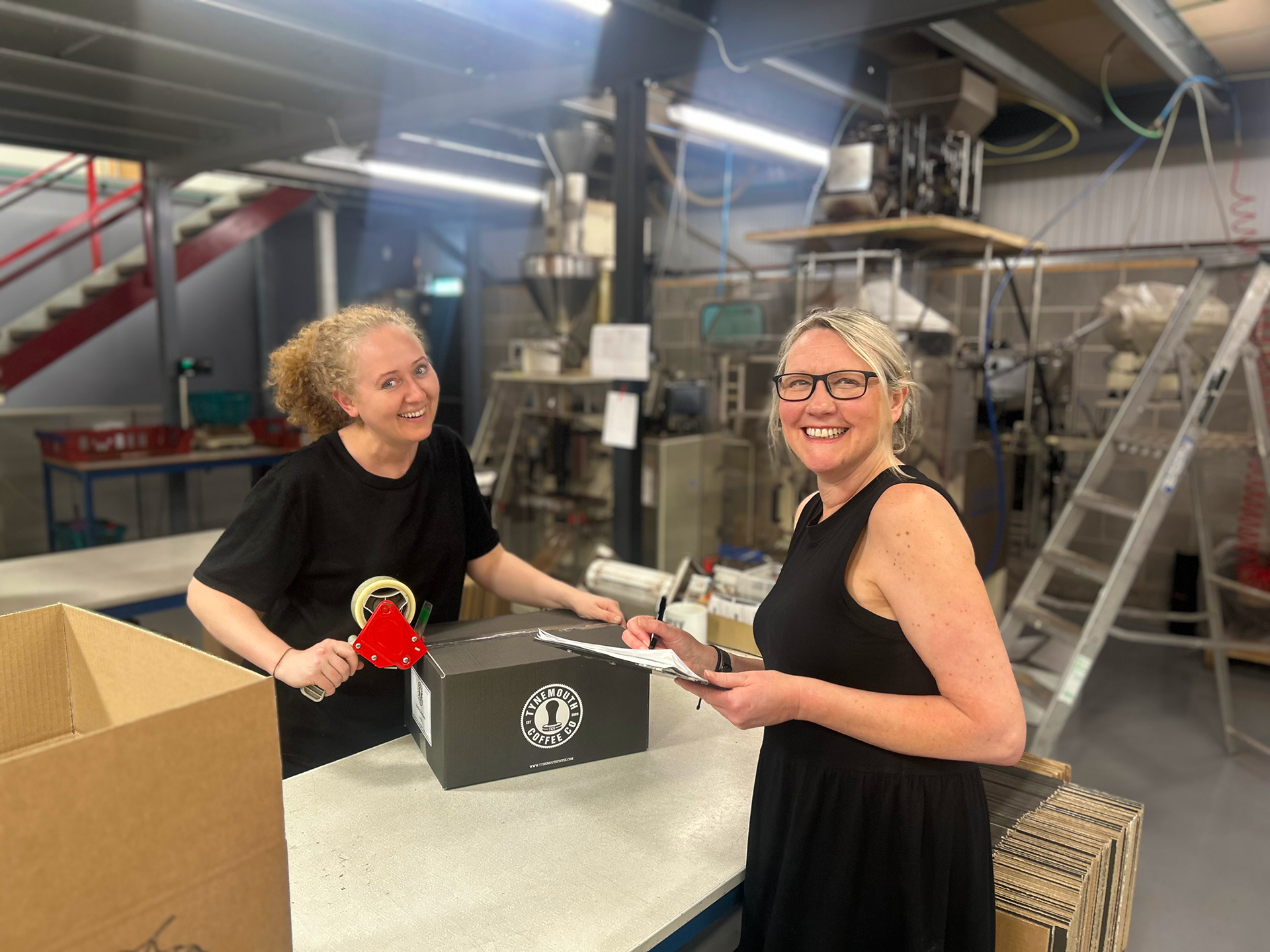
Wendy Jackson-Bolton works on production as Kamila Lubecka packs coffee for shipment
Once coffee has arrived in the UK it travels (usually by wagon) to its most important destination, the coffee roaster. This is where green beans are transformed with extreme heat into shiny brown beans that are a much more familiar sight to the general public. Lloyd Bolton spoke about his job as a coffee roaster at Whiteheads 1858 Ltd, a job he has had for over 20 years. Bolton spoke about why he became a coffee roaster: “From a young age, I always had a passion for coffee… I started drinking coffee at a young age, it was always instant coffee at home, not great.” Bolton laughs as he explains this, it seems he always had a taste for coffee that was of a higher quality than the norm. He continued: “I don’t think I got my first taste of real coffee until I was about 20, which really got me interested.” Since owning the business Bolton and the whole company have strived to produce the best blends.
Lloyd Bolton stands in front of the coffee roaster, the heart of the business
Speaking about sourcing the coffee, Bolton likened the process of choosing the beans to selecting a fine wine. He said: “Every coffee region, coffee growing country, brings a different flavour, Brazilian is completely different to Kenyan etcetera, etcetera. We try and select blends and come up with a nice coffee profile.” Choosing the beans is only one step in this process, as previously mentioned, once negotiated with a coffee broker such as Ian Peach, the beans will be delivered to the factory. The beans then need to be roasted. Bolton described the process: “We weigh the beans out, into blends (as each blend has a very specific amount of different type of beans to achieve the desired flavour), put them into the roaster, which is effectively a giant washing machine, it mixes them up.” The temperature the beans are roasted at is also key in this process, whether the beans are roasted “light, medium or dark” has a massive effect on their flavour, so this has to be accurate every time.
Roasted beans are something the general public will be much more familiar with and are the base of any kind of coffee
Coffee roasting is a surprisingly creative job, it could almost be likened to being a professional chef, or more aptly a highly trained bartender. Knowing what elements to mix to create certain flavours and being accurate each time is crucial. The invention and “remix” of coffee blends is similar to creating twists on classic cocktails and also mixing your own beverages to your tastes, there are a lot of unexpected familiarities. Bolton spoke about this creative aspect of the job: “It’s endless, you could have a coffee blend with 25 different coffees in it, at different percentages. Whether that actually really works when it comes down to it, I don’t know. I personally believe the more old-fashioned blends of about 5 different origins are really good solid coffees.” Whiteheads have previously roasted blends with 7 or 8 different kinds of coffee.
Coffee roasting can be a very physically arduous job, dragging 60kg bags around all day
Sustainability is a big talking point in the world of coffee (and most every other business) in the modern age. The importance of keeping damage to the environment to a minimum is something that’s being looked at with great care, especially in the last 10 years. Bolton has sustainability on his mind “constantly” and he gave a run down on sustainability in the coffee business. He said: “There’s loads of stuff we could do with changing in the coffee world, environmentally, for the farmers, for welfare, the people that are farming coffee, in a lot of countries it’s a corrupt business… But unfortunately, that seems to be driven by way bigger companies than us, the bigger coffee brokers who are driven by banks and it’s all about money in the end.” Bolton emphasised this final statement: “We try and do our bit and source sustainably but it’s very very difficult and it could do with changing a lot.”
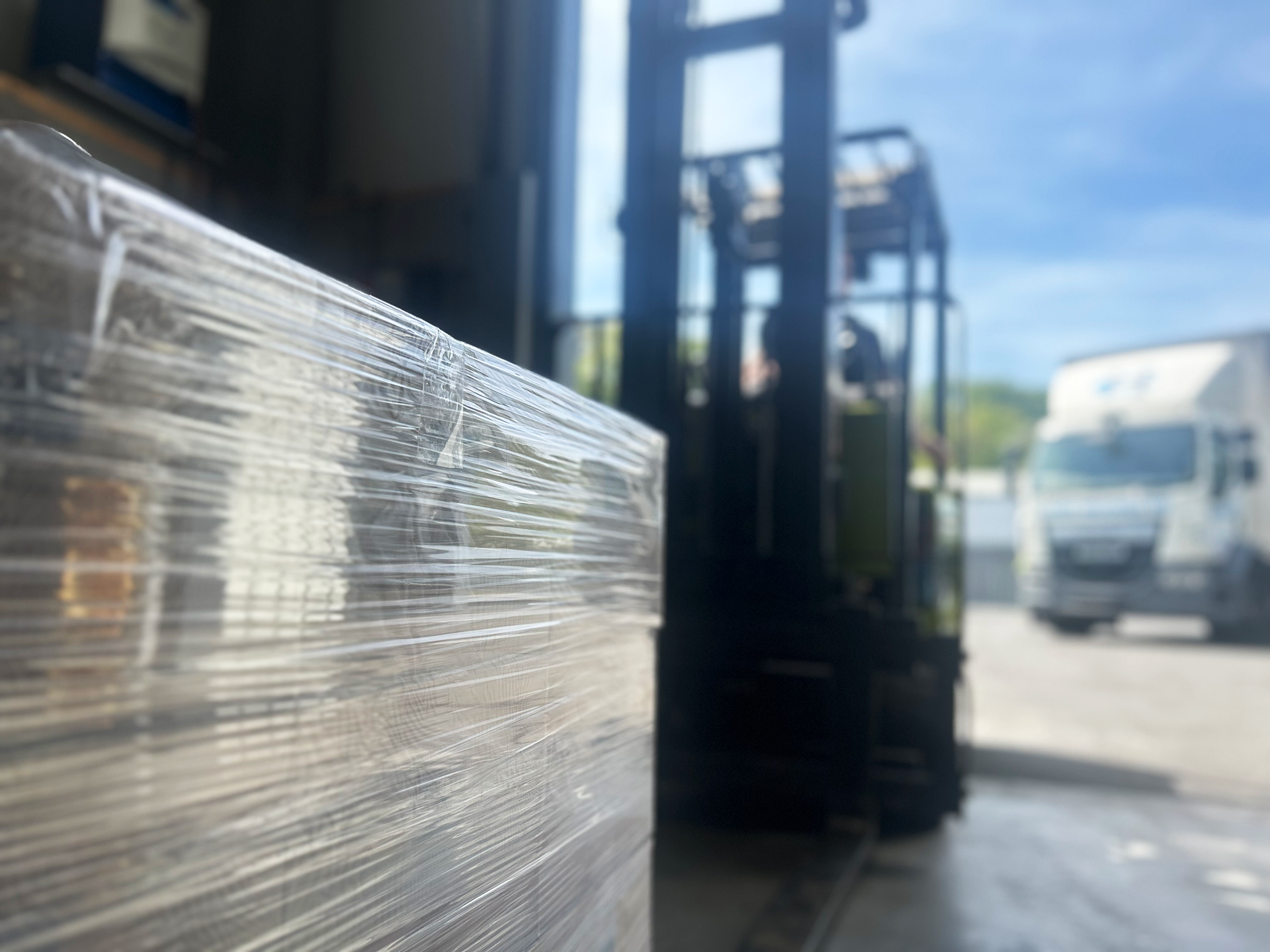
Coffee from Whiteheads is shipped all over the country
This journey comes to an end in cafes across the country. One popular new cafe is White Cloth Stores, located behind the Corn Exchange in Leeds. Hannah Thompson has been a barista for 10 years and spoke in detail about her job and coffee culture. Thompson said: “I used to work at a hotel and the hours were rubbish, then I applied for a job at a Café Nero, to have more sociable hours, it started from there.” There are a variety of skills needed to be a barista, especially in a busy café, Thompson spoke on her experiences and the key abilities needed to be a great barista. She said: “I think the biggest thing I learnt from ‘Nero was good workflow and cleanliness, when you get into the specialty coffee you learn about the different types of beans… and a nicer way of doing things.” Consistently producing a high-quality cup of coffee is the most important skill for a barista. Avoiding burning the beans (by having the water temperature too high), using the right setting on the grinder to set how coarse or fine the beans are, etc. Thompson explained that the most important aspect, however, is ensuring training is the same for everyone. She elaborated: “If everyone is on the same page that a latte is one thing, then all your lattes should go out the same.”
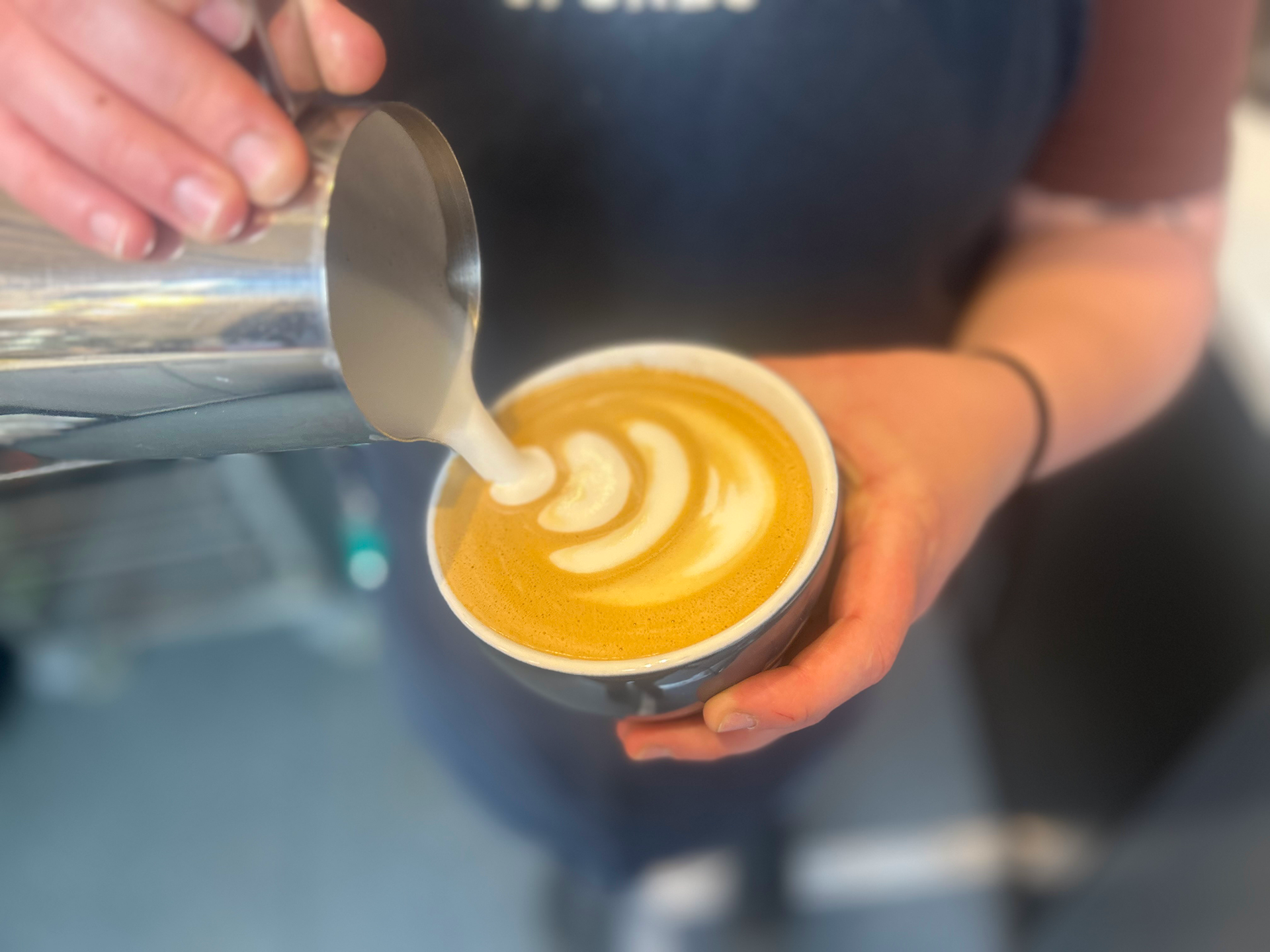
Latte art is a skill in intself, it takes a steady hand
Finally, Thompson discussed changes in consumer habits regarding coffee, whether things had changed in the 10 years she has worked as a barista. Thompson said: “Yeah, there’s definitely been a surge in people ordering shorter drinks, the flat white (a short coffee with less milk and no foam) has become much more of a staple than it was in the early 2000s.” These changing trends could be a result of the influence of other countries and regions (the flat white is believed to have originated in Australia and New Zealand) and the rise of shorter drinks could speak to the high pace that many people are living their lives.
A good cup of coffee brightens many people’s day across the country











 Photographic Journalism
You must be logged in to post a comment.