Final Project Pitch, Weekly Updates & Test Shots

Final Project Pitch

For my project I’d like to explore Kirkgate market, looking into the experiences of vendors and customers, and how the market brings people from all walks of life together and celebrates different cultures.

I could take pictures of stalls, particularly ones selling fresh produce or handmade items as I can imagine these to be photogenic and vibrant, as well as candid shots of vendors interacting with customers

From the start of this module I was intrigued by portraiture so I’d like to practice this in my project, taking shots of market vendors, telling their stories and showcasing their passion for what they do, honing in on the attention to detail they have for their stalls. I could also take shots of loyal customers, and find out why they keep coming back to the markets.

I’d like to capture the overall vibe of the market atmosphere and the diversity of its visitors, whilst highlighting the things that make markets so unique and authentic in comparison to big-brand supermarkets, such as the fresh produce and how sourcing-locally adds to the community spirit.

I intend to display this as an InDesign spread, simply because I might like to do a combination of both portrait and landscape shots, which won’t be possible with an online scrolling article.

Weekly Updates

Here I will document weekly updates regarding my photojournalism project. This may include a selection of test shots and new ideas, along with personal discoveries and reference to any setbacks I face throughout the process.

Monday 24th March Update

In week 7, we were encouraged to devise an approach to image selection for our final project so I thought I’d discuss this here.

Before I take any photos in the markets, I’d like to have an idea of the themes and the types of subjects I’d like to capture. The markets have a vibrant atmosphere, showcasing the city’s diversity through different stalls, products and people, which is what initially attracted me to the idea of covering this for my project. I intend to take picture of vendors and visitors, the fresh produce and goods for sale and the architecture of the markets themselves, showing both the interior and exterior of the building.

I aim to tell the story of community and commerce in Leeds through a mix of wide shots that capture the overall vibe of the market, and close-ups that highlight the personal connections and diversity within the market.

Although I’m keen to practice portraiture and plan to incorporate it into my project, I also want to capture candid shots that show the interactions in the markets and how they bring together people from all walks of life.

I want to take the time to ensure my shots are well-composed with good lighting. I feel there will be plenty of opportunities to experiment with different camera settings for this story, testing various F-stop, ISO, and shutterspeed settings to capture a range of images that:

  1. Capture action, such as a mid-action shot of a chef tossing noodles in a pan in the food hall, for example, which can be achieved with a fast shutter speed, a wide aperture (low F-stop), and a higher ISO.
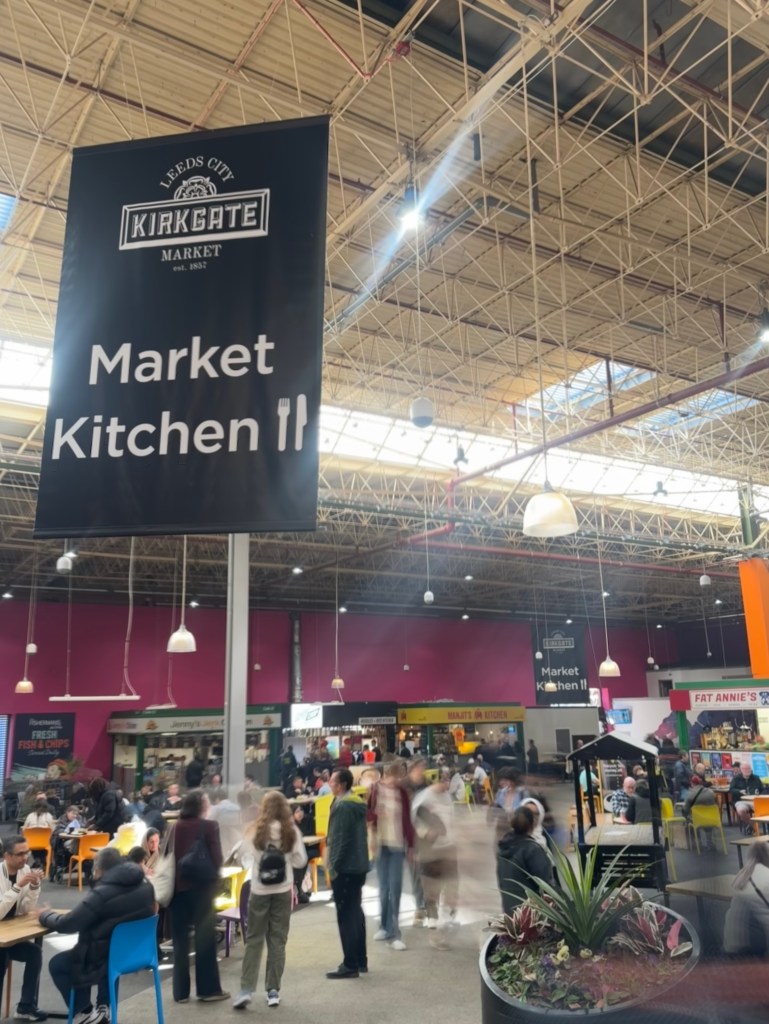
  2. Capture motion blur intentionally and artistically, such as wide shots of crowds to create a time-lapse effect that represents the hustle and bustle of the markets as the heartbeat of the city with lots of people passing through. This can be achieved with a low shutter speed, a wide aperture (low F-stop), and a low ISO.

I plan to take photos with both my iPhone camera and my Nikon D3500 to practice using both. Whilst I’m to explore the camera and its settings, I also want to ensure I get images that I can work with. By using my iPhone as well, I will feel more confident that I’ll capture something worthwhile.

Monday 31st March Update

This week, I scoped out the markets, brainstorming potential story ideas and taking some test shots. I intended to just start chatting to people and see if any stories unfold.

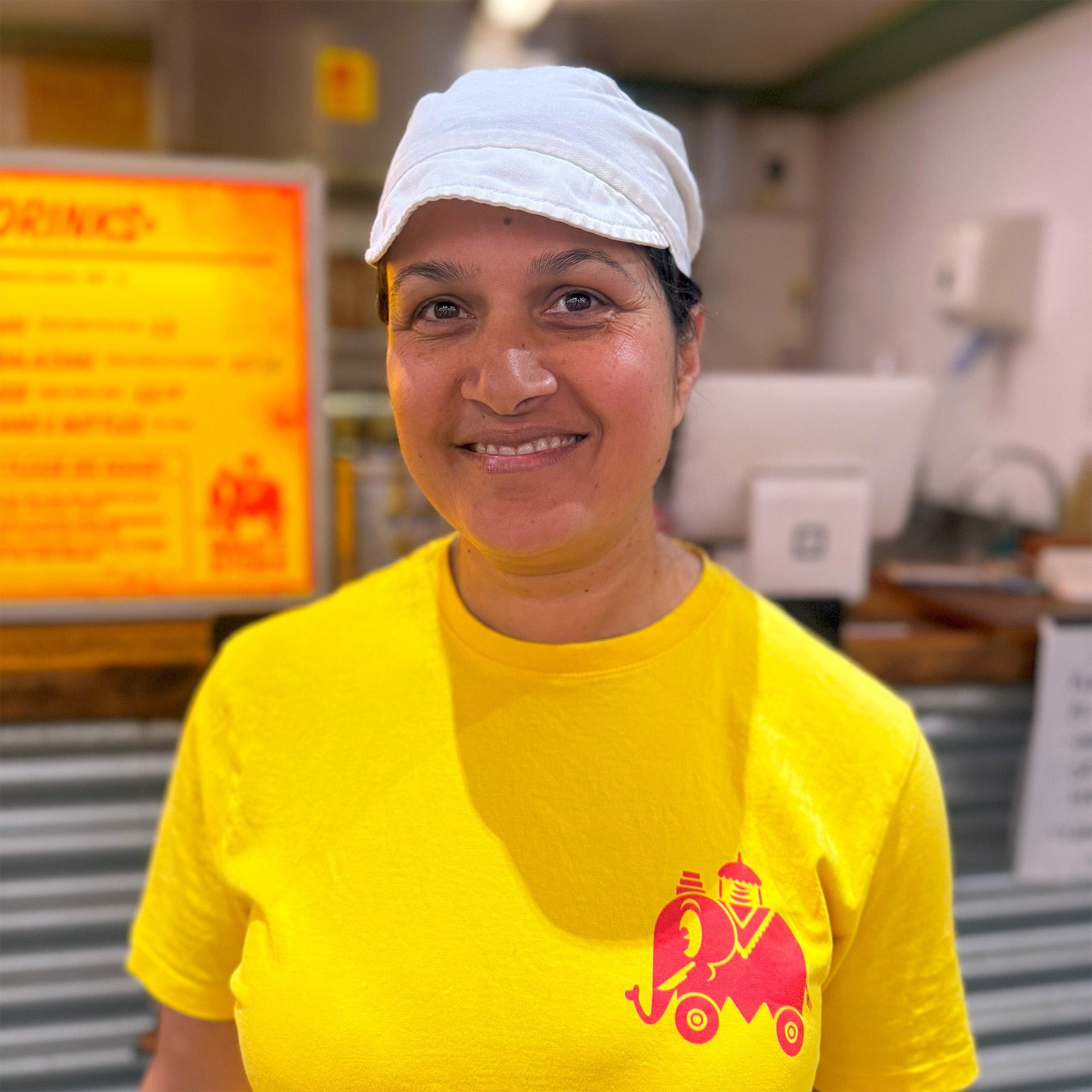
During a conversation with Manjit Kaur, the owner of Manjit’s Kitchen, I discovered that she has a commitment to supporting women who have escaped domestic abuse, offering them a safe environment where they can regain their confidence and independence through work.

I think this would be an interesting angle to focus my project on if she’ll allow me to do so. I can still shoot photos of the markets to capture the overall atmosphere, but looking deeper into Manjit’s story would give my feature more focus and make it less generic to the markets.

Here is a slideshow of some of the shots I took today. I didn’t manage to get many because, by the time I got down there, a lot of the stalls had already packed up, but I’m pleased that I’ve at least made a start and I’ve come away with some inspiration and ideas to work with.
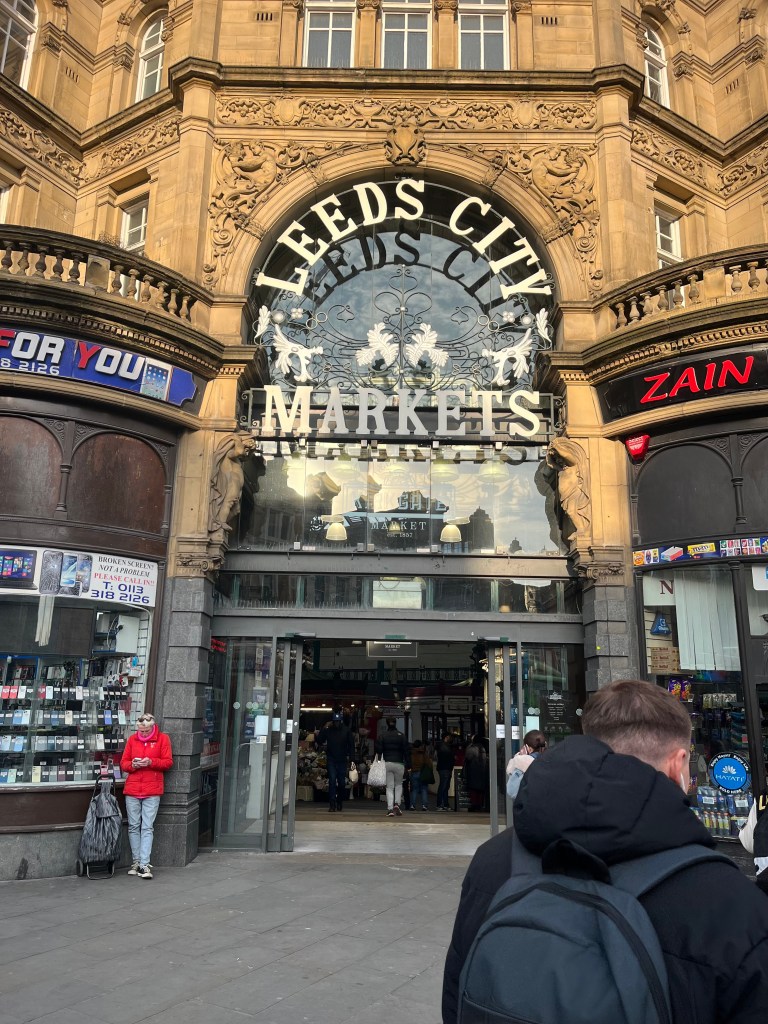
  • The main entrance of Kirkgate Market in Leeds, featuring large glass doors framed by intricate ironwork
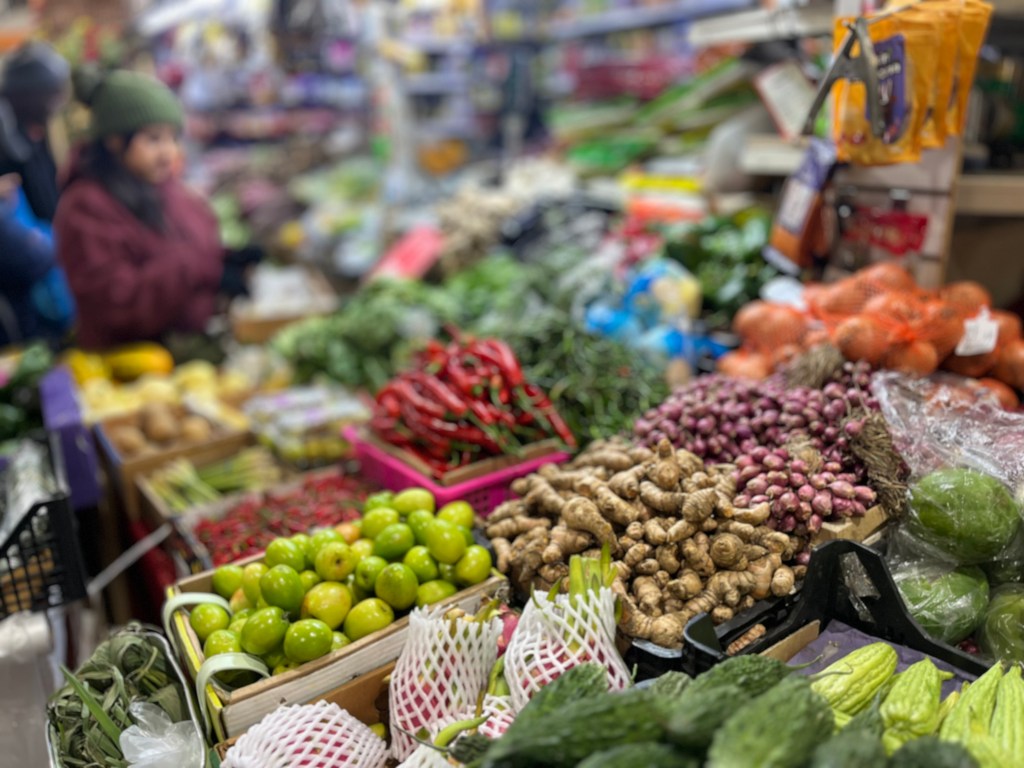
  • A vibrant market stall displaying fresh vegetables, with people browsing in the background
  • A vibrant market stall displaying fresh vegetables, with people browsing in the background
  • A vibrant market stall displaying fresh vegetables, with people browsing in the background
  • A vibrant market stall displaying fresh vegetables, with people browsing in the background
  • A table of people enjoying their meals in the foreground of the food court at Kirkgate Market, with a quiet, nearly empty background as the day winds down
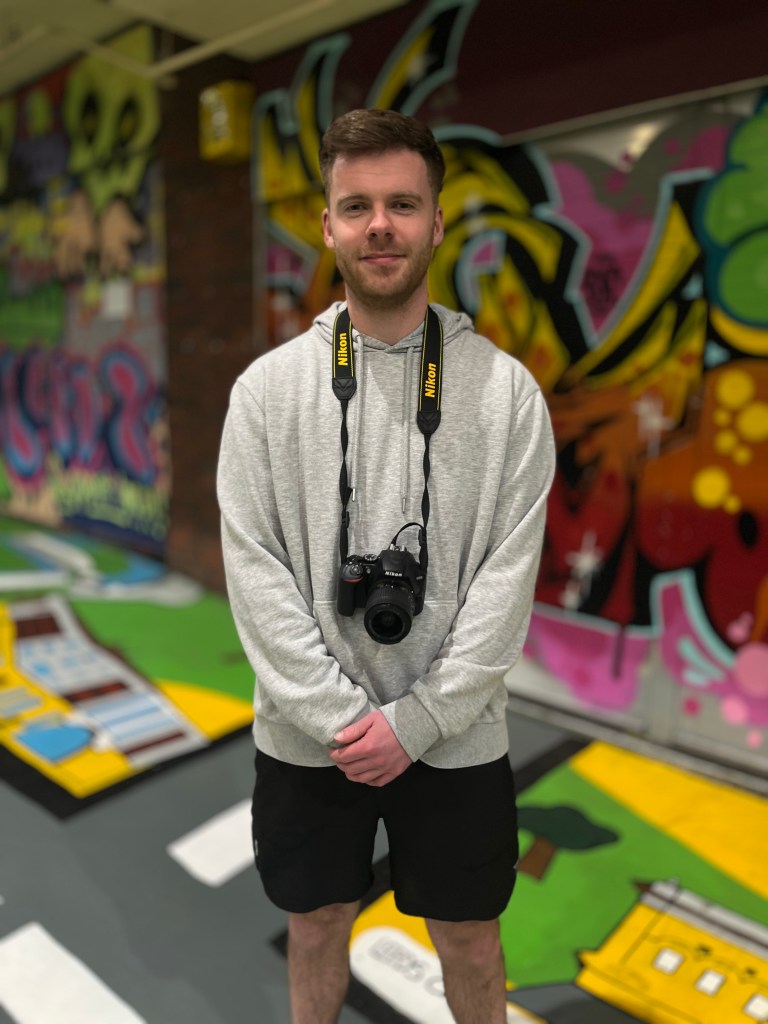
  • A young man with a camera around his neck grins while standing in front of a colorful graffiti mural inside Kirkgate Market
  • A young man with a camera around his neck grins while standing in front of a colorful graffiti mural inside Kirkgate Market
  • A young man with a camera around his neck grins while standing in front of a colorful graffiti mural inside Kirkgate Market

Monday 7th April Update

On 2nd April, I went back to the markets to take some more test shots and to see if I could uncover any other story angles that might be interesting to explore for my feature.

Since a lot of journalism is about who you know as much as what you know, I thought it made sense to include Jenny, the owner of Jenny’s Jerk Chicken, for this feature. I currently have a social media internship with her, and I find her to be a very interesting and inspirational woman. She runs her own business while also being a wife, mother, and full-time soldier. She’s recently won several awards, and her business is growing rapidly, so I plan to ask if she’d be willing to take part in this project.

Jenny’s story, along with Manjit’s, will offer an original perspective on Leeds’ markets, focusing on the success stories of female vendors, rather than a more generic overview of the markets.

Alongside these interviews, I intend to carry out vox pop style interviews with market visitors and other vendors so I can gather varied perspectives on what the market means to different people. I also plan to reach out to councillors and the Lord Mayor to see if they’d be willing to provide a comment.

I took hundreds of test shots around the markets today, but I’ve selected my favourite ones and put them into a slideshow below.

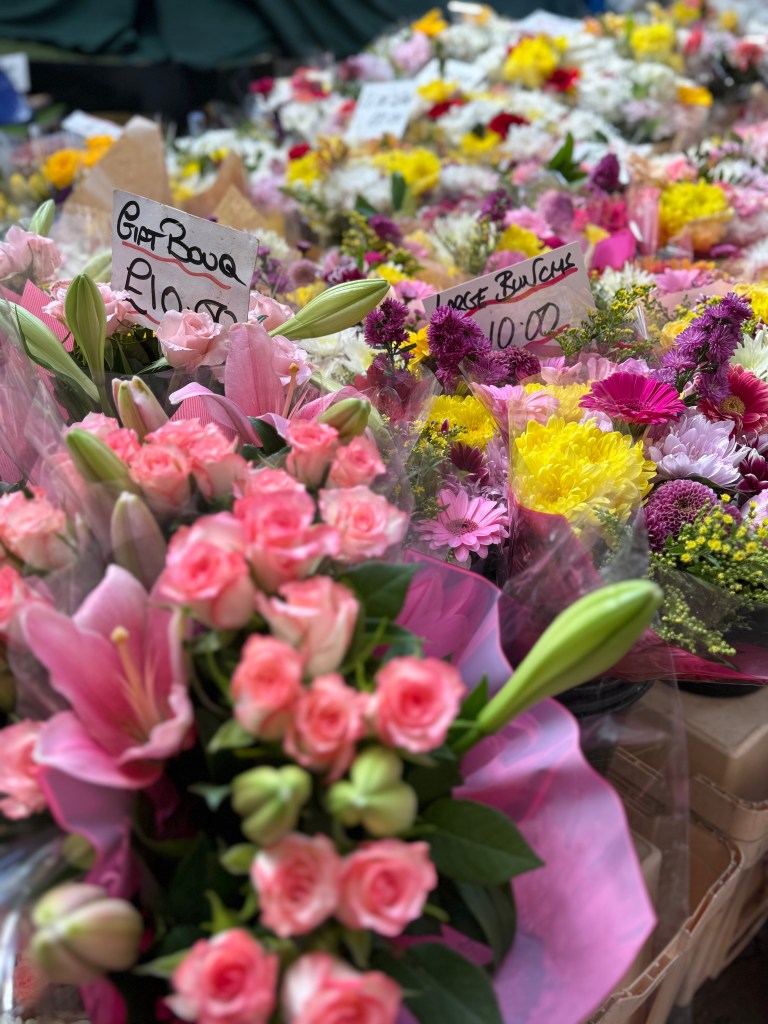
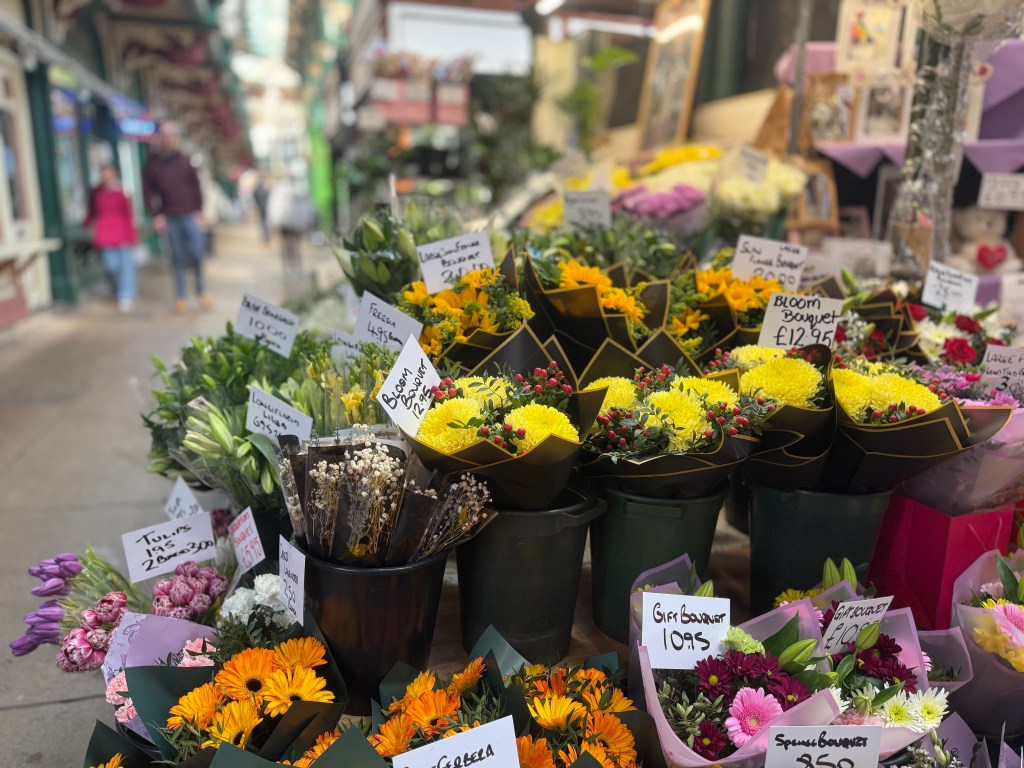
  • A blurred background of pink flowers in Kirkgate Market, with the focus on the vibrant petals in the foreground
  • A blurred background of pink flowers in Kirkgate Market, with the focus on the vibrant petals in the foreground
  • A blurred background of pink flowers in Kirkgate Market, with the focus on the vibrant petals in the foreground
  • A blurred background of pink flowers in Kirkgate Market, with the focus on the vibrant petals in the foreground
  • A blurred background of pink flowers in Kirkgate Market, with the focus on the vibrant petals in the foreground
  • A blurred background of pink flowers in Kirkgate Market, with the focus on the vibrant petals in the foreground
  • A painted sign on the wall inside Kirkgate Market reading "City of Leeds Kirkgate Market Home of," in dark green and gold, with the market's roof visible in the background
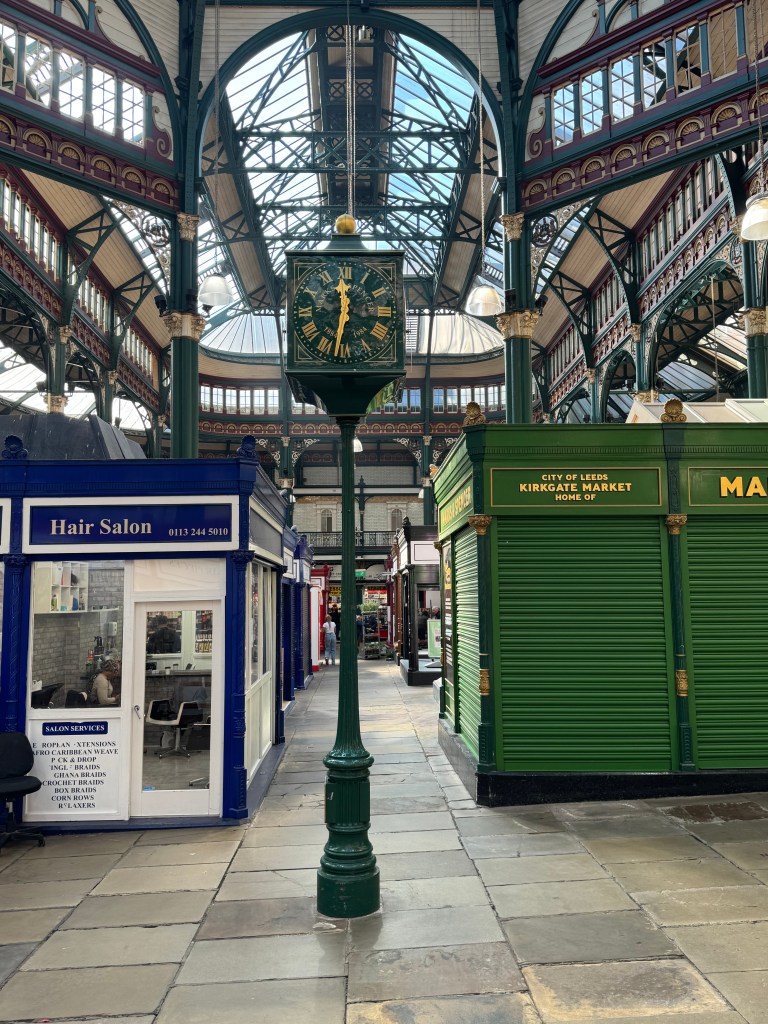
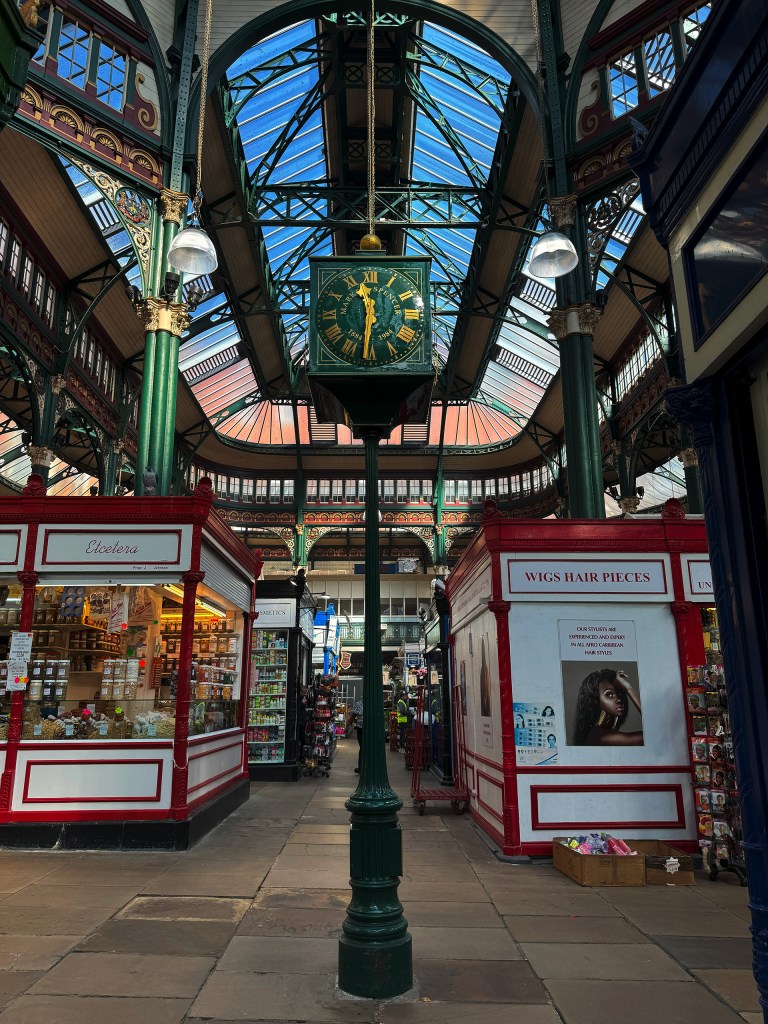
  • An old dark green clock with gold detailing stands proudly between the walkways of Kirkgate Market, with light streaming in from the roof above and stalls visible in the background
  • An old dark green clock with gold detailing stands proudly between the walkways of Kirkgate Market, with light streaming in from the roof above and stalls visible in the background
  • An old dark green clock with gold detailing stands proudly between the walkways of Kirkgate Market, with light streaming in from the roof above and stalls visible in the background
  • An old dark green clock with gold detailing stands proudly between the walkways of Kirkgate Market, with light streaming in from the roof above and stalls visible in the background
  • An old dark green clock with gold detailing stands proudly between the walkways of Kirkgate Market, with light streaming in from the roof above and stalls visible in the background
  • An old dark green clock with gold detailing stands proudly between the walkways of Kirkgate Market, with light streaming in from the roof above and stalls visible in the background
  • An old dark green clock with gold detailing stands proudly between the walkways of Kirkgate Market, with light streaming in from the roof above and stalls visible in the background
  • An old dark green clock with gold detailing stands proudly between the walkways of Kirkgate Market, with light streaming in from the roof above and stalls visible in the background
  • An old dark green clock with gold detailing stands proudly between the walkways of Kirkgate Market, with light streaming in from the roof above and stalls visible in the background
  • An old dark green clock with gold detailing stands proudly between the walkways of Kirkgate Market, with light streaming in from the roof above and stalls visible in the background
  • An old dark green clock with gold detailing stands proudly between the walkways of Kirkgate Market, with light streaming in from the roof above and stalls visible in the background
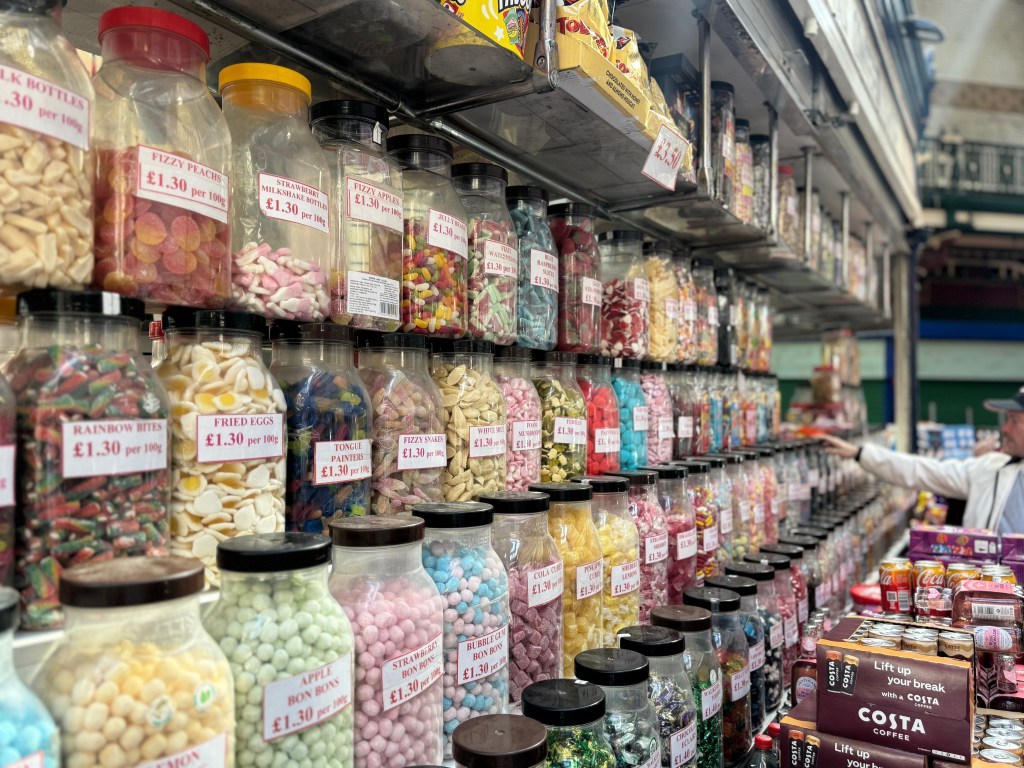
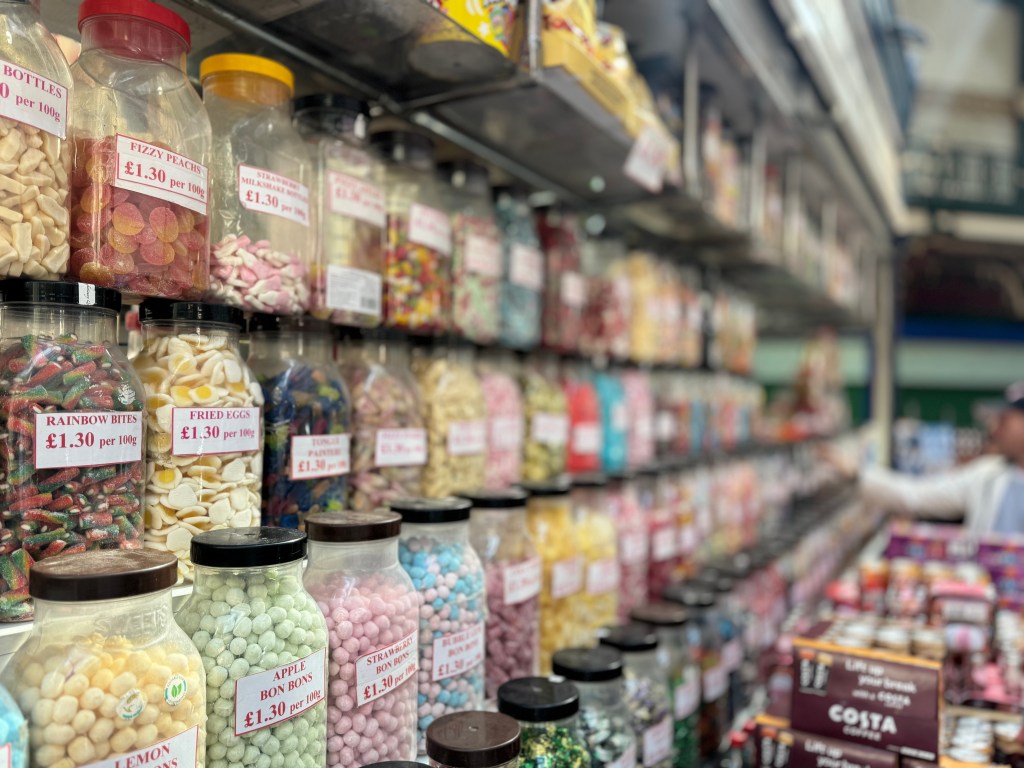
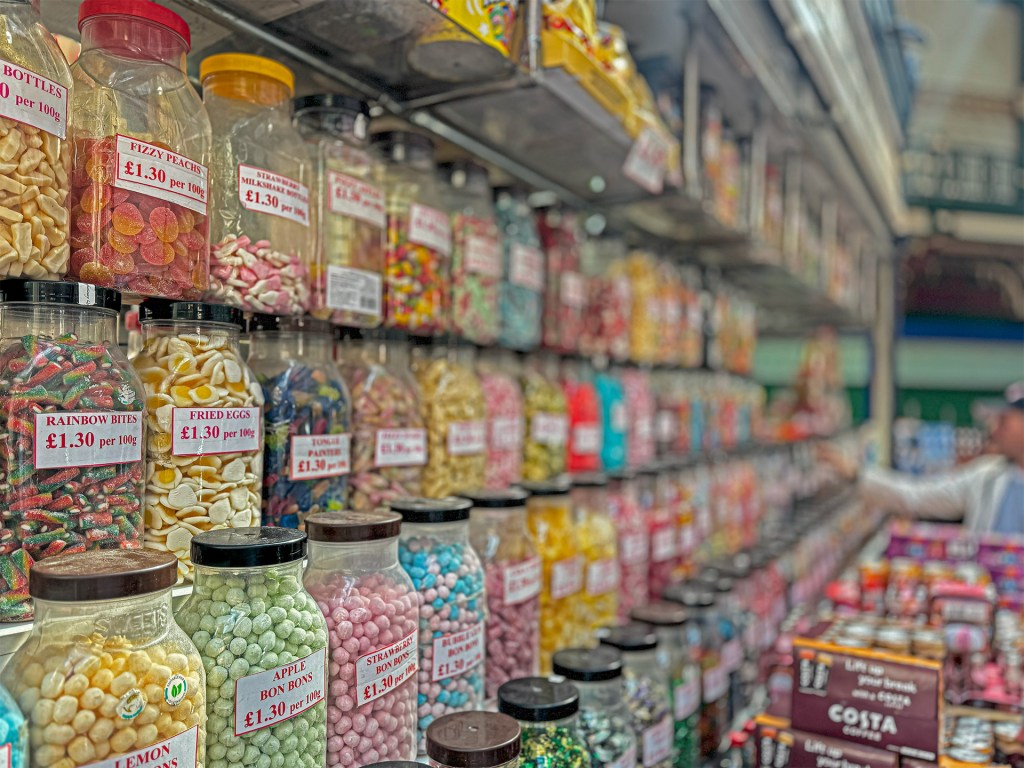
  • Rows of jars filled with sweet treats in Kirkgate Market, with the foreground in sharp focus and the background gradually blurred
  • Rows of jars filled with sweet treats in Kirkgate Market, with the foreground in sharp focus and the background gradually blurred
  • Rows of jars filled with sweet treats in Kirkgate Market, with the foreground in sharp focus and the background gradually blurred
  • Rows of jars filled with sweet treats in Kirkgate Market, with the foreground in sharp focus and the background gradually blurred
  • Rows of jars filled with sweet treats in Kirkgate Market, with the foreground in sharp focus and the background gradually blurred
  • Rows of jars filled with sweet treats in Kirkgate Market, with the foreground in sharp focus and the background gradually blurred
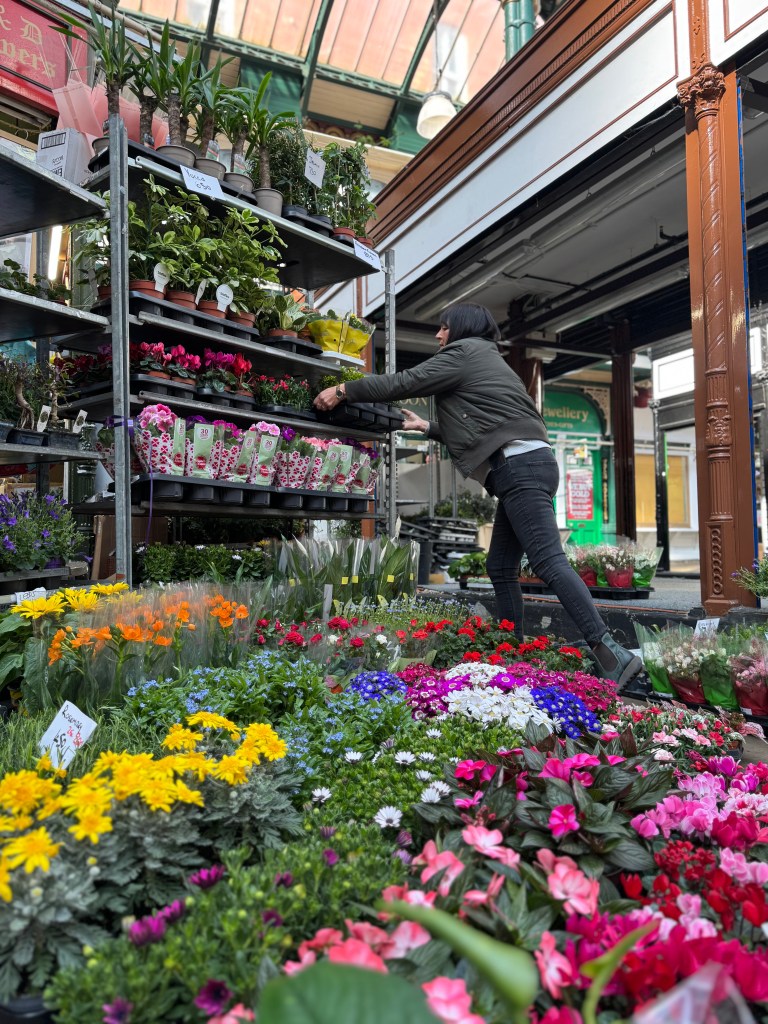
  • A woman displays vibrant flowers at a stall inside Kirkgate Market, with natural light streaming in from the roof above
  • A woman displays vibrant flowers at a stall inside Kirkgate Market, with natural light streaming in from the roof above
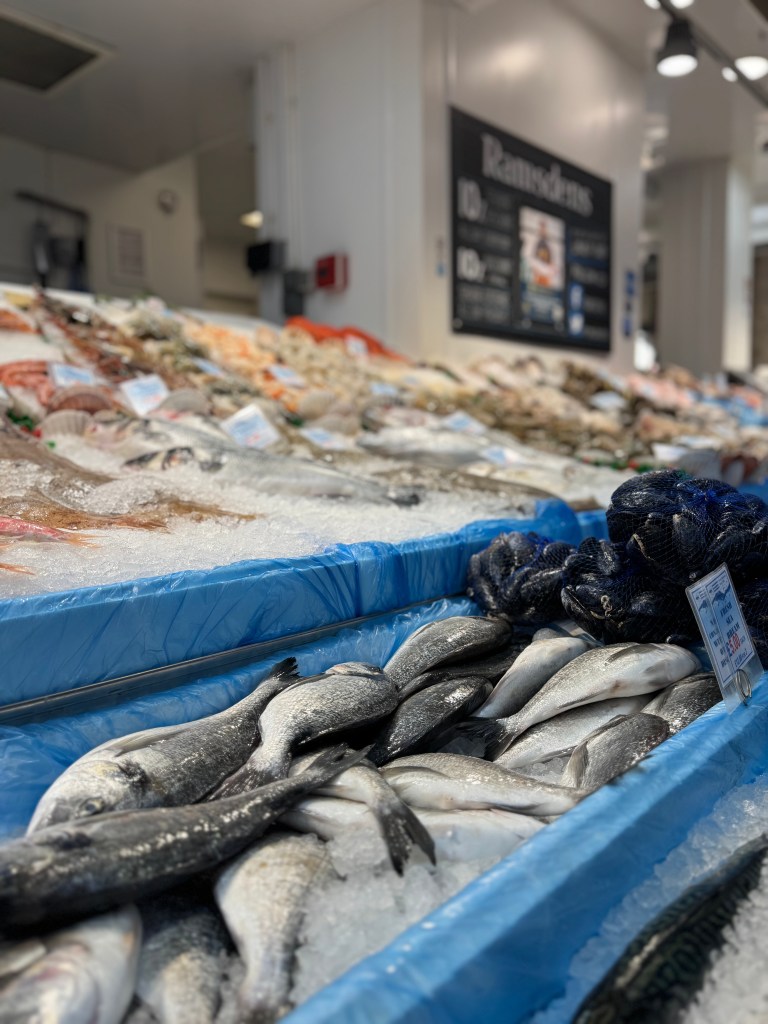
  • A fishmonger inspects his display of fresh fish, offering a range of local catches inside Kirkgate Market
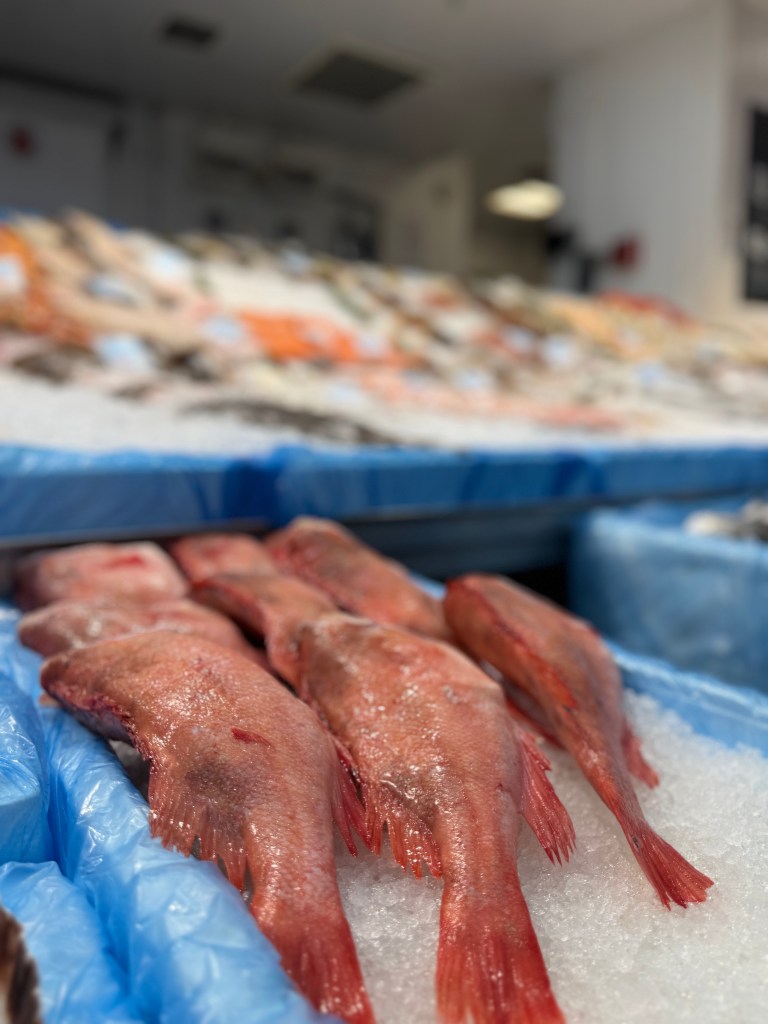
  • A close-up of red fish on ice, with a blurred background showing more fish displayed on ice at Kirkgate Market
  • A close-up of mackerel on ice, with a blurred background showing more fish displayed at Kirkgate Market
  • A close-up of mackerel on ice, with a blurred background showing more fish displayed at Kirkgate Market
  • A fishmonger assists a customer pointing at mackerel on ice, with other stalls softly blurred in the background at Kirkgate Market
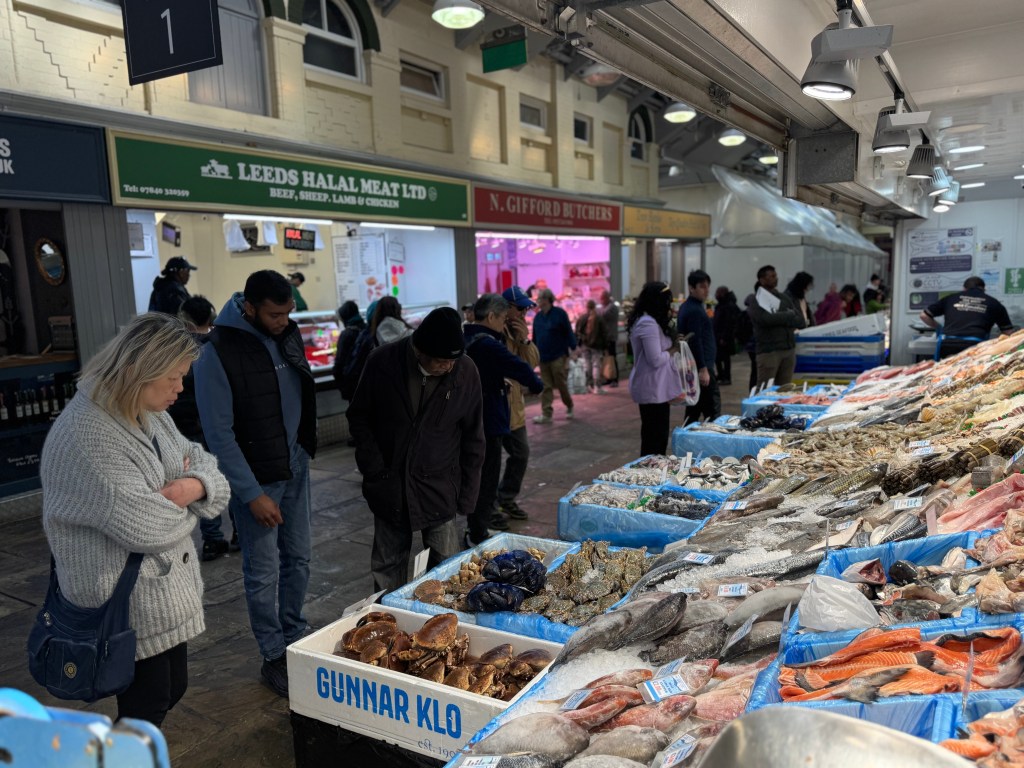
  • A group of people look at a display of fish at Kirkgate Market, with a couple of butcher shops softly blurred in the background
  • A group of people look at a display of fish at Kirkgate Market, with a couple of butcher shops softly blurred in the background
  • A fishmonger weighs a bag of fish for a customer, with a display of fish in the background at Kirkgate Market
  • A fishmonger weighs a bag of fish for a customer, with a display of fish in the background at Kirkgate Market
  • A fishmonger weighs a bag of fish for a customer, with a display of fish in the background at Kirkgate Market
  • A fishmonger weighs a bag of fish for a customer, with a display of fish in the background at Kirkgate Market
  • A close-up of a vegetable display at Kirkgate Market, showcasing a variety of fresh, colourful produce
  • A close-up of a vegetable display at Kirkgate Market, showcasing a variety of fresh, colourful produce
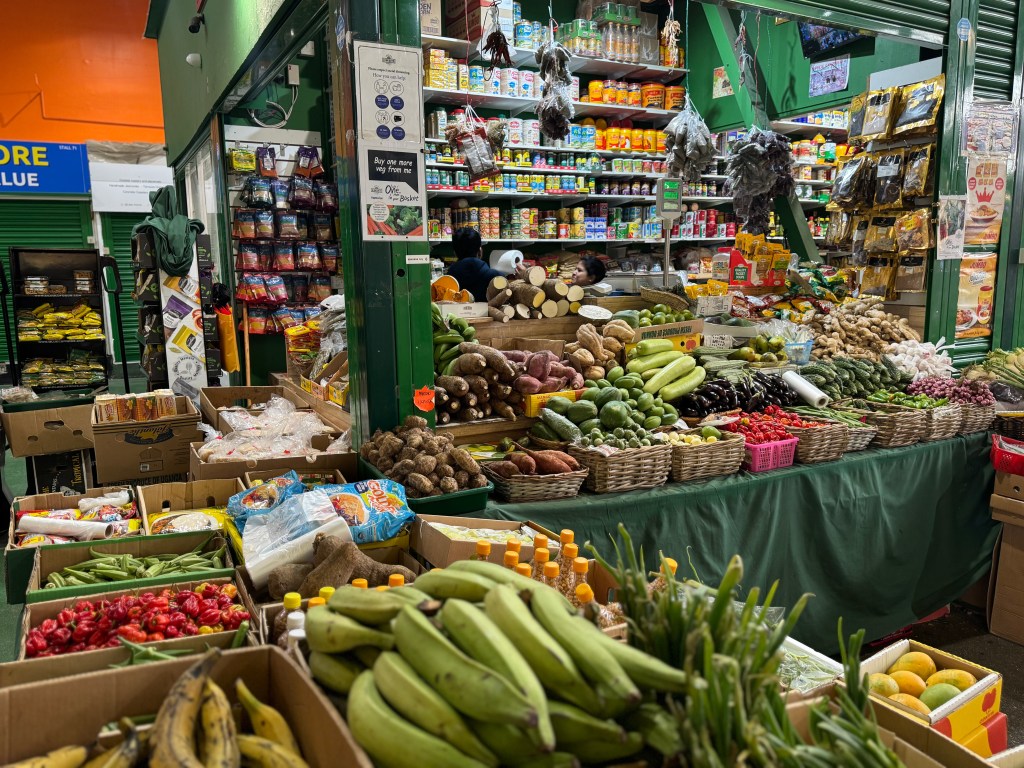
  • A stall at Kirkgate Market displaying exotic vegetables like plantains, with shelves stacked with products visible in the background
  • A stall at Kirkgate Market displaying exotic vegetables like plantains, with shelves stacked with products visible in the background
  • A stall at Kirkgate Market displaying exotic vegetables like plantains, with shelves stacked with products visible in the background
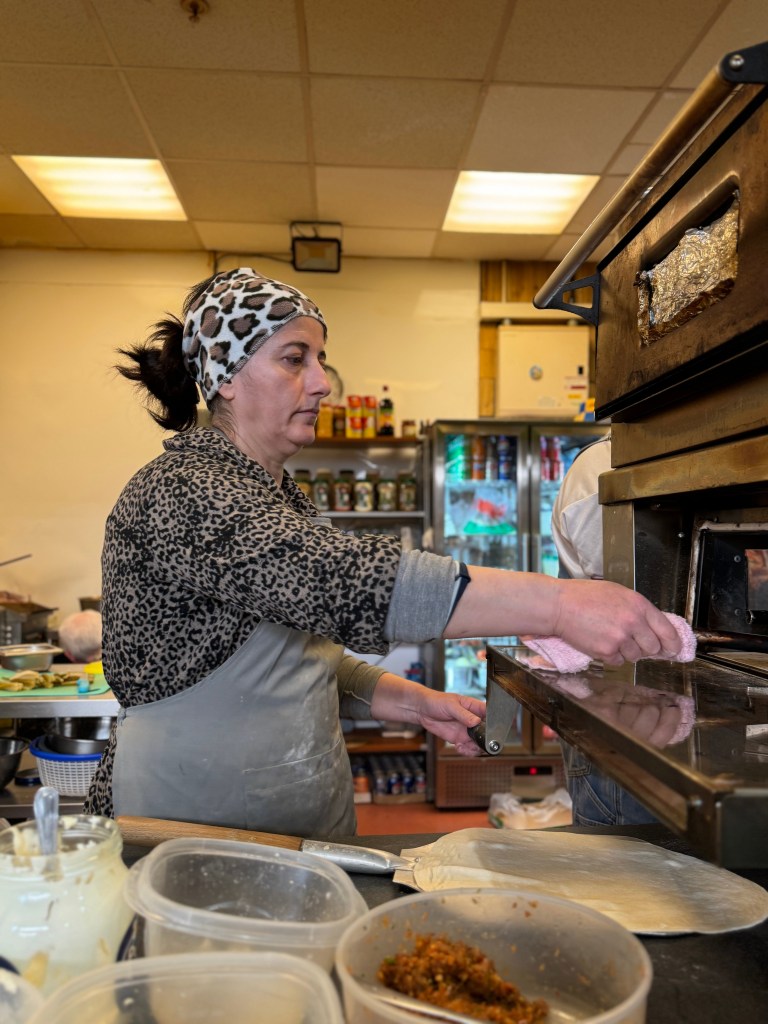
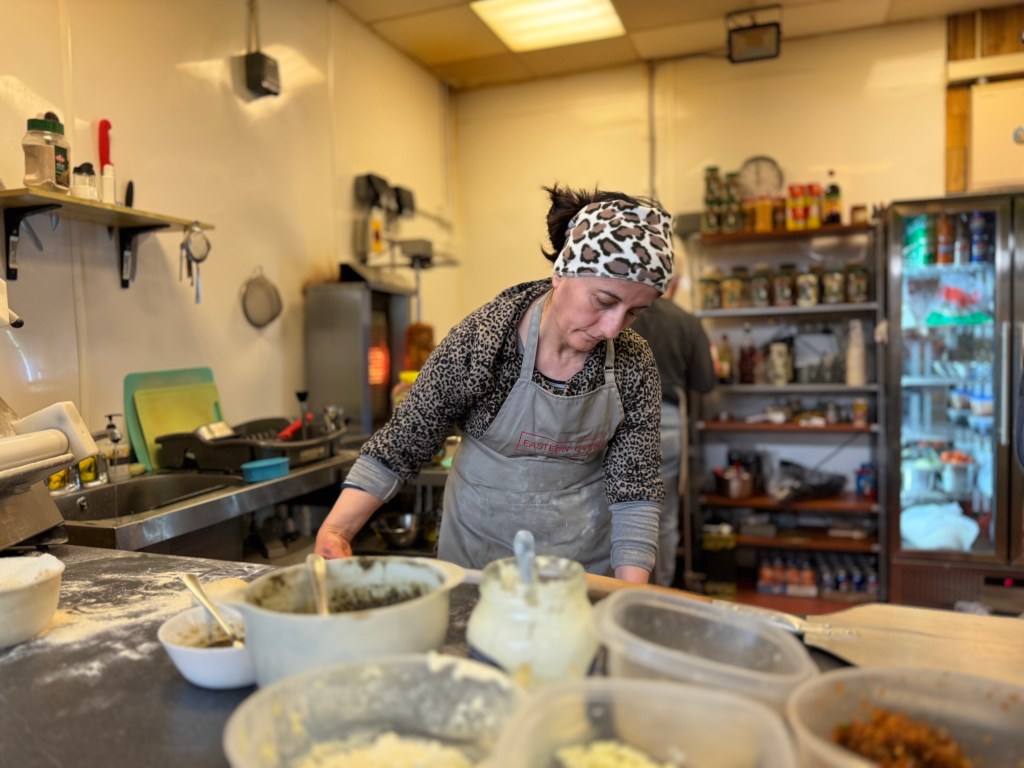
  • A woman wearing an apron and a cheetah print fleece with a matching bandana prepares flatbread at Eastern Oven, with ingredients in the foreground and the kitchen visible in the background
  • A woman wearing an apron and a cheetah print fleece with a matching bandana prepares flatbread at Eastern Oven, with ingredients in the foreground and the kitchen visible in the background
  • A woman wearing an apron and a cheetah print fleece with a matching bandana prepares flatbread at Eastern Oven, with ingredients in the foreground and the kitchen visible in the background
  • A woman wearing an apron and a cheetah print fleece with a matching bandana prepares flatbread at Eastern Oven, with ingredients in the foreground and the kitchen visible in the background
  • A woman wearing an apron and a cheetah print fleece with a matching bandana prepares flatbread at Eastern Oven, with ingredients in the foreground and the kitchen visible in the background
  • A woman wearing an apron and a cheetah print fleece with a matching bandana prepares flatbread at Eastern Oven, with ingredients in the foreground and the kitchen visible in the background
  • A woman wearing an apron and a cheetah print fleece with a matching bandana prepares flatbread at Eastern Oven, with ingredients in the foreground and the kitchen visible in the background
  • A woman wearing an apron and a cheetah print fleece with a matching bandana prepares flatbread at Eastern Oven, with ingredients in the foreground and the kitchen visible in the background
  • A woman wearing an apron and a cheetah print fleece with a matching bandana prepares flatbread at Eastern Oven, with ingredients in the foreground and the kitchen visible in the background
  • A woman wearing an apron and a cheetah print fleece with a matching bandana prepares flatbread at Eastern Oven, with ingredients in the foreground and the kitchen visible in the background
  • A black Leeds City Kirkgate Market sign with white lettering, set against the intricate roof structure that lets in light. The interior features green and gold paintwork
  • 
The vibrant and busy Kirkgate Market Foodhall, with some people blurred to create a timelapse effect, and a "Market Kitchen" sign visible in the scene
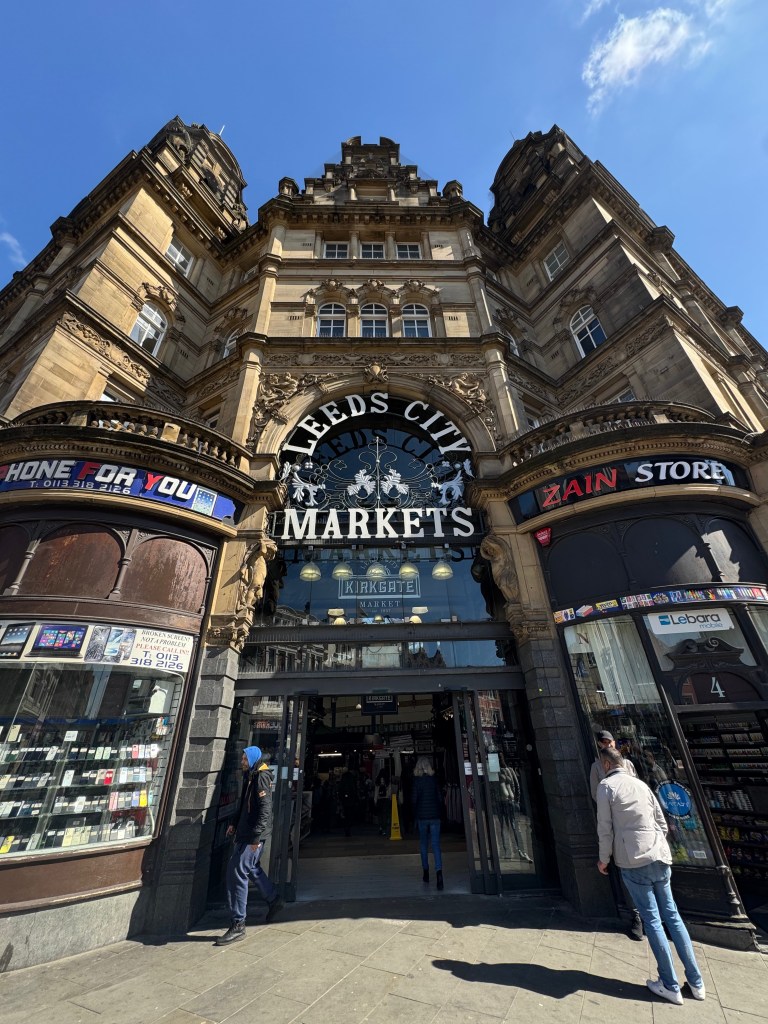
  • The main entrance of Kirkgate Market on a sunny day, with people walking in and out of the building
  • Manjit's Kitchen in the Kirkgate Market Foodhall, featuring bright yellow and green colours with customers waiting for their orders in the foreground
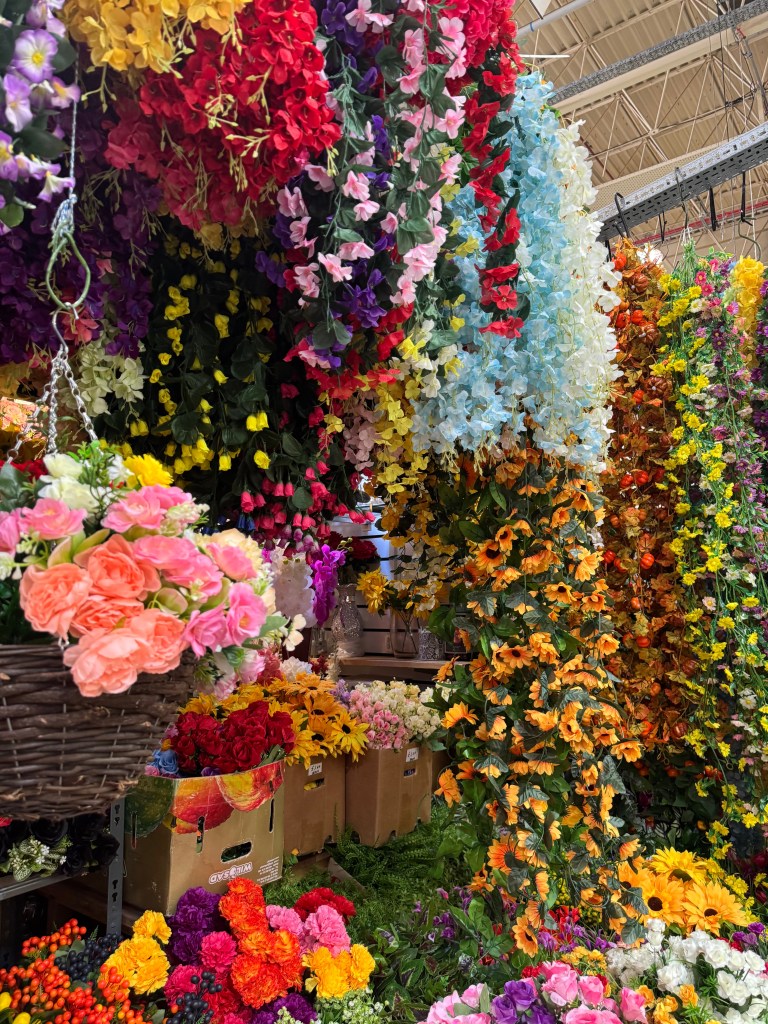
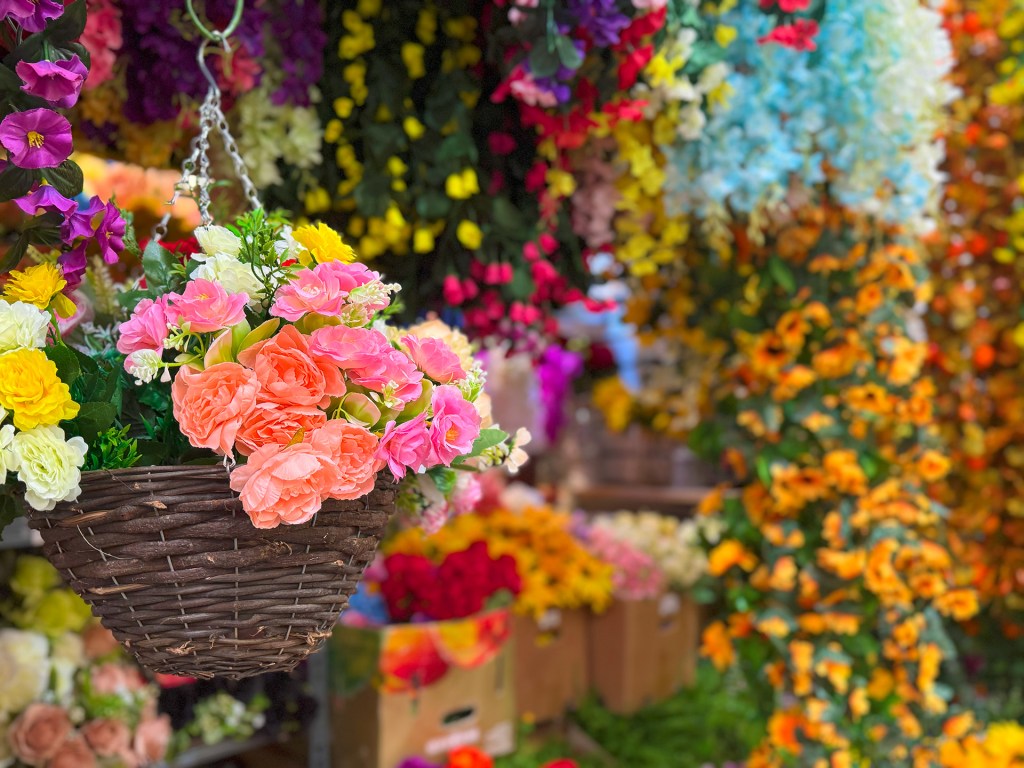
  • A display of coloruful artificial flowers hanging in a variety of bright hues at Kirkgate Market
  • A display of coloruful artificial flowers hanging in a variety of bright hues at Kirkgate Market
  • A display of coloruful artificial flowers hanging in a variety of bright hues at Kirkgate Market
  • A display of rolled-up cloths and materials in various bright colours, neatly arranged side by side at Kirkgate Market
  • A display of rolled-up cloths and materials in various bright colours, neatly arranged side by side at Kirkgate Market

Thursday 17th April Update

Today I took another trip down to the markets to take some more shots and to interview Jenny. As intended, I also got around 10 voxpop style comments from visitors, however, to my surprise, a number of them were actually quite pessimistic towards the markets, saying how they’ve changed a lot over the years, they aren’t as busy as they used to be, and how the council could arrange more events and activities within the market to make it a nice family space, so this could be another interesting angle to explore, however, I just have to be careful I don’t lose the focus.

Manjit hasn’t responded to any of my emails so I decided to go over and introduce myself in person, however, she told me she was very busy and understaffed and that she wouldn’t be able to speak to me that day. Despite this, she let me take some pictures of her and said she may be able to speak to me virtually. I’m trying not to feel too disheartened about this because I got a strong interview with Jenny and the visitor voxpops should pad the piece out and provide a range of perspectives, so I do have enough to work with. I just feel it needs another female vendor’s story like Manjit’s, otherwise there’s a risk the piece may feel too centred on Jenny, rather than representing the wider success stories of women in the markets.

I’ve emailed the Lord Mayor to request a comment on the significance of Kirkgate Market to Leeds, particularly in terms of community cohesion and inclusivity, however, she’s out of office until the 28th, so that may have to be a last minute addition. In the meantime, I have emailed Councillor Jonathan Pryor who’s the executive member for economy, transport, and sustainable development for Leeds City Council too see if he’s willing to provide a comment. I will also look for stats on the footfall of the markets as I think this is quite interesting for readers to know and gives some context to the feature.

I took over 400 shots today, including some portraits of Jenny and Manjit. I made the most of the nice weather and took lots of pictures outside and I’m quite happy with how they turned out. I have displayed some of my favourites in a slideshow below. Although this piece focuses on women in the market, I think it’s important to capture the essence of the markets as a whole which is where there’s such a broad range of photos, not just photos of women.

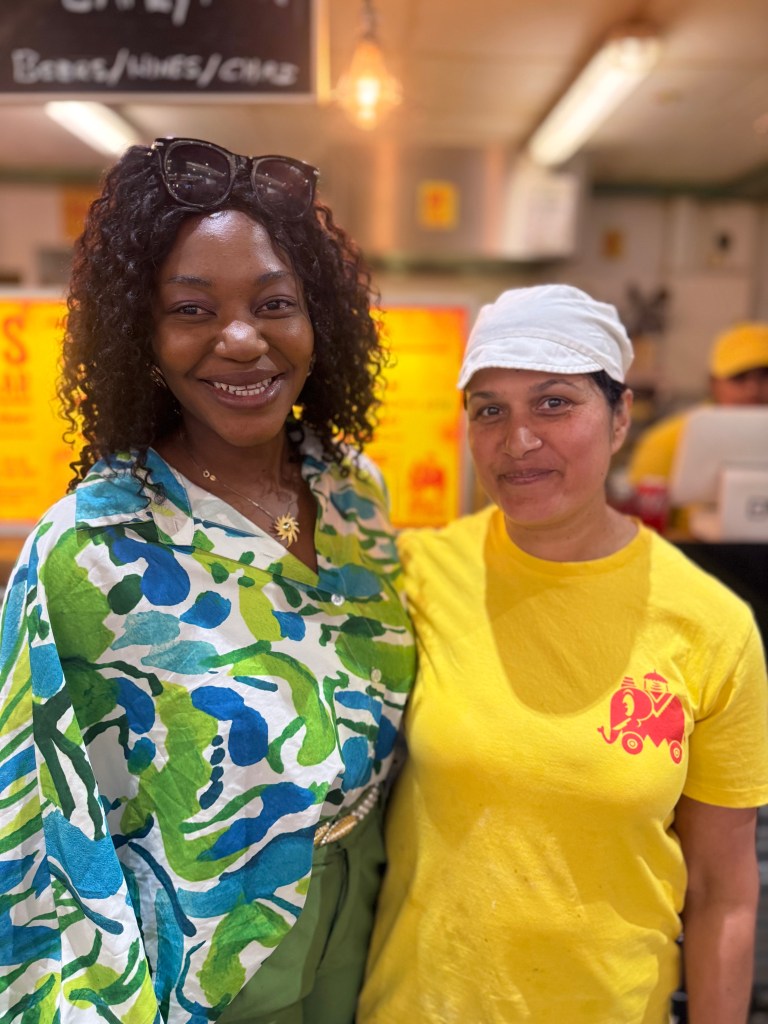
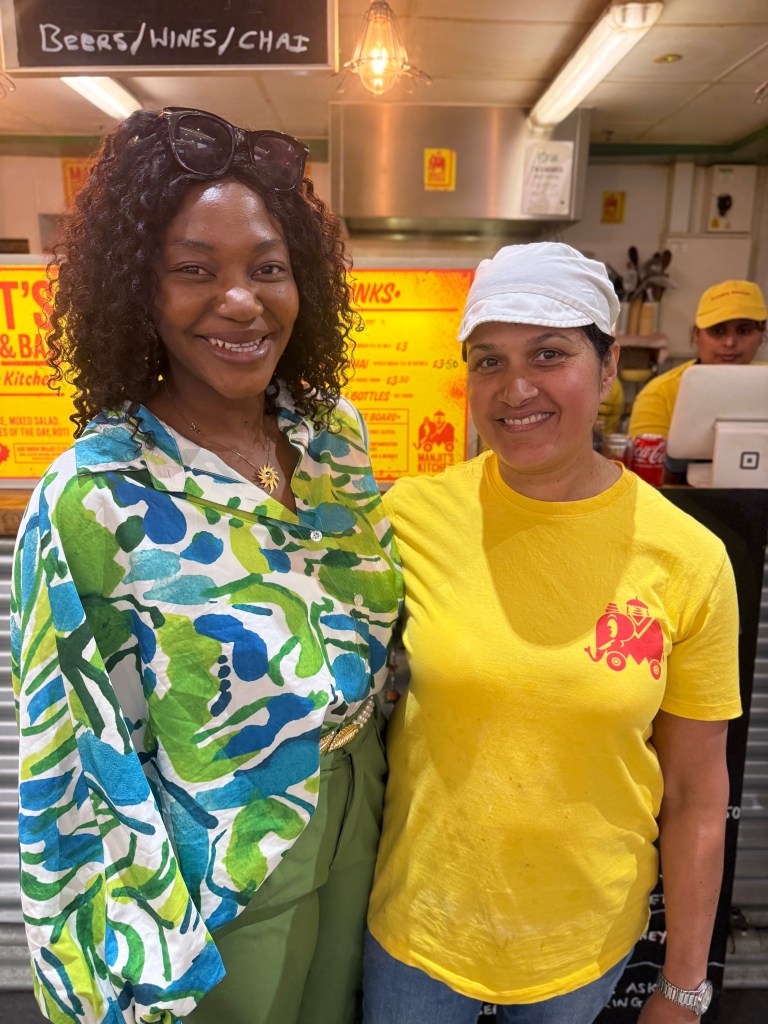
  • Jennifer Barry from Jenny’s Jerk Chicken and Manjit Kaur from Manjit’s Kitchen standing side by side in Kirkgate Market, smiling at the camera with their arms around each other’s backs
  • Jennifer Barry from Jenny’s Jerk Chicken and Manjit Kaur from Manjit’s Kitchen standing side by side in Kirkgate Market, smiling at the camera with their arms around each other’s backs
  • Jennifer Barry from Jenny’s Jerk Chicken and Manjit Kaur from Manjit’s Kitchen standing side by side in Kirkgate Market, smiling at the camera with their arms around each other’s backs
  • Jennifer Barry from Jenny’s Jerk Chicken and Manjit Kaur from Manjit’s Kitchen standing side by side in Kirkgate Market, smiling at the camera with their arms around each other’s backs
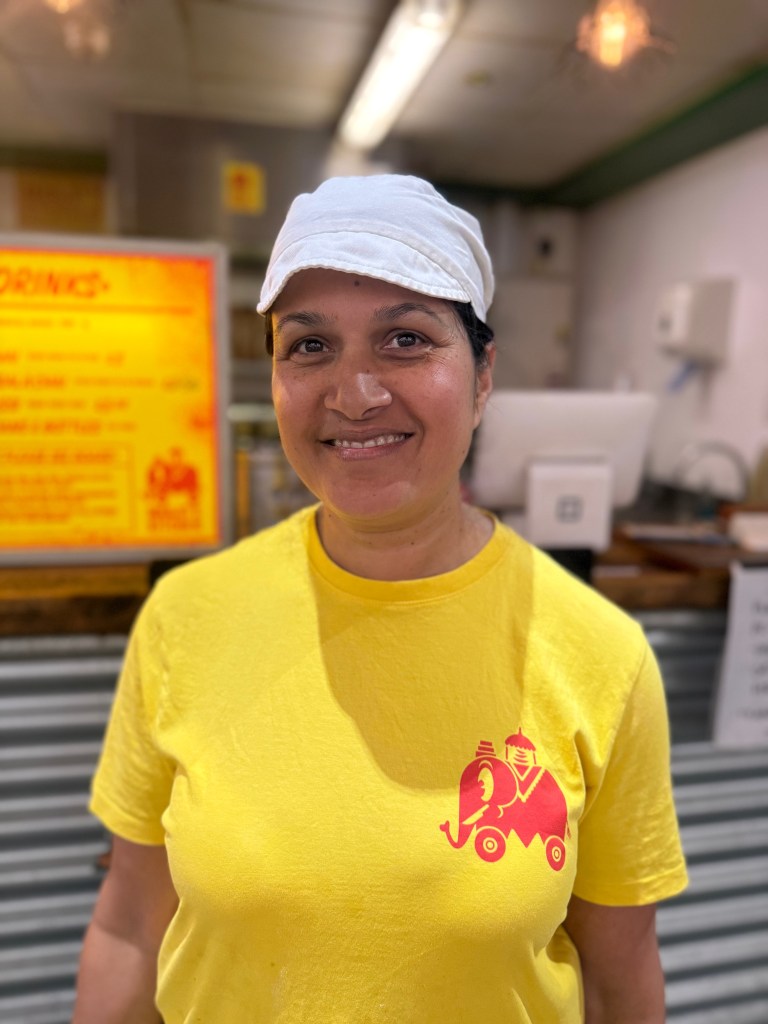
  • Manjit Kaur stands smiling at the camera outside her food stall, Manjit’s Kitchen, in Kirkgate Market, Leeds
  • Manjit Kaur stands smiling at the camera outside her food stall, Manjit’s Kitchen, in Kirkgate Market, Leeds
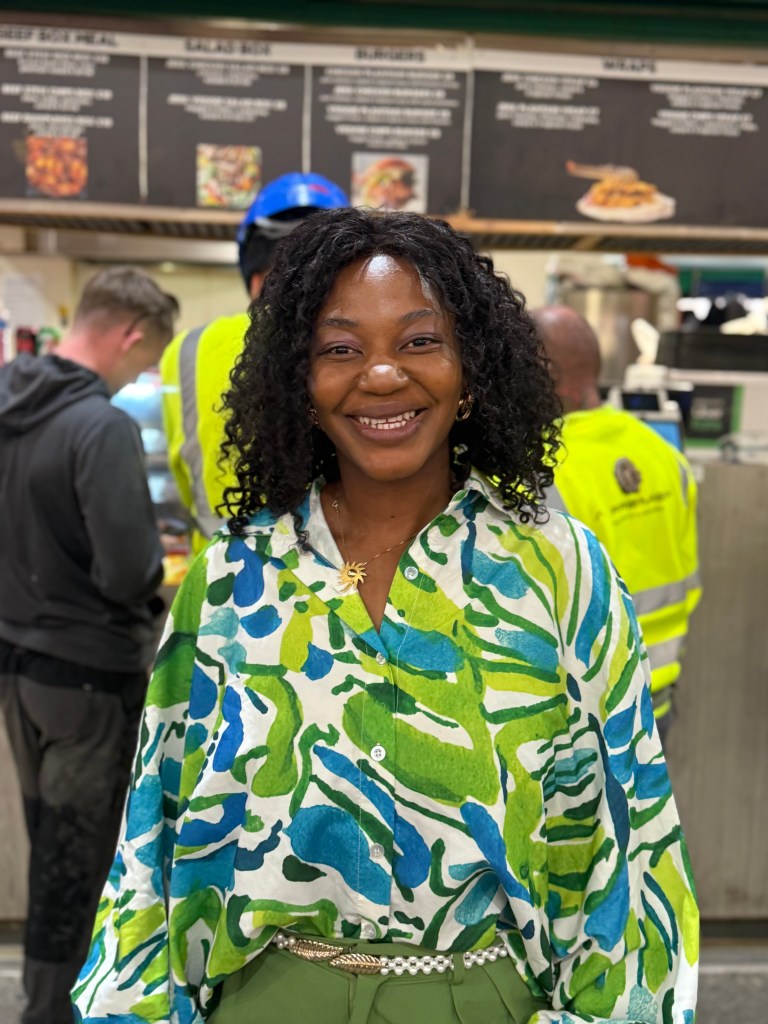
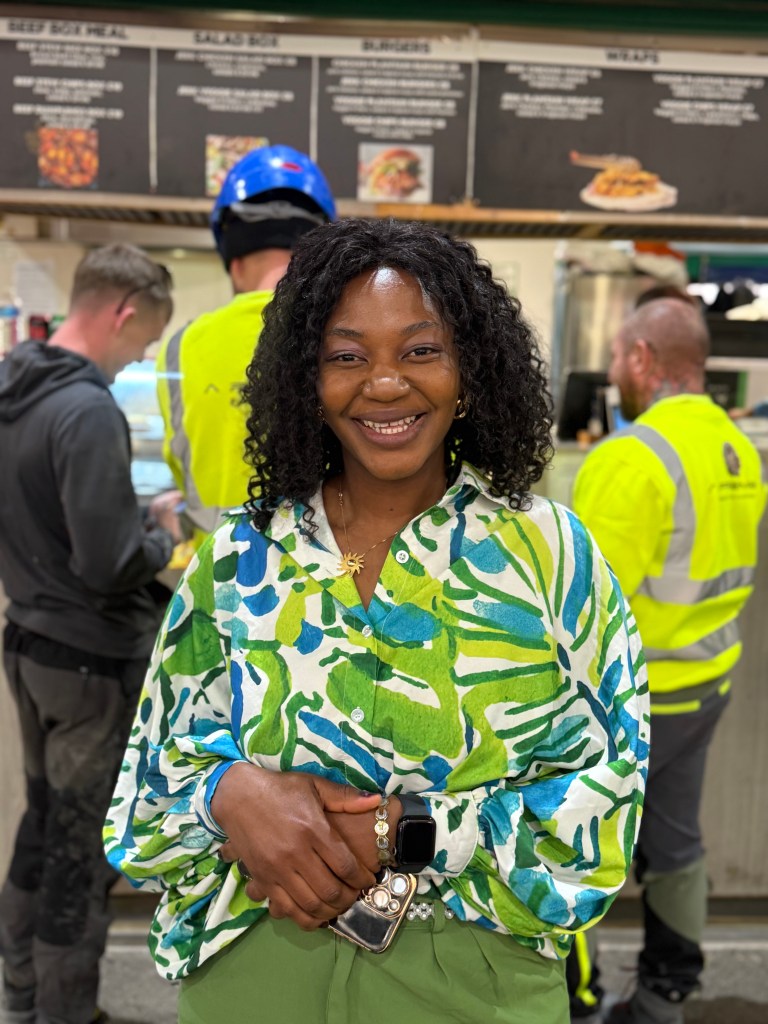
  • Jennifer Barry stands smiling outside Jenny’s Jerk Chicken in Kirkgate Market, with her hands gesturing toward the stall behind her. Construction workers are visible in the background, waiting to order
  • Jennifer Barry stands outside Jenny’s Jerk Chicken in Kirkgate Market, smiling at the camera
  • Jennifer Barry stands outside Jenny’s Jerk Chicken in Kirkgate Market, smiling at the camera
  • Jennifer Barry stands outside Jenny’s Jerk Chicken in Kirkgate Market, smiling at the camera
  • Jennifer Barry stands outside Jenny’s Jerk Chicken in Kirkgate Market, smiling at the camera
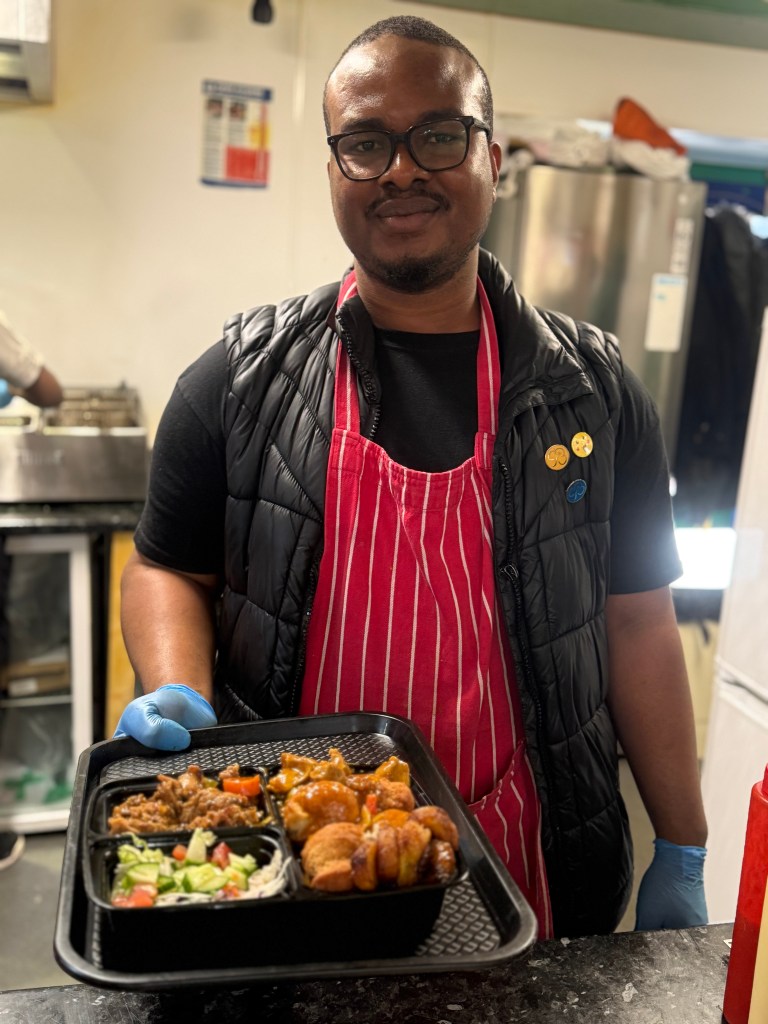
  • A Jenny’s Jerk Chicken employee stands behind the counter smiling at the camera, holding a plate of dumplings, curry goat, and jerk chicken. The kitchen is visible in the background
  • A Jenny’s Jerk Chicken employee stands behind the counter smiling at the camera, holding a plate of dumplings, curry goat, and jerk chicken. The kitchen is visible in the background
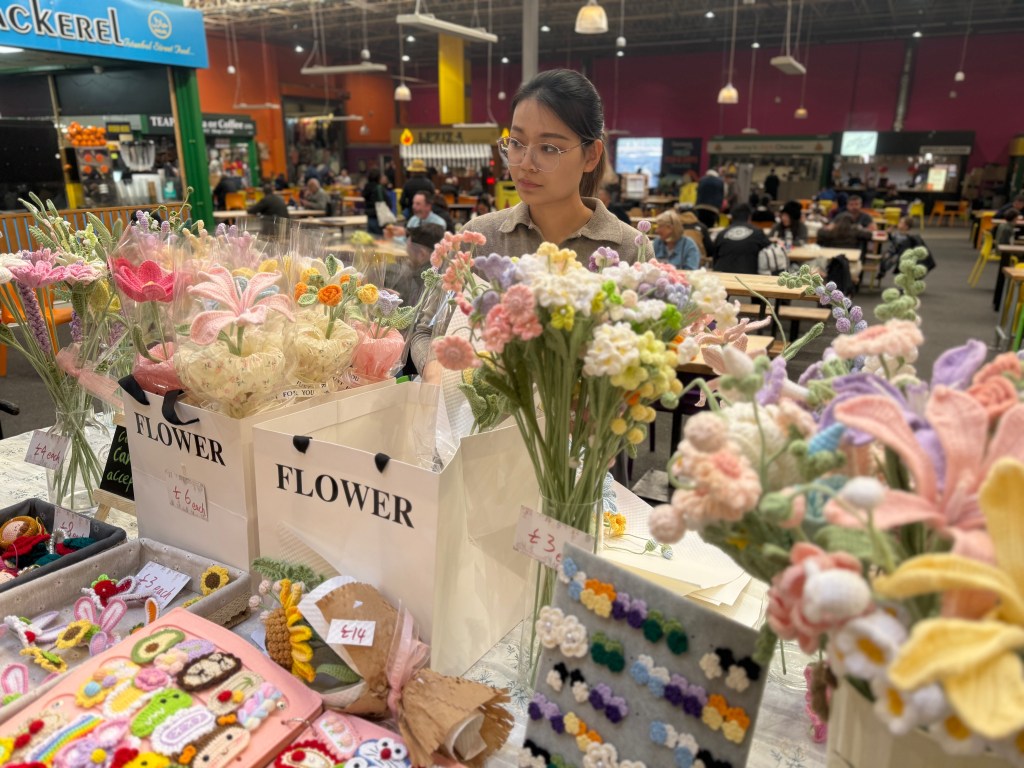
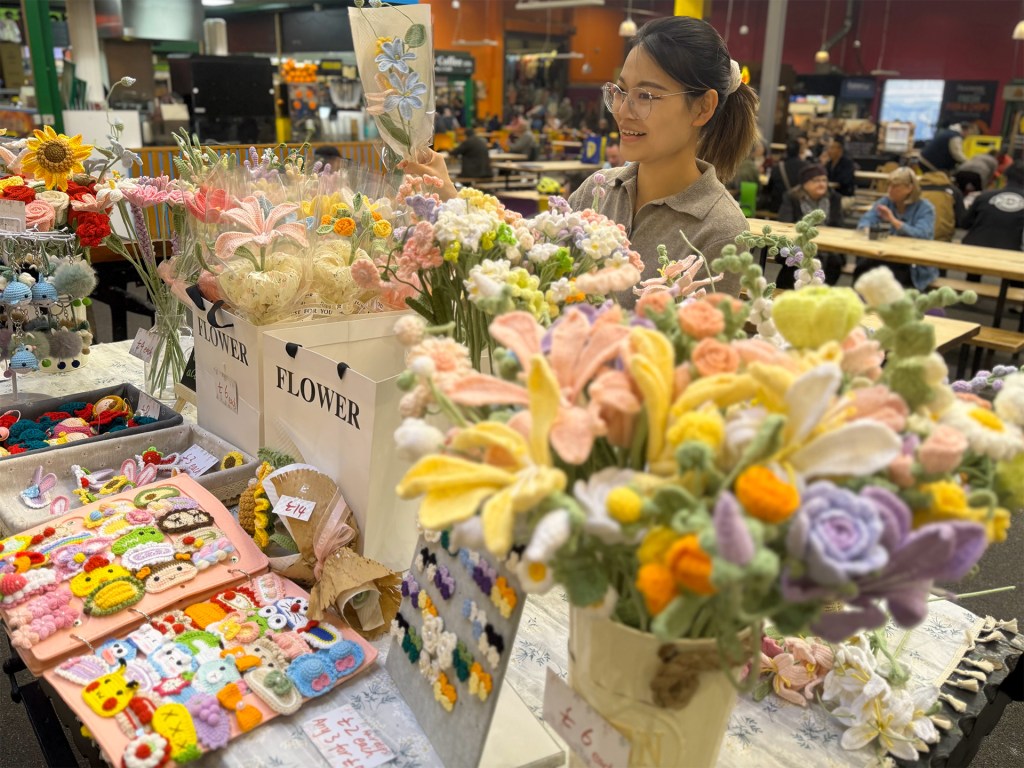
  • A woman stands behind her cart in the centre of Kirkgate Market’s Foodhall, speaking with a customer. The cart is filled with colourful knitted flowers and gifts
  • A woman stands behind her cart in the centre of Kirkgate Market’s Foodhall, speaking with a customer. The cart is filled with colourful knitted flowers and gifts
  • A woman stands behind her cart in the centre of Kirkgate Market’s Foodhall, speaking with a customer. The cart is filled with colourful knitted flowers and gifts
  • A woman stands behind her cart in the centre of Kirkgate Market’s Foodhall, speaking with a customer. The cart is filled with colourful knitted flowers and gifts
  • A woman stands behind her cart in the centre of Kirkgate Market’s Foodhall, speaking with a customer. The cart is filled with colourful knitted flowers and gifts
  • A woman stands behind her cart in the centre of Kirkgate Market’s Foodhall, speaking with a customer. The cart is filled with colourful knitted flowers and gifts
  • A woman stands behind her cart in the centre of Kirkgate Market’s Foodhall, speaking with a customer. The cart is filled with colourful knitted flowers and gifts
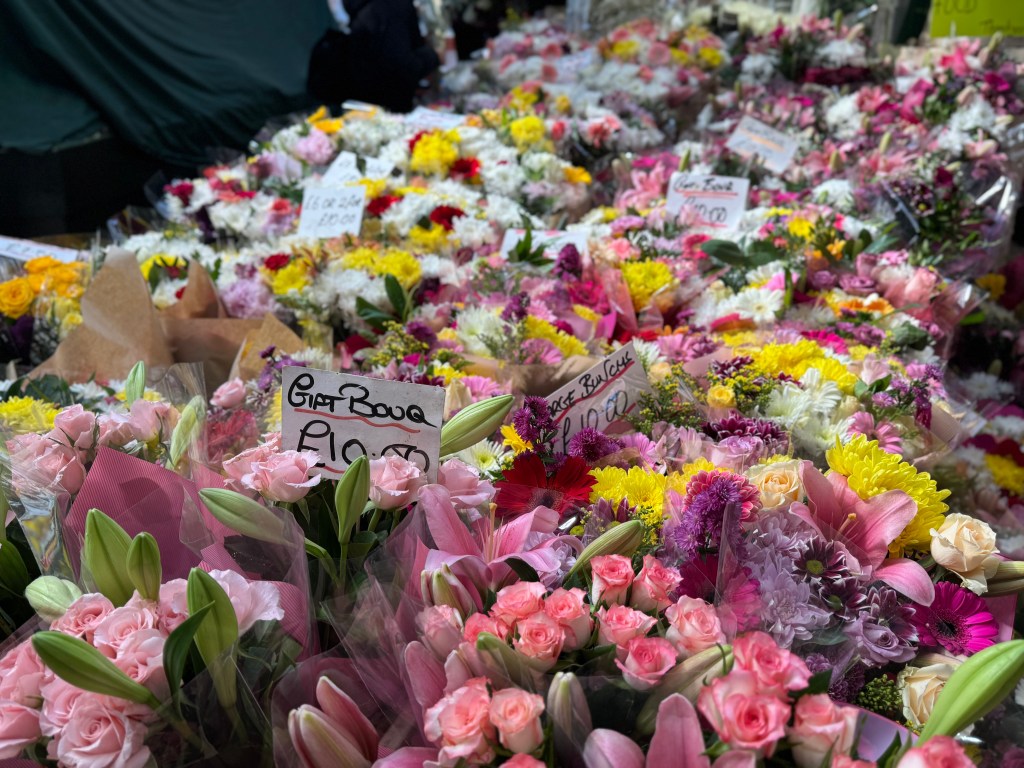
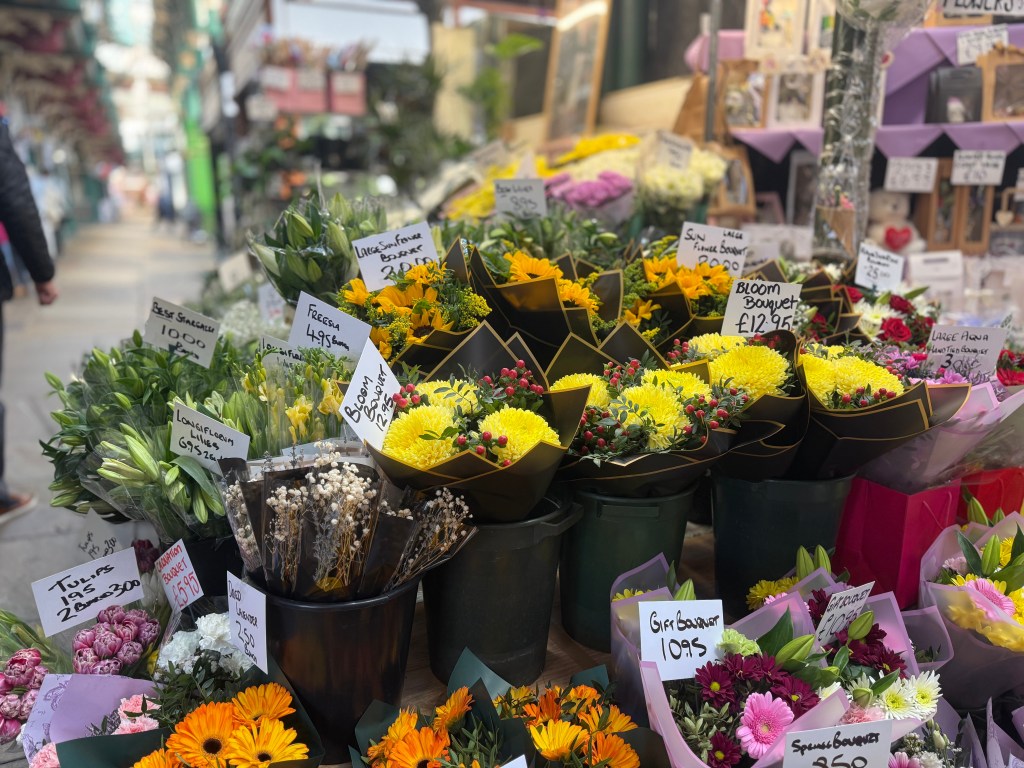
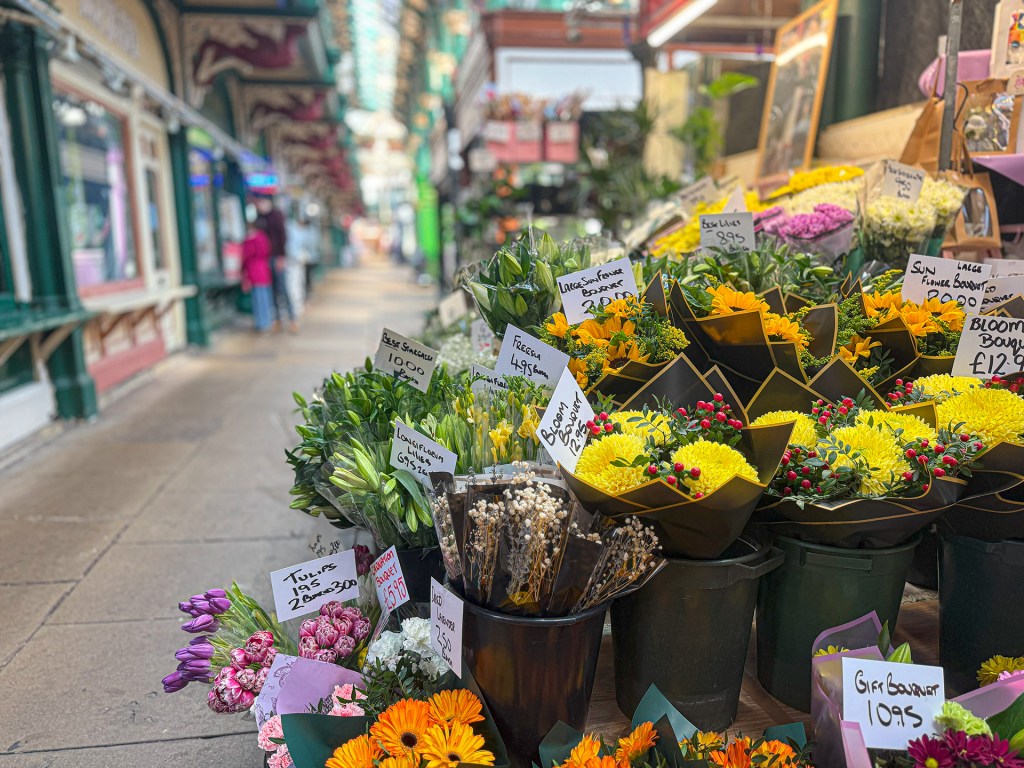
  • A close-up of a vibrant flower display in Kirkgate Market, with various colourful flowers in sharp focus and a blurred walkway in the background
  • A close-up of a vibrant flower display in Kirkgate Market, with various colourful flowers in sharp focus and a blurred walkway in the background
  • A close-up of a vibrant flower display in Kirkgate Market, with various colourful flowers in sharp focus and a blurred walkway in the background
  • A close-up of a vibrant flower display in Kirkgate Market, with various colourful flowers in sharp focus and a blurred walkway in the background
  • A close-up of a vibrant flower display in Kirkgate Market, with various colourful flowers in sharp focus and a blurred walkway in the background
  • A close-up of a vibrant flower display in Kirkgate Market, with various colourful flowers in sharp focus and a blurred walkway in the background
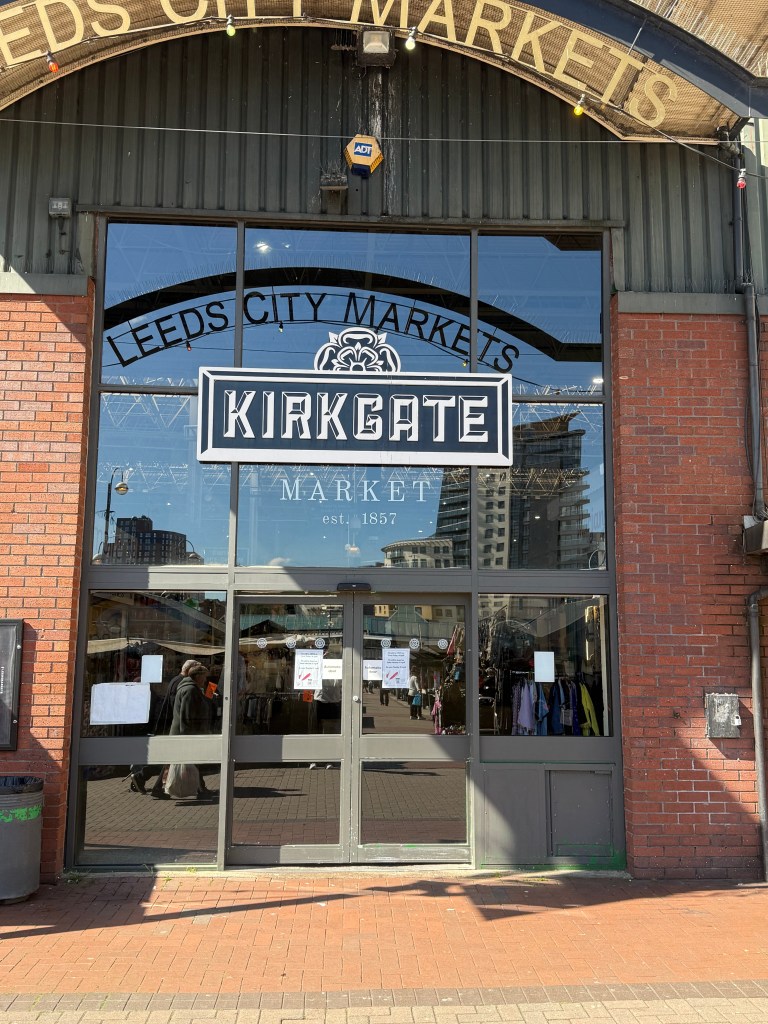
  • The back entrance of Kirkgate Market with glass automatic sliding doors and a black sign with white lettering reading "Kirkgate Markets." Reflected in the glass is partial text from a sign above that reads "Leeds City Markets." The scene is lit by bright natural light
  • The back entrance of Kirkgate Market with glass automatic sliding doors and a black sign with white lettering reading "Kirkgate Markets." Reflected in the glass is partial text from a sign above that reads "Leeds City Markets." The scene is lit by bright natural light
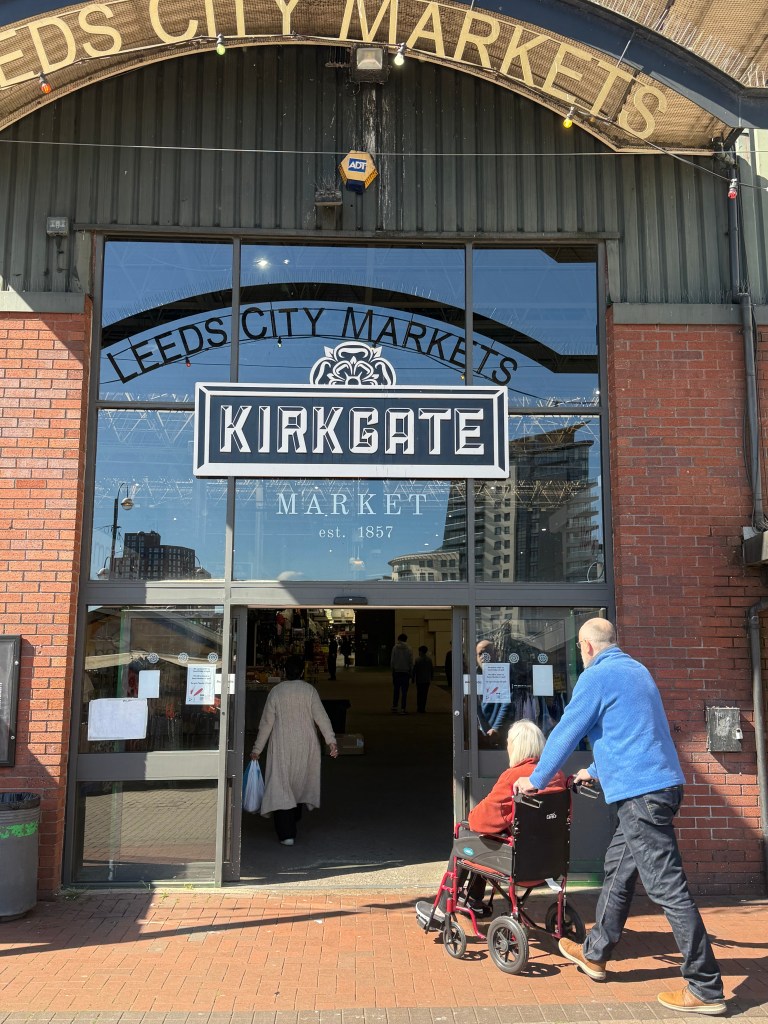
  • A man wheels a person in a wheelchair through the back entrance of Kirkgate Market, which features glass automatic sliding doors and a black sign with white lettering reading "Kirkgate Markets." Reflected in the glass is partial text from a sign above that reads "Leeds City Markets." The scene is lit by bright natural light
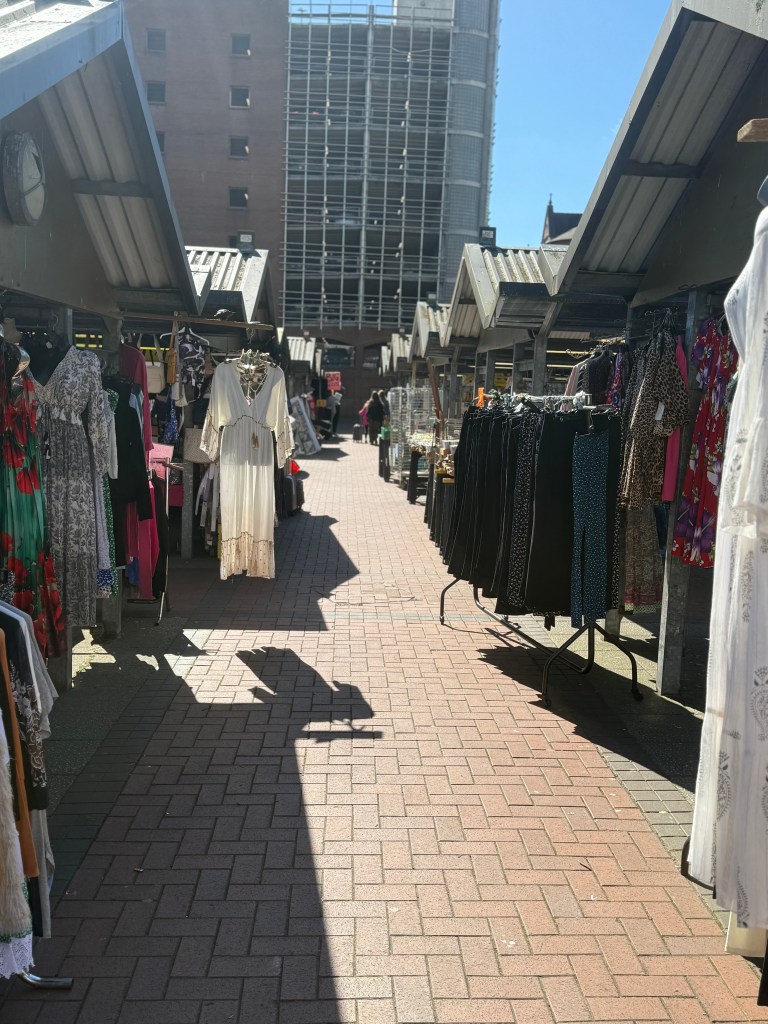
  • The walkways outside Kirkgate Market, lined with stalls displaying clothes. The scene is bright with sunlight and a clear sky
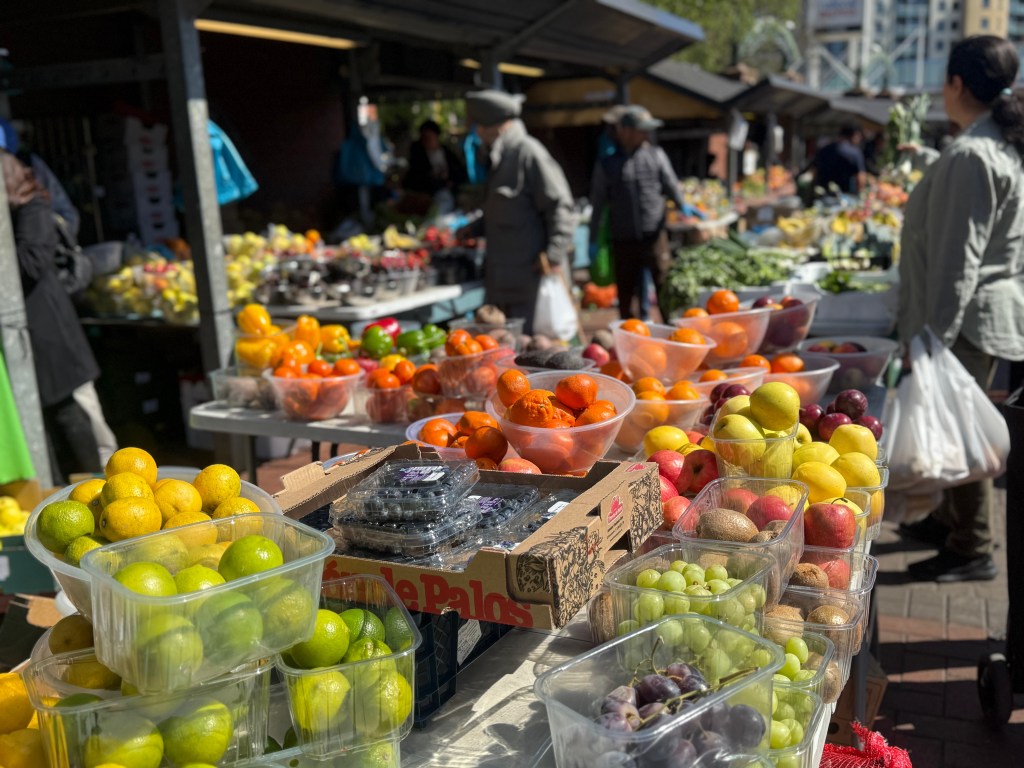
  • A colourful display of fruits outside Kirkgate Market, including grapes, limes, kiwis, blueberries, and oranges on a sunny day
  • A colourful display of fruits outside Kirkgate Market, including grapes, limes, kiwis, blueberries, and oranges, with a stallholder tending to a customer in the blurred background
  • A colourful display of fruits outside Kirkgate Market, including grapes, limes, kiwis, blueberries, and oranges, with a stallholder tending to a customer in the blurred background
  • A colourful display of fruits outside Kirkgate Market, including grapes, limes, kiwis, blueberries, and oranges, with a stallholder tending to a customer in the blurred background
  • A colourful display of fruits outside Kirkgate Market, including grapes, limes, kiwis, blueberries, and oranges. In the background, a stallholder holds out his hand for payment as he assists a customer
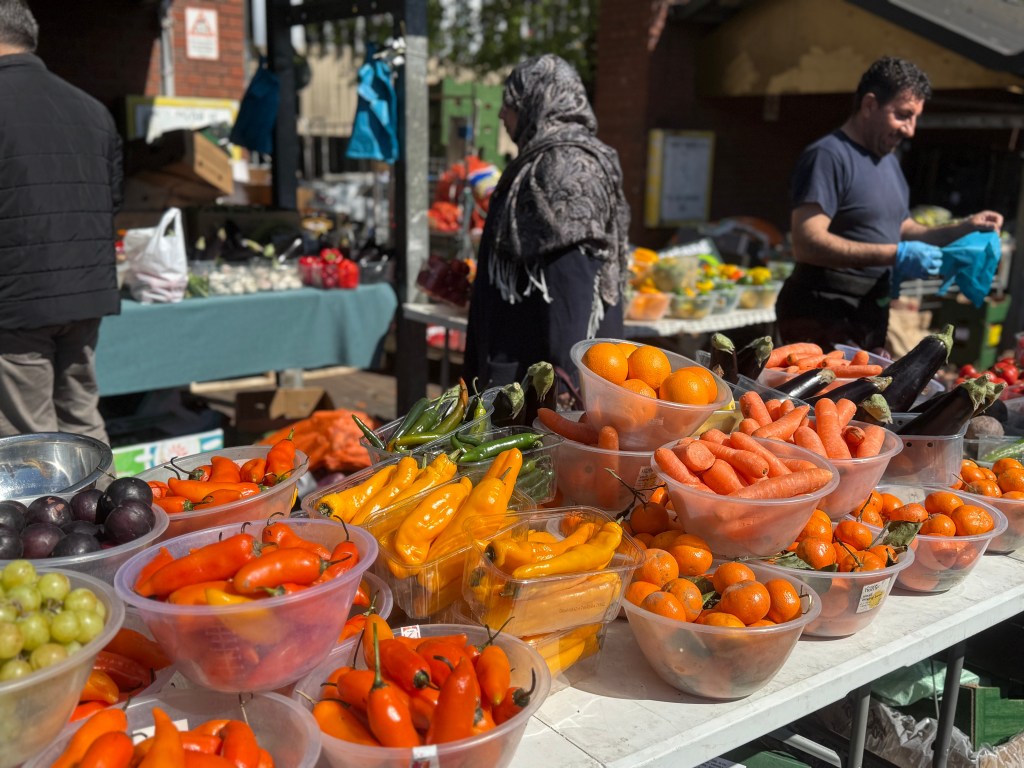
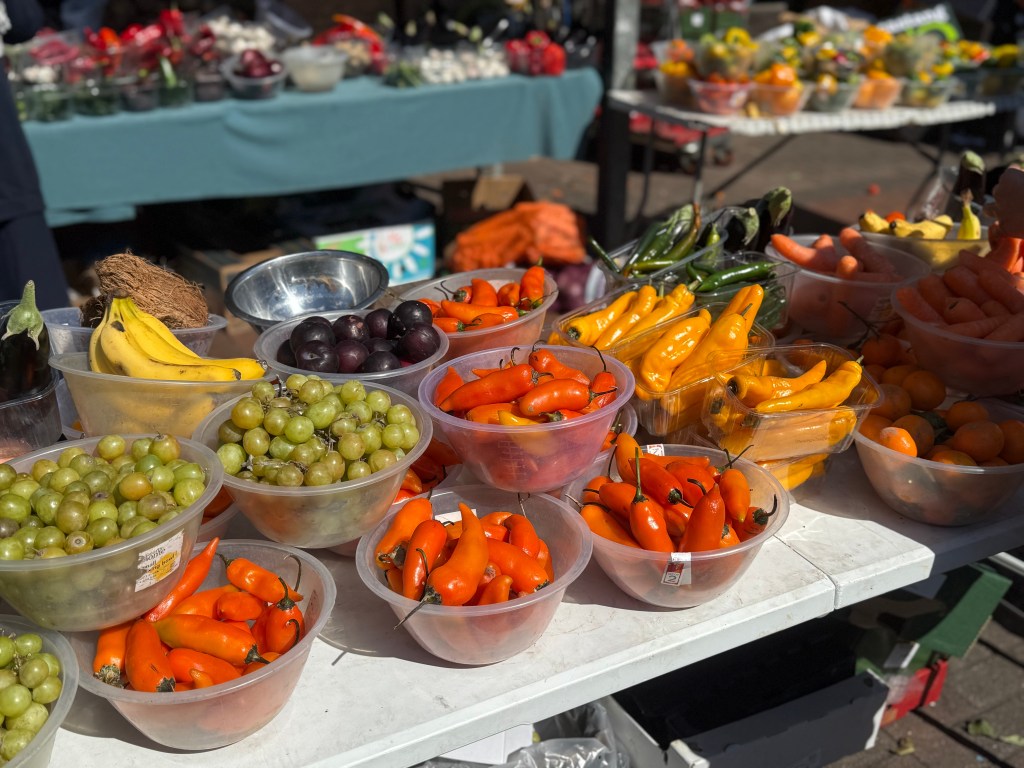
  • A colourful display of peppers, aubergines, carrots, grapes, and oranges outside Kirkgate Market on a sunny day. A woman in a hijab stands in the background, while the male stallholder appears to be smiling. The background is slightly out of focus
  • A colourful display of peppers, aubergines, carrots, grapes, and oranges outside Kirkgate Market. The produce in the foreground is in sharp focus, while a woman in a hijab holding a punnet of strawberries and a male stallholder to her right are slightly blurred in the background
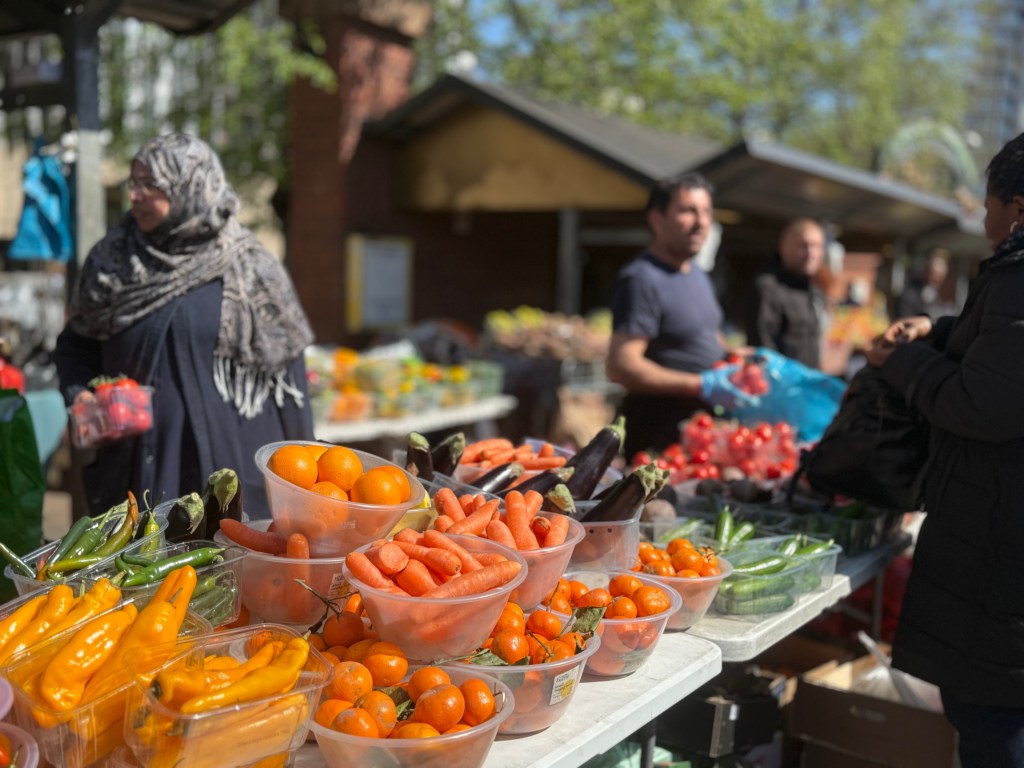
  • A vibrant display of peppers, carrots, grapes, and oranges outside Kirkgate Market. The produce is in sharp focus in the foreground, while the background is blurred. A customer's hand can be seen reaching to pick something from the stall
  • A vibrant display of peppers, carrots, grapes, and oranges outside Kirkgate Market. The produce is in sharp focus in the foreground, while the background is blurred. A customer's hand can be seen reaching to pick something from the stall
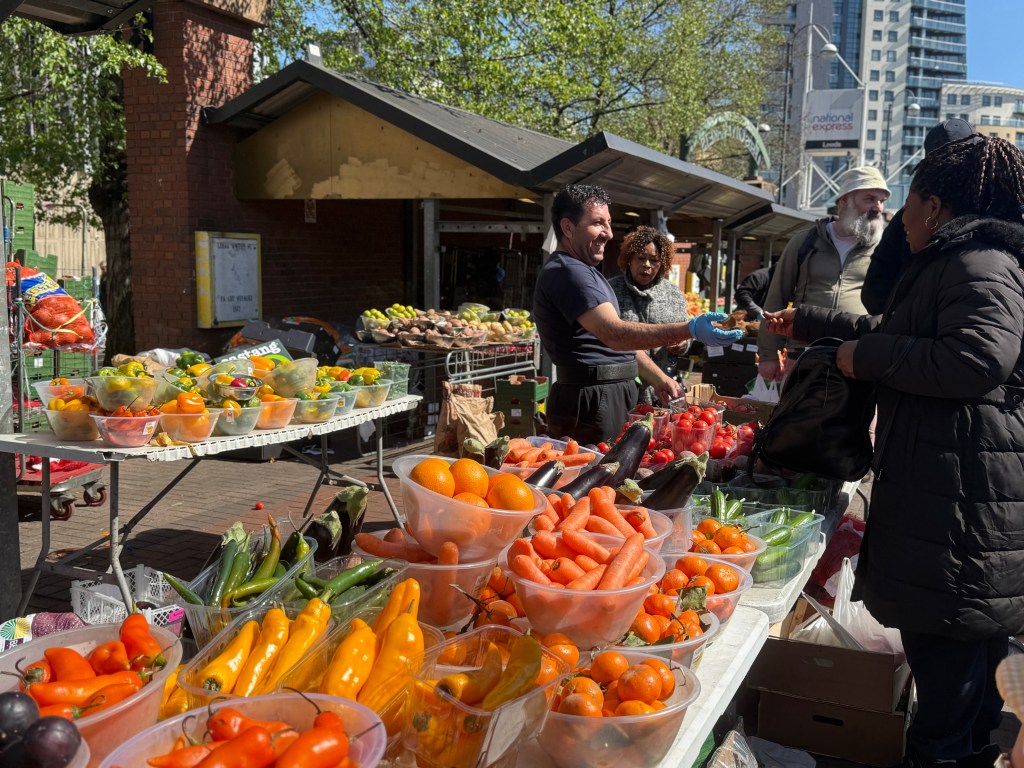
  • A vibrant display of peppers, carrots, grapes, and oranges outside Kirkgate Market. The produce is in sharp focus in the foreground, while a vendor with his hand outstretched laughs with a group of customers on the right side of the shot
  • A vibrant display of peppers, carrots, grapes, and oranges outside Kirkgate Market. The produce is in sharp focus in the foreground, while a vendor with his hand outstretched laughs with a group of customers on the right side of the shot
  • A vibrant display of peppers, carrots, grapes, and oranges outside Kirkgate Market. The produce is in sharp focus in the foreground, while a vendor with his hand outstretched laughs with a group of customers on the right side of the shot
  • A vibrant display of peppers, carrots, grapes, and oranges at Kirkgate Market. The produce is in sharp focus, showcasing its bright colours
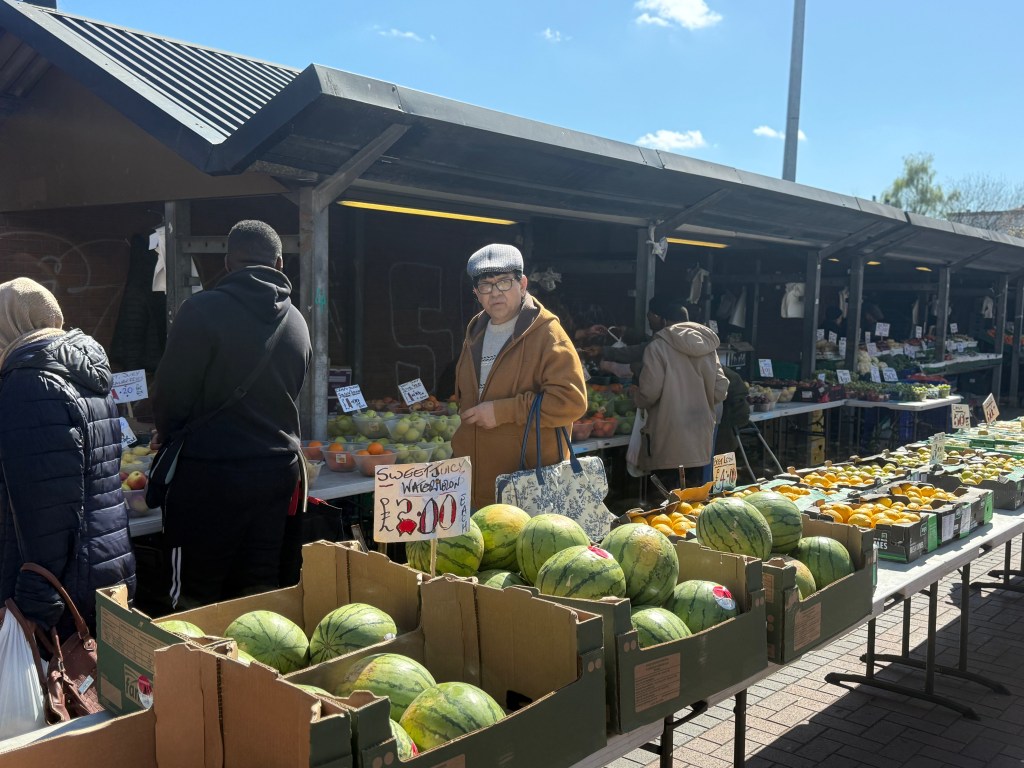
  • Watermelons in crates on tables in the foreground, with sheltered stalls behind and customers walking along the walkway, looking at the market offerings. The sky is clear and bright blue
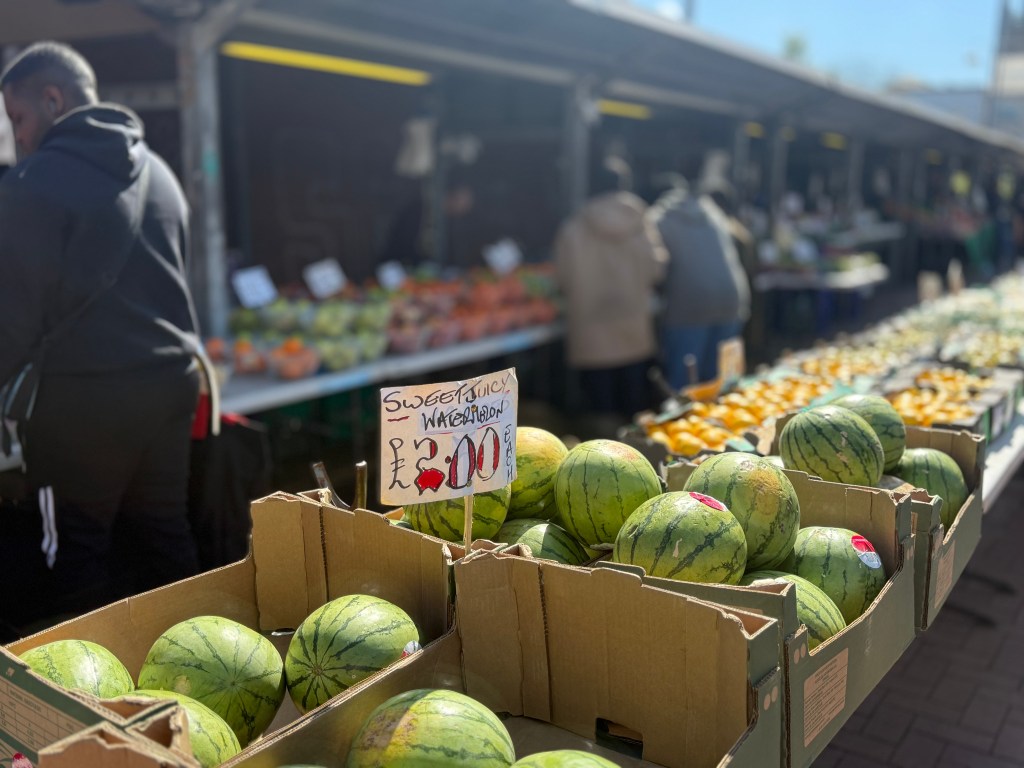
  • Watermelons in crates on tables in sharp focus, with a blurred background of sheltered stalls and customers walking along the walkway. The sky is clear and bright blue
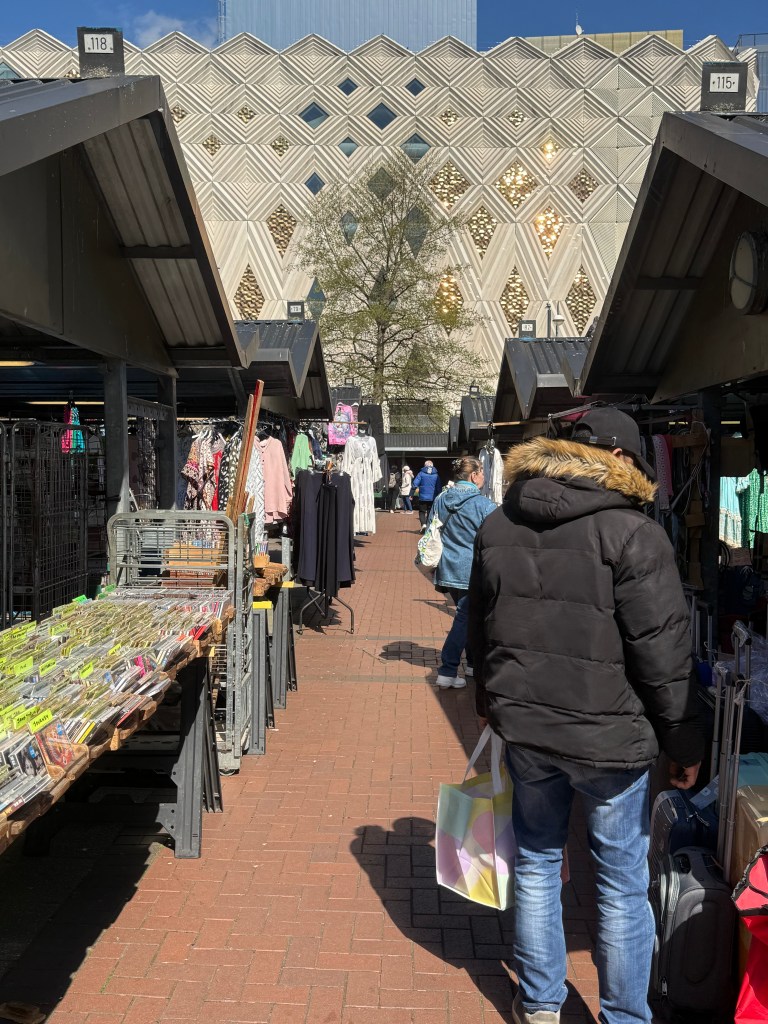
  • The walkways outside Kirkgate Market, lined with stalls displaying clothes. The old John Lewis building is visible in the background. The scene is bright with sunlight and a clear, blue sky
  • The walkways outside Kirkgate Market, lined with stalls displaying clothes. The old John Lewis building is visible in the background. The scene is bright with sunlight and a clear, blue sky
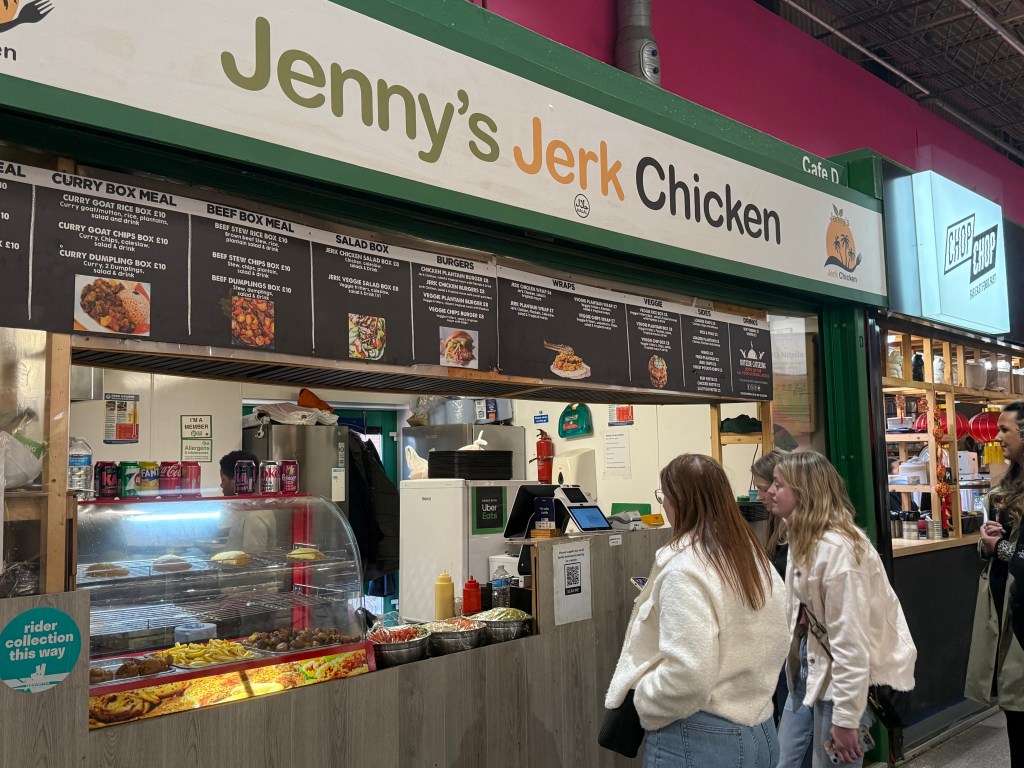
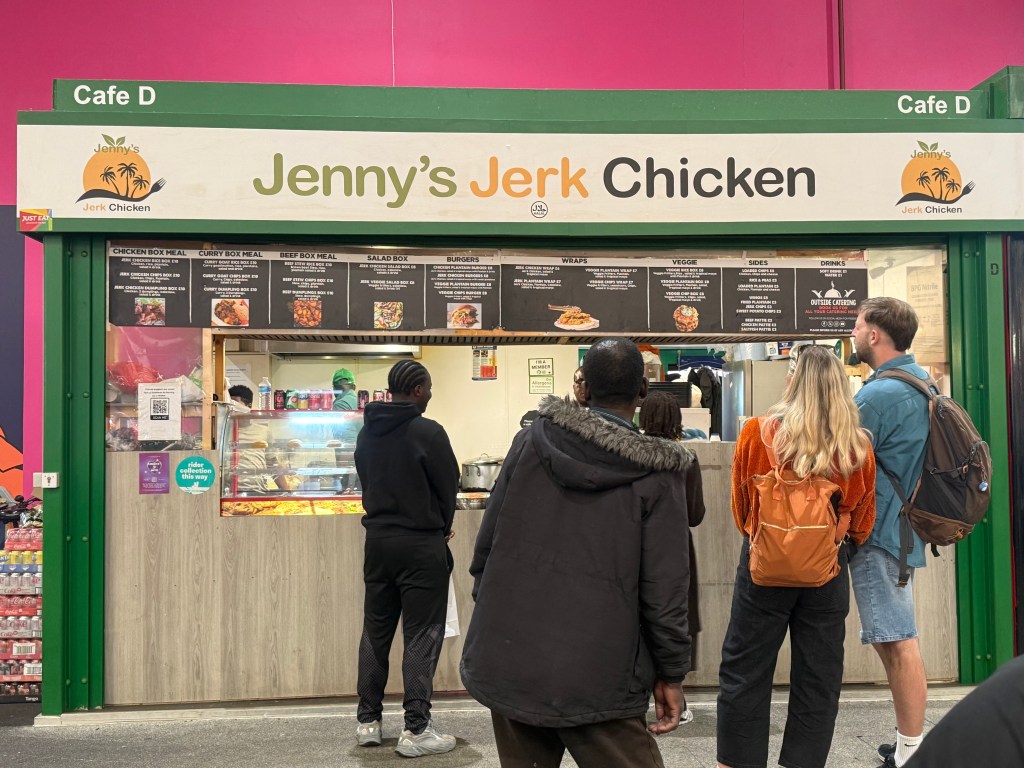
  • Jenny's Jerk Chicken food stall inside Kirkgate Market with a green painted front. Images of the menu items, including curry box meals, beef box meals, salad boxes, burgers, and wraps, are displayed around the opening hatch. Customers are visible near the stall, and someone can be seen working in the kitchen behind the counter
  • Jenny's Jerk Chicken food stall inside Kirkgate Market with a green painted front. Images of the menu items, including curry box meals, beef box meals, salad boxes, burgers, and wraps, are displayed around the opening hatch. Customers are visible near the stall, and staff members can be seen working in the kitchen behind the counter

When I first chose this subject, I was drawn to the vibrant atmosphere of the markets and I’m pleased that I’ve managed to capture that energy in these shots. That said, I may still make some tweaks on Photoshop, such as perspective crops or other small adjustments, so I can really bring them to life before finalising them.

Now that I’ve narrowed down the hundreds of test shots I took at the markets, I’m refining my selection further and choosing the best 12 photos to include in my project. These images are displayed in the slideshow below, with a Photoshopped version next to each one. The captions detail the adjustments I have made on Photoshop and why I chose to do so.

I’ve focused on images that highlight the women of the market, while also capturing its vibrancy and diversity. This helps bring the piece to life and sets the scene for the feature, providing a broader context as I delve into the stories of Jenny and Manjit.

  • Rows of jars filled with sweet treats in Kirkgate Market, with the foreground in sharp focus and the background gradually blurred
  • Rows of jars filled with sweet treats in Kirkgate Market, with the foreground in sharp focus and the background gradually blurred
  • Jennifer Barry stands smiling outside Jenny’s Jerk Chicken in Kirkgate Market, with her hands gesturing toward the stall behind her. Construction workers are visible in the background, waiting to order
  • Jennifer Barry stands smiling outside Jenny’s Jerk Chicken in Kirkgate Market, with her hands gesturing toward the stall behind her. Construction workers are visible
  • A display of coloruful artificial flowers hanging in a variety of bright hues at Kirkgate Market
  • A display of coloruful artificial flowers hanging in a variety of bright hues at Kirkgate Market
  • An old dark green clock with gold detailing stands proudly between the walkways of Kirkgate Market, with light streaming in from the roof above and stalls visible in the background
  • An old dark green clock with gold detailing stands proudly between the walkways of Kirkgate Market, with light streaming in from the roof above and stalls visible in the background
  • A vibrant market stall displaying fresh vegetables, with people browsing in the background
  • A vibrant market stall displaying fresh vegetables, with people browsing in the background
  • A stall at Kirkgate Market displaying exotic vegetables like plantains, with shelves stacked with products visible in the background
  • A stall at Kirkgate Market displaying exotic vegetables like plantains, with shelves stacked with products visible in the background
  • A woman stands behind her cart in the centre of Kirkgate Market’s Foodhall, speaking with a customer. The cart is filled with colourful knitted flowers and gifts
  • A woman stands behind her cart in the centre of Kirkgate Market’s Foodhall, speaking with a customer. The cart is filled with colourful knitted flowers and gifts
  • A woman wearing an apron and a cheetah print fleece with a matching bandana prepares flatbread at Eastern Oven, with ingredients in the foreground and the kitchen visible in the background
  • A woman wearing an apron and a cheetah print fleece with a matching bandana prepares flatbread at Eastern Oven, with ingredients in the foreground and the kitchen visible in the background
  • Jennifer Barry from Jenny’s Jerk Chicken and Manjit Kaur from Manjit’s Kitchen standing side by side in Kirkgate Market, smiling at the camera with their arms around each other’s backs
  • Jennifer Barry from Jenny’s Jerk Chicken and Manjit Kaur from Manjit’s Kitchen standing side by side in Kirkgate Market, smiling at the camera with their arms around each other’s backs
  • A colourful display of fruits outside Kirkgate Market, including grapes, limes, kiwis, blueberries, and oranges, with a stallholder tending to a customer in the blurred background
  • A colourful display of fruits outside Kirkgate Market, including grapes, limes, kiwis, blueberries, and oranges, with a stallholder tending to a customer in the blurred background
  • A close-up of a vibrant flower display in Kirkgate Market, with various colourful flowers in sharp focus and a blurred walkway in the background
  • A close-up of a vibrant flower display in Kirkgate Market, with various colourful flowers in sharp focus and a blurred walkway in the background
  • Manjit Kaur stands smiling at the camera outside her food stall, Manjit’s Kitchen, in Kirkgate Market, Leeds
  • Manjit Kaur stands smiling at the camera outside her food stall, Manjit’s Kitchen, in Kirkgate Market, Leeds

Monday 28th April Update

I got a response from Manjit on the 23rd April and she answered the questions I had for her about her business so I’m delighted about this and now feel more confident knowing that my feature will highlight two compelling female success stories instead of focusing solely on Jenny.

I’m enjoying the feature-writing process of this assignment because I chose a topic that has really enabled me to get creative and write in a way that I haven’t for a while. I feel it’s brought out my creative flare which has been hiding ever since I’ve been encouraged to write simply and succinctly for news stories.

The way I’ve written this feature is very different by comparison to the pieces I’ve created at uni so far. I’m worried that maybe I’ve leaned too far into the creative writing element of feature writing with this piece. However, I’ve tried to immerse the reader in the experience and take them on a really vivid journey through the markets and I feel I can get away with doing that for a soft story like this, whilst still ensuring my feature is credible and incorporates real, authentic journalism.

My interest in writing is what initially drew me to this course so it feels like a full circle moment to be doing one of my final ever assignments in the very field that initially attracted me to the degree in the first place.

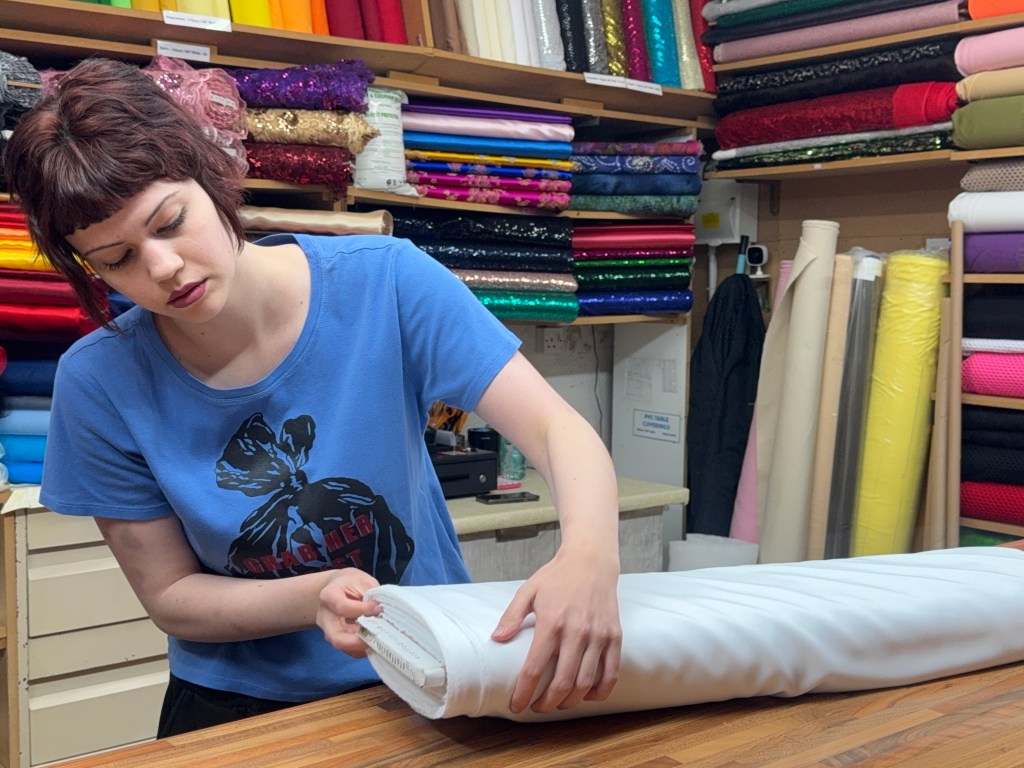
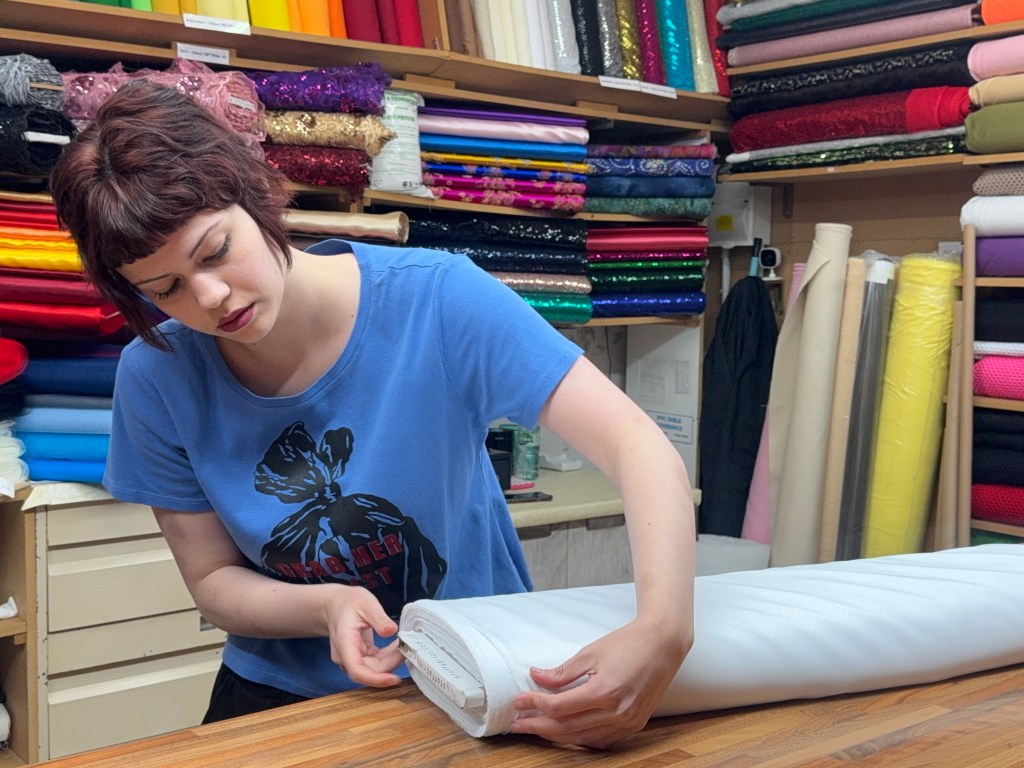
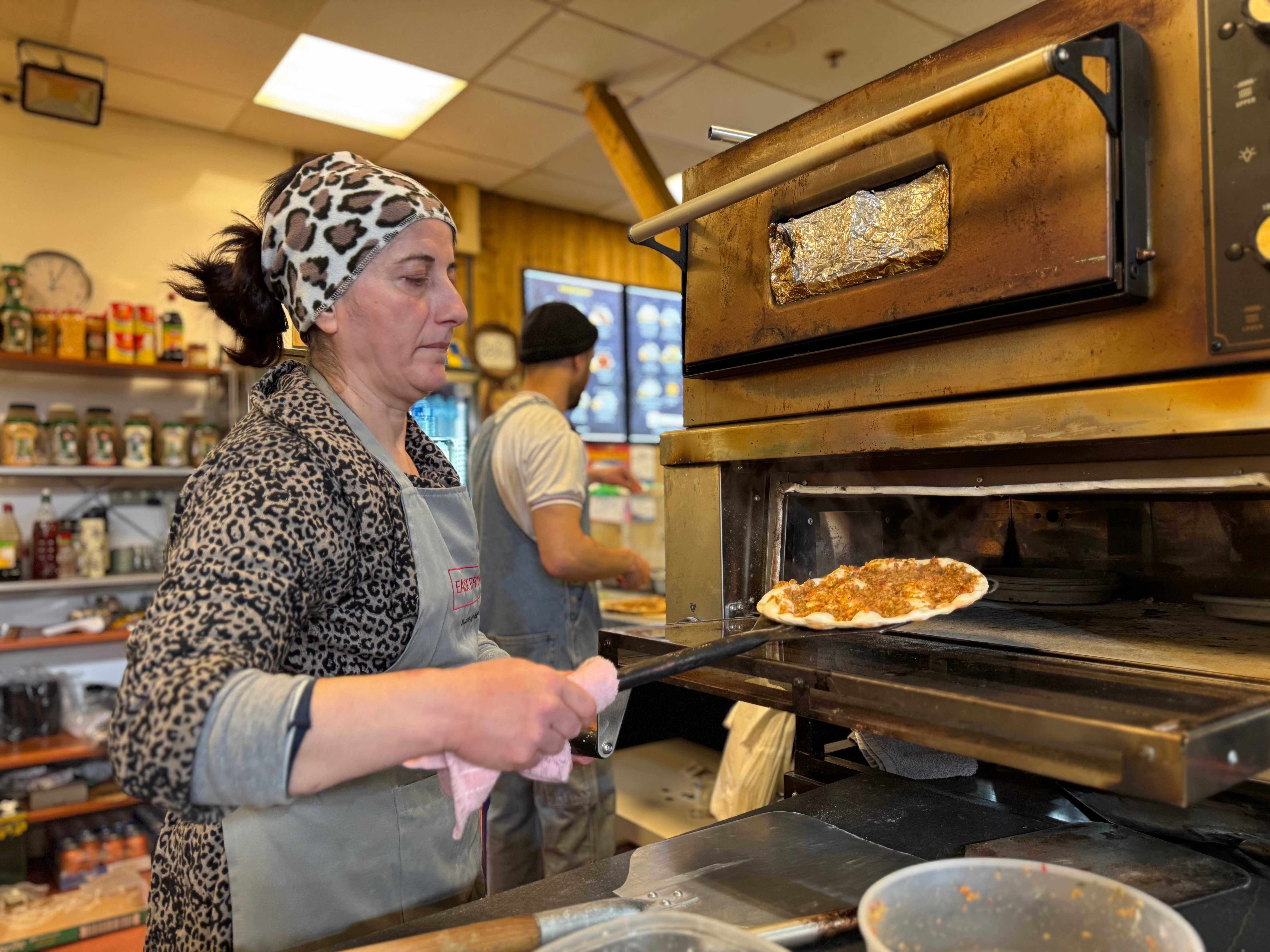
After a catch-up with Karl today, he told me that my strongest image is that of the woman making the flatbread because it’s an action shot and reveals something to viewers that they did not have access to prior, which is the soul purpose of journalism.

He advised me to incorporate more ‘behind-the-scenes’ shots like this one and to scale down on the number of images that are just of ‘things’, which, despite being of good quality, don’t reveal anything new, which I think is a fair statement. I intend to go back down to the markets over the next few days to try to get some more exclusive shots. I will then rank my images from strongest to weakest. Karl suggested it’s best to have 10 really strong images to ensure I maintain a high standard of work, rather than trying to use 12 that might slightly diminish the overall piece.

I have also decided to re-edit the image of Manjit because I didn’t like how I’d brought out the red tones in her face and made her appear hot and flustered. Here is the new edited version:

Saturday 3rd May Update

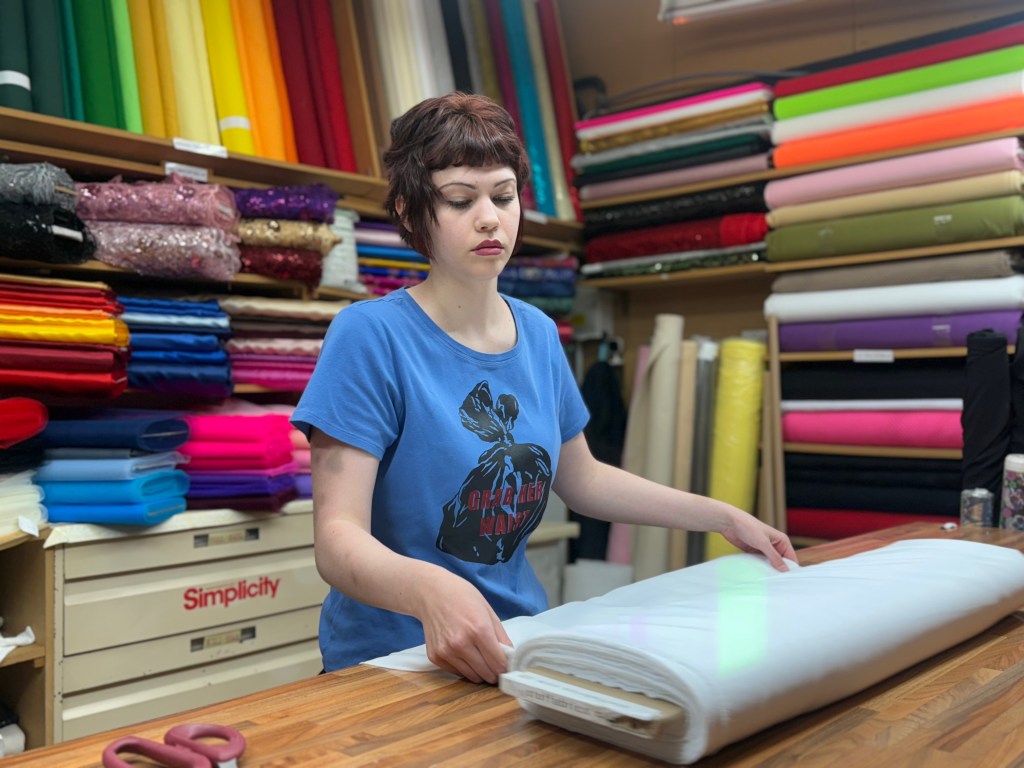
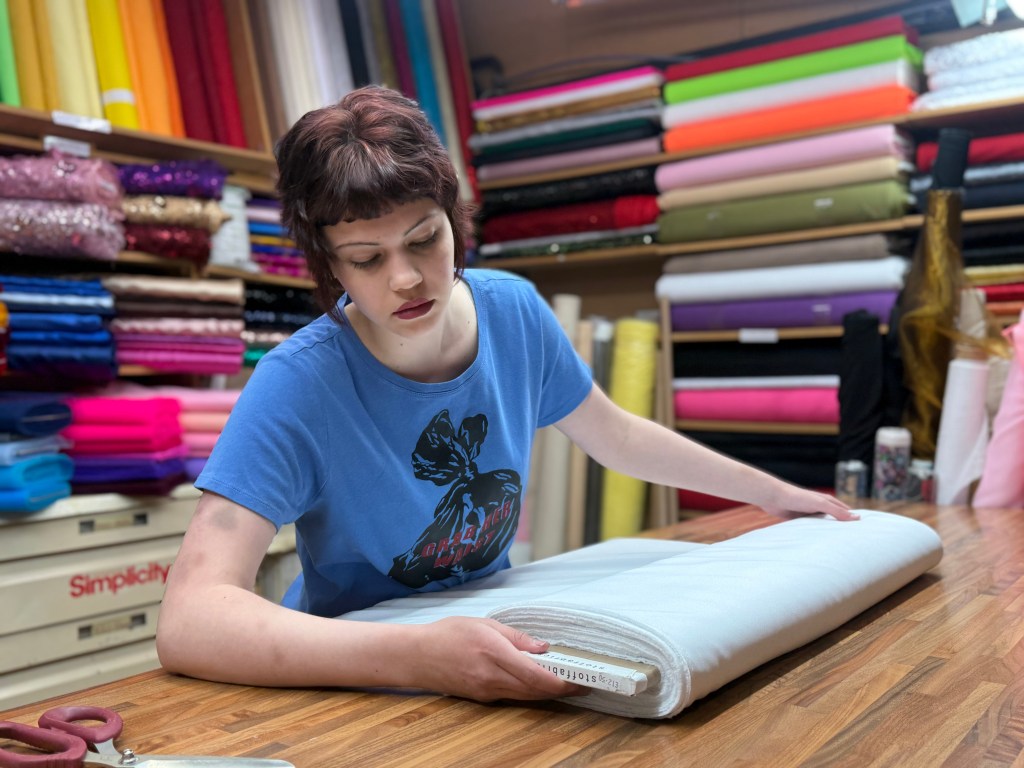
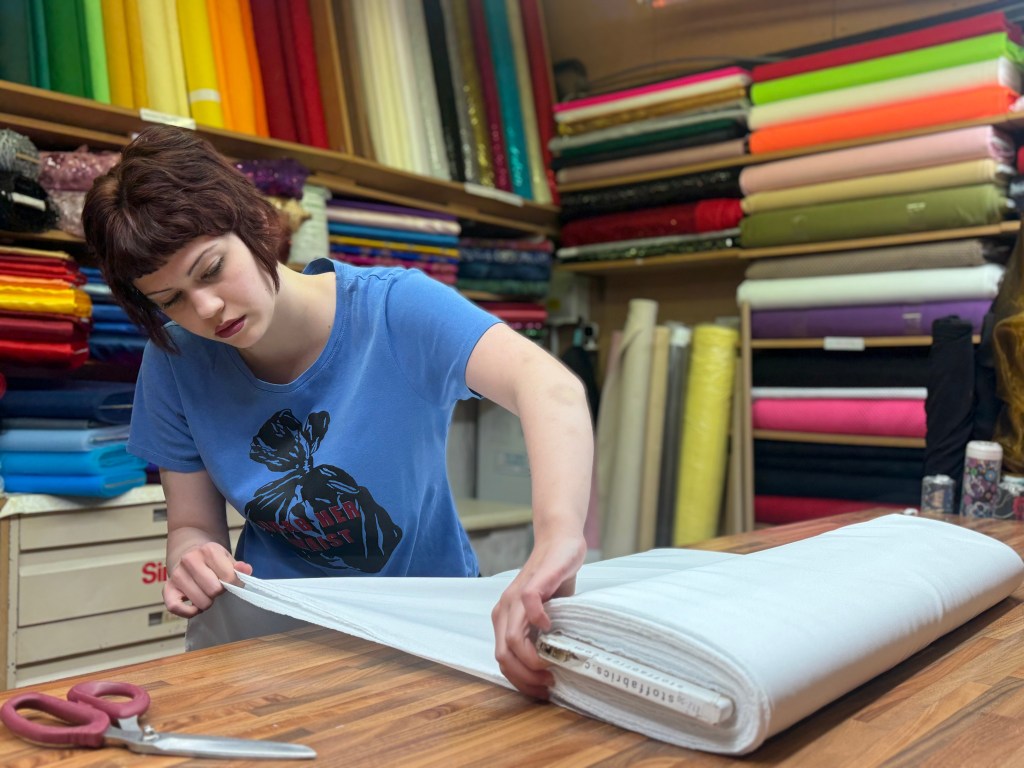
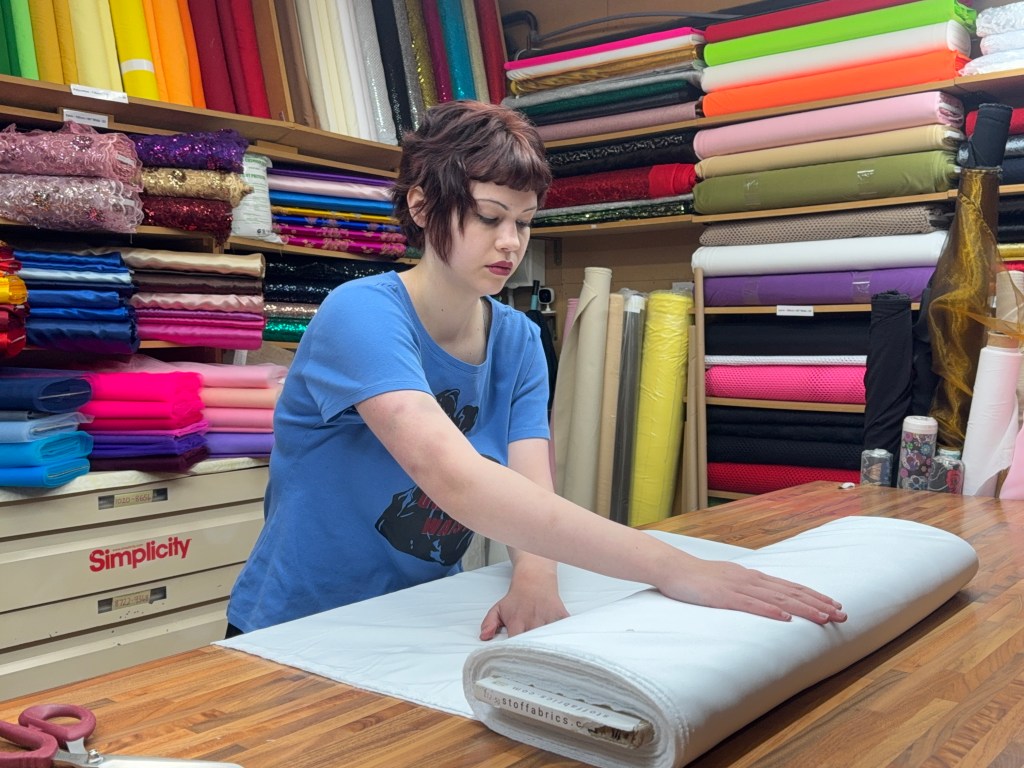
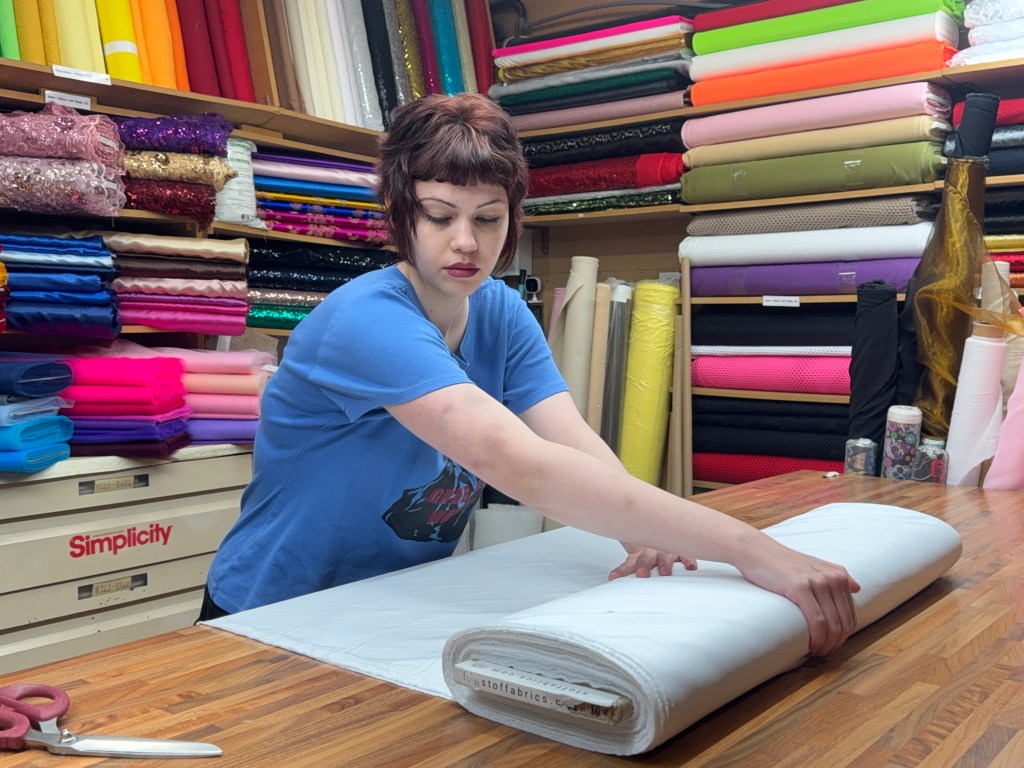
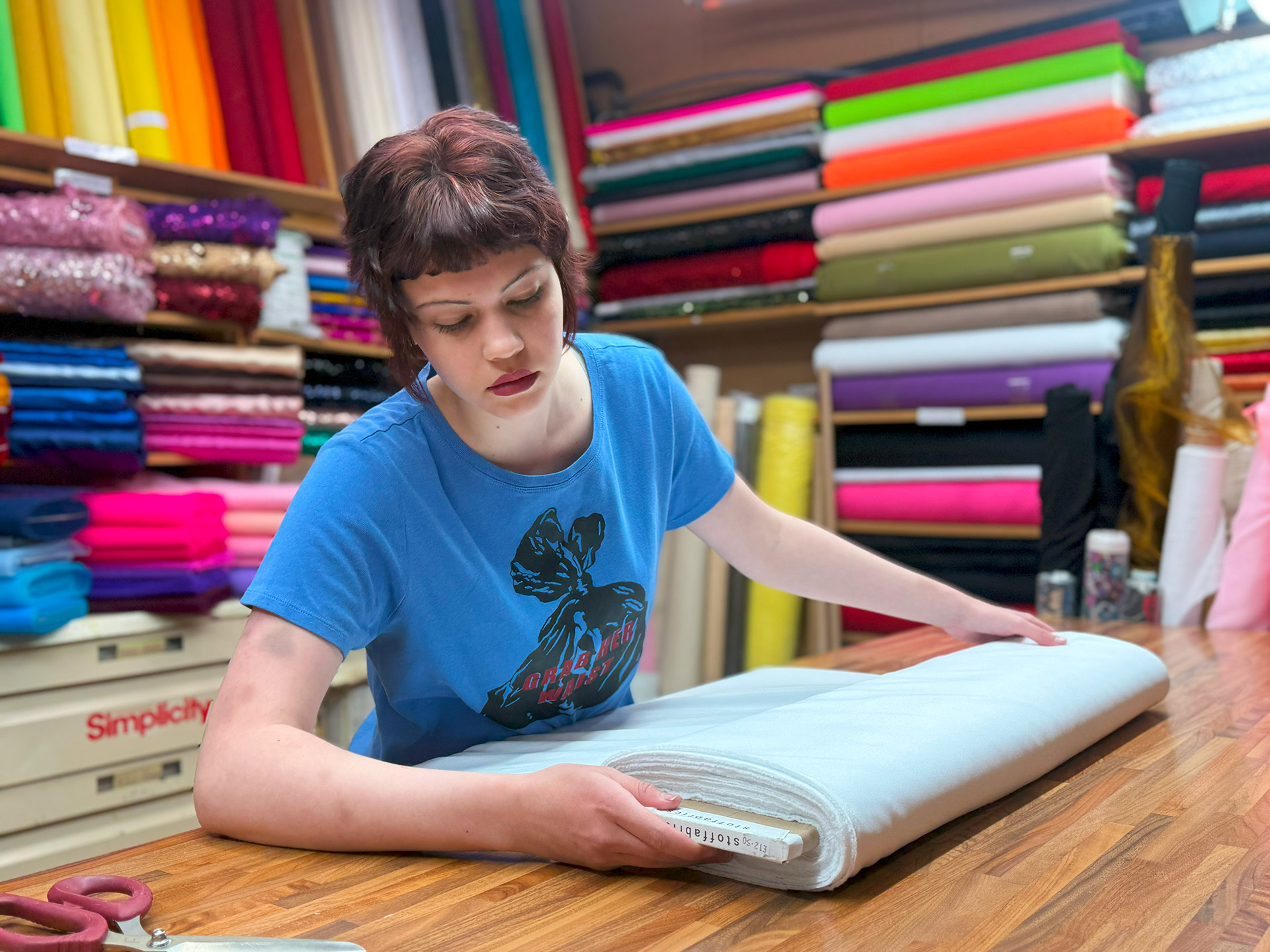
Today I went down to the markets on the hunt for another image that captures action within the markets. I spotted this woman hard at work and I knew instantly this would be a nice shot. I took a few with a high shutterspeed and a few with varying F-stops. My favourites from the following slideshow are numbers 5, 10 and 12. I intend to replace one of my other shortlisted images with one of these to ensure I am showing my readers what happens behind the scenes in the markets.

  • A woman folds a large piece of fabric at her market stall, surrounded by neatly stacked rolls of material behind her
  • A woman folds a large piece of fabric at her market stall, surrounded by neatly stacked rolls of material behind her
  • A woman folds a large piece of fabric at her market stall, surrounded by neatly stacked rolls of material behind her
  • A woman folds a large piece of fabric at her market stall, surrounded by neatly stacked rolls of material behind her
  • A woman folds a large piece of fabric at her market stall, surrounded by neatly stacked rolls of material behind her
  • A woman folds a large piece of fabric at her market stall, surrounded by neatly stacked rolls of material behind her
  • A woman folds a large piece of fabric at her market stall, surrounded by neatly stacked rolls of material behind her
  • A woman folds a large piece of fabric at her market stall, surrounded by neatly stacked rolls of material behind her
  • A woman folds a large piece of fabric at her market stall, surrounded by neatly stacked rolls of material behind her
  • A woman folds a large piece of fabric at her market stall, surrounded by neatly stacked rolls of material behind her
  • A woman folds a large piece of fabric at her market stall, surrounded by neatly stacked rolls of material behind her
  • A woman folds a large piece of fabric at her market stall, surrounded by neatly stacked rolls of material behind her
  • A woman folds a large piece of fabric at her market stall, surrounded by neatly stacked rolls of material behind her
  • A woman folds a large piece of fabric at her market stall, surrounded by neatly stacked rolls of material behind her
  • A woman folds a large piece of fabric at her market stall, surrounded by neatly stacked rolls of material behind her
  • A woman folds a large piece of fabric at her market stall, surrounded by neatly stacked rolls of material behind her

I chose to go with number 10 from this slideshow in the end, so I edited it to enhance the vibrance of the colours in the background. I like this image because I think it captures how she’s hard at work which is a theme I try to touch on in my feature.

  • A woman folds a large piece of fabric at her market stall, surrounded by neatly stacked rolls of material behind her
  • A woman folds a large piece of fabric at her market stall, surrounded by neatly stacked rolls of material behind her

Tuesday 7th May Update
I’ve really enjoyed this module, much more than I expected to. I’m proud of what I produced for the assignment, both in terms of writing and photography. I think my project is colourful, uplifting, and creative, and I’m pleased with how it balances different elements: two main sources (Jenny and Manjit), six vox-pop style comments from visitors, and some relevant secondary statistics from the council. I think that’s a strong and satisfactory mix for the word count.

I’m also grateful for the opportunity to brush up on my InDesign skills. Although layout still isn’t my favourite part of the process, I can see a clear improvement compared to what I created in the Magazine module earlier in the year, and I’m proud of myself for persevering with this element and figuring things out on my own.

On top of that, I’m glad to have learnt how to use Photoshop as image editing was something I had no idea about at the start. And I’m especially chuffed to have finally figured out how to properly use the camera I’ve owned for over six years! I’m excited to apply these photography skills in future, whether in a journalism role or just to impress my friends.

Overall, this has been a valuable and enjoyable elective that complements the rest of the course really well.

Week 6 – Post-production, colour & image correction

For this week’s task, we were asked to go back through our previous images and select two to improve using the post-production techniques we’ve learnt in today’s workshop.

I will edit my photos in Adobe Photoshop by cropping, adjusting color and brightness, and making other corrections with non-destructive adjustment layers.

ORIGINAL IMAGE:

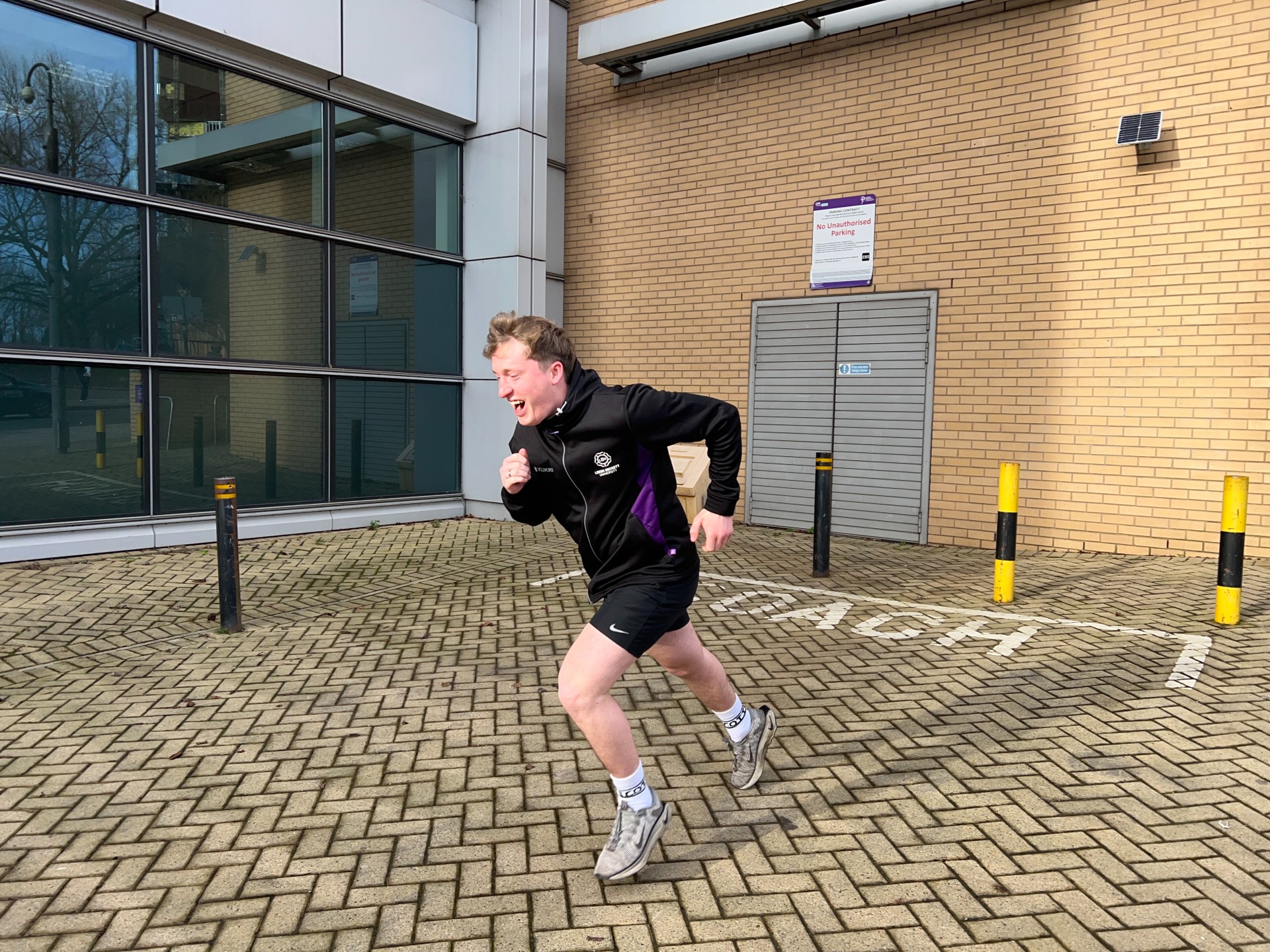
A focused image of a male mid-sprint, captured using the burst mode feature on an iPhone camera to emulate fast shutter speed, showing him in action with minimal blur
Ben captured mid-sprint using burst mode on my iPhone, allowing me to freeze the action with a sharp, focused image despite the fast movement

POST-PRODUCTION IMAGE:

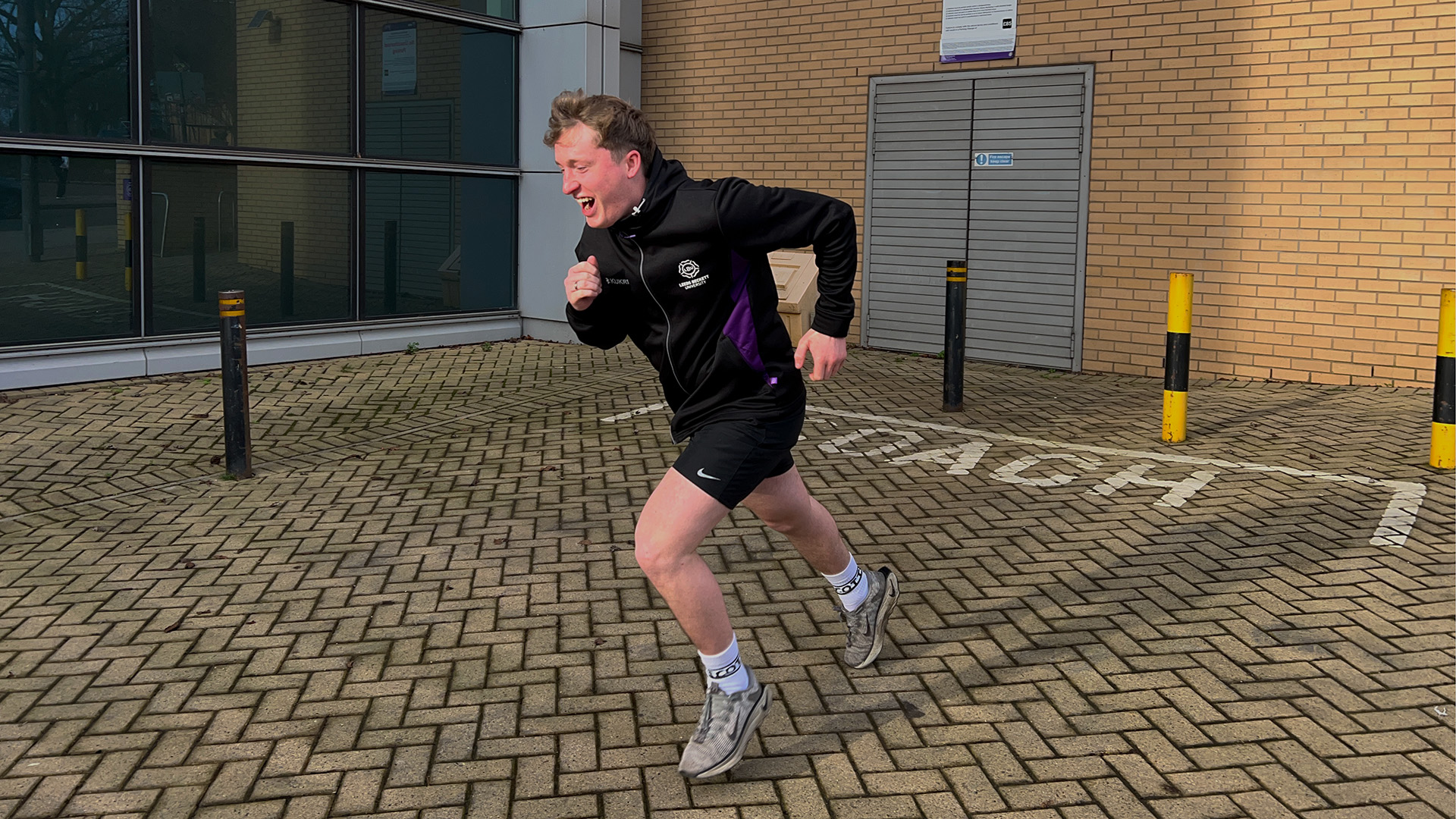
A focused image of a male mid-sprint, captured using the burst mode feature on an iPhone camera to emulate fast shutter speed, showing him in action with minimal blur
Taken using ‘burst mode’ on the iPhone, this action shot was enhanced by adjusting the brightness and vibrance to bring the subject into sharper focus, though a slight red tinge remains after correcting the overexposure. The image was cropped using the ‘rule of thirds’ for better visual balance

I chose to edit this image taken using ‘burst mode’ on the iPhone camera because I liked how I managed to capture the action shot. However, my subject didn’t stand out against the background and brickwork of the ground, so I wanted to enhance the colours to make him appear less washed out.

When cropping, I used the ‘rule of thirds’ grid with a 16:9 ratio, ensuring the subject’s head was positioned in the top third for visual balance.

I dimmed the brightness to -50 and increased the vibrance to +20. I also set the width to 1920 and height to 1080, as these dimensions are optimal for online viewing.

These adjustments helped correct the overexposure of his skin, bringing him into sharper focus and making him stand out against the background. However, my subject now has a slight red tinge. While this is still an improvement over the original, I’d like to find a way to reduce the redness of his face without losing the correction of the over-exposure.

When exporting the image, I chose a JPEG format for its smaller file size, which allows for quick transfer and easy viewing online. I saved the file as ‘Benrunningoutdoorsmidstride’ for easy identification and better SEO.

ORIGINAL IMAGE:

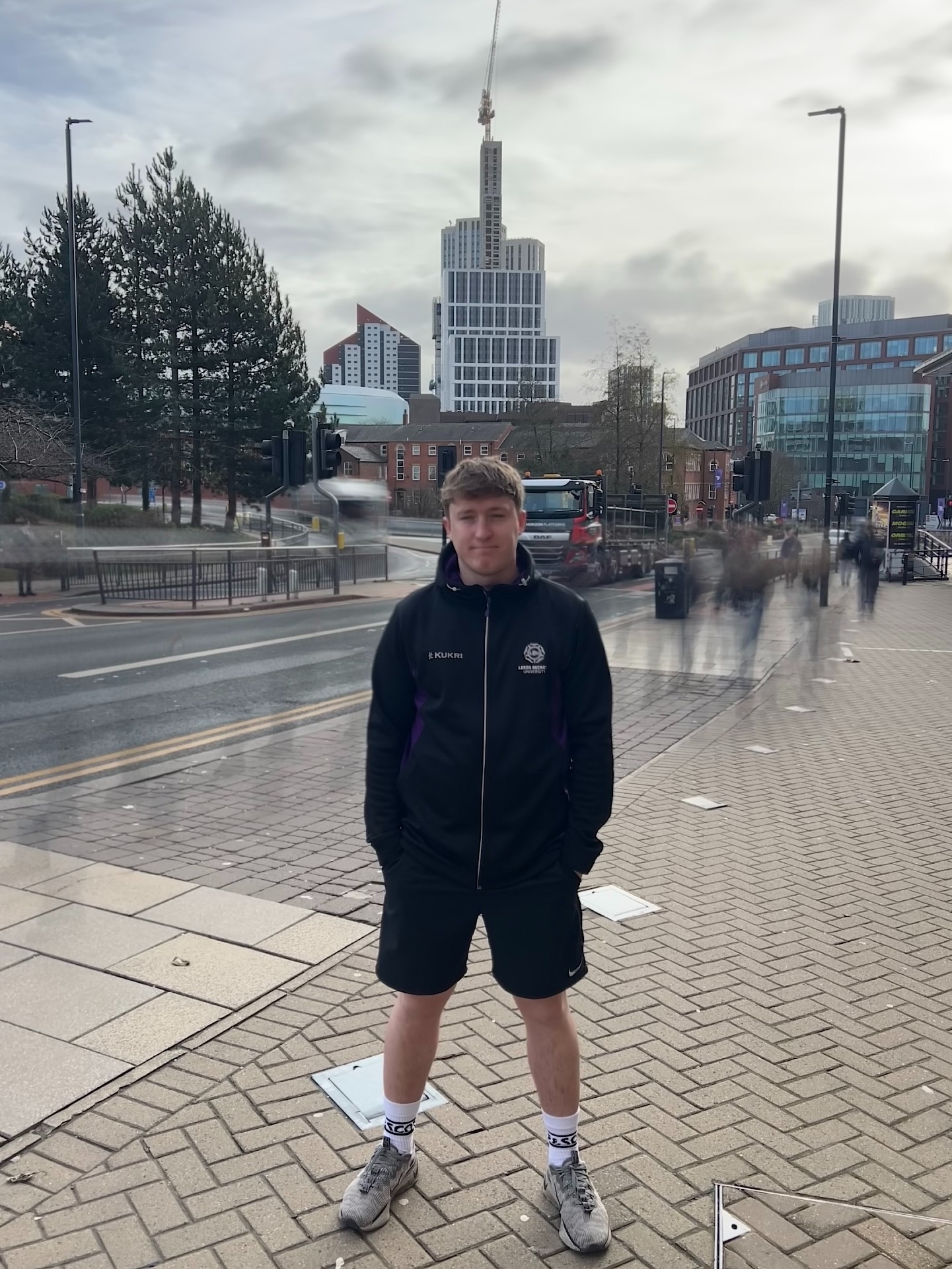
A photo of a male standing still in front of a busy background, with motion blurred behind him. The live photo long
Ben remains in sharp focus while the busy background blurs, created using the live photo long exposure setting on my iPhone camera to emulate a slow shutter speed, giving the image a time-lapse feel

POST-PRODUCTION IMAGE:

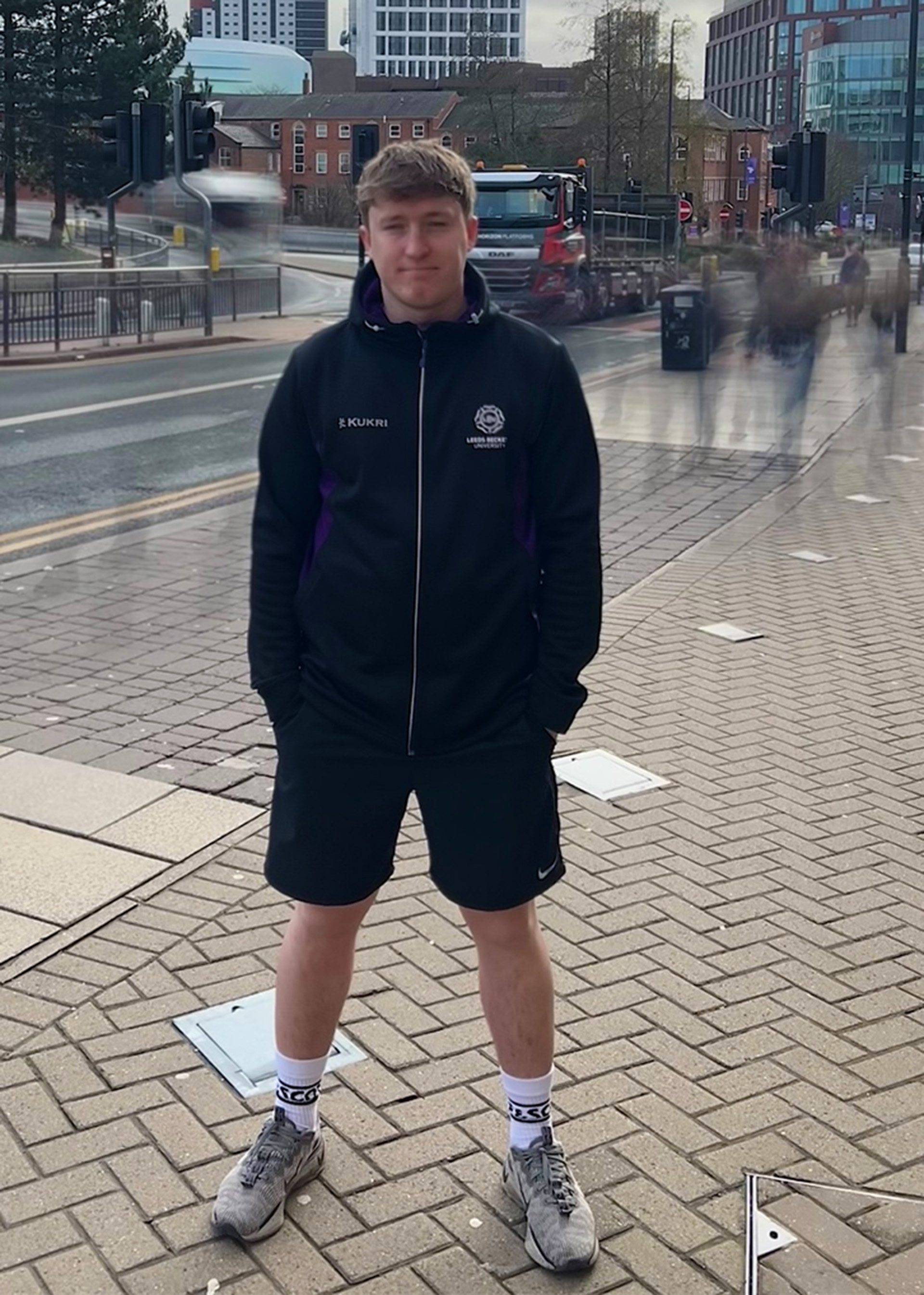
A photo of a male standing still in front of a busy background, with motion blurred behind him. The live photo long
Using the live photo long exposure setting, I captured Ben in sharp focus against a blurred background, emulating a slow shutter speed effect. After cropping with the ‘rule of thirds’ and adjusting vibrance, I enhanced the image’s colours and brought Ben into sharper focus

I chose to edit this image so I could practice the skills we learnt in today’s workshop on a portrait photo. I was particularly interested in seeing how the adjustment layers would affect the image, especially with the blurred background.

For cropping, I used the ‘rule of thirds’ grid with a 5:7 ratio, ensuring that the subject’s head was positioned in the top third for a balanced composition.

I increased the vibrance to +20, which enhanced the saturation in the midtones whilst preserving the highlights and shadows.

This adjustment added more colour to the subject’s face, making him stand out more against the blurred background.

When exporting, I chose a JPEG format for its small file size, ensuring quick transfer and easy online viewing. I saved it as ‘Benstandingoutdoorsinfrontofcrowdofpeopleportrait’ for easy identification and SEO optimisation.

Extra Credit Task

My Before and After

For this week’s extra credit task, we were asked to go out and take test shots of a subject, choosing from a list of options such as portraits, scenic shots, home test shots, candid photos or shots that align with our final project idea.

We were then asked to edit and improve the shots in Photoshop.

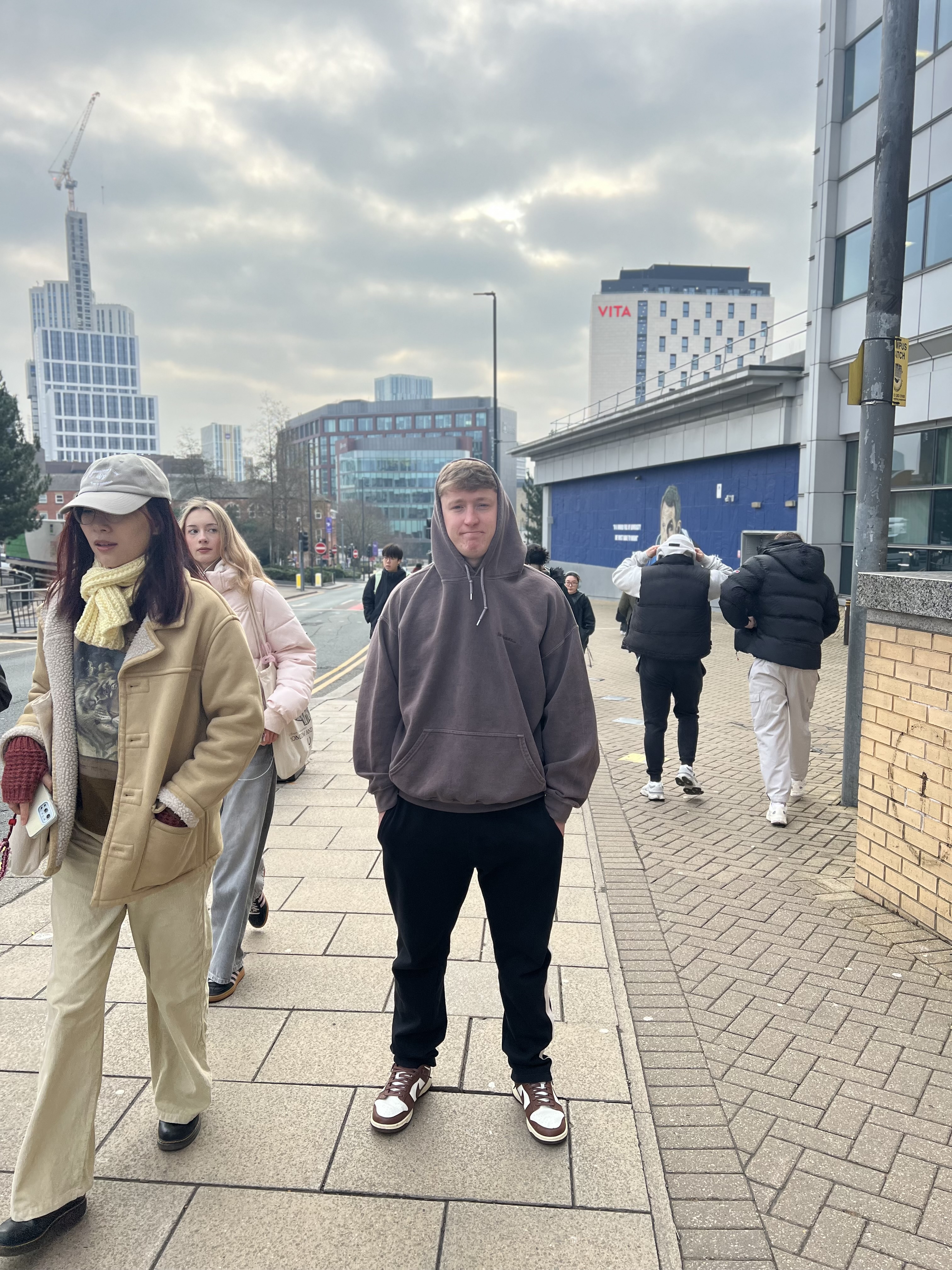
I decided to take some portraits of my friend out in the city, as I’d like to include some portraiture in my project.

I used my Nikon D3500 camera for this shoot.

I wanted to create a shallow depth of field for these shots, emphasising my subject whilst blurring the action taking place behind him. Although I didn’t record the exact camera settings, I used a low F-stop number to achieve a wide aperture, which allowed my subject to remain in sharp focus while the background became blurred, helping to isolate my subject. I also kept the ISO low, as the natural outdoor light was already bright, and I wanted to avoid having any noise into my shots. Since there was no major movement taking place in the image, I didn’t need an extremely fast shutter speed; just one that was quick enough to prevent any camera shake and maintain sharpness in the image.

The slideshow below shows the original shot contrasted with the edited one.

When editing this image, I used the perspective crop tool to line up the top edge of the image with the straight edge of the tall building behind.

I tested out the white balance tool in Photoshop by clicking ‘filter’ then ‘camera raw filter’. From here I started by changing the settings in the ‘light’ panel. I pulled the shadows down to -20, I pulled the highlights down to -15, and I pulled the whites down to -100 to dull the exposure of the white sky behind the subject.

In the ‘colour’ panel, I increased the temperature +10, vibrance. I increased the saturation to +10, and increased the saturation to +20.

I then wanted to play around with contrast so I clicked ‘layer’, ‘new adjustment layer’, ‘brightness/contrast’ and I decreased the contrast to -20.

To finish, I wanted to sharpen the edges of this image so I clicked ‘filter’, ‘sharpen’, ‘sharpen edges’.

These adjustments helped to improve the overall clarity of my subject, brightening his features and preventing him from looking washed out against the brightness of the sky behind.

I saved this image in a JPEG format and named it ‘conorpotraitstandinginbusycitycentrephotoshopped’.

  • A portrait of a man standing in focus on a busy shopping street, with blurred pedestrians walking in the background and buildings lining the street
  • A portrait of a man in focus standing on a busy shopping street, with blurred pedestrians walking in the background. The image has been edited to enhance the subject's clarity while reducing the exposure of the bright sky

Read my weekly reflection here.

Week 5 – Shutterspeed & ISO

Shutterspeed

According to Photography Masterclass Magazine, shutter speed controls how long the camera’s sensor is exposed to light. Shutter speed is measured in fractions of a second (e.g. 1/250). A faster shutter speed (e.g. 1/1000) captures motion sharply. A slower shutter speed (e.g. 1/2 ) creates motion blur.

ISO

According to Photography Life, ISO measures the camera’s sensitivity to light. A lower ISO setting (e.g.100) will decrease the camera’s sensitivity meaning more light will be required, which isn’t ideal in poor lighting conditions. To compensate for this, the shutter speed must be lower, to allow light to be let in for longer, and a lower F-stop to let more light into the lens. A low ISO setting produces a sharper image, however, this is dependent on whether you find a good balance between the shutter speed and F-stop, as failure to do this, could still affect the quality of the image, potentially causing it to come out blurry.

A higher ISO setting (e.g. 1600), on the other hand, will increase the camera’s sensitivity to light meaning it doesn’t need as much light to create a good quality image. This is useful when shooting in poor lighting conditions. A high ISO setting means you can shoot with a fast shutter speed and a higher F-stop because these settings allow the camera to capture enough light quickly to ensure the image is well exposed. However, it’s important to note that increasing ISO can also cause the images to appear grainy.

In summary, ISO determines a camera’s sensitivity to light, with a lower ISO producing sharper images but requiring more light, and a higher ISO allowing faster shutter speeds in low light at the cost of potential graininess.

Camera Task

For this task, I will take images using both fast and slow shutter speeds with my Nikon D3500, capturing:

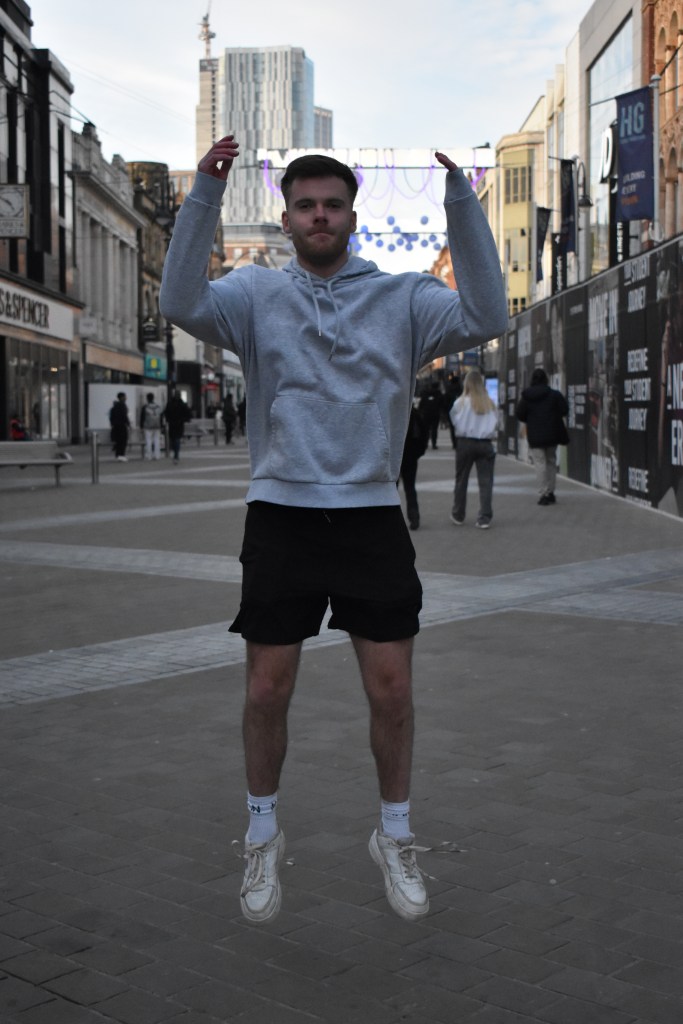
a) a friend mid-jump with minimal blur using a fast shutter speed to capture the sharp details of their movement

b) a portrait of a friend with a slow shutter speed to create a dynamic effect in the background

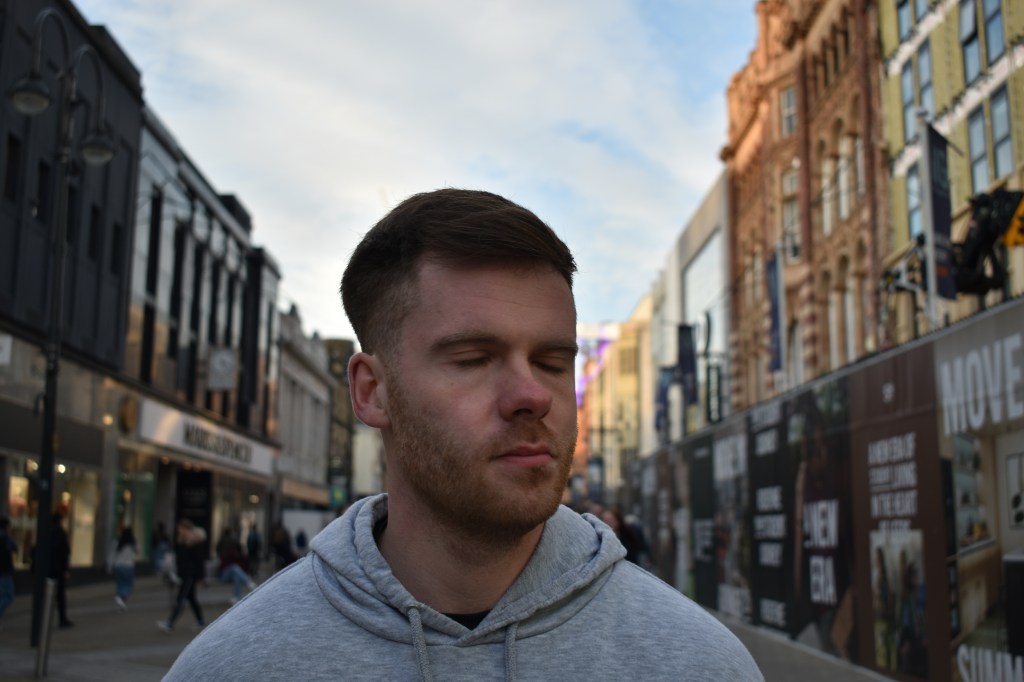
c) a photo of my subject moving just their head using a slow shutter speed to create a sense of motion, blurring the movement of their head whilst keeping the rest of their body in focus

By doing this, I aim to show how different shutter speeds can capture motion in various ways, from freezing action to creating a sense of movement and energy in the image.

  • A man mid-jump, captured with a fast shutter speed, showing sharp details of his movement with minimal blur, frozen in mid-air. The background features a busy shopping strip
  • A portrait of a man looking into the camera, in sharp focus, with a blurred background. A bike’s motion is blurred on the right, captured with a slow shutter speed
  • A man on a busy shopping strip, with his head completely blurred due to slow shutter speed. The background isn’t fully in focus, adding to the sense of motion
  • A man on a busy shopping strip, with his head in motion, captured with a slow shutter speed. The background is blurred, and his facial features appear slightly distorted due to the motion blur

This slideshow demonstrates the impact of both fast and slow shutter speeds through four constructed images.

The first image shows my subject mid-jump, freezing the action and preserving sharp details with minimal blur, as a result of fast shutter speed.

The second image features a still portrait of the same subject with a dynamic, blurred background. I like how the motion of the bicycle on the right is captured while the subject remains in focus. The use of a slow shutter speed emphasises the movement around the subject.

In the third image, I asked my subject to move just his head. Here, we can see the slow shutter speed creates a pronounced blur which emphasises the sense of motion.

I included the fourth image, which captures the subtle head movement of my subject using a slow shutter speed. While the motion blur of his head is less pronounced, the slightly out-of-focus background and the distortion of his facial features create a distinctive dynamic effect, similar to what we see in boxing photography when an opponent has just been punched. I chose to include this image in my slideshow because I like the effect it creates.

These images show how varying shutter speeds can significantly change the outcome of a photo. By understanding shutter speed settings, we gain more control over how we capture motion, allowing us to experiment and get creative with our shots.

Mobile Task

For today’s task, we were required to take images with our iPhone camera using burst mode to capture fast shutter speed shots and live photo long exposure to simulate slow shutter speeds. We took a photo of our subject mid-action to freeze the moment and a portrait of our subject with background movement for a creative long exposure effect.

In the image below, I asked Ben to sprint and I took around 80 images using the burst mode feature on my iPhone camera which emulates fast shutter speed.

This meant I was able to capture him in action whilst still producing a focused image.

A focused image of a male mid-sprint, captured using the burst mode feature on an iPhone camera to emulate fast shutter speed, showing him in action with minimal blur
Ben captured mid-sprint using burst mode on my iPhone, allowing me to freeze the action with a sharp, focused image despite the fast movement

In the photo below I asked my subject, Ben, to stand still in front of a busy background. I used the live photo long exposure setting on my iPhone camera to emulate a slow shutter speed. As a result, you can see that Ben is in focus while the motion is blurred. This almost creates a kind of time-lapse effect in the background, whilst the subject is frozen in time, which I quite like.

A photo of a male standing still in front of a busy background, with motion blurred behind him. The live photo long exposure setting on an iPhone camera emulates a slow shutter speed, keeping the subject in focus while the background creates a time-lapse effect
Ben remains in sharp focus while the busy background blurs, created using the live photo long exposure setting on my iPhone camera to emulate a slow shutter speed, giving the image a time-lapse feel

Read my weekly reflection here.

Week 4 – Focus, aperture & depth of field

In this blog post, I will be exploring how different F-stop settings affect the depth of field in portraiture. I will take three photos of my subject standing in the same spot with the same background, demonstrating the impact of using a low, high, and medium F-stop. I intend to show how each setting influences the sharpness of the background and the focus on the subject.

In the first image the F-stop is set to the lowest setting, which is 1.2 This means the aperture is wider and more light can get in which results in a shallow depth of field. This blurs the background and puts Ben, the subject, in sharper focus.

However, in this particular example, it would appear that the wall to the right of my subject is also in quite sharp focus. In future, I need to ensure I tap on the subject to allow the main focus to be on him.

Since I took this photo outdoors, the natural lighting is already good, however, if I was shooting in poor lighting conditions, the low aperture setting would let more light in and compensate for this to produce a better quality image.

A photo of a person named Ben standing with his hands in his pockets, with tall city buildings in the blurred background. The image has a shallow depth of field, with Ben in sharp focus while the background is softened
A portrait of Ben taken with an F-stop of 1.2, creating a shallow depth of field that blurs the background. Despite the intended focus on the subject, the nearby wall also remains sharp. This setting is useful for low-light conditions, as it allows more light to enter the lens

In the second image, the F-stop is set to its highest setting, which is 16. This causes the aperture to be narrower, creating a deeper depth of field. This means more of the landscape behind is in focus, as opposed to the subject.

This setting causes the opening in the lens to be much smaller which results in less light getting in. Since I was shooting outdoors with natural light, this wasn’t too much of an issue, however, if I was shooting in poor lighting conditions, I would have had to decrease the shutter speed or increase my ISO.

The increased depth of focus means the blur isn’t as prominent so, when we compare this image to the first, we notice it isn’t as sharp.

A photo of a person named Ben with a sharp focus on both the subject and the background, taken with an F-stop of 16. The landscape behind him is now more in focus, with less background blur compared to the previous image. The image is bright due to natural light, but the smaller aperture results in less light entering the lens
A portrait of Ben taken with an F-stop of 16, resulting in a deeper depth of field that keeps both the subject and the background in focus. The smaller aperture reduces the amount of light, but natural outdoor lighting helps maintain brightness

In the third image, the F-stop is set somewhere in the middle, which is 8, providing a balance between the effects of a wide aperture and a narrow one. Here we have a moderate depth of field so more of the image is in focus. This gives equal focus across the whole frame. With a mid-range F-stop, a moderate amount of light is let in. If shooting in reasonable lighting conditions, like I have with this shot, this image should come out ok with this setting, but, if shooting in low lighting conditions, I would need to slow my shutter speed or have a higher ISO to compensate.

A photo of a person named Ben with a moderate depth of field, taken with an F-stop of 8. The subject and background are both in focus, providing a balanced shot. The image is well-lit with natural light, as the mid-range aperture allows a moderate amount of light to enter the lens
A portrait of Ben taken with an F-stop of 8, creating a balanced depth of field with both the subject and background in focus. The moderate aperture allows for good exposure in natural lighting

Extra Credit Task

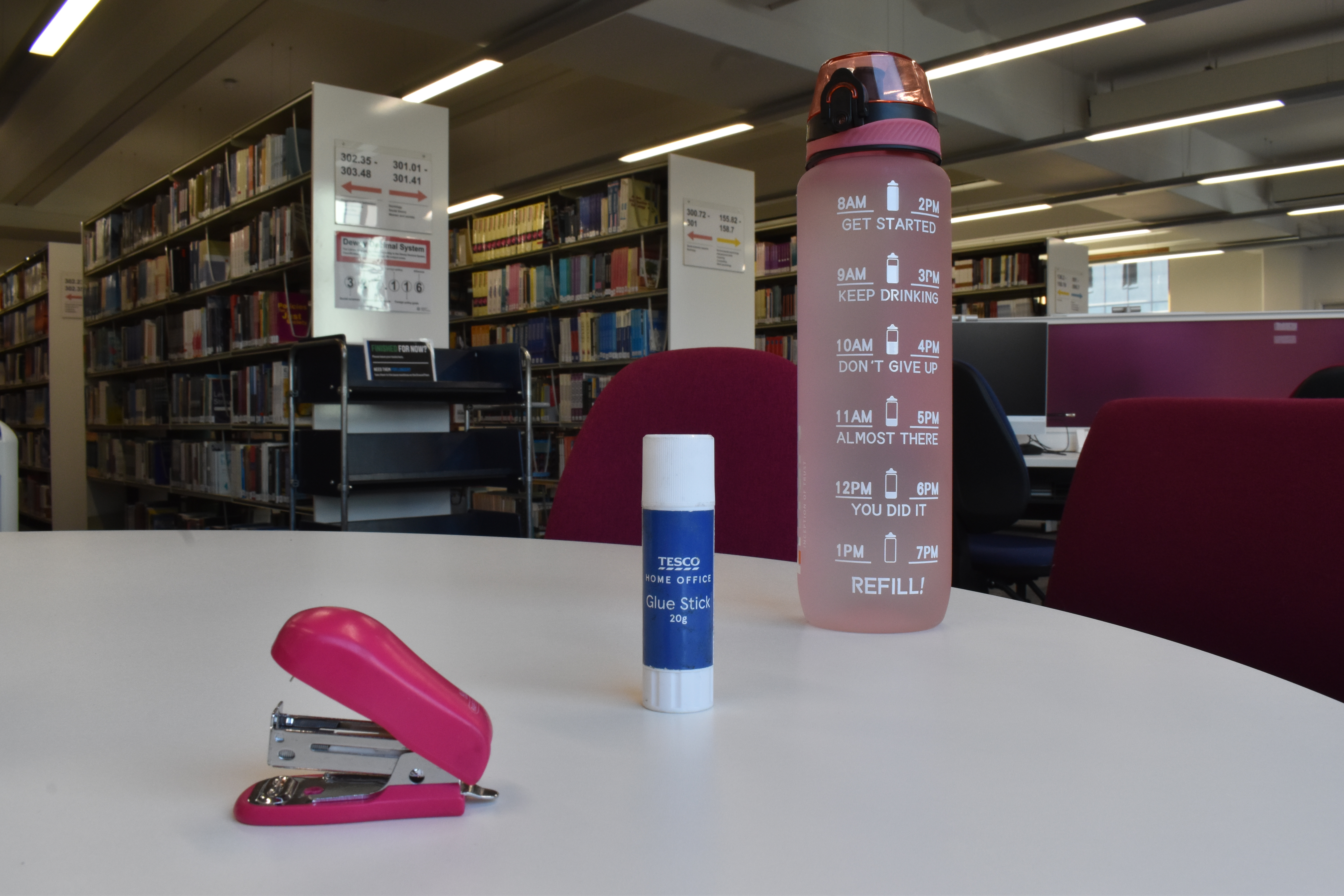
I then repeated the same task but indoors with my Nikon D3500 camera, exploring how different aperture settings affect focus and depth of field in a still-life scene.

I arranged three objects on a flat surface, positioning them at varying distances from the lens (one close, one in the middle, and one further away).

A close-up of three objects on a desk in a library: a stapler, glue stick, and water bottle, all in sharp focus. Rows of bookshelves are visible in the background, with the image demonstrating a long depth of field achieved using a smaller aperture (F-stop 18)
This photo captures three objects on a desk in sharp focus, demonstrating the effect of a long depth of field and smaller aperture (F-stop 18). The library background is softly blurred, highlighting the clarity of the foreground

In the first picture, I managed to get all three objects in sharp focus by using a long depth of field and a smaller aperture (F-stop 18), as pictured above.

A close-up of three objects on a desk in a library: a stapler in sharp focus, with a glue stick and water bottle behind it, both blurred. Bookshelves are visible in the background but are also out of focus
This image shows a stapler in sharp focus with a glue stick and water bottle blurred behind it, highlighting the shallow depth of field created by a larger aperture (F-stop 3.5)

In the second one, only the nearest object was in sharp focus because I used a shallow depth of field and a larger aperture (F-stop 3.5), as pictured above.

When we compare these two images, we can see that adjusting the aperture and depth of field can significantly impact the focus and overall composition of the final image.

Read my weekly reflection here.

Self-made women stirring up success in Kirkgate Market

By Saffron Carroll

Celebrating cuisine, culture, and community spirit, Leeds Kirkgate Market has become an invaluable hub for female entrepreneurs, welcoming people from all walks of life to honour tradition and embrace diversity in the ever-changing landscape of the city

A woman folds a large piece of fabric at her market stall, surrounded by neatly stacked rolls of material behind her
With calm focus and skilled hands, a vendor tends to her stall, one of many women helping to shape the future of Kirkgate Market while honouring its rich past

Amid the fast-paced rhythm of commuters and the hustle and bustle of shoppers, proudly stands Kirkgate Market, towering over the city dwellers and tourists below, all rushing to their next destination. It’s an enduring anchor of the city of Leeds that continues to serve as a cherished landmark within the community, even some 167 years on.

As you step in through the grand entrance that overlooks the fast-fashion thrum of Vicar Lane, visitors are greeted with elaborate green and gold ironwork as sunlight pours in through the arched ceilings above, showcasing the market’s Victorian charm, as you are transported back in time.

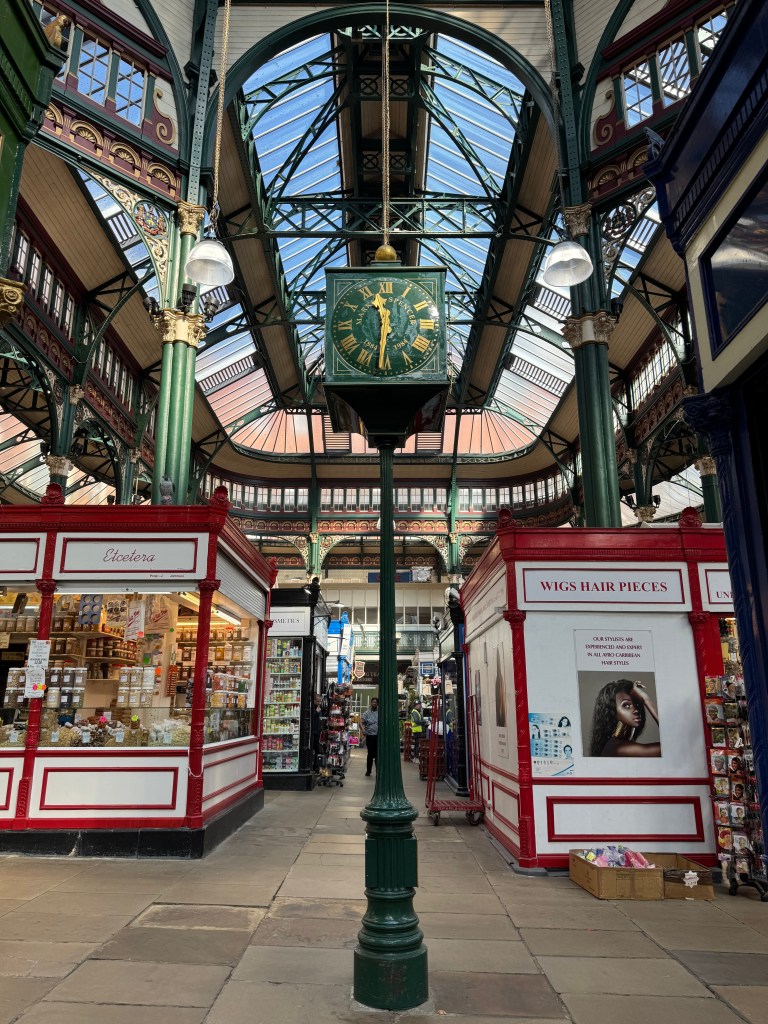
An old dark green clock with gold detailing stands proudly between the walkways of Kirkgate Market, with light streaming in from the roof above and stalls visible in the background
The iconic green clock in Kirkgate Market marks the birthplace of Marks & Spencer, which opened its first store here in 1884 as a penny bazaar. The clock, located in the 1904 hall, remains a symbol of the retailer’s rich heritage in Leeds

In the distance, you hear a green grocer hollering: “Four for a quid on fresh peppers,” and, round the corner, the calls of a fishmonger: “Catch of the day! Big prawns, bargain price.”

Here, time seems to slow down.

This historic market hums with an energy of its own, offering a slow, mindful experience that the impersonal, unauthentic immediacy of modern commerce just can’t match.

As you stroll by the vibrant flower stalls, and an endless row of penny sweets displayed in jars, the butchers window and that smell of fresh meat that’s distinctive albeit not off-putting, you’re greeted by the friendly faces of vendors beckoning you to come and appreciate what they’re offering, and people from all walks of life, both old and young, just mooching by.

Olive Corny is a local who visits the markets once a week. She praises them for their traditional nature and the variety of goods on offer, noting: “The markets attract people that are after a bargain and that like to socialise.”

She adds: “It’s not like in a supermarket where everything is just stacked in trays. You never know what you might find here.”

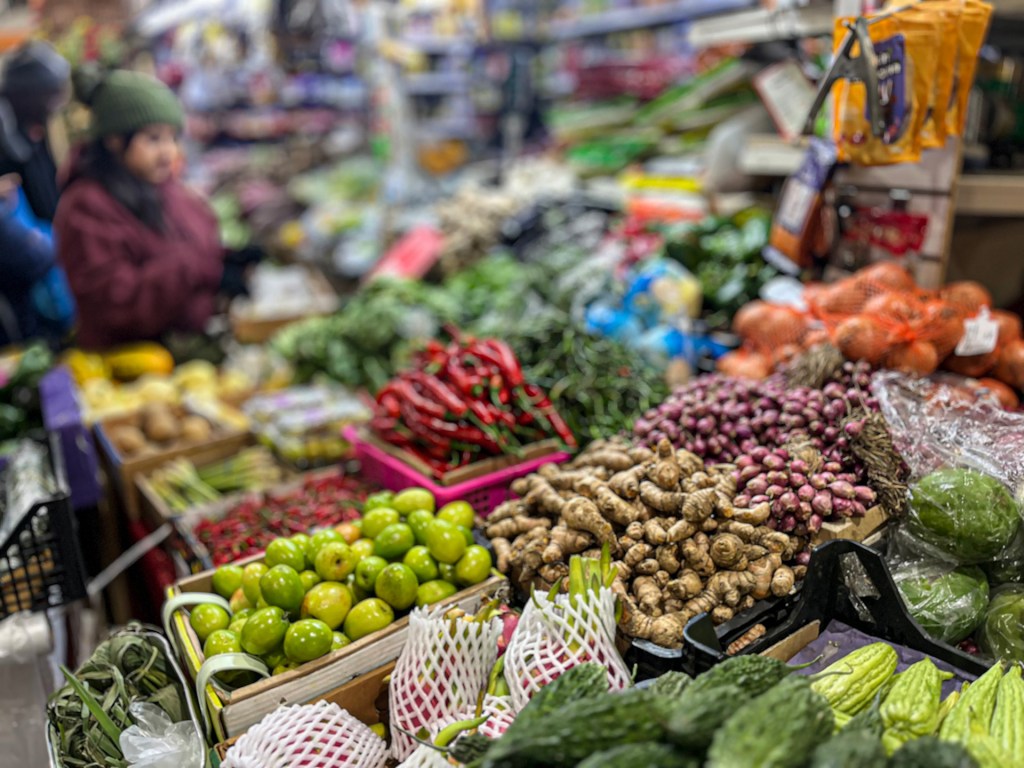
And her words ring true. Everywhere you look, you’ll find something intriguing. Crates full of produce you’ve never encountered before, fruits with spiky skins, vegetables with names you can’t pronounce, jars of auburn spices in every shade of autumn.

For a moment you forget you’re just in a city in the north of England. Everywhere you look, a new taste and experience is unfolding. It’s the kind of place where you come in for salmon fillets and leave with a bundle of fresh lemongrass, Darjeeling tea leaves, and Nag Champa incense. The randomness, paradoxically, is part of what you expect.

A colourful display of fruits outside Kirkgate Market, including grapes, limes, kiwis, blueberries, and oranges, with a stallholder tending to a customer in the blurred background
Amid the vibrant energy of Kirkgate Market, this fruit stall is just one of many that reflect the diverse, community-driven spirit that makes the market so special

The unfamiliarity of all these new and exciting cultural experiences is enhanced by the snippets of conversation you catch from passersby, exchanging words in all kinds of languages, becoming part of the experience itself. This serves as a powerful reflection of all the different people passing through, each contributing to a more mindful, embracing and inclusive atmosphere.

Though discrimination still exists, under the roof of Kirkgate Market, everyone is united as one, celebrating the beauty of one another’s differences with a kind of appreciation and respect that’s often hard to come by, making it all the more special.

A woman wearing an apron and a cheetah print fleece with a matching bandana prepares flatbread at Eastern Oven, with ingredients in the foreground and the kitchen visible in the background
At lunchtime in Kirkgate Market, a woman prepares fresh flatbread at Eastern Oven, with ingredients ready and the kitchen in full swing

As you meander deeper into the twists and turns of the eclectic maze that is Kirkgate Market, you feel a slight chill coming from the old flagstones under your feet, but it’s not unpleasant. Instead, it serves as a reminder of all those who have walked over them before.

But what’s that? Something catches your attention. The smell of fragrant spices wafts through the air and immediately your feet set off following your nose down into the food court where you’re greeted with flavours from all over the world. So many choices it’s almost overwhelming.

With food stalls offering everything from fresh Caribbean jerk chicken to authentic Indian cuisine, female entrepreneurs like Jennifer (Jenny) Barry and Manjit Kaur have kickstarted their businesses from humble beginnings right here in the market.

Jenny’s Jerk Chicken made it’s appearance in the market 13 years ago after Barry made a successful application to bring Caribbean flavours to the food court.

Jennifer Barry stands smiling outside Jenny’s Jerk Chicken in Kirkgate Market, with her hands gesturing toward the stall behind her. Construction workers are visible
Jennifer Barry welcomes you to Jenny’s Jerk Chicken in Kirkgate Market, where bold flavours meet a loyal lunchtime crowd

With a degree in Accounting and Finance, she was eager to apply her business knowledge and share a taste of her culture with the locals.

For Barry, it’s the sense of community in the market that she values above all else: “You get to connect with people in the deepest way,” she reflects, adding, “In a supermarket, you just grab your stuff and go but, in the market, people are a lot more relaxed. Nobody is in a rush, you sit down, you chill, they get to know you, and you get to know them.”

She credits the collaborative, tight-knit atmosphere of Kirkgate to her business’ success, stating: “I think being situated in the market benefits the business a lot, not only because of the community that we have here, but because everyone is willing to help you.”

Over the years, Barry has developed a loyal lunchtime crowd and now she is keen to give back to the community that welcomed her with open arms when she emigrated from Jamaica.   

She shares: “When I came, everyone treated me fairly. I’ve been given fair opportunities, like every other person. I’ve been more welcomed here than I could ever imagine, so I feel it’s my duty to give back to people that have always assisted me.”

Last year, Leeds City Council granted Jenny’s Jerk Chicken the Diversity and Inclusion Award as a result of Barry’s commitment to supporting young and homeless people, as well as the community work she does with charities such as the Happy Tears Foundation, offering food and sometimes employment to keep vulnerable people off the streets.

Not only does she care about giving back to others, but Barry is also passionate about sustainability and appreciates the convenience of having everything she needs for her business under one roof.

A stall at Kirkgate Market displaying exotic vegetables like plantains, with shelves stacked with products visible in the background
Exotic vegetables like plantains add to the market’s wide ranging produce, a reflection of the diverse communities that bring Kirkgate to life each day

She explains: “We get almost 80% of everything we need right here in the market, so we are not travelling to get stuff,” adding, “With climate change, a lot of businesses need to take a deeper look at themselves and see what are they doing to really help the community.”

Being surrounded by like-minded, self-made women, Barry feels inspired by her fellow female vendors, and remarks: “There’s not a single woman in this market that I’m not friends with because these women have shown us that everything is possible. They have to juggle being a mother, being a wife, being a business owner, and yet they still wear a smile every single day.”

Jennifer Barry from Jenny’s Jerk Chicken and Manjit Kaur from Manjit’s Kitchen standing side by side in Kirkgate Market, smiling at the camera with their arms around each other’s backs
Jennifer Barry and Manjit Kaur, of Jenny’s Jerk Chicken and Manjit’s Kitchen, side by side in Kirkgate Market, two friendly faces behind much-loved food spots in Leeds

One of those women is Manjit Kaur, owner of Manjit’s Kitchen, which has been situated just two stalls down from Jenny’s Jerk Chicken for 11 years.

She recounts: “Before I started my business, I was unemployable. I was sacked from a previous job for what I now realise was a racist manager. When I applied for new jobs he would send negative references and the job offers were retracted.”

Despite these setbacks, Kaur was determined to transform her culinary zeal into a career.

“I had a passion for cooking, a car, and a Twitter account,” she reveals, “So, in order to provide for my son, I set up my own business.”

For Kaur, this was a testament to her resilience in overcoming the discrimination she had faced early in her career.

She explains: “I wanted to take the opportunity to express myself and my culture in the work I do.”

Manjit Kaur stands smiling at the camera outside her food stall, Manjit’s Kitchen, in Kirkgate Market, Leeds
Manjit Kaur outside Manjit’s Kitchen in Kirkgate Market, bringing bold flavours and a warm welcome to the heart of Leeds

However, when it comes to being a business owner, Kaur’s values run much deeper than just serving food. She is keen to create a safe working refuge for her employees, something that is very close to her heart.

She comments: “I suffered domestic violence for many years. I was homeless. I lived in hiding. So, as an organisation, we understand some of the issues arising from situations our teams have experienced and we try to remove barriers to employment.”

As a result, Kaur employs many women who have experienced domestic violence, just as she did, providing security while they rebuild their lives and navigate challenging circumstances.

Now operating in multiple locations, Kaur has found the markets to be a vibrant hub for spreading the word about her business.

She explains: “Every day is different but we are part of the pulse of the city”.

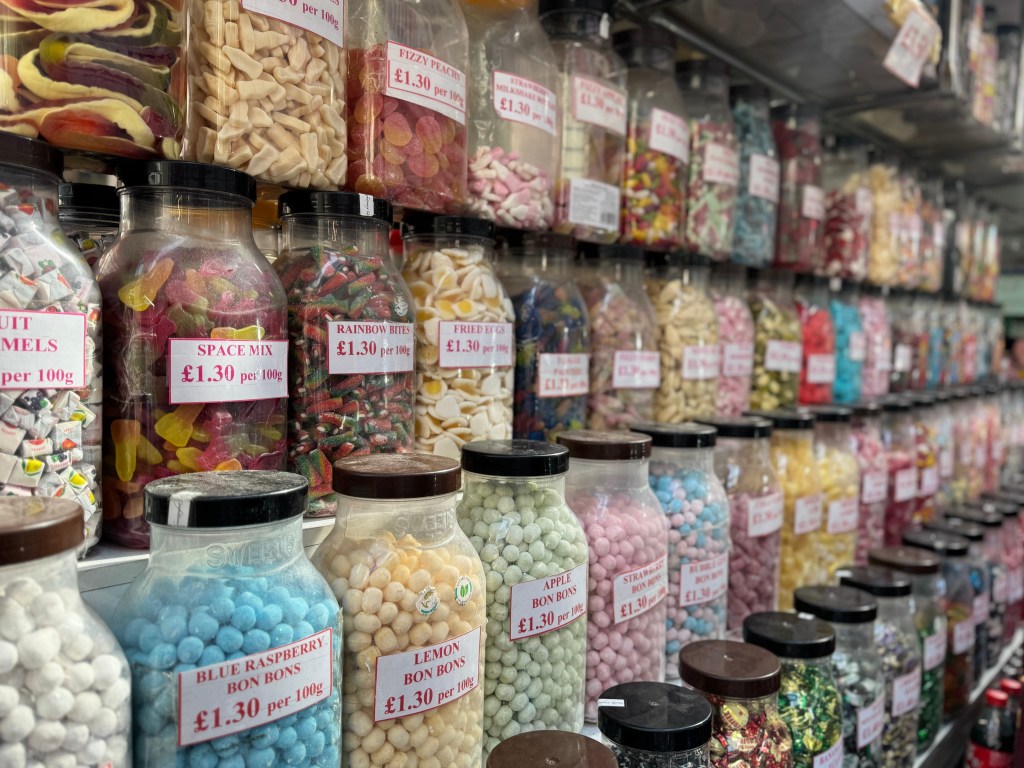
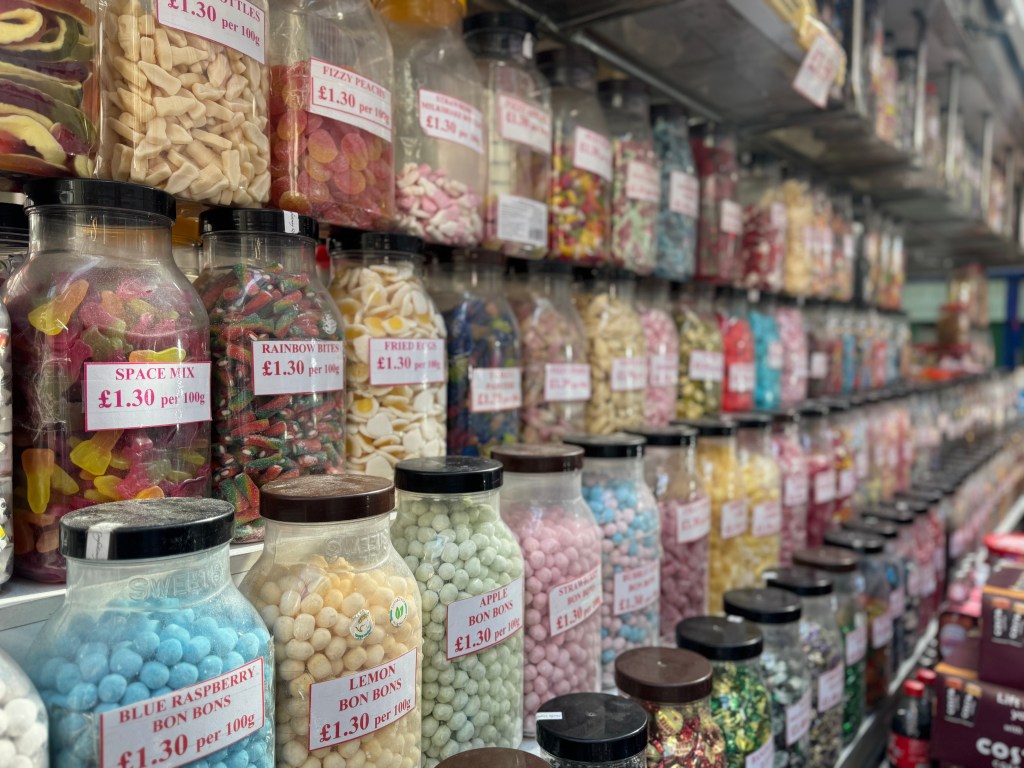
Rows of jars filled with sweet treats in Kirkgate Market, with the foreground in sharp focus and the background gradually blurred
Colourful jars of sweets evoke nostalgia, offering a sweet contrast to the rich mix of tradition and global flavours throughout the market

Like Barry, Kaur sees many benefits to being situated in the market, expressing: “It gives us the chance to operate in a city centre location with high footfall for a comparatively cheaper rent.”

Kaur hopes to expand to more locations still, with the knowledge that her work continues to make a positive impact to many.

Every day of the week, the lively, multicultural food court in Kirkgate Market continues to thrive, bringing people from all walks of life together through the power of food. With large communal tables, strangers soon end up as acquaintances and the community aspect of the markets is something that really appeals to the loyal patrons they serve.

Regular market visitor, Kevin Walsh, reflects on the renovations that took place back in 2013, admitting his initial doubts towards the changes: “When it was first done, and they spent £12 million on it, I thought, ‘what a disaster’, but it turned out to be one of the best things that’s ever happened to Kirkgate Market, in my opinion,” he enthuses, adding, “You’ve got so much diversity of food, and I think it attracts everybody: disabled, Asian, black people, white people, Chinese people. All sorts of people.”

However, though many celebrate the market for its multicultural vibe, long-standing vendors like Vikram Kapoor have observed the changes taking place and haven’t always welcomed them.

“It’s different now,” Kapoor shares, “It’s a problem with parking. People used to park right outside and come straight in. Now it’s a multi-storey zone and it’s expensive. I think that puts people off.”

However, others appreciate the market’s proximity to public transport. Visitor, Diane Amos, remarks: “People walk through the markets to get to the bus station because it’s convenient. They might be encouraged to stop and take a look at what stallholders are selling while they’re passing through.”

For many visitors, like Kerry Thorpe and Faye Parton, the market is a place that offers diverse experiences, reflective of the people it serves.

“It’s very eclectic,” Thorpe remarks, “There’s something for everybody. It’s a community-based thing.”

Parton adds: “There are different things that attract different people and it improves Leeds as a whole because the city should be multicultural.”

“We came in to try out Manjit’s Kitchen,” Thorpe continues, “but even when you pop in with the intent of doing something specific, you end up getting distracted by something else,” she laughs.

A vibrant market stall displaying fresh vegetables, with people browsing in the background
At Kirkgate Market, fresh vegetable stalls like this one offer a diverse range of produce from all over the world, adding an international flair to the market’s rich heritage
The figures suggest that people’s love for the markets is only increasing. Statistics released by Leeds City Council earlier this year state that Kirkgate Market attracted over a whopping 5.9 million visitors in 2024, which is a four percent increase from the previous year. In addition to this, the footfall has risen by 33 percent since 2021 suggesting a strong, post-pandemic recovery.

Last year, 20 new businesses opened in Kirkgate Market which is the highest-ever total for a single year. While sceptics see the market-scene as outdated and only appealing to older generations, these numbers are proof that they are still as popular as ever.

Having survived an Industrial Revolution, the rise of mass retail, and the Covid-19 pandemic, it’s safe to say Kirkgate Market has withstood the test of time and is still a hit with the locals. Excitement is always unfolding and today, much of that is driven by self-made women who have built their businesses right here in this historical building with a commitment to supporting others as they go along.

Their journeys go beyond selling authentic food. For these female entrepreneurs, it’s about working alongside their fellow female counterparts, as allies, not competitors. It’s about lifting each other up and supporting women who are still finding their feet, empowering one another through culinary mastery, culture and kindness.

As the heartbeat of the city, collaboration, inclusivity and diversity run through the veins of Kirkgate Market, creating a vibrant atmosphere where all are welcome.

Check out my magazine spread on Heyzine.

Photojournalism Weekly Reflections

Week 1 – 27/01/25

This week we were introduced to the Photojournalism module. Karl talked us through the topics we can expect to cover in the upcoming weeks from mobile and camera photography techniques to using photoshop and preparing images for publication. We talked through the assessment and what we can expect in terms of the delivery of this module. We were then sent out on a task where we had to get a 200-word story and an image to complement it.

I came across a homeless man, called Mark, sat outside McDonalds so I approached him to see if he’d be willing to answer a few questions and have his photo taken to which he agreed. I took a few photos and, although I was happy with them, he wasn’t looking at the camera in any of them. As Karl mentioned today, when the story is about an individual, they need to be looking directly at the camera, otherwise, the story loses its sense of personal connection, making it less impactful or engaging. In hindsight, I should have asked him to look at the camera so I could really encapsulate the emotion and loneliness in his eyes. I pulled some quotes from his short interview and bulked the article out with some government data to give it some authority,

I like that this task combined other journalistic skills such as interviewing, data journalism and article-writing because I think it’s useful to keep these skills ticking over.

I’m excited about this module and there are a number of skills I’m looking forward to learning such the use of shutter speed, the use of photoshop and how to colour correct. I’ve owned a Nikon D3500 for almost 5 years but I’ve never looked into how to use it properly so I’m hoping this module will teach me the skills that will enable me to use it effectively.

Week 2 – 03/02/25

This week we were introduced to the types of Photojournalism and I couldn’t believe just how many categories this can be broken down into.

I’m keen to explore a range of styles, however, in terms of my Photojournalism final project, I leaning towards portraiture as I think this opens up lots of opportunities to tell interesting, personal stories.

For our task today we were asked to produce a research post exploring a style of photojournalism that we are interested in so I chose to look into portraiture, more specifically, portraiture surrounding the LGTBQ+ community.

I discovered that the first known example of portrait photography dates back as far as 1839 when Robert Cornelius took, what is believed to be, the first self portrait photo.

I also researched some well-known portrait photographers such as Irving Penn, Dorothea Lange and Richard Avedon, analysing some of their most famous photographs and what makes their styles so poignant and unique.

We were asked to explore techniques, challenges and motifs within portrait photography, a task I found particularly useful.

Through this task, I discovered the term ‘aperture’ which refers to the opening in a camera lens that controls the amount of light that enters the camera, and how this can affect the appropriate shutter speed setting. I’m keen to put the techniques I have researched into practice.

Week 3 – 10/02/25

Today our session was lead by Chris. We began by looking over the research posts we did last week and discussing our findings with the class.

We were then set a task that required us to look into image construction, finding examples of:

1) a news photograph that has somehow been constructed or set up

2) a news photograph taken from a point of view that affects the story

3) a photograph where the ‘meaning’ was disputed

I found this task quite tricky because, although I understood these concepts and am able to recognise how a photographer might manipulate or influence an image, I struggled to find clear examples that fit these categories.

However, this task did help me to gain a deeper understanding of how powerful a photographer’s choices can be in shaping the story a photograph portrays.

By honing in on specific details, photographers can affect the viewer’s emotional response and the examples I studied today are proof of that. Marc Riboud’s Flower Child, Richard Drew’s The Falling Man, and Sally Mann’s Candy Cigarette all show how photographers can intentionally craft images to provoke thought.

I didn’t realise just how much control a photographer can have when it comes to influencing the viewer’s perspective. Even seemingly small factors such as the angle, the lighting, the framing and the subject matter have an impact on the viewer’s perception, and can completely change the angle of a story.

I always thought that photographers just took pictures of whatever’s happening in order to complement the words on the page. I didn’t think they had much leeway for creativity, but I am now learning that they actually have the power to assemble visual narratives, opening up the opportunity for interpretation and discussion.

Week 4 – 17/02/25

In today’s session we looked at the effects of different F-stop settings on depth of field and image focus.

We were sent out to test out a range of apertures so we could analyse the outcome. I took three pictures of Ben, my subject, on a busy pavement in front of a backdrop of buildings.

I used an F-stop of 1.2, 16 and 8.

Using a low F-stop of 1.2 (a wider aperture) allows more light into the lens. This produced a shallow depth of field, blurring the background to emphasise my subject. However, I noticed that the focus on my subject wasn’t quite as crisp on this image as it could have been, with some focus being given to the wall to the right. In future, I need to ensure I tap on my subject to ensure they are in focus first.

However, shooting outdoors with natural light meant the wider aperture worked to my advantage, letting more light in. If I were to shoot in a setting where the lighting was compromised, setting the camera to a wider aperture would improve the quality of the image by increasing the level of light coming into the lens, thus enhancing the exposure.

I then took the same picture again but used a higher F-stop of 16 which narrows the aperture and increases the depth of field. This reduction in light entering the lens meant more of the background was in focus, however, with the background being more prominent, this photo didn’t appear as sharp.

For my third image, I used a middle range F-stop of 8 which provided a moderate depth of field, giving an even amount of focus across the image. In this image, the light was balanced between both the subject and the background so everything was relatively focused. This setting could be useful when trying to capture a broad scene, rather than honing in on a single subject.

I found this task really useful for understanding how aperture affects focus and how each setting can bring a different result. I preferred the outcome of the high aperture image because I thought it appeared more crisp and professional, however, as we leant today, there are varying reasons why a photographer may decide to use a different aperture. These could be down to technical reasons such as lighting quality, but also down to more intricate decision-making like choosing to focus on the subject rather than the background to divert the viewer’s attention to ‘the main event’.

Week 5 – 24/02/25

In today’s session we learned about ISO and shutter speed and how these two components along with aperture, affect how much light enters the camera lens. This determines the overall exposure of an image.

We were sent out on a task whereby we had to get an image of a friend mid-action with minimal blur by using the iPhone burst mode to freeze the motion and capture a sharp image that emulates a fast shutter speed.

We then had to take an image of a friend stood in front of a busy background, using the live photo long exposure setting to emulate a slower shutter speed, capturing the fluidity of the background motion.

Today I learnt that you can use a lower ISO (e.g. 100-400) for good lighting conditions and a higher ISO (800+) in poor lighting conditions. However, it’s worth noting that a high ISO can result in a grainy image so it’s important to maintain a good balance between ISO, aperture and shutter speed.

Shutter speed refers to how long the camera’s shutter is open for as this determines how much light hits the sensor. A fast shutter speed (e.g. 1/500) freezes motion, which is useful when photographing sports, for example, whereas a slower shutter speed (e.g. 1/30) captures motion blur, which is useful when photographing things like running water.

As mentioned last week, aperture determines how much light enters the camera, adjusting the size of the lens opening. A wider aperture/lower f-stop lets more light in, creating a shallow depth of field which blurs the background, whereas a smaller aperture/higher f-stop decreases the amount of light, producing a sharper image.

When taking photos, you have to find the right balance between aperture, shutter speed and ISO. You can’t change one without changing the others.

Week 6 – 03/03/25

Today we explored some of the post-production techniques you can use in Adobe Photoshop to improve the overall finish of your images.

The adjustment layer on Photoshop ensures that any changes you make are non-destructive which keeps the integrity of the original image and allows you to go back to the unaltered version if you wish. We played around with different settings such as exposure, saturation, vibrance, etc. to see how they changed our images.

We also practised cropping using a standard ratio grid as this ensures your images are consistent each time. I chose to go with the ‘rule of thirds’ gird because this is something I am familiar with from broadcasting. For one image, I used a 16:9 ratio grid and, for the other, I used 5:7.

Using the cropping tool also gives you power over where you position your subject. I was able to zoom in on my subject to prevent him from being drowned out by the background. However, it’s important to note that any cropping should be done in an ethical way that doesn’t manipulate the story the image is telling, i.e. by cropping out something relevant.

We also discussed the practice of exporting images for online use. It’s important to ensure the image is exported in a JPEG format with the correct dimensions (1920 width) as these are optimised for online viewing. The JPEG format is a small file sizes which allows for quick transfer and fast access for viewing online. When exporting the edited image, it’s important to give it a very descriptive name as the aids SEO and also makes it easier for you to locate the edited version on your desktop.

Post-production and the use of Photoshop was something I was dreading a little bit at the beginning of this module as these are skills I am unfamiliar with. However, this workshop has made me realise it isn’t actually as complicated as it seems. My issue seems to be that I don’t really have an eye for what looks good and what needs changing. When an original image and an edited image are put side-by-side, I can recognise that improvements have been made but I wouldn’t necessarily know what they did to change it, or what I would need to change in order to improve my own images, so this is a skill I would like to improve for my project. Perhaps I could start by analysing edited and unedited images so I can have a more critical eye when it comes to my own images.

Week 7 – 10/03/25
This week we learned about shooting in RAW. RAW files are able to collect all the information from the camera’s sensor without reducing the quality, storing more information about colour and tonal range. This means we have more control when it comes to adjusting aspects like exposure, shadow, highlights, etc. in Photoshop during the post-production process.

A JPEG, on the other hand, compresses the file up to five times so it has up to five times less image data than a RAW file does.

However, because RAW files are much larger than JPEGs, they take up more memory card space so this is something to bear in mind when shooting. Another important note is that RAW files are not ready for publication and, although we can work on them in software like Photoshop, they must be converted to a JPEG format for publication.

When taking photos it’s good to get a mix of both RAW shots and JPEG shots because, having JPEGs means you can view them quickly during the selection process, but, having RAW shots means you’ll have more detailed shots that you can edit in post-production which will improve the overall quality of your work.

I’m keen to test out shooting in RAW to see how this improves the clarity of my photos.

Week 8 – 17/03/25
This week we discussed how close-up photography can be used to tell stories. Journalism is all about finding out and sharing information that people don’t already know and this is no different in photojournalism.

It’s our job as photojournalists to find the extraordinary in the ordinary. Seemingly small elements can reveal information so, by choosing to focus on the details that may otherwise be overlooked, we can capture photos that inform but also cause an emotional response for the viewer. This is what I like about photojournalism; we have more leeway to get creative with our storytelling.

Today we looked at a number of techniques that can be used to create effective close-up shots. The use of different lenses plays an important part in this. Macro lenses, for example, can be used to capture fine details, whereas telescopic lenses are better for capturing distant subjects in close detail (these are often used by paparazzi). Standard ‘zoom’ lenses operate somewhere in the middle of these two lens ranges.

Tilt-shift lenses manipulate the depth of field of an image to make distant subjects seem close yet tiny. This technique is often used to create a toy-like effect, making a real-life scene appear miniature and model-like.

We also spoke about how context, camera angle and composition can affect the narrative of close-up shots. Lighting, has a significant impact in terms of emphasising textures, almost bringing an extra dimension to the image that we wouldn’t otherwise experience in standard photography.

We can also play around with reflections and light to tell the story in a more interesting, or unexpected way, adding layers of meaning that encourage the viewer to question what they’re looking at. Karl referred to this as a “visual subterfuge”, almost creating an illusion and inviting the viewer to consider multiple perspectives.

This week’s session has made me realise just how much power photographers have in changing the narrative of a photo, thus changing the viewer’s perspective.

Week 1 – Government figures show increase in number of rough sleepers in Leeds

This image depicts a homeless woman sat on the ground wrapped in a sleeping bag with a cigarette in her hand. There is a dog sat in her lap and they are both looking into the distance.

Government figures from 2023 found that the number of rough sleepers in Leeds increased by 32% over the year

This image depicts a homeless man crouching outside McDonalds. He has a blue backpack between his legs and is looking into the distance away from the camera
Mark Fitzgerald, 36, a former chef, is one of the many now living on the streets of Leeds

The increase in the number of rough sleepers in Leeds underscores a growing crisis in the UK.

This rise shows the strain local services are facing and highlights the demand for lasting solutions to combat homelessness.

Mark Fitzgerald, 36, is a former chef, and has been sleeping on the streets for almost 4 months after losing his flat due to struggles with addiction.

“I just feel totally invisible. Nobody really notices you,” he says. “I can’t remember the last time I had a good night’s sleep, and it’s even worse this time of year.”

As the number of rough sleepers continues to rise, Leeds is confronted with increasing pressure to deal with the underlying causes of homelessness and prevent more individuals from being neglected.

Leeds City Council says: “We strive to deliver compassionate and caring services, that reduce inequalities, overcome accessibility barriers for potentially vulnerable or under-represented small groups, and builds in homelessness education for the city.”

Read my weekly reflection here.