

Showcasing the Best in Photojournalism from Leeds Beckett University
This post features two images which I will include in my final project, I believe this is a good opportunity to practice editing and correcting images which I will actually be using in a piece of graded work.
Image 1 – To the first image I made some minor adjustments, mainly focusing on the brightness levels. As it was a bright day when taking the photographs, there was high levels of brightness, which I believe needed to be reduced to give the image a better look – and turn the focus onto the boxer rather than the natural background.


Image 2 – Again, there was a focus here on reducing the brightness levels. With this image I also played around with the levels of contrast and saturation as I experimented with the different correction levels to find the best changes to make to the image. While the changes made were minor, I believe they give the image a far better look.
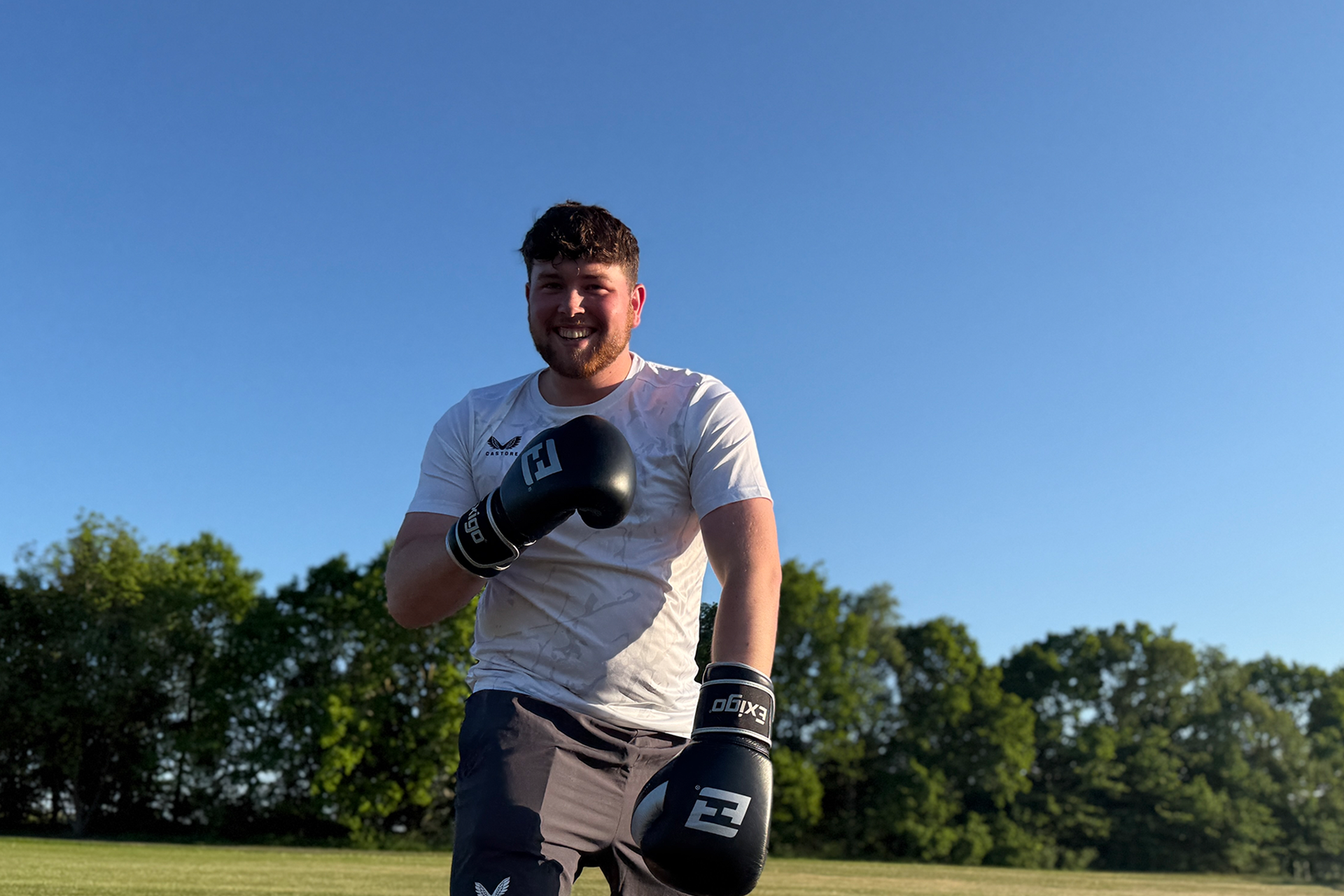
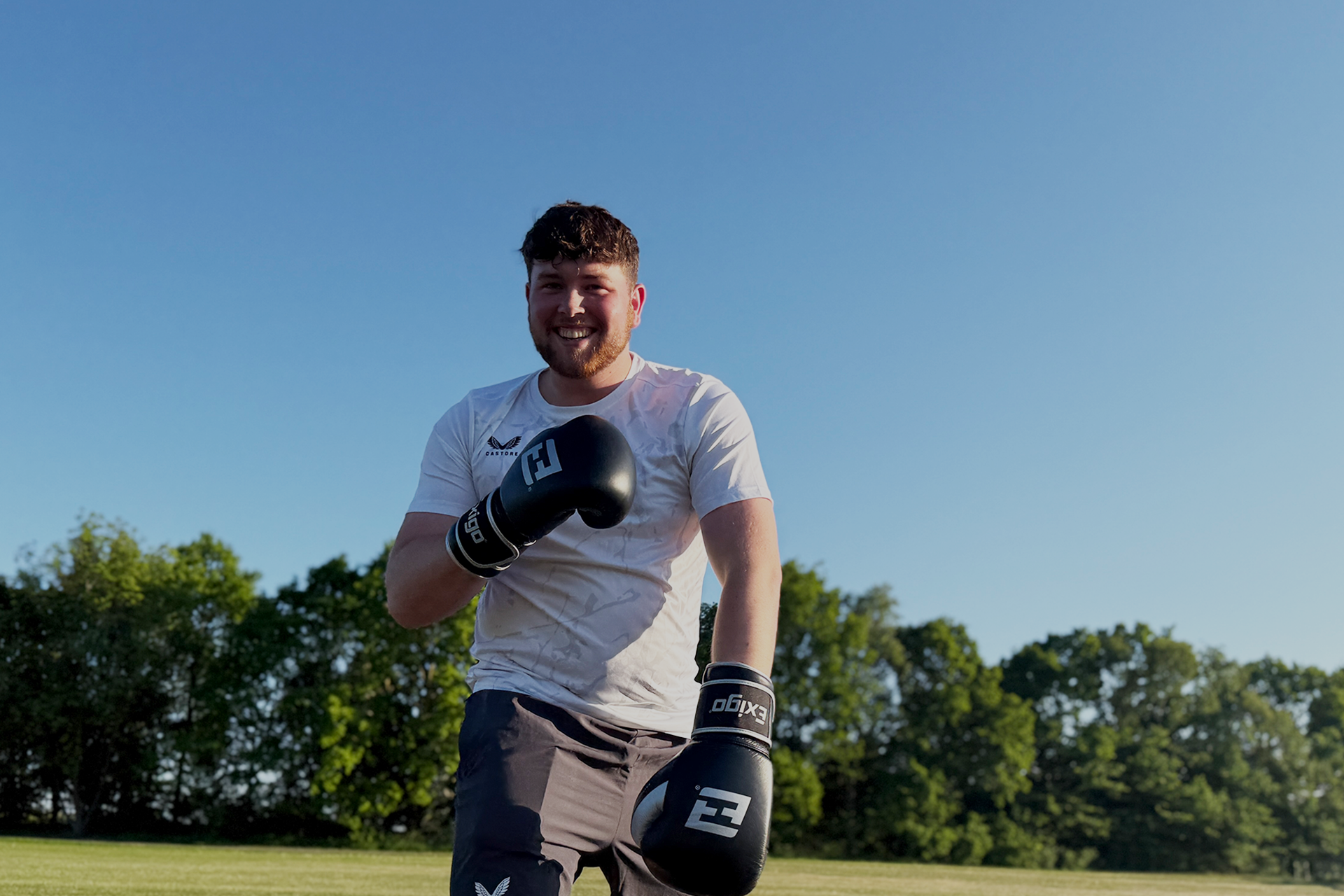


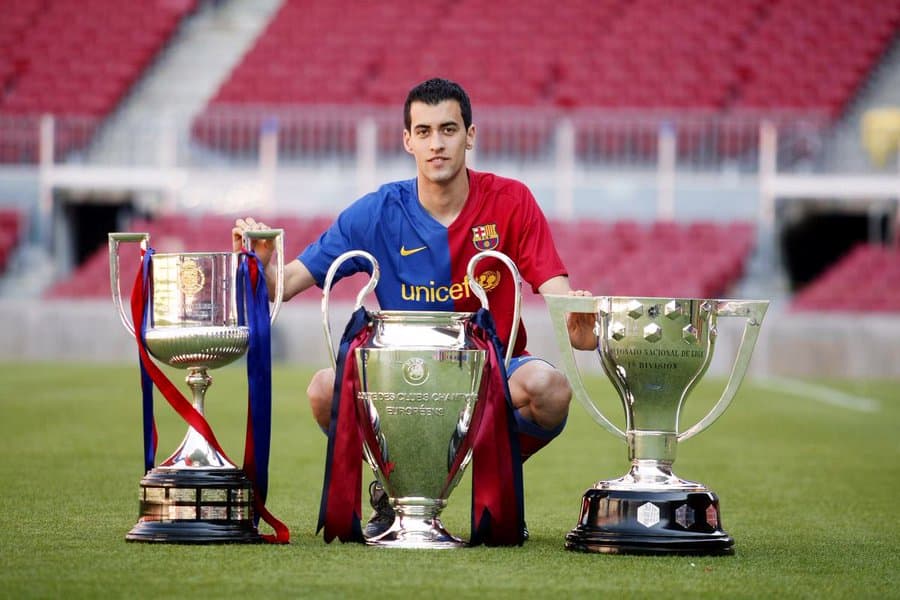
Photo = https://sportzpoint.com/football/10-players-who-have-won-the-most-trophies-in-football-history
Images such as the one displayed above, can be set up to construct a narrative – in this case, Busquet’s has been told to crouch behind the three titles Barcelona had won in one season to show off the clubs achievements and his involvement in their success. A constructed photo can be used to display exactly what the photographer wants to show, after a discussion with the editor they will be aware of the focus of the piece of journalistic work and may chose to construct a photo (such as one featuring trophies) to display exactly what the editor wants to convey.
Images such as the one above, taken during the 9/11 attack in New York, can also be used to convey specific messages. This photo in question is taken from the ground, showing the rescue and response effort from the emergency services – this affects the story as it highlights the human impact and response effort of such an event.
The meanings of photographs can also be unclear, sometimes causing debates around the intentions of the photographer. This can lead to confusion and discussions on the topic in question, and while increased attention isn’t necessarily a bad thing – clarity is important in journalism and an unclear/debated meaning of a photo is not always a positive.

On June 29th, the John Charles Centre for Sport plays host to the latest ‘white collar boxing’ event in Yorkshire, as the popularity of events continue to rise.
White collar boxing began in the 1990’s in New York, as white collar workers sought after a release from their day to day lives.
White collar boxing gives people the opportunity to have a real boxing experience, taking part in routine training and sparring before having an actual fight in front of a crowd. Its popularity in New York rapidly increased throughout the 90’s, before eventually spreading into major cities within Europe and Asia.
The popularity of white collar boxing has been rapidly increasing within the UK, on average, 15,000 people will participate in an event every year as they look to raise money for a chosen charity. Since 2009, one white collar boxing organisation (UWCB) has raised over £29 million for different charities across the UK.
Oliver Sellars took part in a white collar boxing event in 2023, and advocates for anybody to get involved and try something new: “I’d always say just go for it. I didn’t have any experience boxing when I signed up, but that’s the same with most people, you’re starting from scratch.
It was a great experience honestly, it taught me so much and it was almost like an escape from normal life. It changed my routine and gave me chance to let off some built up frustration.
It was quite surreal to be in the ring getting punched in the face but it was fun at the same time. The training was so hard but knowing it’s for charity gave me that extra boost.”
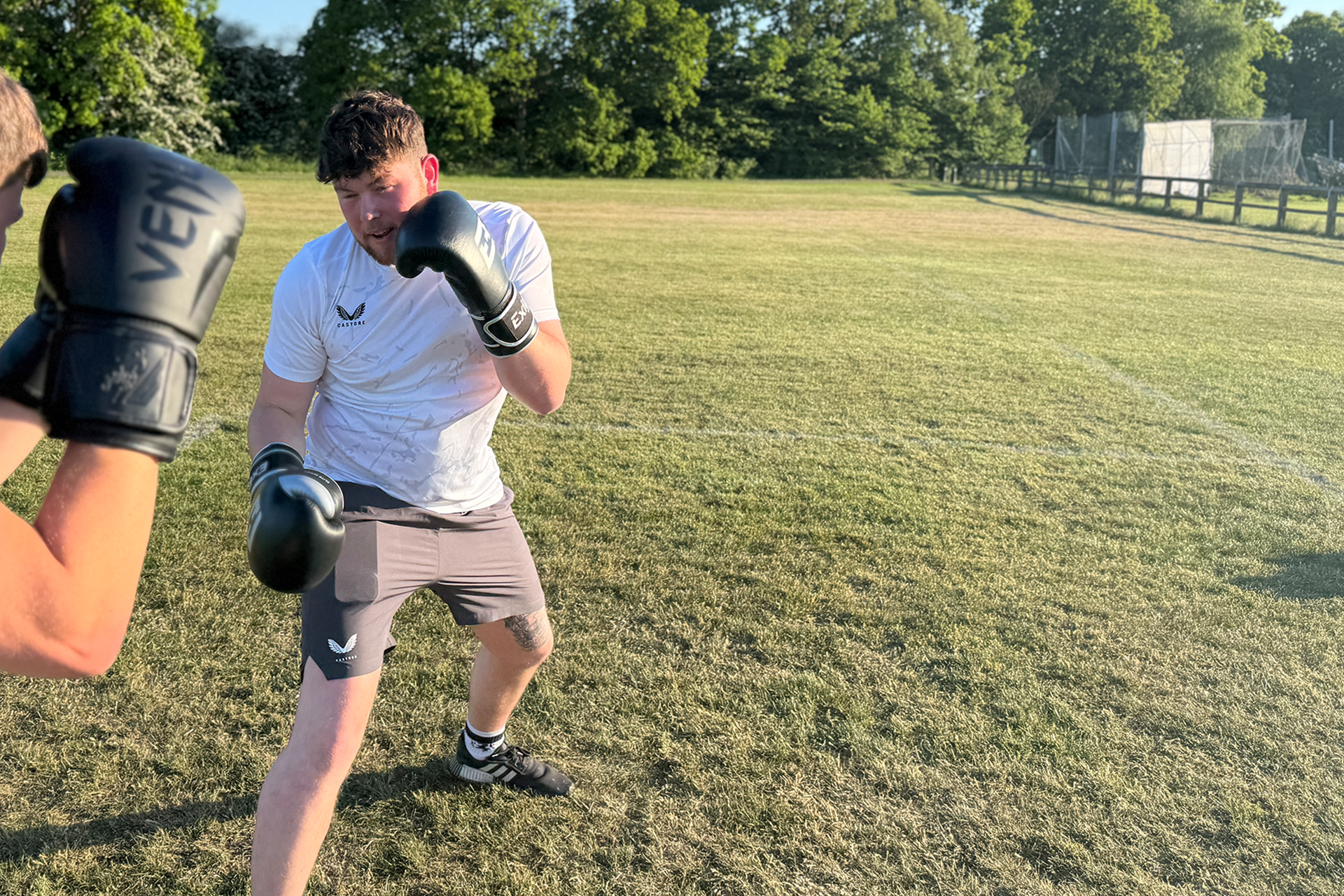
Participants take part in a rigorous training camp to get them physically fit, and as prepared as possible to fight. There’s a major emphasis on individuals’ commitment and devotion to take part.
Sellars said: “The training was so tough, there was so many times I felt like I wanted to give up but I didn’t. The actually boxing training, and the sparring sessions were really fun, I enjoyed them.
But the cardio and fitness side was awful, I don’t think anyone really enjoys cardio – but I hated it.
It was so hard to keep at it at times, especially after a long day at work, but in the end it felt great. It felt great to have stuck with it after all the times I could have given up, after every session I got like a mental boost from knowing I went and did it even when I didn’t feel like it. Knowing I had something to work towards that I had committed to, meant I couldn’t just give up, I had to keep going and get ready to fight.
It was difficult yes, to go through the boot camp and get as fit as I could as quick as I could, but that sense of achievement after I did the fight was massive.”
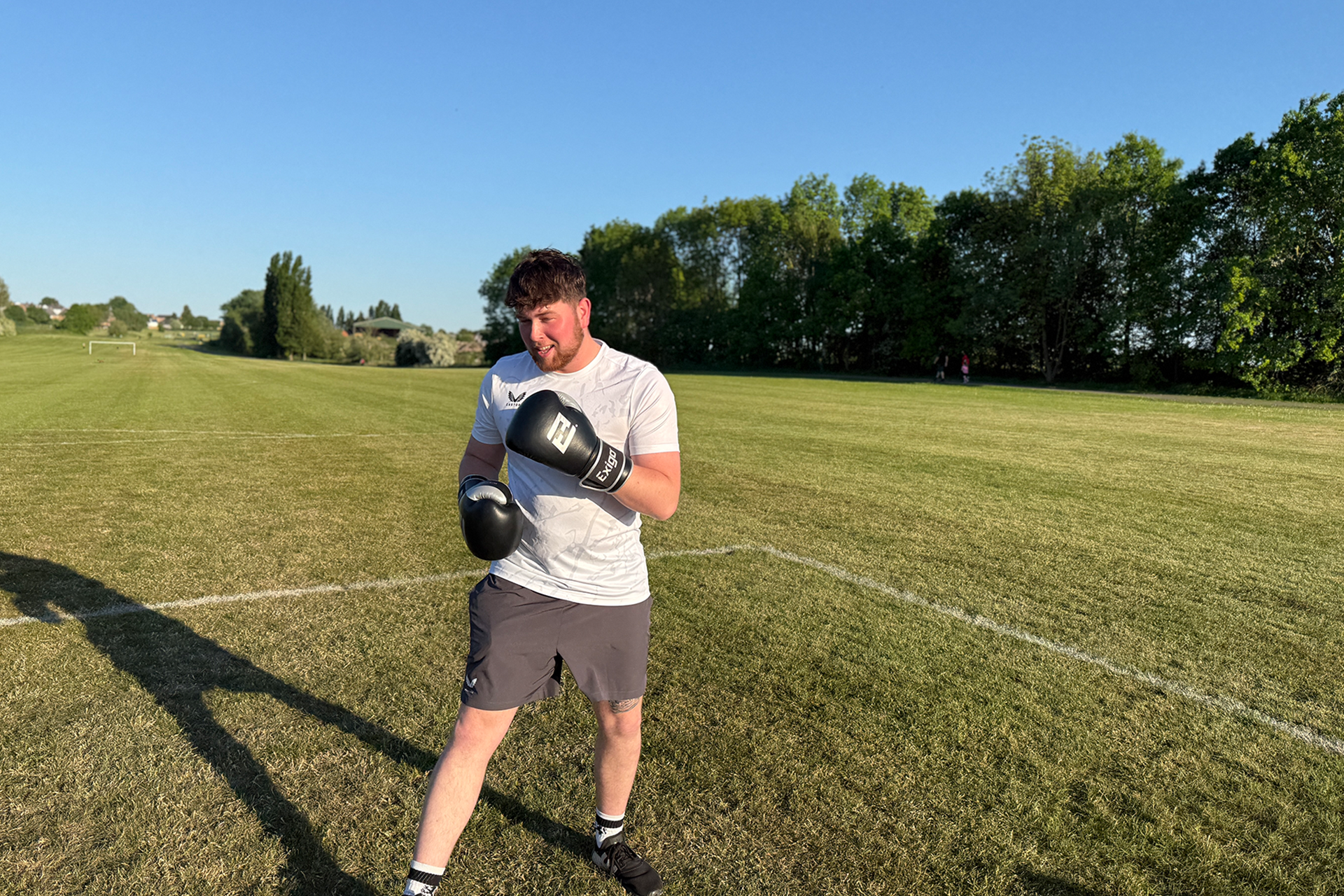
Everyone who takes part in a white collar event will have a different motivation and reasoning behind signing up, for some it may be to get fit or try a new sport. The opportunity to be centre stage in a big event might be attractive to others. But for first time competitor, Arron Hill, there’s a much more personal reason why he’s chosen to get involved.
Hill said: “While it’s always been something that I wanted to tick off my bucket list. I wanted to do it for charity, to give back to the people that helped my grandma in her final days and helped my family through a difficult period.
I’m doing it for Wakefield Hospice, that’s the reason as to why I’m doing it. Obviously, everything personal aside, it’s pretty much just for that, just for my grandma, and for the people that helped her. Just to say thank you.
This is a way that I can raise money for the charity and get fit at the same time.”
To prepare for his fight, Hill is taking his training extremely seriously, motivated to make his grandma proud he finds himself in a ruthless training routine which he’s crafted with the help from his coach.
Two days a week Hill is in the boxing gym alongside his coach, practicing all the technical aspects of boxing. The rest of the week he is building up his fitness through cardio activity, whether it’s attending his local gym or going on runs.

Hill has set himself some personal goals he is determined to hit ahead of the fight, to ensure he is in the best position possible when he steps in the ring.
Discipline is a major part of boxing. Hill admits it’s sometimes difficult to stay on track, however, motivated by taking part in the event in the memory of his grandma – he refuses to quit.
Hill said: “It’s been harder than what a lot of people think.
Obviously, fighting’s a different sort of fitness. It’s one thing running about a ring for three minutes per round and trying to not to get hit but it’s another thing trying to win and score points.
I’ve liked the personal challenges that I’ve set myself. It’s been a good journey so far, so I’m looking forward to seeing where it takes me in the future.
It can be hard to stay disciplined at times, but that’s just part and parcel of the sport, it’s the self-discipline that matters.”
Taking part in such a busy fitness routine while working his full-time job is a challenge for Hill, but he has no interest in slowing down. He believes he’s never been more motivated to stay disciplined.
The importance of physical well-being and fitness isn’t lost on Hill, or his network of support.
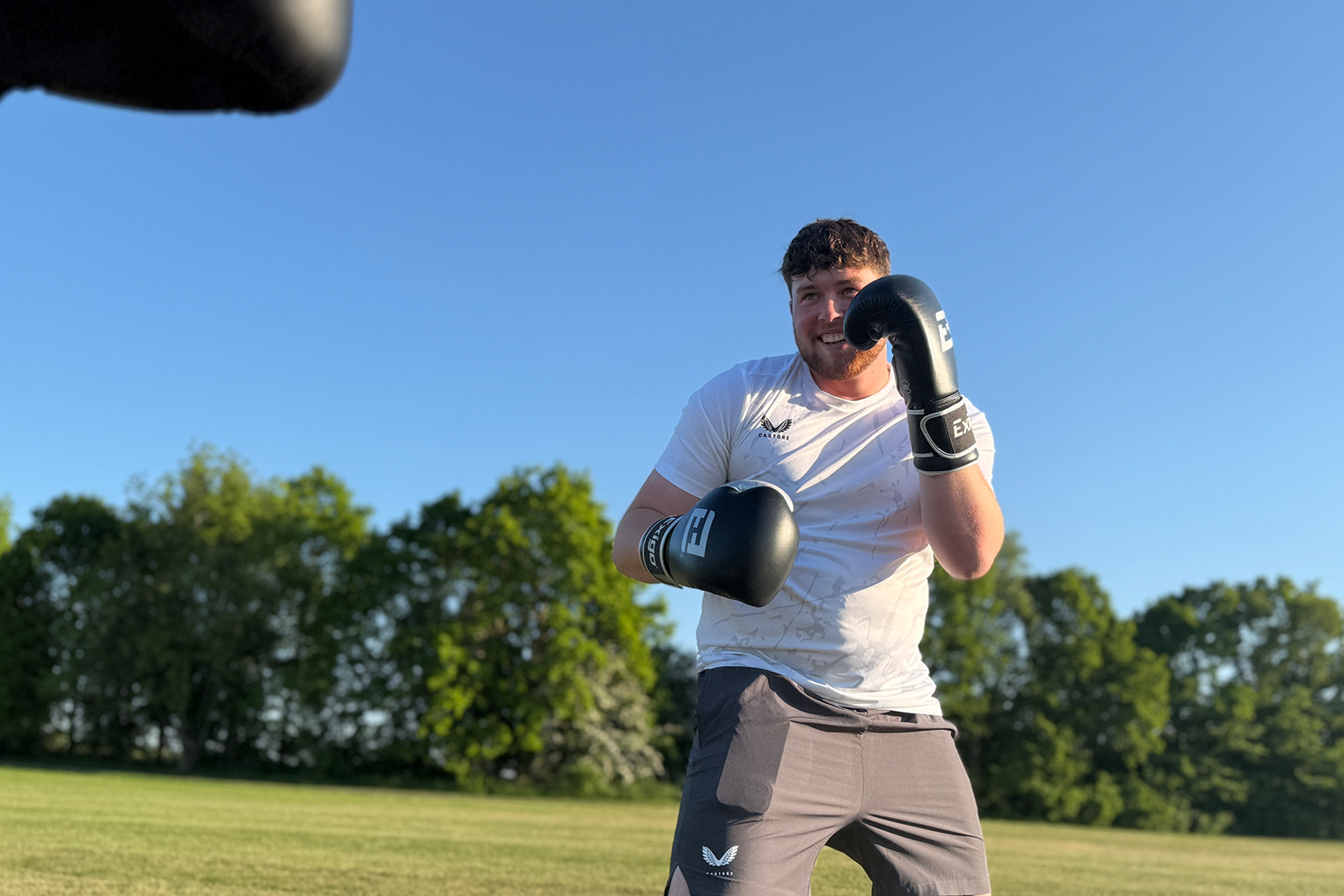
While Hill frequently changes his exercise activity in order to keep things fresh, bound by time constraints from his full-time job matching up with his gyms opening hours– he finds himself often exercising in the outdoors.
He’s found himself sparring his cousin on the playing fields behind his house, doing hill sprints in a local park and running round a local nature reserve with his friends.
Hill is doing everything he can to get as fit as possible ahead of the fight, even completing countless press-ups after his impromptu sparring session in the park.

Enjoying his training is vital for Hill, he said: “I’ve got three days of active recovery and two days of boxing training. So when I’m not boxing, I’m running or in the gym, just doing anything I can to keep the fitness levels going.
I’m constantly trying to break through barriers but not trying to exert myself too much to the point of injury. It’s been harder than what a lot of people think.
I’ve had a lot of good sparring rounds with some good people. My cousin being one of them. I’ve also met up with people from my old gym that I’ve had rounds with in preparation for this, it’s been good. They’ve definitely been the standout moments.”

Hill believes signing up for the boxing fight could change his life, it’s given him a new found drive and motivation to get as fit as possible. His training schedule may seem excessive for an amateur, charity boxing fight, but Hill is determined to take full advantage of the event and the motivation he has found since signing up.
Away from his scheduled training, and when he’s not working, Hill spoke about how he spends most of his time: “Mainly doing cardio, just to keep the lungs going really.
Like I said, you’ve got to run away and not get punched, and to try and throw something back, so it does take a big toll on your cardiovascular system.
I’ve got a big sports complex near my house, which is surrounded by fields and hills. It’s been good for hill sprints, and there has been some decent long runs as well around where I live.
I’ve found in the fields you’ve got enough open space to move around to practice footwork and head movement, so I’ve made the most of that when the sun is out”
Sellars backed up the importance of fitness when preparing for a fight: “I couldn’t believe how hard it actually was at first, I couldn’t believe how fit I needed to be.
Obviously, I’d never boxed before so I was starting from scratch with my fitness and it was so hard at first. As the weeks went by I got more and more fit, so it became easier. I didn’t appreciate before how fit boxers actually were and how hard it is to actually fight.
I’m so glad I did it, it gave me a reason to actually try and get fit – and to stick with it. Knowing I had the fight coming up meant I actually stayed on track and kept training, and kept on my diet.
Having that final goal and something to work towards was massive in actually starting [his fitness journey.]
Anytime I was tempted to not go to the gym or to break my diet, I thought about the fight and reminded myself I was doing this for charity. It kept me on track knowing I had to fight in front of people and I definitely didn’t want to be embarrassed, but also knowing it’s for charity gave me that extra boost to actually stay disciplined.”
Ultimately, white collar boxing seems to be a win-win situation, participants work on their fitness and health while raising money for charity – and on top of that, they benefit from 8 weeks of free boxing lessons.
Both Hill and Sellars are massive advocated for partaking in white collar boxing events, they both noted the impact the training has had on their fitness and lifestyle – and the importance of raising money for charity.
As the fight approaches, Hill is motivated to win, going into is final weeks of training he believes he stands in good stead. But he thinks it’s important to remember the reason behind the fight.
Hill said: “I’d say I’m confident, but I’m not cocky. You’re stepping in there with another man who’s going in there to rip your head off, so you’ve got to be wary, but I’m confident that I can get the job done.
I’d probably say I’m a bit scared as well, but it’s part and parcel of it. You’ve got to be scared.
I definitely want to win, and I’ll obviously try my best to do so, but I think you’ve got to remember why you’re even doing the fight. It’s for my grandma, for Wakefield Hospice, to thank them for everything they did for me and my family.
Hopefully we can raise loads of money for them, and show them how grateful we are for everything they did.”
Donations to Wakefield Hospice can be made on the following website – Fundraiser by Arron Hill : Charity boxing for Wakefield hospice
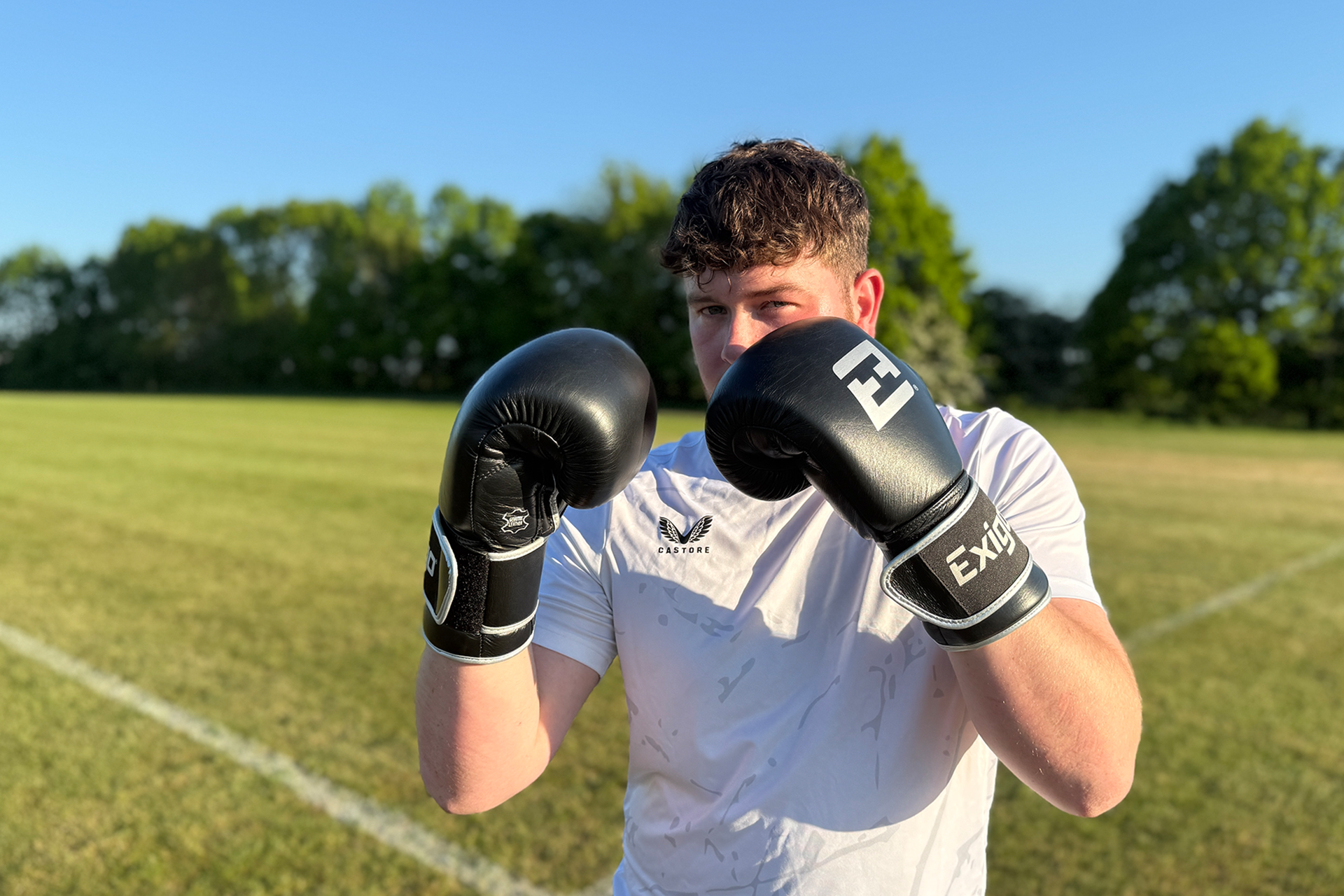

F-stop is a camera setting which limits or increased the amount of light a lens lets in, which can also be used to manipulate the field of depth of an image. A higher F-Stop value means a smaller aperture, which results in less light and a more focused image. Image 1, shown above, is an example of picture taken using a low F-stop value which creates a blurred background effect by having the person in full focus.
Conversely, by using a high F-stop value, an image entirely in focus can be created. However, by using a higher F-stop, less light enters the lens due to a reduced aperture. An example of this can be seen directly below, captioned Image 2.

Finally, a mid-ranged F-stop value can be used to create an image where the object is in focused while the background is blurred to a medium level. An example of this can be seen below.

Standing at over 190 meters, the 44-storey building also becomes the tallest building in Leeds and construction is due to finish in 2026.

The city of Leeds already has one of the largest student populations in the UK, but the current on-going development on Merrion Way will offer housing to over 700 students as it becomes the World’s tallest purpose built student accommodation tower.
Over 60,000 students are already enrolled at University’s across the city, and demand for affordable student accommodation has never been higher. The new development plot will provide 633 ‘Luxury’ bedrooms in the city centre.
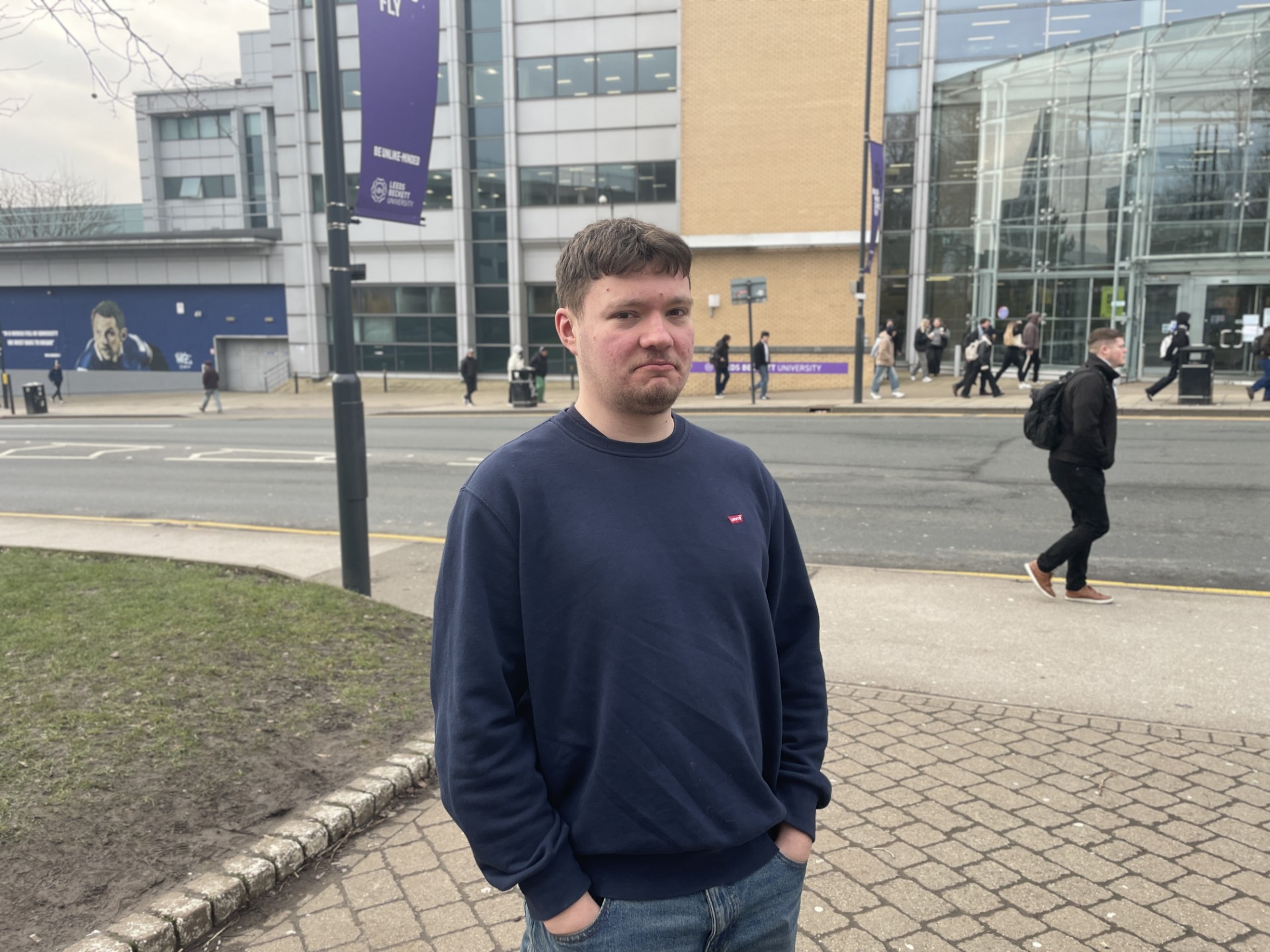
Beckett student, Lleyton Miller said: “New student accommodation is always good, especially in the city centre. It helps first year students guarantee getting somewhere good to stay.”
As the student population continues to rise, Leeds students often find themselves pushed out of the city centre to areas such as Hyde Park and Headingley – which are often criticised by students following negative experiences with their landlords.
With the development of the city centre accommodation, more students will have access to higher quality living space.
Leeds Trinity University student, Lewis Naipie-Haydon said: “I’ve been lucky enough to get good landlords, but I’ve heard horror stories of some ‘slumlords’ who sell accommodation for two times it’s actual worth.
“Accommodation wise, you get good landlords and companies and you get bad ones. With the cost of living going up the rent rise is harsh, but understandable.
“Personally, I like the amount of students in Leeds. It creates a welcoming atmosphere and almost a sense of belonging. The nights out are good, and the amenities are curated for us, which helps to boost the university experience and enjoyment of the city.”
 Photographic Journalism

You must be logged in to post a comment.