Admittedly this last year of University has been tough for me as I fell out of enjoyment with the course and have been in a bit of a slump at times due to other aspects of my life as well. I do realise that this is no excuse so I will be using my week 8 task as a reflection on what I had gotten done before the module deadline.
Weeks 8, 9 & 10 consisted of me getting my photos together before I did my writing, as I already had my story in mind and quotes from Ruben Forde. The toughest part about gathering these photos was the editing and making them look professional. I used two types of camera throughout this process, mainly my iPhone for the ‘street’ photos and then my flatmates camera for the in-game shots which were placed towards the end of my story when I was talking about Ruben’s university basketball career as I felt as though they were appropriate for that part of the story.
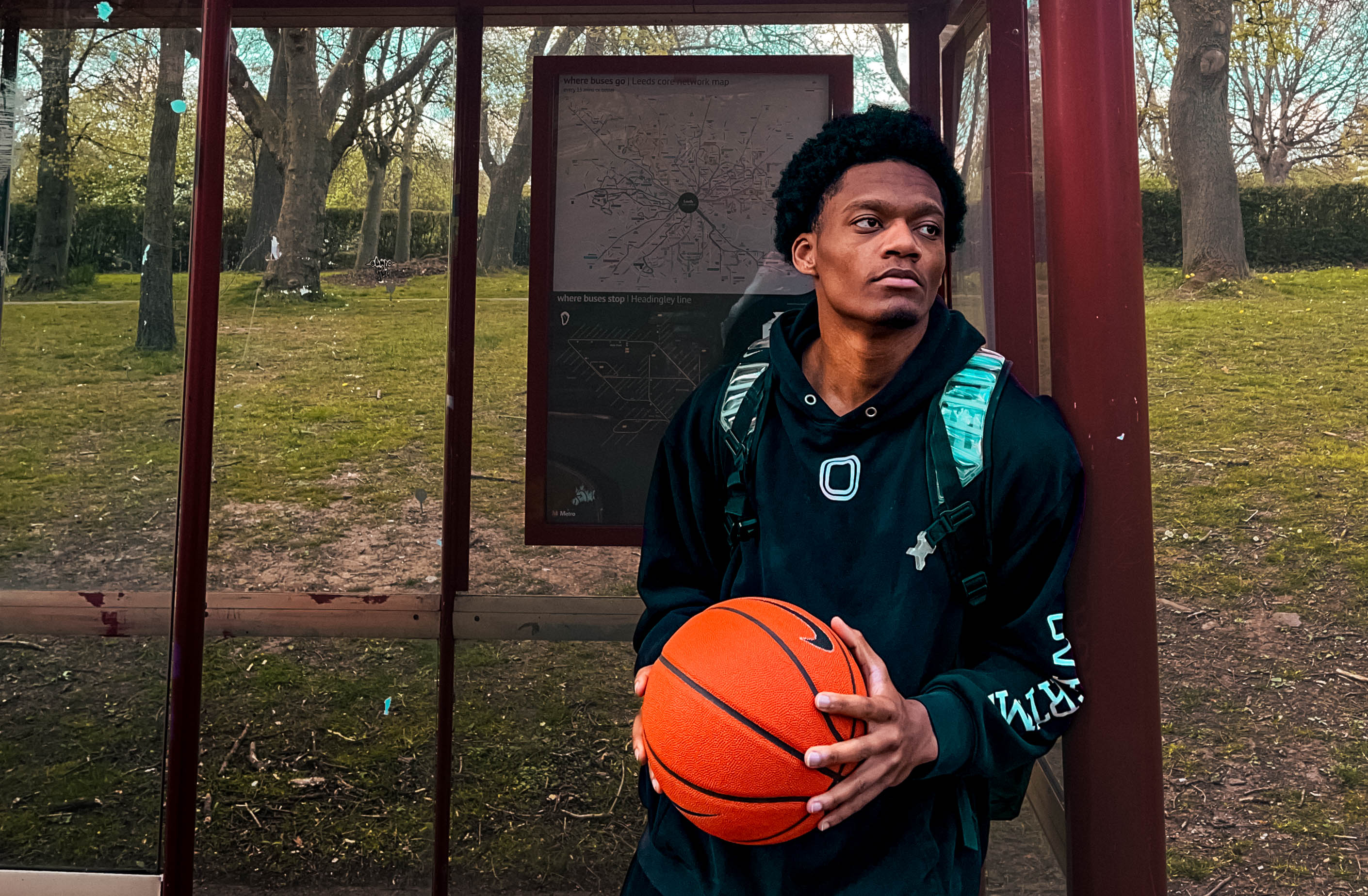
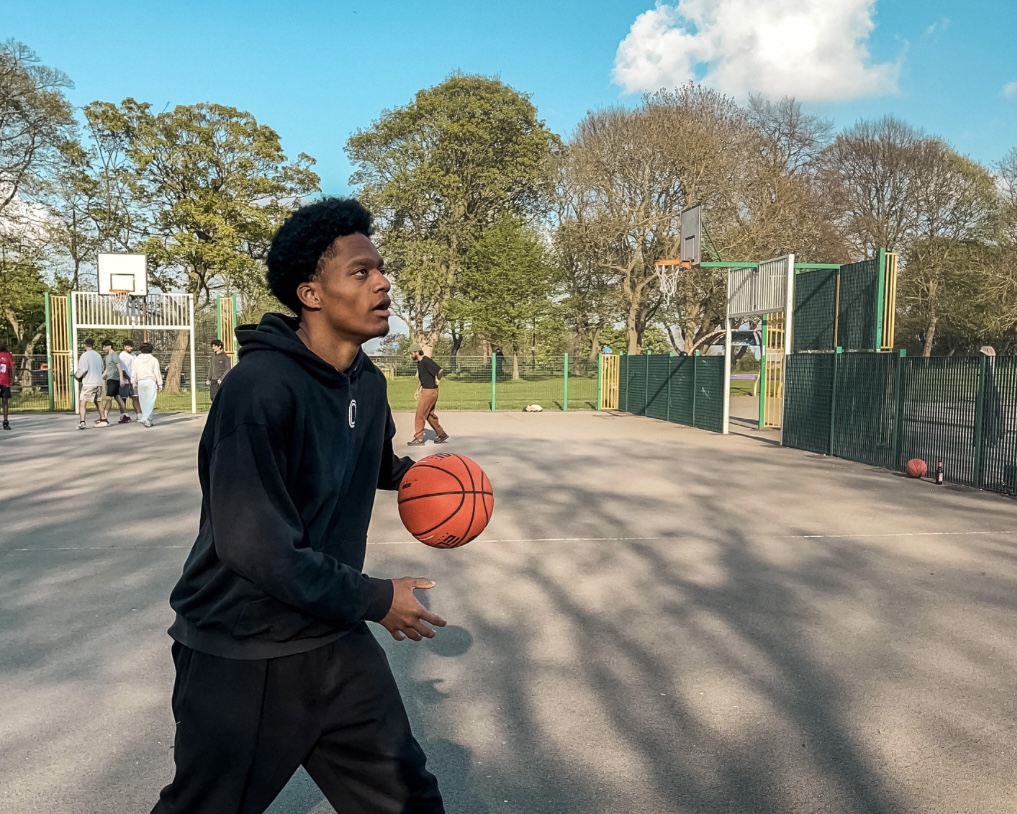
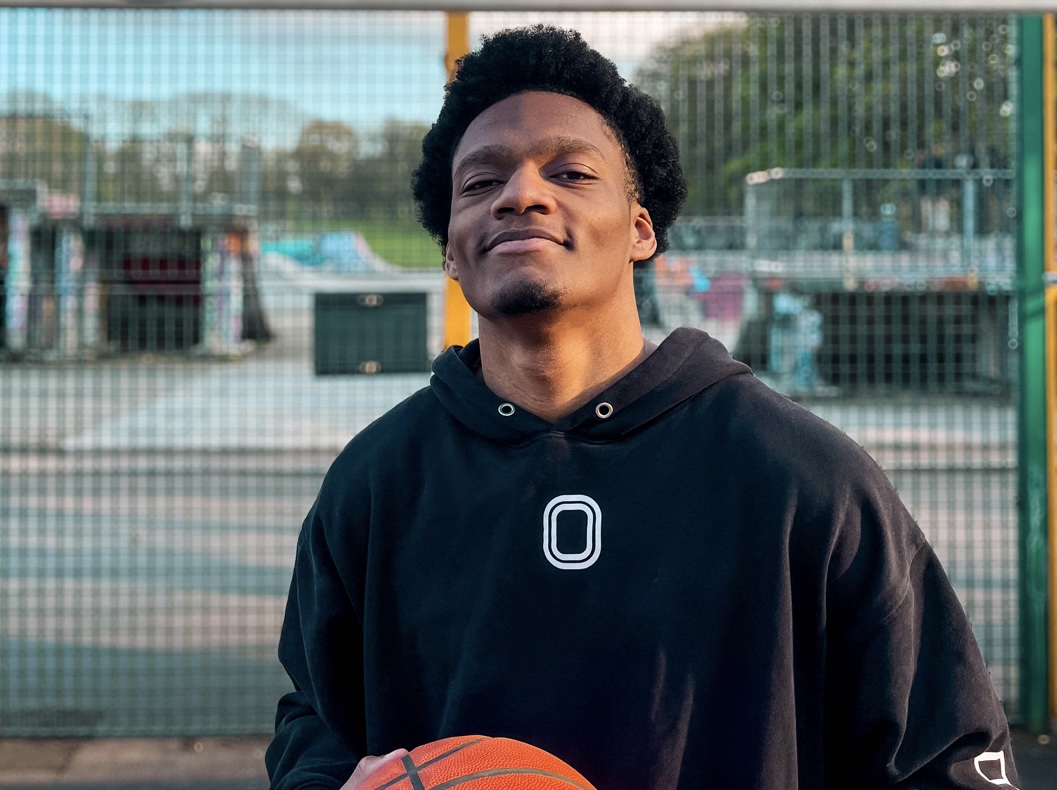
The street photos originally came out to be quite average, however through the use of my experience with photo editing I was able to tweak the photos to look more professional and cleaner as they originally lacked composition and detail. Once I had edited the iPhone images, they looked a lot clearer, and to do this I ensured that there was more focus on Ruben and some of the images lacked colour so I enhanced the contrasting colours so that the image stood out more.
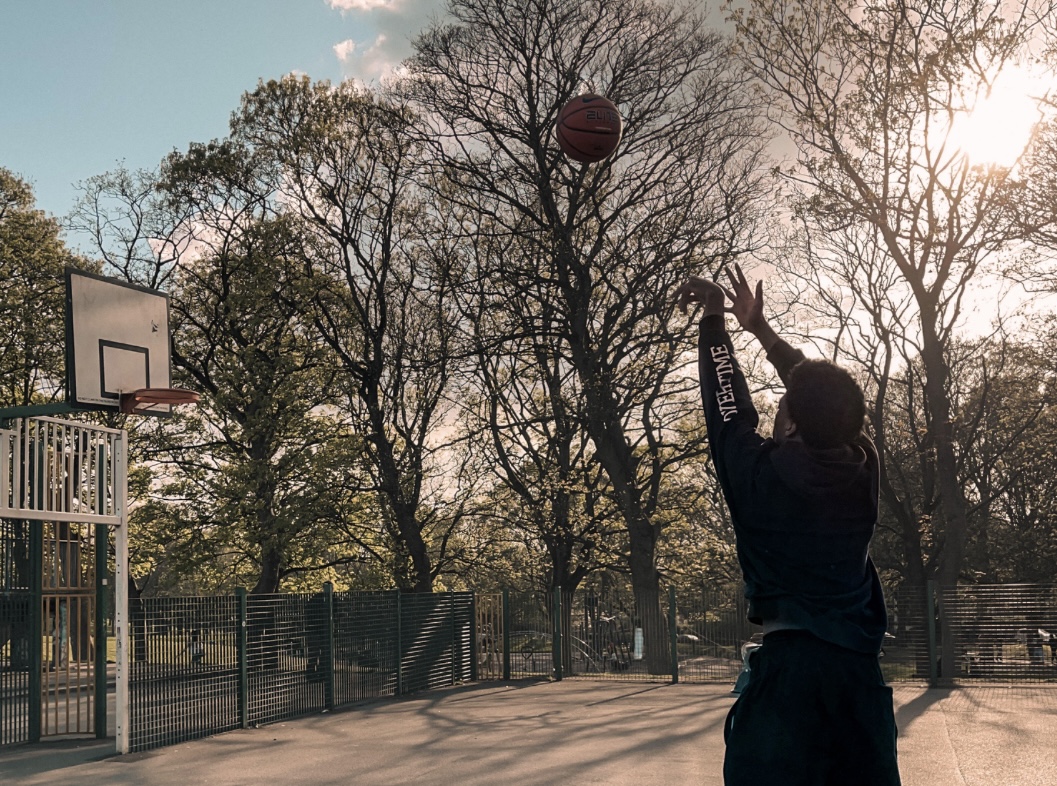
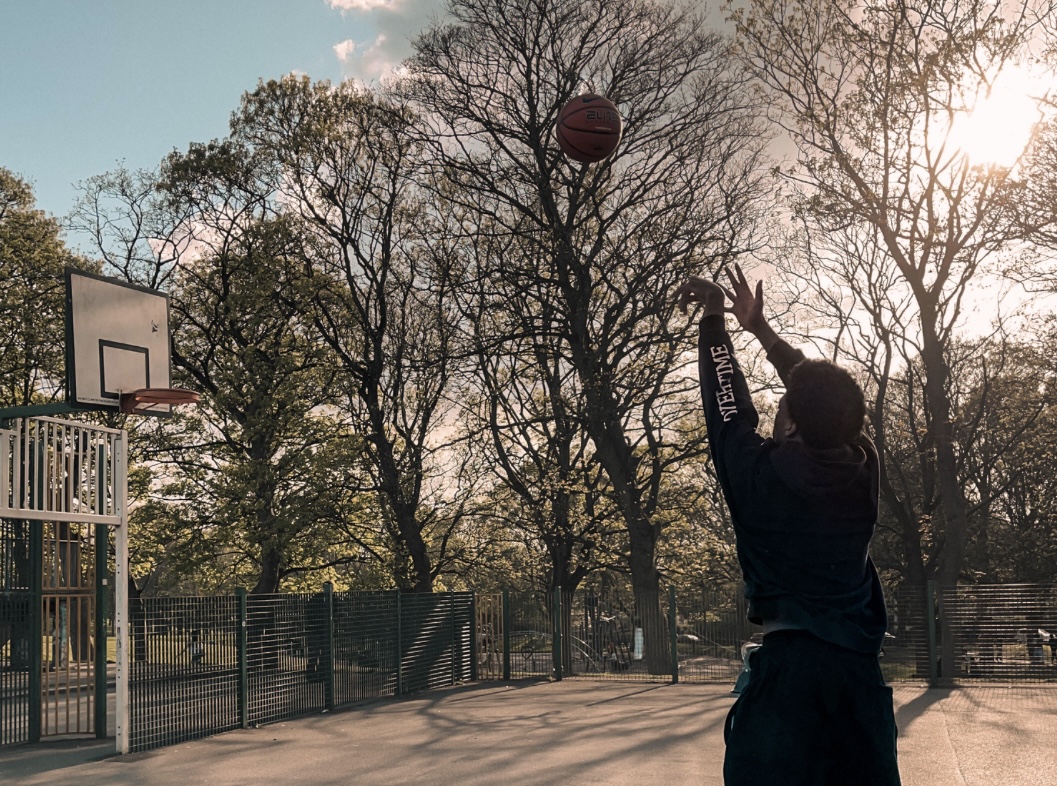
The image above was my favourite one once I had done editing. In my article it is placed when I am talking about Ruben’s relationship with God, and I believe that once I was able to edit the photo so that the light was brighter, it came out really well and almost appeared as a metaphor having the light shining down on Rueben whilst he is playing basketball on the streets, where he started.
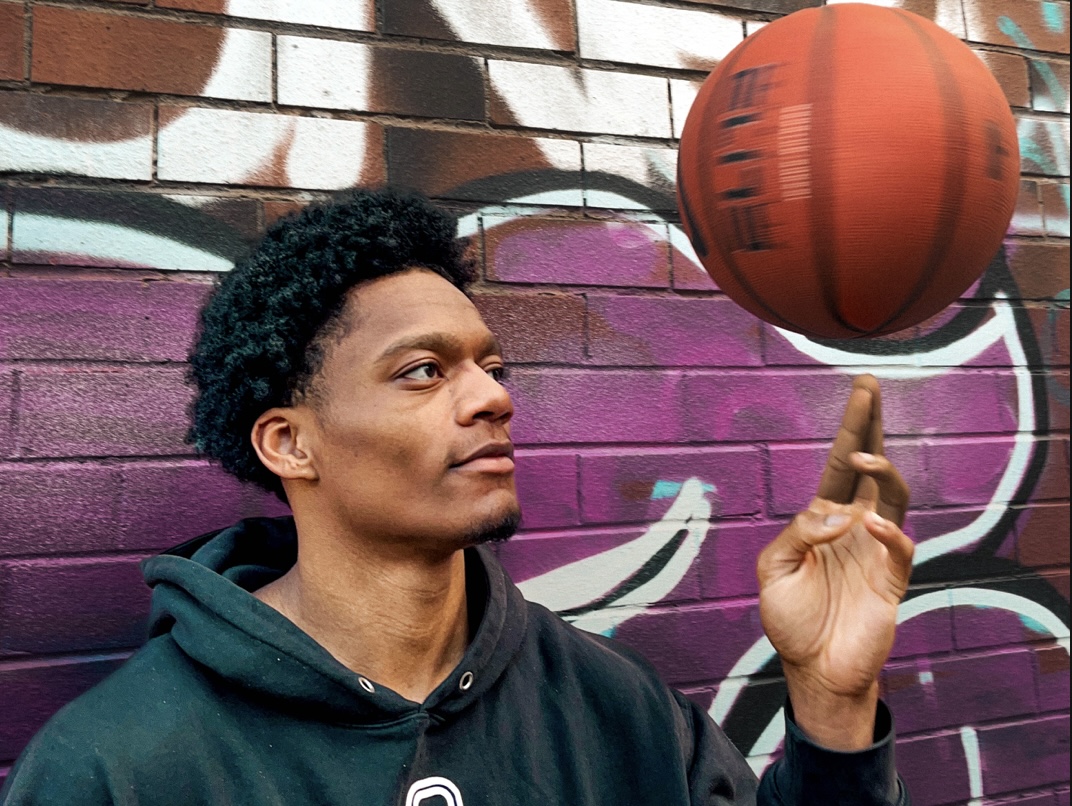
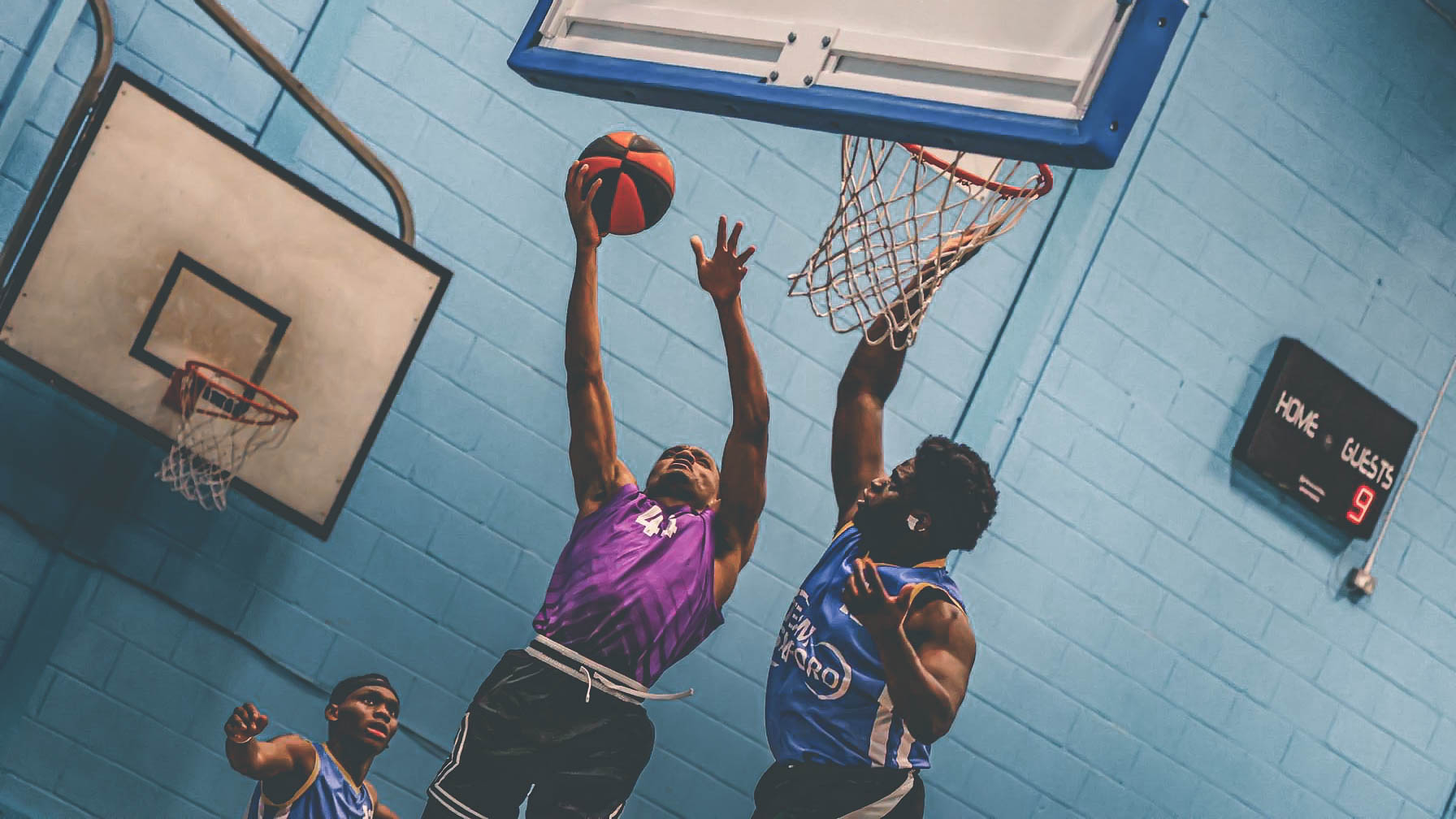
The image above was disappointing, this was at a training session and was taken as I was trying to learn how to use the camera. The original shot was good however I accidentally took it in portrait mode rather than landscape. Therefore I had to crop it which took a lot of quality out of the image. As well as this, I struggled with the focus so the image came out quite blurry, and trying to edit that proved to be difficult as you can see, I wasn’t able to make it as clean as I would’ve liked.
I overcame these challenges once I was shown how to use the camera and through some more practise at home I was able to learn what settings would be best to shoot in for sports photography at their game. I still struggles slightly however I was able to get a few great shots during their game vs York by using the camera settings to my advantage. I was able to use a fast shutter speed to freeze the action of Ruben jumping and running as well as the ball bouncing. As well as this I used a wider aperture to let in more light and create a shallower depth to focus more on Ruben. As it was indoor, I used a higher ISO to maintain the shutter speed in low light. Despite only having a few photos that came out this good, I was very happy with how they looked.
Overall, I wish that I had been better prepared for this module and I regret letting my personal life get in the way of my education too much. I am still somewhat pleased with what I produced and I am still glad to have taken this module as I have learned some fascinating skills along the way that I will have for life.
The image above is capturing my fellow classmate mid-jump. This was taken through the use of the burst mode setting on my iPhone. The burst mode is a tool that emulates fast shutter speed which in turn allows me to take many images at once in order to pick out the best result. The image came out okay, you can tell that the model is jumping based off his body language and movement however his toes are out of shot so his full body isn’t captured. Next time I would stand further back or use a wider shot so that I could capture the full movement.
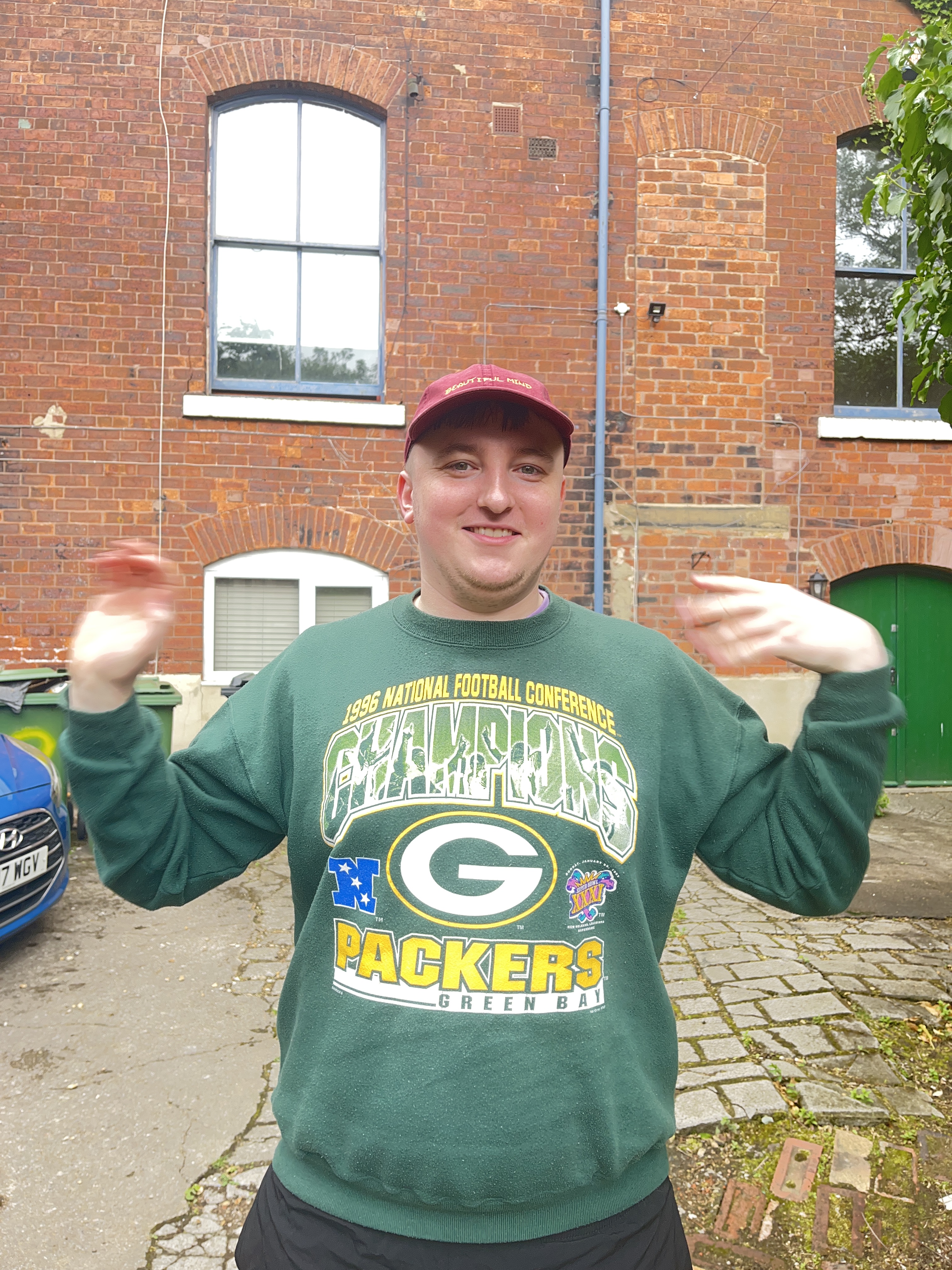
This second image, is of the same model but this time standing completely still aside from moving his hands around to create a blur affect. In order to get this shot, I used a tool on my iPhone called Live Photo. This tool uses long exposure to mimic slow shutter speeds, and in turn can’t capture frames as quickly as a high shutter speed can, creating this blur affect. I believe this image came out at a decent standard. You can tell that the model is standing still aside from his hands moving and the blur affect is quite successful.
Shutter speed and ISO research –
The amount of time a camera’s shutter stays open to let light onto the sensor or film is known as the shutter speed. It is crucial when figuring out motion and exposure in a picture. In sports photography, for example, a shutter speed of 1/1000 of a second is perfect for freezing fast-moving subjects because it allows in less light. A lower shutter speed, on the other hand, such as 1/10 of a second or more, lets in more light and can produce motion blur, which is helpful for photographing nature. In order to prevent camera shake, a tripod is usually required during exposures of 10 seconds or longer.
Together with shutter speed and aperture, ISO is one of the three essential elements of exposure and describes how sensitive your camera’s sensor is to light. P oor ISO values, such ISO 100, show poor sensitivity to light and are best suited for bright settings or tripod use since they result in cleaner photos with less grain. The sensitivity of the sensor is increased by higher ISO values, such as ISO 1600 or ISO 3200, which makes it simpler to take pictures in low light without using a flash. But raising the ISO also results in more digital noise or grain, which may affect the clarity of the image. The ideal balance between brightness and image quality, as well as the lighting circumstances, will determine which ISO is best.
My first image displayed above is of a fellow classmate with a building and some more objects behind him. This photo was taken with the depth of field (dof) set to its highest possible setting. As you can see, the image is very detailed with everything being in shot and shown clearly in the image. Not only is the model shown in clear focus but so are the elements behind him as well. This was done on my iPhone, by going into the portrait settings and moving the f dot all the way to the highest setting. My aim for this photo was to make the image as detailed as possible by being able to see everything in the photo very clearly, and I believe that I was able to do this due to the settings I used. The image came out very clear and looked like what I was aiming for.
This second image pictured above, is an example of using the complete opposite settings. Once again, this shot includes the same model in front of the same background. To get this affect you have to use the lowest depth of field possible. This puts the subject closest to the camera in full focus whilst blurring out the background. To do this I also went into portrait mode and set the f dot all the way to its lowest setting. As you can see, the background is completely blurry making it only possible to focus on the model at the front, who is shot very clear to the eye. I aimed to get this affect as I wanted to only be able to focus on the model at the front of the shot, rather than the detailed background behind them. I think the image came out well, however if I was to do it again I would ensure that the models entire body is in shot as well as a less busy background so that the image looks cleaner.
Finally, my third photo was taken using the depth of field on a middle setting. This picture has the least obvious changes as the background is only slightly out of focus, whilst the model remains more in focus. I do not believe that this setting is very aesthetic as when I look at it I want to only focus on the model, but when doing so the background is still drawn in, which would normally be fine but in this case it is slightly blurry which does not give a nice affect in my opinion. To get this outcome I once again went on the portrait mode in my phone and changed the f dot to its middle setting.
Many of basketball’s greats are born on the streets, streetball itself is the heart of basketball. It is known as a place where you learn who you really are as a player. Although originating in the USA, over the years the culture of basketball has spread internationally and has become a huge sport in the UK. However, the first official British basketball league (BBL) wasn’t founded until 1987. Before this, players have had to find a way to express their talent elsewhere.
Street basketball has always been hugely popular throughout the UK, and its most raw, talented basketball players can be commonly found in more deprived areas, such as the rougher parts of Manchester. These street ballers form respectable communities and produce some of the most talented ballers the UK has seen.
Streetball culture in Manchester has always been influenced by diversity. Young athletes from diverse immigrant backgrounds such as, African, South Asian, Caribbean, and Eastern European all bring their unique street smarts, tenacity, and styles to the court. The combination of these nations produces a distinctive style of basketball in the UK that is unpredictable, athletic, and fast-paced.
Ruben Forde, a Lithuanian born basketball player has originated from these streets of Manchester and has grown up with the game. Basketball is his one guaranteed love, and is all he knows. Forde has grown up in a place called Moss side, which has a reputation for being one of the more crime-ridden areas in Manchester.
Moss Side is often seen as a place of contrast, still hindered by crime, but now also increasingly recognized for its sense of community and culture. For someone like Ruben, growing up there means carrying both the scars and strength of the area.
Forde said: “It’s the same across most of the rougher areas in Manchester. In places like Moss Side and Fallowfield, basketball isn’t just seen as a sport, for me and for others like me it’s been my culture and a coping mechanism for when I have been struggling.
Ruben began his playing career on the streets, but he says that his relationship with basketball started through his relationship with God. He also states that: “basketball wasn’t just a sport for him, it was a calling”.
For many athletes such as Ruben, religion provides a strong moral and emotional foundation. It helps shape their identity beyond their sport and gives them a greater sense of purpose. Faith becomes a framework to understand victory, defeat, pain, and growth
Raised in a deeply religious family, his relationship with God was established from the very beginning. Ruben said: “My connection with God started the moment I was born, everything I am today is because of him. I truly believe he’s guiding me, step by step.”
This connection is what drives Ruben, and many others forward. Rubens earlier life didnt contain luxuries that other children may take for granted, growing up in a poorer household he did not have access to much technology or activities, for Forde, his main focuses were on family, God, and playing basketball on the street.
“I didn’t have the distractions other kids had. No phone, no ps4. I had my family, a basketball, and my belief. Even now when I step onto the court, it’s a blessing. I never take it for granted. Every shot I take, it’s God moving through me. This isn’t just about me making it pro. It’s about fulfilling the purpose he gave me.
I’ve just been taught that way, I can’t really explain it. Some people think I take my relationship with God too seriously, or that its cringey, but it’s just all I’ve known growing up. My family are extremely religious and that became stronger when they emigrated to England, they believed it was God that gave us this opportunity. It has been the same as I have been getting older, God has just been in my routine, church on Sundays. Prayers before meals. Lessons of perseverance, humility, and resilience were constantly taught and repeated around the dinner table to me and my siblings. It made us who we are today”, said Forde.
The constant street ball and his relationship with God keeping him resilient and hard-working has shaped Forde into a rather exceptional young player. At the age of 20, Forde has just recently joined his university team, and because of his talent he has been thrown straight into the first team, as a regular starter.
But how did Ruben make the leap from streetball to being a part of a team on the actual courts? Ruben has always been incredibly athletic, and thanks to his repetitive routine of streetball, he has naturally developed an athlete’s frame and has always had quickness and talent. Because of this, he developed a strong talent for basketball before he even played his first game for a grassroots team.
“I’d managed to surprise a lot of teams in my area for how good I was at a younger age. I’ve always been fairly tall but somewhere along the way I just didn’t stop growing, but before that I just had this knack for anything athletic really. I was shocking all the old heads on the court by jumping over kids twice my size, I was able to dunk from like age thirteen.”
It was this ability that pushed Ruben to join a grassroots level basketball side. However, he struggled to find a team at first in the Manchester area. Basketball at the grassroots level in the UK is full of heart, but it’s also fighting an uphill battle.
Unlike football, which receives massive funding, media attention, and institutional support, basketball often operates in the shadows. Yet despite the lack of resources, it remains one of the most played sports among young people.
But when Ruben was younger, the scene was a little bit different. The accessibility wasn’t really there at the time. Particularly in Black and minority ethnic communities, basketball wasn’t receiving a lot of funding back then.
Forde said, “It was disappointing when I was younger, because I felt as if my hard work and drive wasn’t really paying off, and for a young kid, it really messes with you. During my childhood we struggled financially, so throughout that time I gave everything I had to Basketball, and all I wanted to do was repay my family and God who has strived for me to become a better individual and had helped with my basketball talent.”
Eventually though, Ruben got recommended to a grassroots level team by one of the older ballers on his local street court. This sense of community is why street basketball can be so special. What it lacks in support, it makes up for in grit, community spirit, and raw talent. Whether it’s a converted playground in Moss Side or a small sports hall in Leeds, the love for the game burns bright, and players like Ruben Forde are living proof of what that scene can produce.
“I felt as if it was a blessing. I got so lucky in the fact that I just happened to have been playing on that court at the right time in the right place, and I will forever be grateful to that man as it felt like at the time that opportunity was just never going to come, you know?, said Forde.
For the rest of his teenage years, Ruben was proving himself at grassroots level and was starting to attract attention from various youth academy programs as well as youth/summer programmes abroad. Ruben had a choice to make; does he continue in England? Or does he venture to the states away from his family who had worked so hard for his opportunity.
Before his decision could be made, the global Covid-19 pandemic turned his life upside down. Lockdown was extremely difficult for the young basketball player. He had gone from playing every minute after school outside on the street playing basketball, to being stuck inside for the best part of 4 months.
Ruben said, “Covid was so hard man, it really was. I had no hoop in my garden, and we weren’t allowed to go play on the streets either, I know 4 months isn’t that long of a time in the grand scheme of things, but it left me in a dark spot.
I turned to God in that time, and I was able to believe that things were going to get better. I decided that after covid was over I was going to take a gap year to get back into playing and then go to university so that I can get a better education as well as keep trying for my dream in basketball.”
In September 2024, Ruben Forde moved to Leeds to study at Leeds Beckett Univeristy, a university very well known for its sporting achievements and history. It was during this time that he signed up for a trial for the men’s beckett basketball team.
During try outs, everyone was immediately blown away by how good he was, and straight away Ruben was offered a place in the first team, which he has cemented himself in the starting 5 ever since.
Since then, Forde has been the team’s leading points scorer as well as standing out in big games with his dribbling ability, his ability to dunk and his natural athleticism. His teammates and coaches have regularly told him that he has what it takes to make it.
“I’ve just always had this belief in me, this certainty that I’m going to make it in England. I can’t explain it, but I’ve always just had that feeling in the back of my mind that one day I will be playing in the BBL”.
In May 2025, there was a Varsity sports day that is played annually towards the back end of the University year, and the event consists of both Leeds university team’s, being Leeds Beckett and University of Leeds going head-to-head across every sport played at the Uni’s.
It is widely known as the biggest sporting spectacle at University level across Leeds, and students flock to the event every year to cheer on their respective Universities. It is as big as it gets for university student athletes.
The student athletes don’t just participate for bragging rights; they play for pride. At certain sports, there are even scouts that go and watch to see if there are any talented athletes that have the potential.
It is a fierce contest and a historic rivalry that has gone back generations. In the previous year, Beckett had triumphed in the basketball and took home the trophy, so this year the University of Leeds were out for revenge.
However, this year Leeds Beckett first team had something they didn’t last time, a new athlete and a new card up their sleeve, Ruben Forde. Forde said, “The expectation on me going into Varsity was great, I lap up those sorts of things, I was so pumped for my varsity debut, everything just felt right for me at the time”.
Unfortunately, Beckett had some vital injuries going into their game. Knocks to their captain and starting point guard meant that they were at a disadvantage going into the game. Ruben had the game of his life, however the University of Leeds won by just one point, taking home the trophy and everything that comes with it.
“It was a hard one to take,” said Forde. I really wanted to mark my first year off with that varsity win, but things just didn’t fall into place on the day. I felt bad for those third years who couldn’t end their time at Uni with a good result, but we will be back next year, and we will put things right”.
Things weren’t all gloomy after Varsity. Ruben was informed shortly after by one of his coaches that there was an offer in place from The Newcastle Eagles, a team in the BBL, for Reuben when he finishes University.
Finally, Forde said: “I couldn’t believe what I was hearing. Honestly, I was so happy when I heard they were interested. It just felt as though that belief that I always had in me, the one fueled by God, was about to come true. The only downside is that I’d have to move to Newcastle”!
From the street courts of Moss Side to the newfound university competitions, he’s carried the same belief that he was made for more. With God as his guide, the game in his blood, and a professional future within reach, Ruben is catching up to his dream. And as he looks ahead, one thing is certain, he’s only just getting started.
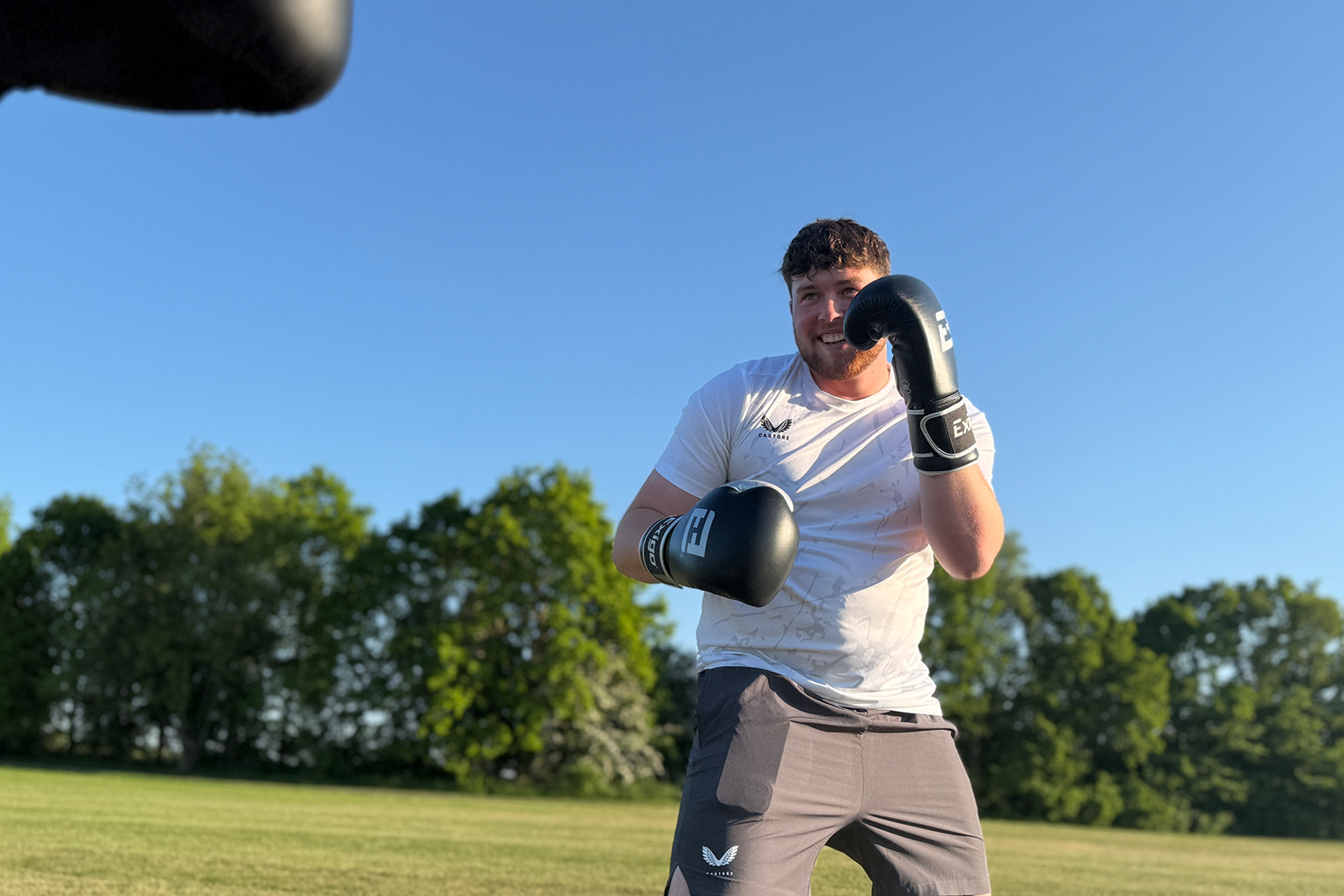
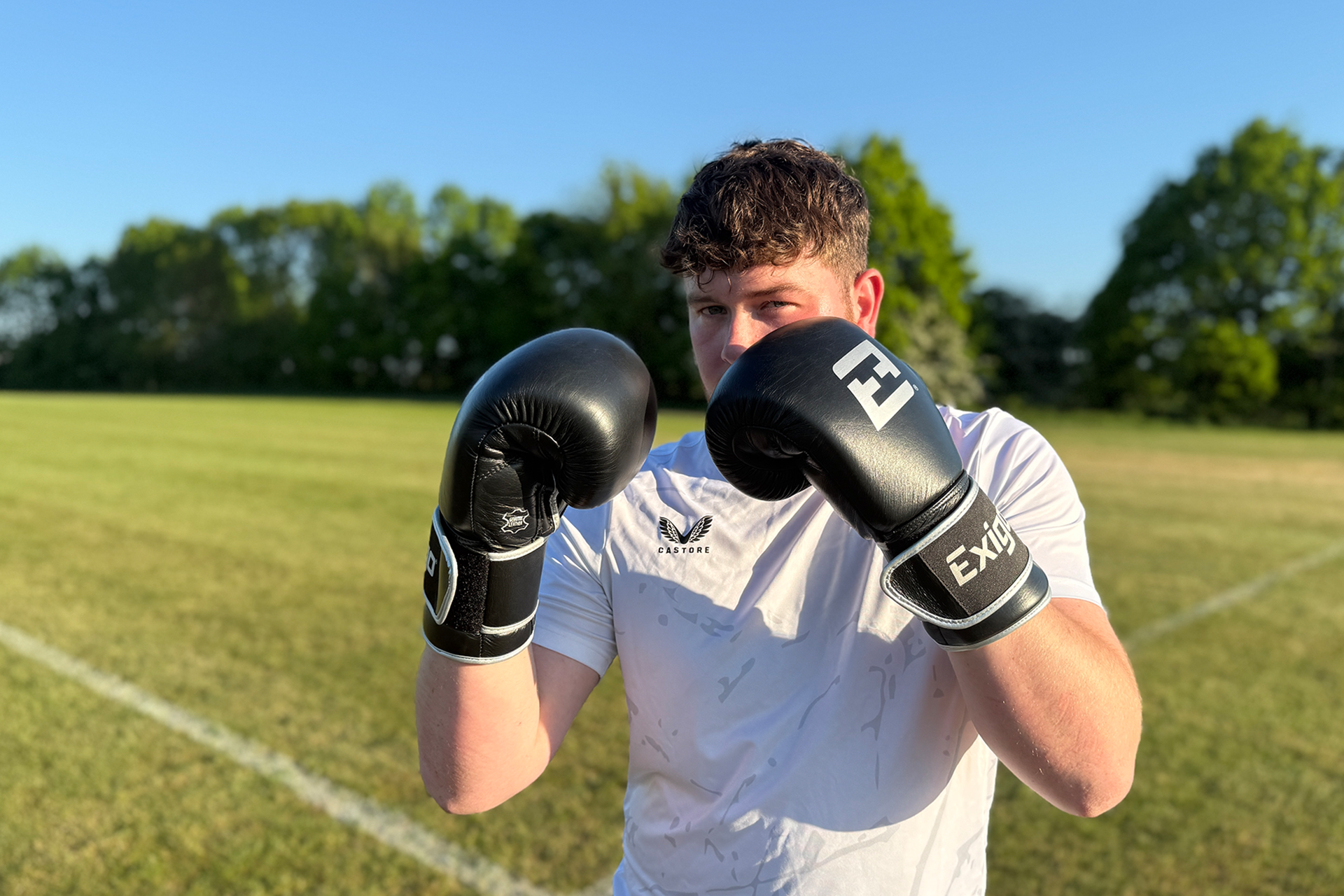
This post features two images which I will include in my final project, I believe this is a good opportunity to practice editing and correcting images which I will actually be using in a piece of graded work.
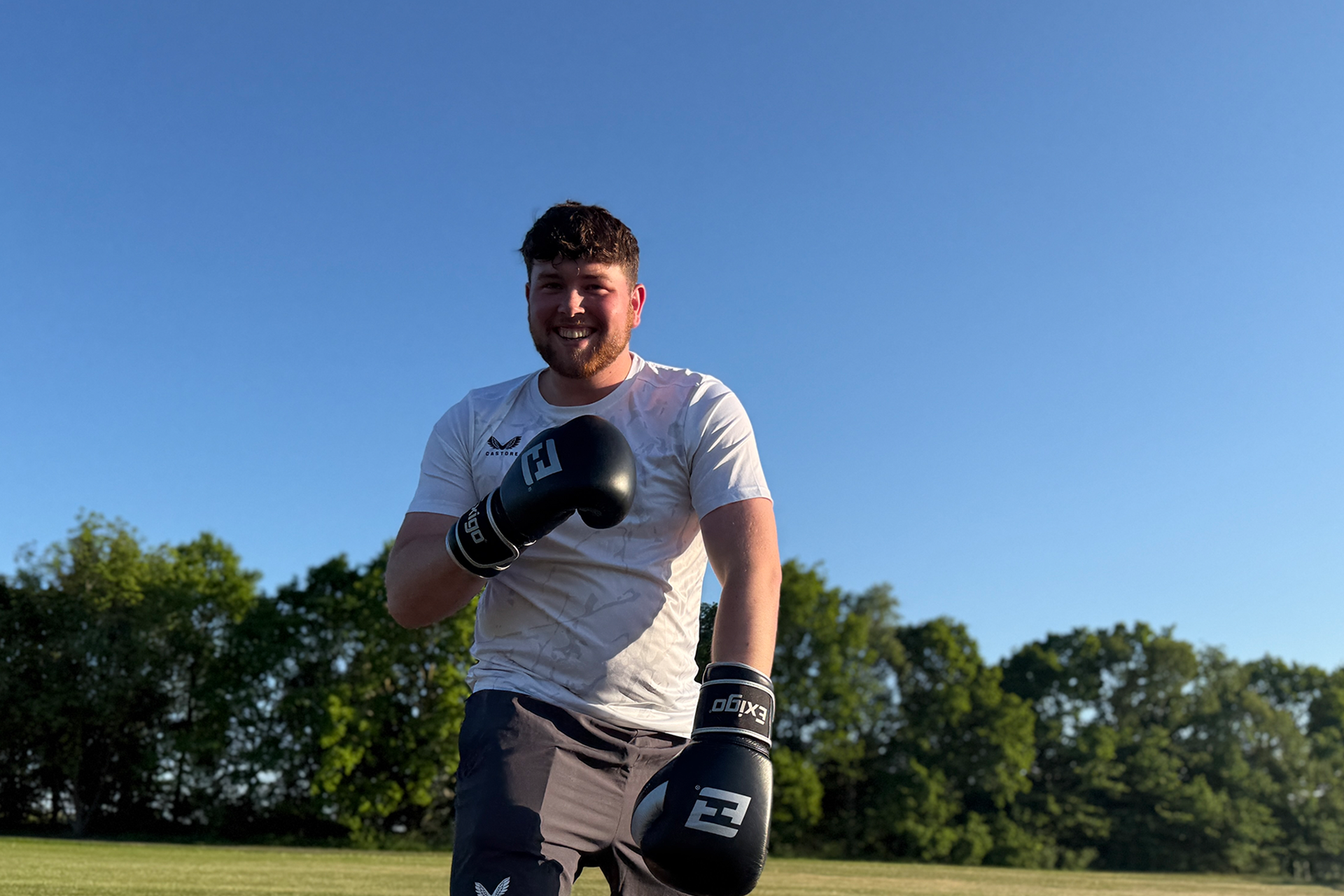
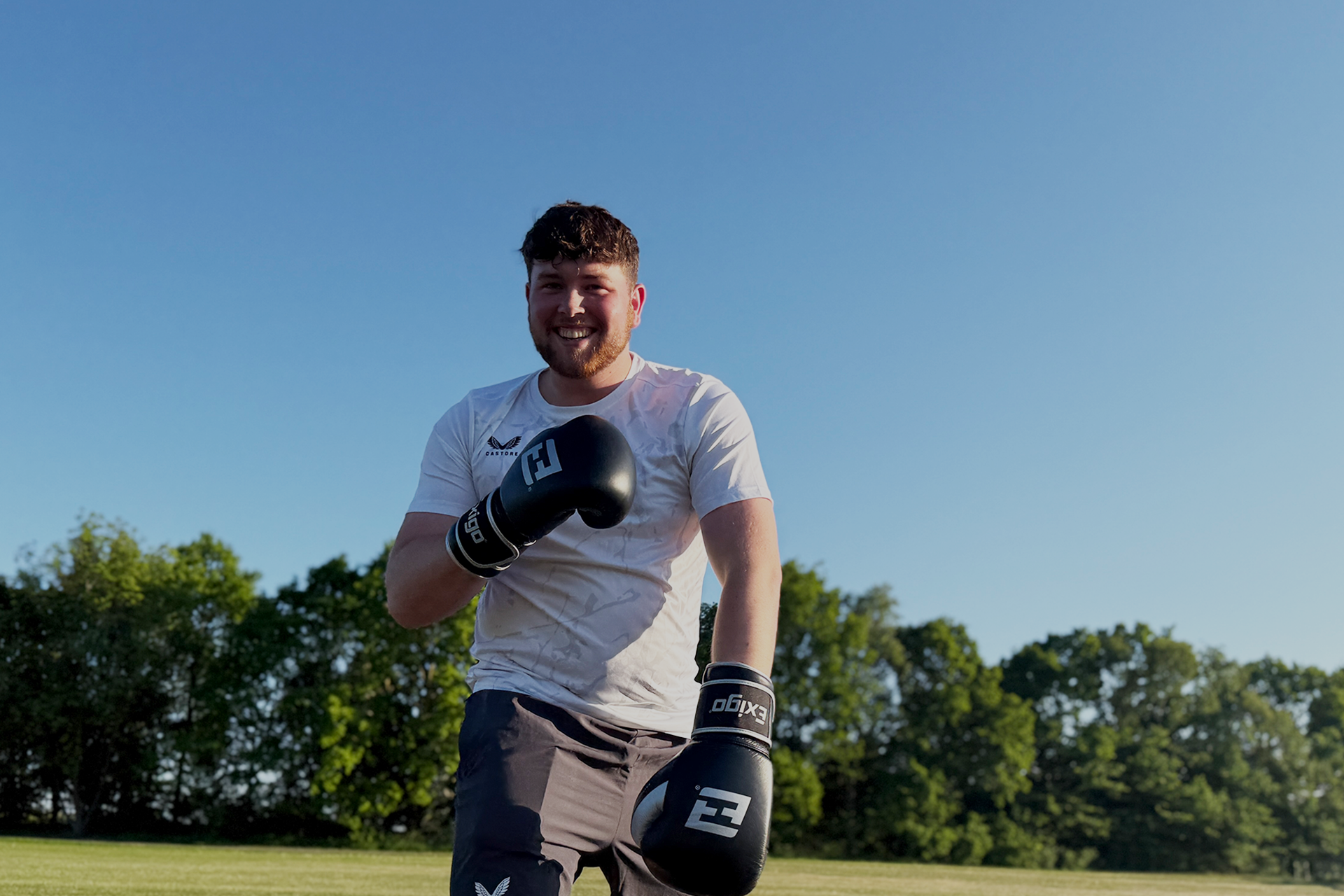
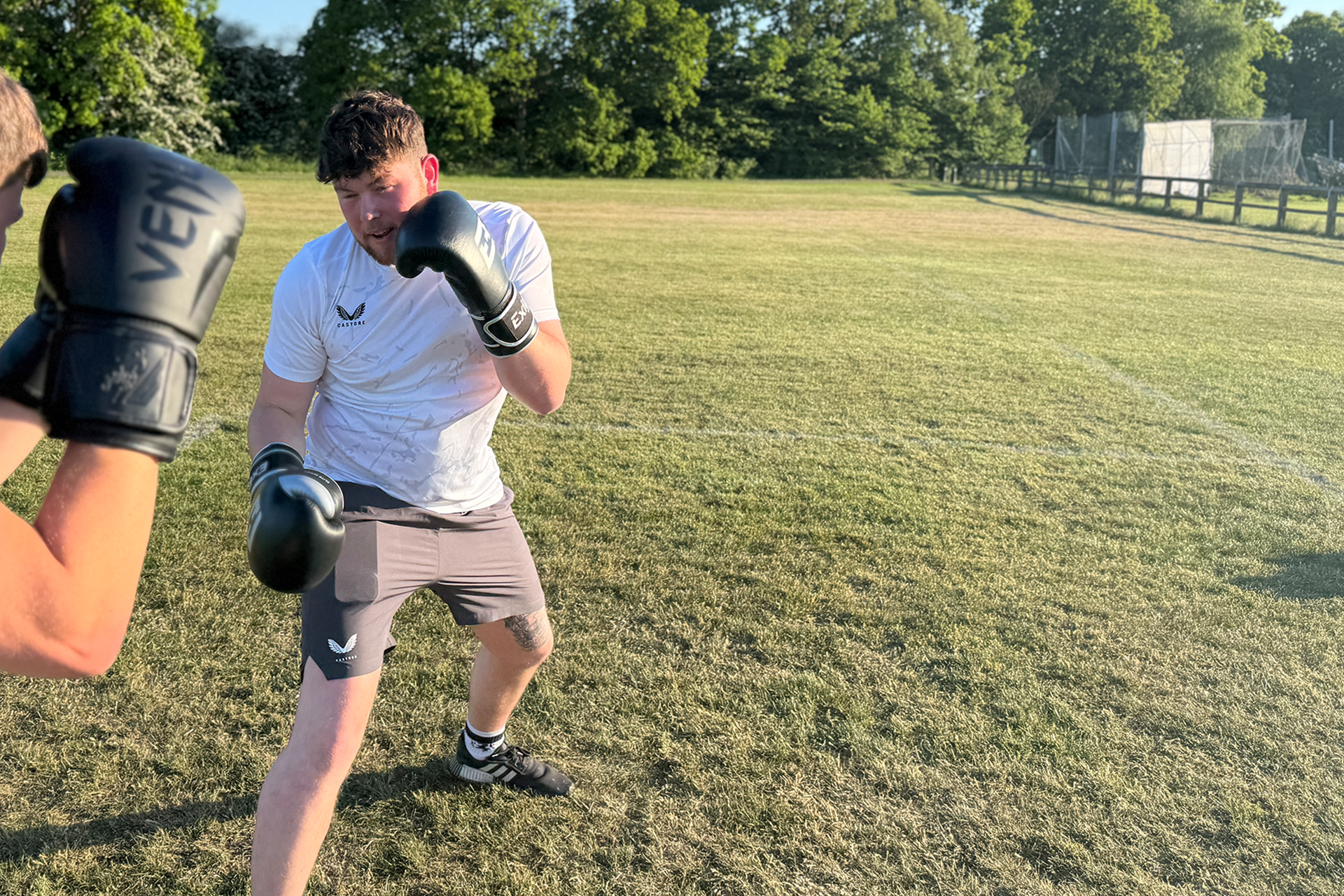
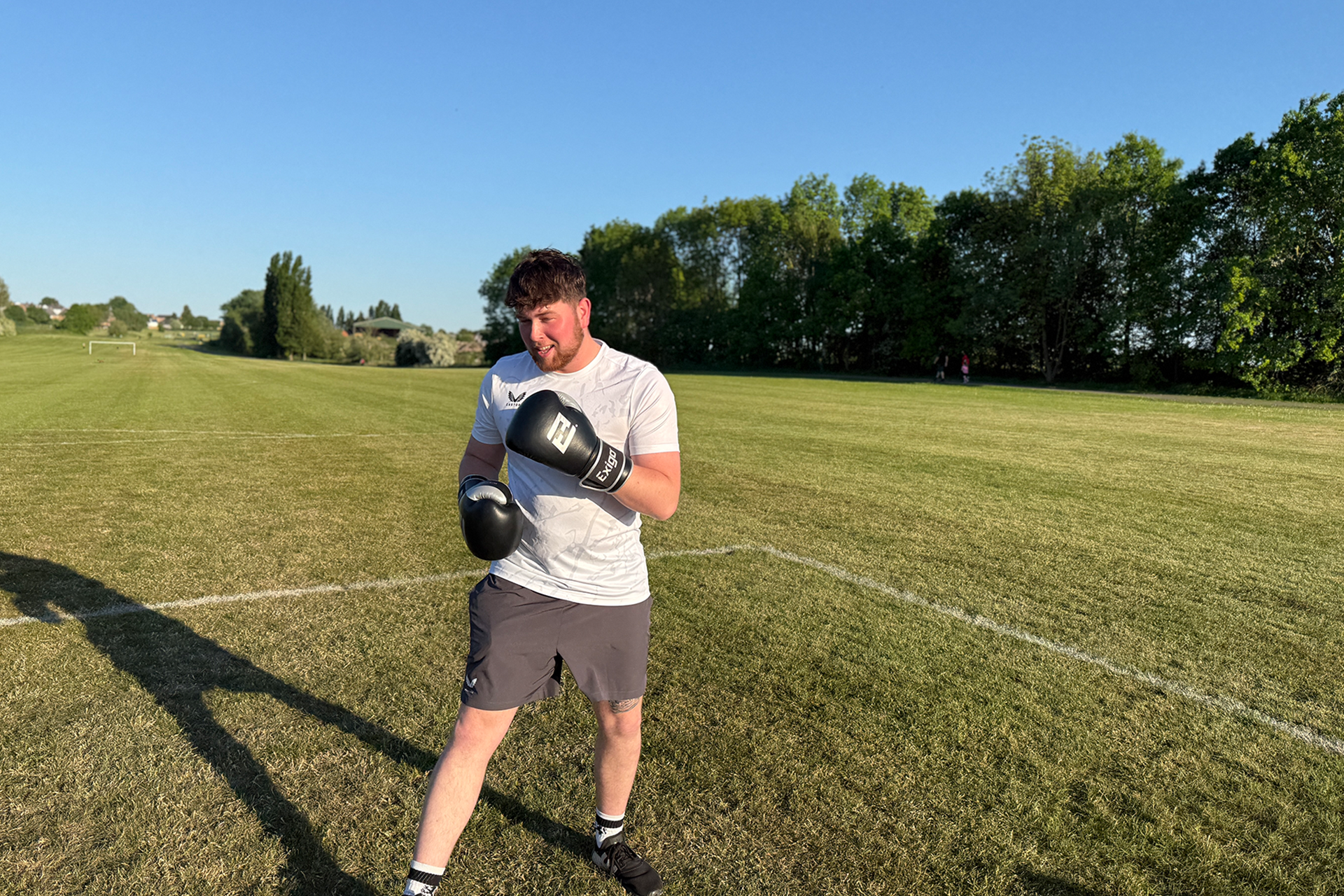
Image 1 – To the first image I made some minor adjustments, mainly focusing on the brightness levels. As it was a bright day when taking the photographs, there was high levels of brightness, which I believe needed to be reduced to give the image a better look – and turn the focus onto the boxer rather than the natural background.
Image 1 – beforeImage 1 – After
Image 2 – Again, there was a focus here on reducing the brightness levels. With this image I also played around with the levels of contrast and saturation as I experimented with the different correction levels to find the best changes to make to the image. While the changes made were minor, I believe they give the image a far better look.
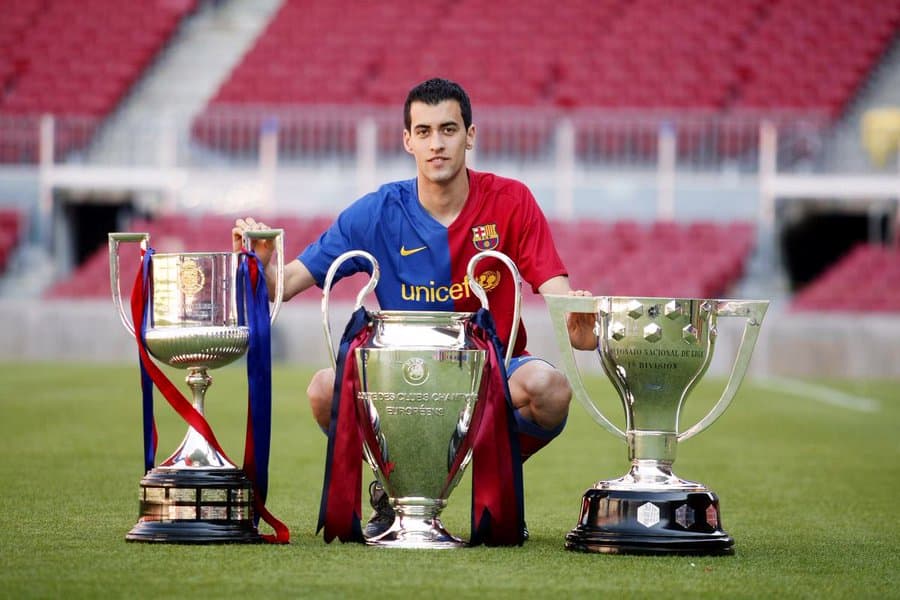
Images such as the one displayed above, can be set up to construct a narrative – in this case, Busquet’s has been told to crouch behind the three titles Barcelona had won in one season to show off the clubs achievements and his involvement in their success. A constructed photo can be used to display exactly what the photographer wants to show, after a discussion with the editor they will be aware of the focus of the piece of journalistic work and may chose to construct a photo (such as one featuring trophies) to display exactly what the editor wants to convey.
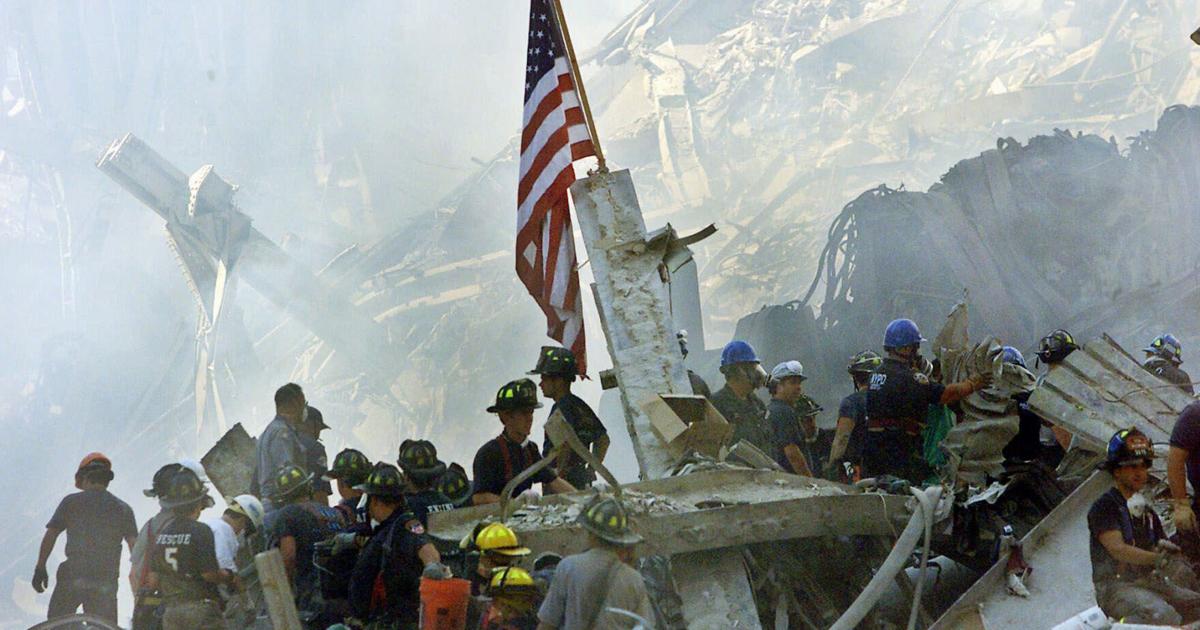
Images such as the one above, taken during the 9/11 attack in New York, can also be used to convey specific messages. This photo in question is taken from the ground, showing the rescue and response effort from the emergency services – this affects the story as it highlights the human impact and response effort of such an event.
The meanings of photographs can also be unclear, sometimes causing debates around the intentions of the photographer. This can lead to confusion and discussions on the topic in question, and while increased attention isn’t necessarily a bad thing – clarity is important in journalism and an unclear/debated meaning of a photo is not always a positive.
On June 29th, the John Charles Centre for Sport plays host to the latest ‘white collar boxing’ event in Yorkshire, as the popularity of events continue to rise.
White collar boxing began in the 1990’s in New York, as white collar workers sought after a release from their day to day lives.
White collar boxing gives people the opportunity to have a real boxing experience, taking part in routine training and sparring before having an actual fight in front of a crowd. Its popularity in New York rapidly increased throughout the 90’s, before eventually spreading into major cities within Europe and Asia.
Oliver Sellars took part in a white collar boxing event in 2023, and advocates for anybody to get involved and try something new: “I’d always say just go for it. I didn’t have any experience boxing when I signed up, but that’s the same with most people, you’re starting from scratch.
It was a great experience honestly, it taught me so much and it was almost like an escape from normal life. It changed my routine and gave me chance to let off some built up frustration.
It was quite surreal to be in the ring getting punched in the face but it was fun at the same time. The training was so hard but knowing it’s for charity gave me that extra boost.”
Hill during a sparring session
Participants take part in a rigorous training camp to get them physically fit, and as prepared as possible to fight. There’s a major emphasis on individuals’ commitment and devotion to take part.
Sellars said: “The training was so tough, there was so many times I felt like I wanted to give up but I didn’t. The actually boxing training, and the sparring sessions were really fun, I enjoyed them.
But the cardio and fitness side was awful, I don’t think anyone really enjoys cardio – but I hated it.
It was so hard to keep at it at times, especially after a long day at work, but in the end it felt great. It felt great to have stuck with it after all the times I could have given up, after every session I got like a mental boost from knowing I went and did it even when I didn’t feel like it. Knowing I had something to work towards that I had committed to, meant I couldn’t just give up, I had to keep going and get ready to fight.
It was difficult yes, to go through the boot camp and get as fit as I could as quick as I could, but that sense of achievement after I did the fight was massive.”
Hill is raising money for Wakefield Hospice
Everyone who takes part in a white collar event will have a different motivation and reasoning behind signing up, for some it may be to get fit or try a new sport. The opportunity to be centre stage in a big event might be attractive to others. But for first time competitor, Arron Hill, there’s a much more personal reason why he’s chosen to get involved.
Hill said: “While it’s always been something that I wanted to tick off my bucket list. I wanted to do it for charity, to give back to the people that helped my grandma in her final days and helped my family through a difficult period.
I’m doing it for Wakefield Hospice, that’s the reason as to why I’m doing it. Obviously, everything personal aside, it’s pretty much just for that, just for my grandma, and for the people that helped her. Just to say thank you.
This is a way that I can raise money for the charity and get fit at the same time.”
To prepare for his fight, Hill is taking his training extremely seriously, motivated to make his grandma proud he finds himself in a ruthless training routine which he’s crafted with the help from his coach.
Two days a week Hill is in the boxing gym alongside his coach, practicing all the technical aspects of boxing. The rest of the week he is building up his fitness through cardio activity, whether it’s attending his local gym or going on runs.
Hill only started boxing ahead of the fight
Hill has set himself some personal goals he is determined to hit ahead of the fight, to ensure he is in the best position possible when he steps in the ring.
Discipline is a major part of boxing. Hill admits it’s sometimes difficult to stay on track, however, motivated by taking part in the event in the memory of his grandma – he refuses to quit.
Hill said: “It’s been harder than what a lot of people think.
Obviously, fighting’s a different sort of fitness. It’s one thing running about a ring for three minutes per round and trying to not to get hit but it’s another thing trying to win and score points.
I’ve liked the personal challenges that I’ve set myself. It’s been a good journey so far, so I’m looking forward to seeing where it takes me in the future.
It can be hard to stay disciplined at times, but that’s just part and parcel of the sport, it’s the self-discipline that matters.”
Taking part in such a busy fitness routine while working his full-time job is a challenge for Hill, but he has no interest in slowing down. He believes he’s never been more motivated to stay disciplined.
The importance of physical well-being and fitness isn’t lost on Hill, or his network of support.
Hill finds himself laughing while sparring his cousin
While Hill frequently changes his exercise activity in order to keep things fresh, bound by time constraints from his full-time job matching up with his gyms opening hours– he finds himself often exercising in the outdoors.
He’s found himself sparring his cousin on the playing fields behind his house, doing hill sprints in a local park and running round a local nature reserve with his friends.
Hill is doing everything he can to get as fit as possible ahead of the fight, even completing countless press-ups after his impromptu sparring session in the park.
Hill mid press-up
Enjoying his training is vital for Hill, he said: “I’ve got three days of active recovery and two days of boxing training. So when I’m not boxing, I’m running or in the gym, just doing anything I can to keep the fitness levels going.
I’m constantly trying to break through barriers but not trying to exert myself too much to the point of injury. It’s been harder than what a lot of people think.
I’ve had a lot of good sparring rounds with some good people. My cousin being one of them. I’ve also met up with people from my old gym that I’ve had rounds with in preparation for this, it’s been good. They’ve definitely been the standout moments.”
“It can be hard to stay disciplined at times, but that’s just part and parcel of the sport, it’s the self-discipline that matters.”
Hill believes signing up for the boxing fight could change his life, it’s given him a new found drive and motivation to get as fit as possible. His training schedule may seem excessive for an amateur, charity boxing fight, but Hill is determined to take full advantage of the event and the motivation he has found since signing up.
Away from his scheduled training, and when he’s not working, Hill spoke about how he spends most of his time: “Mainly doing cardio, just to keep the lungs going really.
Like I said, you’ve got to run away and not get punched, and to try and throw something back, so it does take a big toll on your cardiovascular system.
I’ve got a big sports complex near my house, which is surrounded by fields and hills. It’s been good for hill sprints, and there has been some decent long runs as well around where I live.
I’ve found in the fields you’ve got enough open space to move around to practice footwork and head movement, so I’ve made the most of that when the sun is out”
Sellars backed up the importance of fitness when preparing for a fight: “I couldn’t believe how hard it actually was at first, I couldn’t believe how fit I needed to be.
Obviously, I’d never boxed before so I was starting from scratch with my fitness and it was so hard at first. As the weeks went by I got more and more fit, so it became easier. I didn’t appreciate before how fit boxers actually were and how hard it is to actually fight.
I’m so glad I did it, it gave me a reason to actually try and get fit – and to stick with it. Knowing I had the fight coming up meant I actually stayed on track and kept training, and kept on my diet.
Having that final goal and something to work towards was massive in actually starting [his fitness journey.]
Anytime I was tempted to not go to the gym or to break my diet, I thought about the fight and reminded myself I was doing this for charity. It kept me on track knowing I had to fight in front of people and I definitely didn’t want to be embarrassed, but also knowing it’s for charity gave me that extra boost to actually stay disciplined.”
Ultimately, white collar boxing seems to be a win-win situation, participants work on their fitness and health while raising money for charity – and on top of that, they benefit from 8 weeks of free boxing lessons.
Both Hill and Sellars are massive advocated for partaking in white collar boxing events, they both noted the impact the training has had on their fitness and lifestyle – and the importance of raising money for charity.
As the fight approaches, Hill is motivated to win, going into is final weeks of training he believes he stands in good stead. But he thinks it’s important to remember the reason behind the fight.
Hill said: “I’d say I’m confident, but I’m not cocky. You’re stepping in there with another man who’s going in there to rip your head off, so you’ve got to be wary, but I’m confident that I can get the job done.
I’d probably say I’m a bit scared as well, but it’s part and parcel of it. You’ve got to be scared.
I definitely want to win, and I’ll obviously try my best to do so, but I think you’ve got to remember why you’re even doing the fight. It’s for my grandma, for Wakefield Hospice, to thank them for everything they did for me and my family.
Hopefully we can raise loads of money for them, and show them how grateful we are for everything they did.”
The spectacle of mankind beating each other up for sport has been entertaining us since the first civilisations. Wrestling is widely thought to be the world’s oldest sport, first being depicted approximately 15,300 years ago in cave paintings in Southern France. Boxing wasn’t far behind, believed to have originated in ancient Mesopotamia in 3000 BC.
Today, there are hundreds of sports in the world where fighting is a major component. Although fighting is usually illegal and thus discouraged outside of a sporting context, and despite the inherent risks of pain, injury, brain damage, or even death, not to mention the potential guilt of harming another person, there’s something about it that fascinates and excites us humans.
One of the oldest and most brutal variations of combat sport is Muay Thai, often referred to as “The Art of Eight Limbs” due to its use of fists, elbows, knees and legs. Its exact date of origin is uncertain, since much of its written history was destroyed in the 14th century when the Burmese (Myanmar) attacked Thailand and destroyed the written, ancient knowledge stored in the many temples of Siam. However, we do know that Muay Thai has been used as a form of military training for centuries, teaching young men how to use their entire body as a weapon to defend the kingdom. Since the late 20th and early 21st century, its popularity has skyrocketed worldwide, largely due to its utilisation in MMA, another sport which has become mainstream in the last twenty years.
For over a decade, Muay Thai has been taught just outside Leeds City Centre at Kiatphontip Gym, founded by legendary fighter and coach Jompop Kiatphontip. Over the years, he and his team have trained several fighters who have reached the prestigious ONE Fighting Championship, one of the sport’s major promotions.
Freddy Walters, 18, is another of the gym’s young prospects, with a 10-0-1 competitive record. He’s currently training for a fight out in Bangkok, Thailand. Despite his young age, he has over seven years of experience in Karate and another seven in Muay Thai. The involvement of children in these activities may be controversial to some, but to Walters himself, these sports have shaped him into the young man he is today.
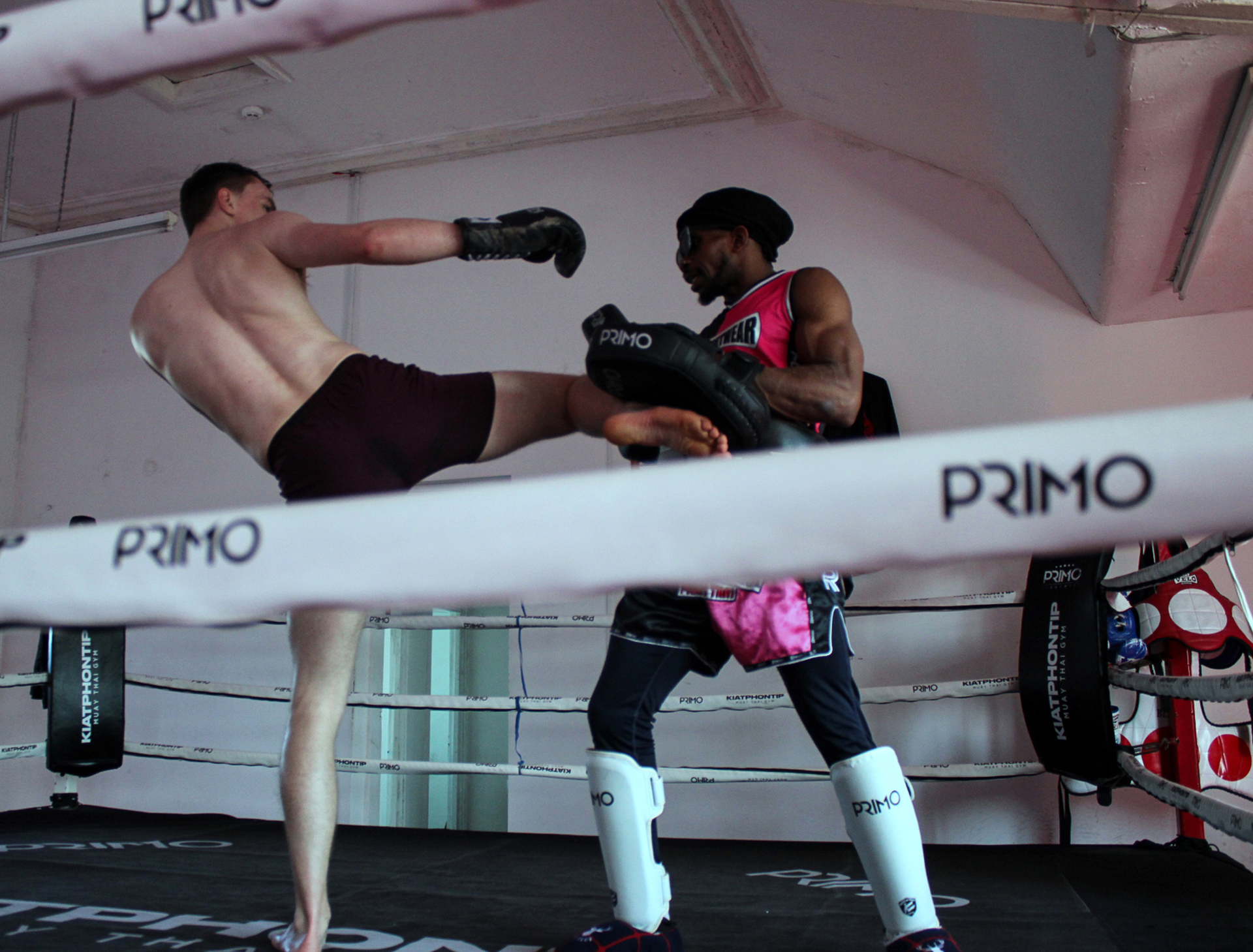
Walters (left) during a one-on-one training session ahead of his next Training Camp in May
“It’s (Muay Thai) given me confidence. I’ve just started university, and looking at job applications and things like that, but everything seems less scary when nobody’s punching you in the face.
“When you’re used to walking out in a boxing ring in front of thousands of people and somebody there is going to try and hurt you, everything else seems a bit of a step down. So it gives me real self-confidence in life and a belief in my ability to do things.
“When I first started this, there was a sense of fear and everything like that. But as you get more experienced, the nerves subside and it becomes more exciting, more enjoyable. I never really think about getting hurt. I just think about going and doing what I like and enjoy doing.”
Training and fighting in Thailand is a common practice for foreigners who have an interest in the sport. There, Muay Thai isn’t just a hobby or a pastime, but a sacred part of the mainstream culture. This is because the sport is treated as a way of life, and offers fame and a viable way out of poverty. Many Thai boxers start fighting competitively from as young as six, and many will have hundreds of fights throughout their career.
Walters has had a small taste of this lifestyle, spending several months living in a training camp in Thailand.
“I went out last year after finishing my A-levels. I went out for six weeks. We literally lived at the gym, you stayed in a room with a bathroom, which was right behind the boxing ring. So when you’d wake up in the morning, as soon as you step out your door, you’re in the gym.
“You don’t have the stress of work, uni, or your family life and things like that. You just go and you embrace Muay Thai training two times a day.
“It’s a lifestyle out there, rather than a hobby.”
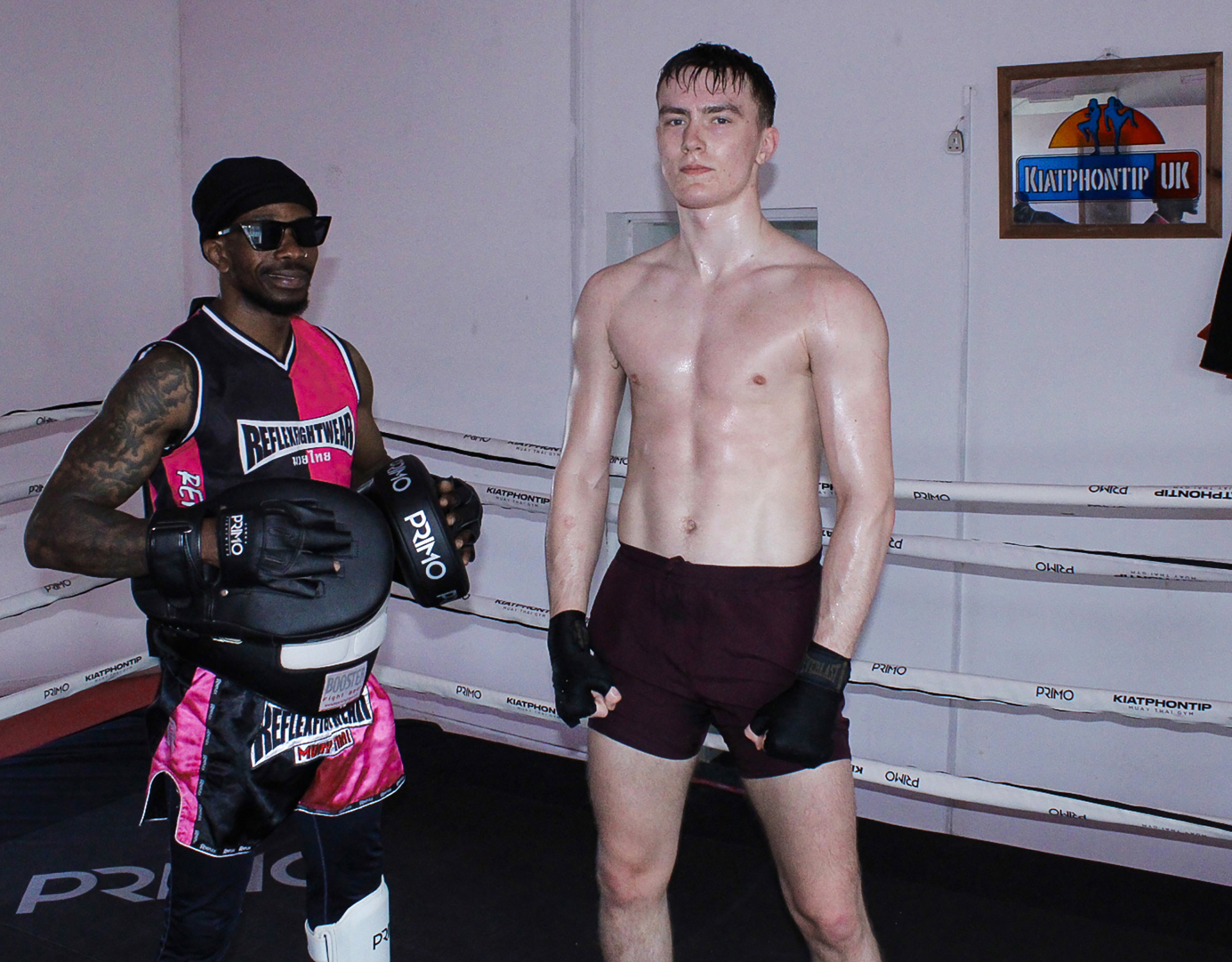
Wilson Pips (left) after a pad session with Walters. Pips is one of the main coaches at Kiatphontip Gym
Back in Leeds, many of Walters’ fellow trainees also have their sights set on the professional stage. Felix Nnochiri, 21, after just a year and a half of training, is one of those people. Like many people in recent years, his love for the sport began when he saw its techniques used in the UFC, before a friend suggested they start training at Kiatphontip. This friend has since quit, but what keeps Nnochiri going is not any desire for violence, but the feeling of personal triumph that training gives him.
“After a good sparring session, you do feel a bit euphoric. You feel strong. You feel like you can kind of take on anybody.
“I mean, sometimes you feel beat. You feel kind of demoralised. Sometimes you even question why you’re still doing it when you get beat up, but because the highs are so high, you know, that’s what keeps you going.
“I want to go as far as possible. I want to at least get to the tournament called the MTGP (Muay Thai Grand Prix), which is the step before you get to ONE Championship, with the top Muay Thai fighters in the world. There are quite a few fighters in my gym who have already done that, and I can take them. So I know I can get there.”
Nnochiri (left) during a sparring session at Kiatphontip
There isn’t a lot of money in British Muay Thai, which makes it difficult for aspiring fighters to consistently dedicate enough time to it. A possible way around this for those with a lot of experience is by taking up coaching on the side. Jake Perryman, the soon-to-be head coach of Leeds Beckett Muay Thai, is in the early stages of this path. Having struggled with his mental health and alcohol in the past, he feels that this ‘addictive’ passion has given him a more productive lifestyle and new goals to strive towards.
“I stopped drinking alcohol nearly 1000 days ago. It was just before the academic year started. I didn’t really know what to do myself. I’d done a little bit of Thai boxing on and off over the years, but nothing special, no fights or anything. And I just decided right as I stopped drinking to just turn up to a few classes, and then to start turning up to every class.
“Then I just thought ‘I think this is it’, I’d always been interested in competing and stuff, but my relationship with alcohol stopped that. And then once the drinking stopped, the Thai boxing started.
“I’ll be a professional one day. I’m 28, I’ve got about 10 more years of this in me, I think. And that’s one big fat macrocycle.”
A client (right) being coached through a PT session with Perryman
His transition into coaching began when he was unexpectedly let go from his role at a SEN school. After selling his motorcycle, he used the money to purchase the equipment needed to become a PT at a local PureGym, including £700 a month to rent space in the facility. Despite working at a deficit before overtime and ‘just surviving’ in his own words, he plans to increase his reputation with a level 3 strength and power qualification with British Weightlifting.
“I’m not interested in getting big. I’m interested in getting strong, so I’m more of a strength and conditioning guy. I’d much rather breed athletes than help people get big, and because next year, I’m going to be the head coach at Leeds Beckett Thai boxing. It’s all going to tie into each other.”
“Once I do this weightlifting course, and I can kind of advertise myself as a real strength and conditioning, weight lifting, Thai-boxing, athlete-breeding machine, then I think things will really kick off.
“But currently I do have a lot of impostor syndrome, like, I haven’t lived this life, and I’m taking people’s money to tell them how it’s done. I feel like I have a lot of learning to do before I can teach anyone else. So there’s also a psychological process of trying to let that go and sort of be like, ‘No, I do this. I am worth it, and I’m good at what I do.’”
Perryman in the area at Puregym he often uses to coach clients
Despite the many positives this lifestyle can bring, the risk of serious physical injury cannot be ignored, especially in competitive matches. An infamous example took place in a 2022 ONE Fighting Championship match between Liam Harrison and Nong-O Hama. A brutal low kick by Nong-O sent Harrison to the floor and left him with a torn ACL, MCL, and meniscus, which took him two years to recover from.
Famous Thai coach Kru Bonpot, during an interview with Humans of Fighting, touched on the fear of pain, simply saying that “Muay Thai is pain; If you no like, you cannot do Muay Thai.”
When you look at it like that, it’s no surprise that there are fighters out there who are influenced by past trauma and troubling mental states, which Perryman was able to offer detailed insight into.
“I think a big similarity in the sort of psyche of a lot of fighters is that a lot of them are kind of weird. And that might sound a bit pretentious, like, ‘Oh, I’m so weird and different.’ But I mean the ones that go in there wanting to get hurt.
“I think not all, but a lot of fighters are quite traumatised people, and they’re almost turning that self-destructive behaviour into something creative. So if they weren’t hurting themselves by enduring the ring and enduring the fighting, they’d be destroying themselves with a substance or a lifestyle that would eventually kind of wind up hurting them anyway. So I think a lot of the time they get in there because they feel like they deserve it, and they think it’s the life that they deserve”.
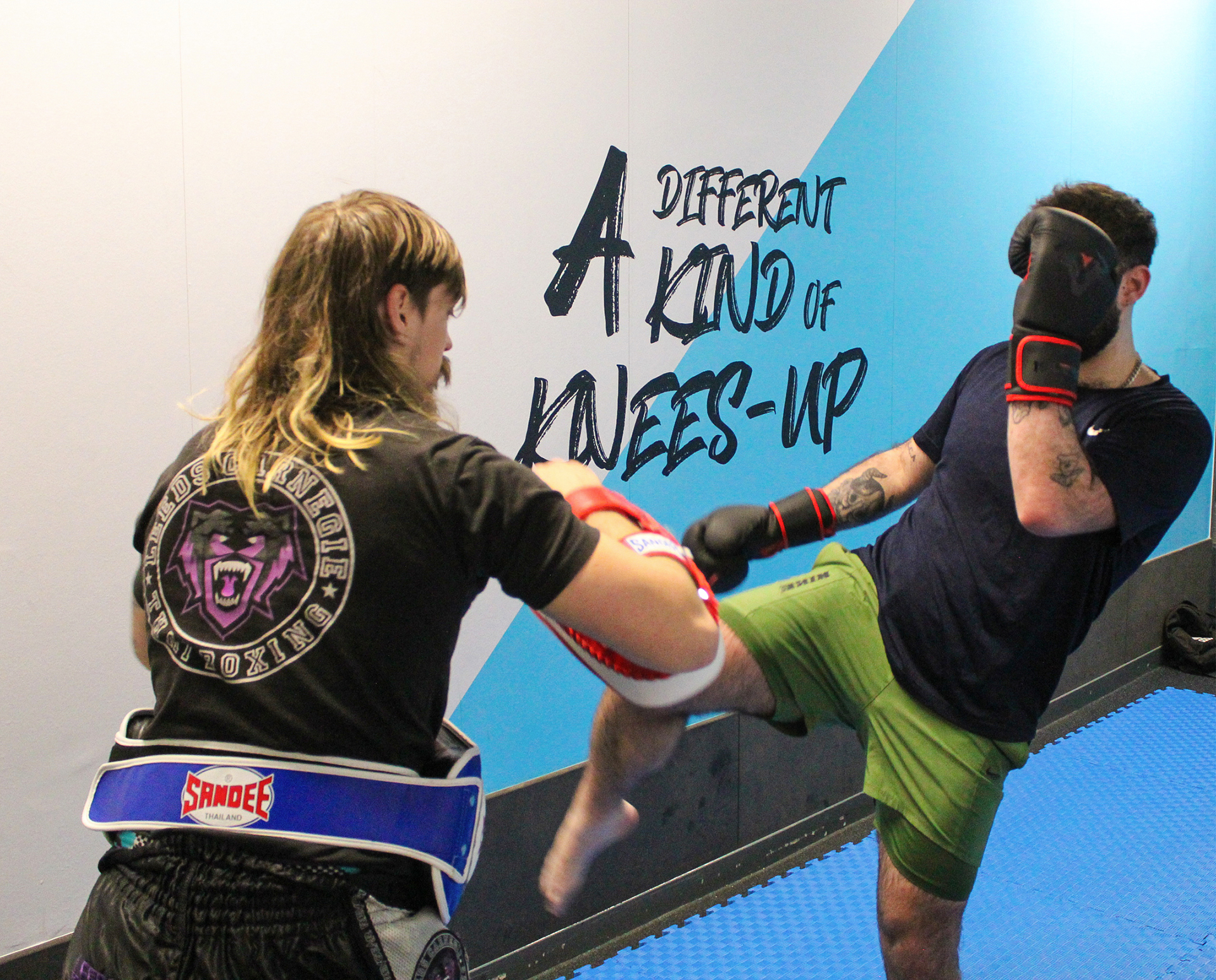
Perryman and his client during a pad session.
Not everyone enjoys the brutal, stand-up striking combat seen in Muay Thai, and there’s an equally fast-growing martial art by the name of Brazilian Jiu Jitsu (BJJ) which offers an alternative. BJJ was formed in early 20th-century Brazil, after Japanese judo expert Mitsuyo Maeda passed his knowledge onto the Gracie brothers. Over time, the five brothers tweaked the techniques taught by Maeda, prioritising ground-based combat over the more difficult stand-up fighting seen in Japan. Carlos Gracie opened up his own “Gracie Jiu-Jitsu” schools in the 1920s, before the family spread their style to the US in the 70s, which by then was known as “Brazilian Jiu-Jitsu”. It wouldn’t receive real UK notoriety until the 1990s, when Royce Gracie would utilise the martial art in the first few years of the UFC, going 11-0-1 in the first five tournaments. Its effectiveness was obvious, and more gyms began to open worldwide as interest grew.
The philosophy behind the martial art is that it allows for a much smaller, weaker fighter to take on a bigger, stronger opponent by taking the fight to the floor, and immobilising them through grappling, takedowns and submissions. It’s for this reason that the open weight category exists in competitive tournaments.
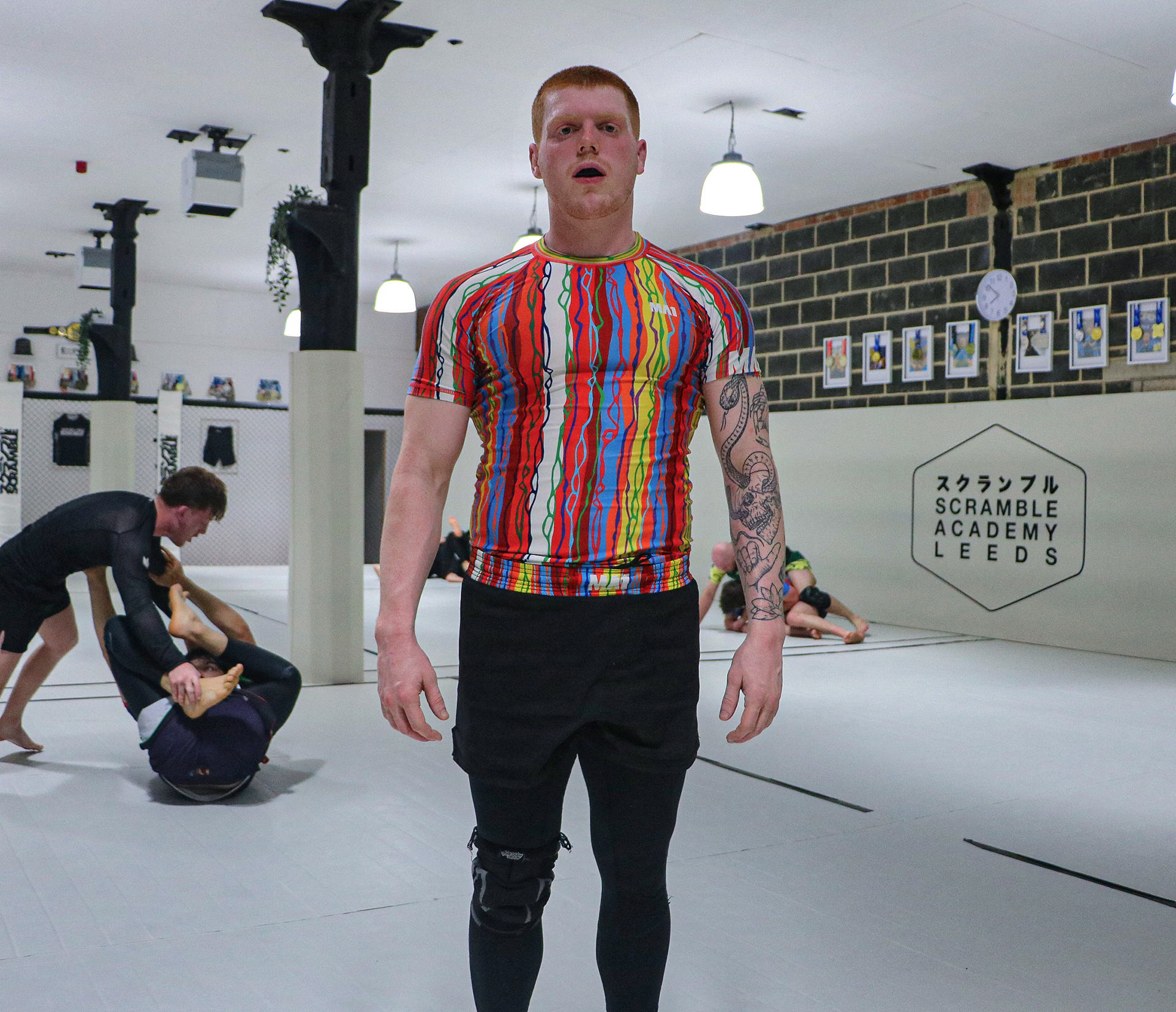
About a ten-minute drive from Kiatphontip gym is ‘Scramble Academy’ in Armley. A martial arts gym which, in its main ‘open mat’ room, offers BJJ training to all skill levels and age groups, seven days a week. One of the more experienced members is Rob Portman, who was inspired to become a Jiujiteiro after he and his brother saw it being used in the UFC. Since then, he’s both fought and coached others in between training.
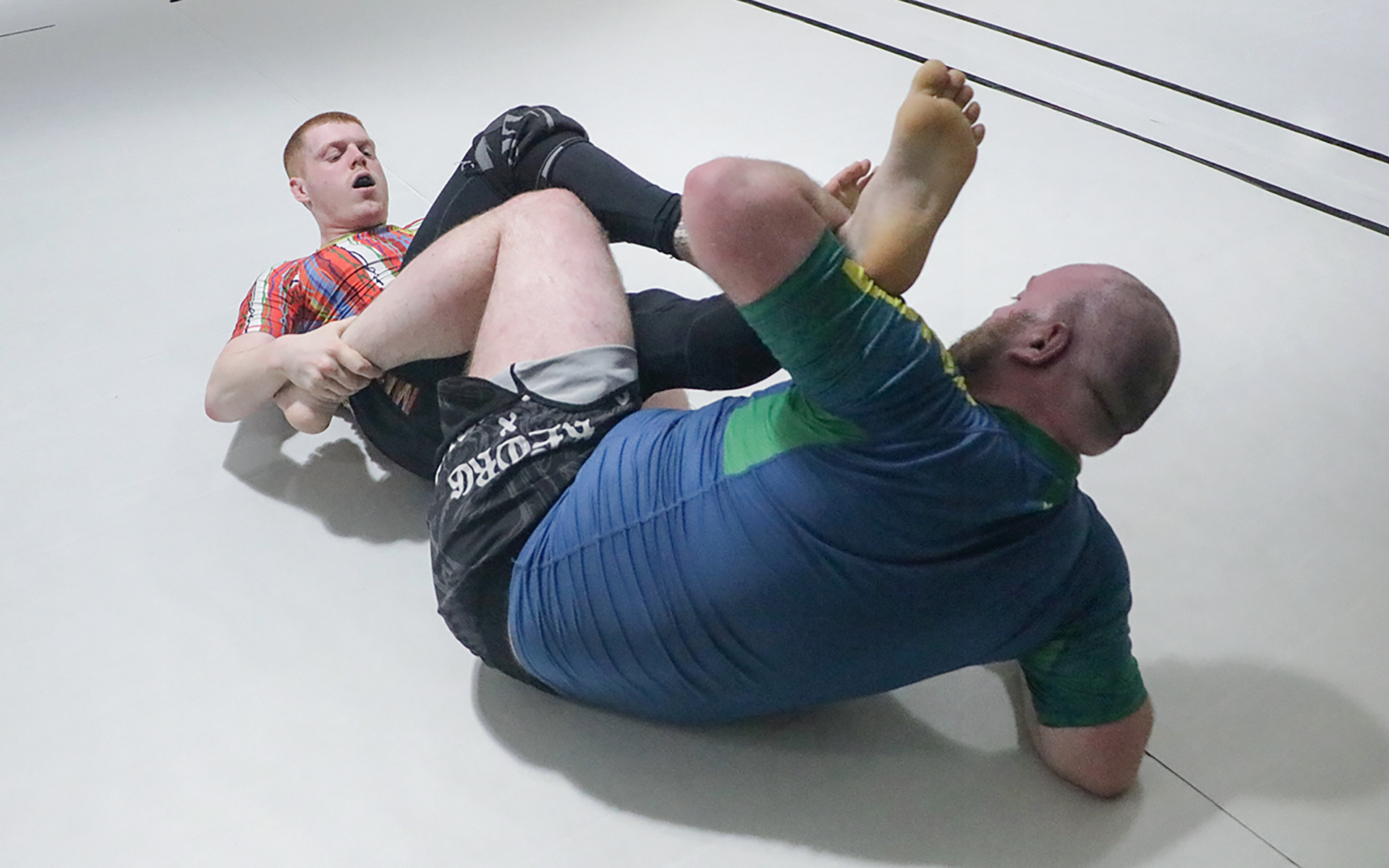
Two trainees including Portman (left) sparring
“I haven’t competed for a while, but over the past few years, I’ve probably had over 50 matches of just Jiu Jitsu. I wanted to do Thai boxing at the beginning, but then I was just realised that getting kicked in the face and stuff wasn’t the most fun. So, yeah, I’ve just stuck with Jiu Jitsu.
“At the minute though, I’d class myself as a coach. I don’t compete anymore because I’m injured all the time, but I’ll coach the kids’ classes here, and then if the main coach, or the Professor per se, isn’t here, I’ll cover for him when he needs me to.”
Despite BJJ being a completely different martial art, the aspects that drive his passion are very similar to the Muay Thai fighters: this being the opportunity for solo triumph and self-improvement, but also for self-criticism upon defeat, and the burning desire to make amends that comes with that.
A trainee at Scramble watches on towards the end of a session
“I used to play team sports like football and rugby, but I didn’t enjoy them. Selfishly, if we lost, I would never feel like I’d lost. I blamed it on my team, whereas in this (BJJ), there was no excuse. I liked the fact that if I won, it was because of me, or if I lost, it was because I lost.
“I also love the fact that you’re just always learning and that never stops. There’s always new stuff, or people start beating you with something new, and that’s just kind of addictive.
“It’s awful when you lose, though. What makes it worse is that you’re picking yourself apart before you even compete. You’ll be in a training camp every single day for two months, and you’re just scrutinising yourself in the gym; if you lose a round, it doesn’t feel like you’re just losing a round in the gym. It feels like ‘if I compete like how I was in the gym on that day, then I’m gonna lose’. And then at this level, you have to fund yourself to go to these clubs. So if it’s abroad, or if it’s down in London, you’re then forking out a load of money that you’ve had to save up for. And if you lose, it’s not just like, ‘Oh, I just lost because I was bad.’ It’s like, ‘I’ve also lost loads of money.’
“But then it kind of drives me. It makes me want to get back in because I hate the fact that someone else is better than me, so it makes me want to get back in and get better. But I’ve also seen people who get so demoralised that they just get fed up with the sport, it’s a lot to put yourself out there and then essentially realise you’re not good enough to be the best.”
Portman posing in the open mat area at Scramble, where all BJJ sessions take place
According to EuroNews, an estimated 300 million people now consider themselves fans of Mixed Martial Arts, with the United Kingdom being one of the countries where it’s most popular.
Whatever the reasons, the popularity of MMA, and the specific martial arts it consists of, is increasing, with no signs of slowing down. Humanity’s everlasting love for combat sports continues.


















 Photographic Journalism
You must be logged in to post a comment.