Beyond the fairway: untold stories of competitive golfers

To many, golf is more than just a sport. It’s the four hours in the day when they can put their phones away, switch off from the troubles of normal day life and just be present in the moment. Renowned for the copious amounts of hours spent perfecting every minute detail of the golf swing, it is one of the only sports where it can be more mentally tough than physically. 

Being able to hit a golf ball is one thing, but being able to play golf is another. The ability to forget previous mistakes and that the most important shot is always the next one is what makes the best players so impressive. But beyond the scorecards are the untold stories of these players. What led them to pick up a club? What drives them to dedicate themselves to a sport of such fine margins?  How did they overcome adversity?

It’s not unusual in golf for players to have to call an abrupt end to their dreams of picking up a green jacket at Augusta or lifting The Claret Jug at The Open. So many players fall and disappear from the professional game and are forgotten about by fans quicker than they can shout fore right.
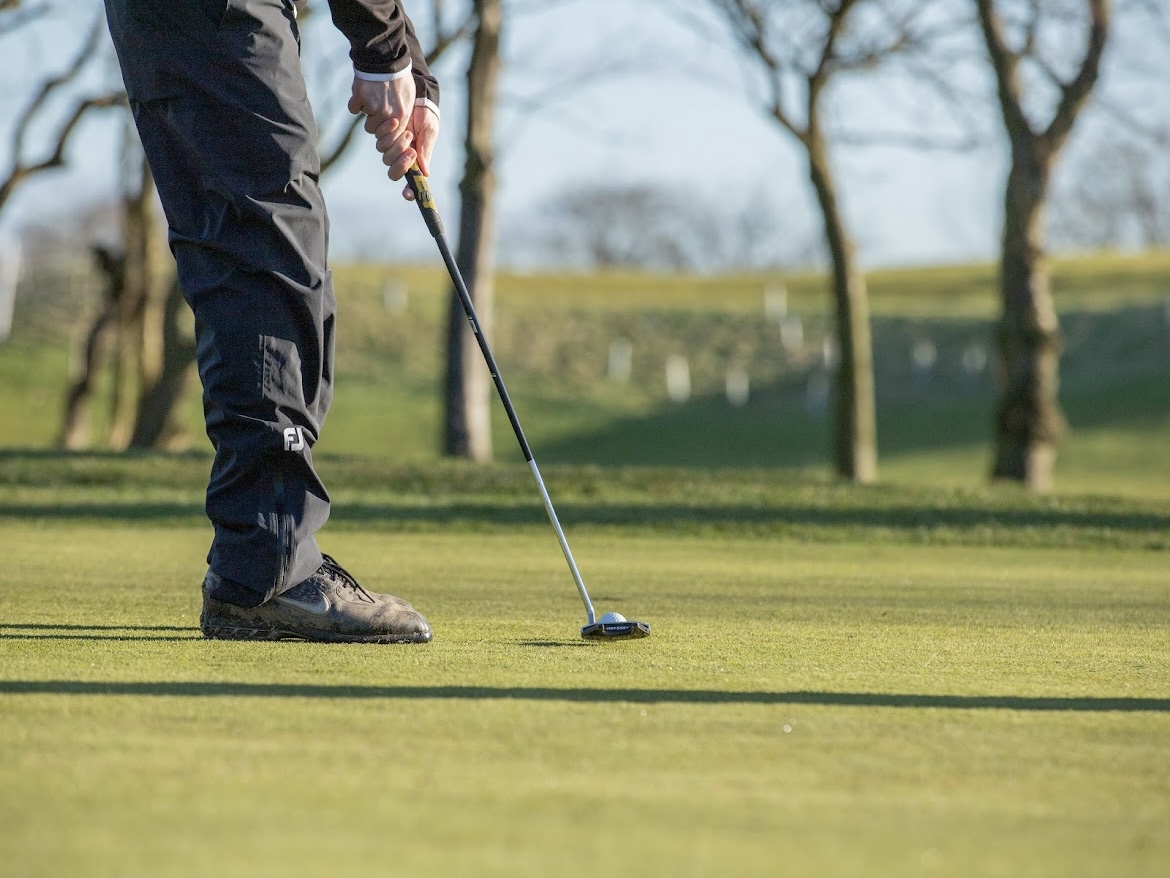
Horsforth Golf Club in Spring sunshine

Ex-US Open winner Michael Campbell couldn’t mentally deal with the pressure of success and living up to the name. That was the pinnacle of his career, but his outgoing character took a sharp decline as he said in his retirement statement, ‘nobody ever tells you how to get down.’ 

With everyone being encouraged to speak out and express their feelings and pasts in today’s society, I wanted to uncover how aspiring players balance the stresses of life with time spent playing and what their journeys have been like. I went to Horsforth Golf Club to watch one of the biggest matches in Leeds Beckett Golf’s history as the side looked to make the final of the national cup for the first time. I spoke with a few players who have untold stories about what got them to where they are now.

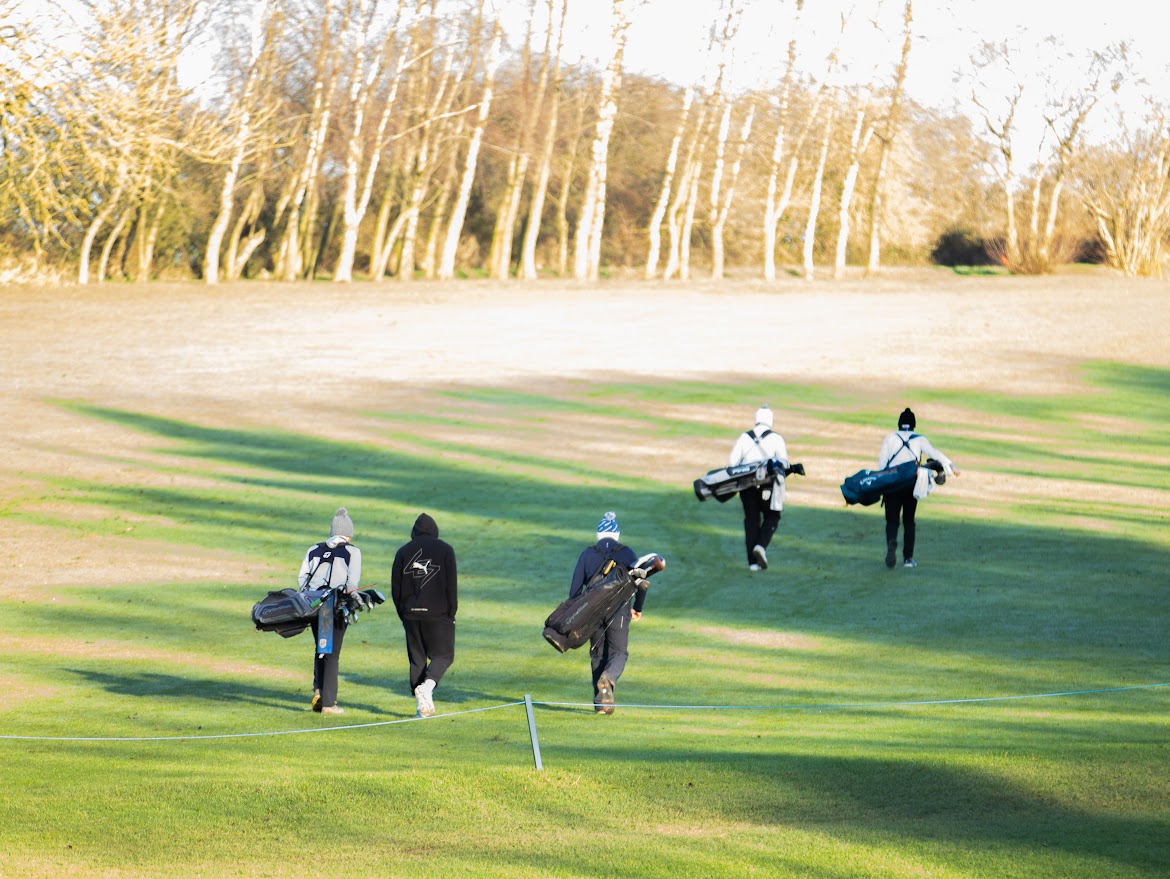
The final group heading down the 1st fairway

The Leeds Beckett first team are made up of some of the most promising players from across the country and have come to gain a degree but also further their abilities on the course. Many of the players not only compete in BUCS highest league and national competitions but also play for their home clubs’ scratch teams. 

Paul McGahan, nicknamed Frenchie, is one of longest longest-serving players and has been named captain for this season. Having started playing golf at the age of five, he’s renowned across the university golf scene for his laid-back approach to the game, but is able to switch into a different person when playing competitively. “The confidence in my ability has come from an early age, I don’t feel pressure. If I go behind in a match, I let my opponent feel like he’s got the upper hand, but little do they know that coming from behind makes drives me into a different gear.”
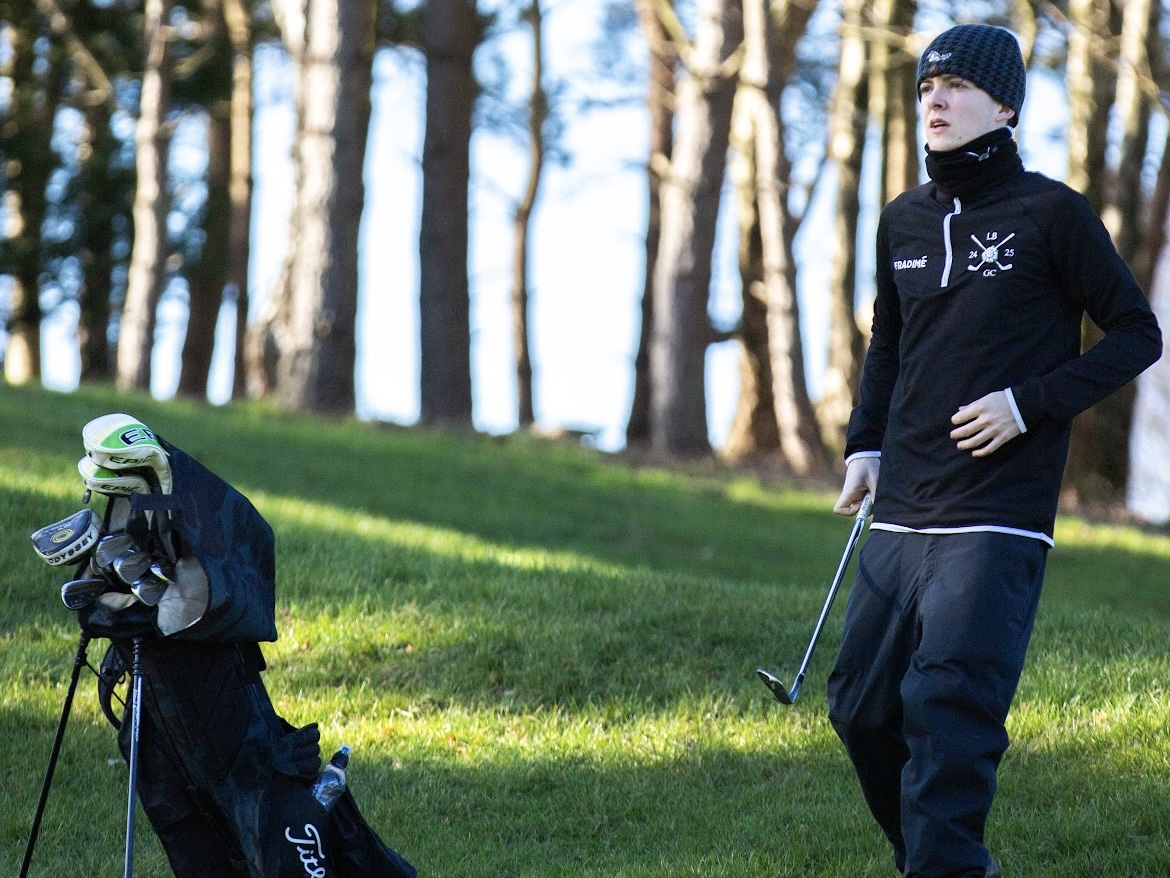
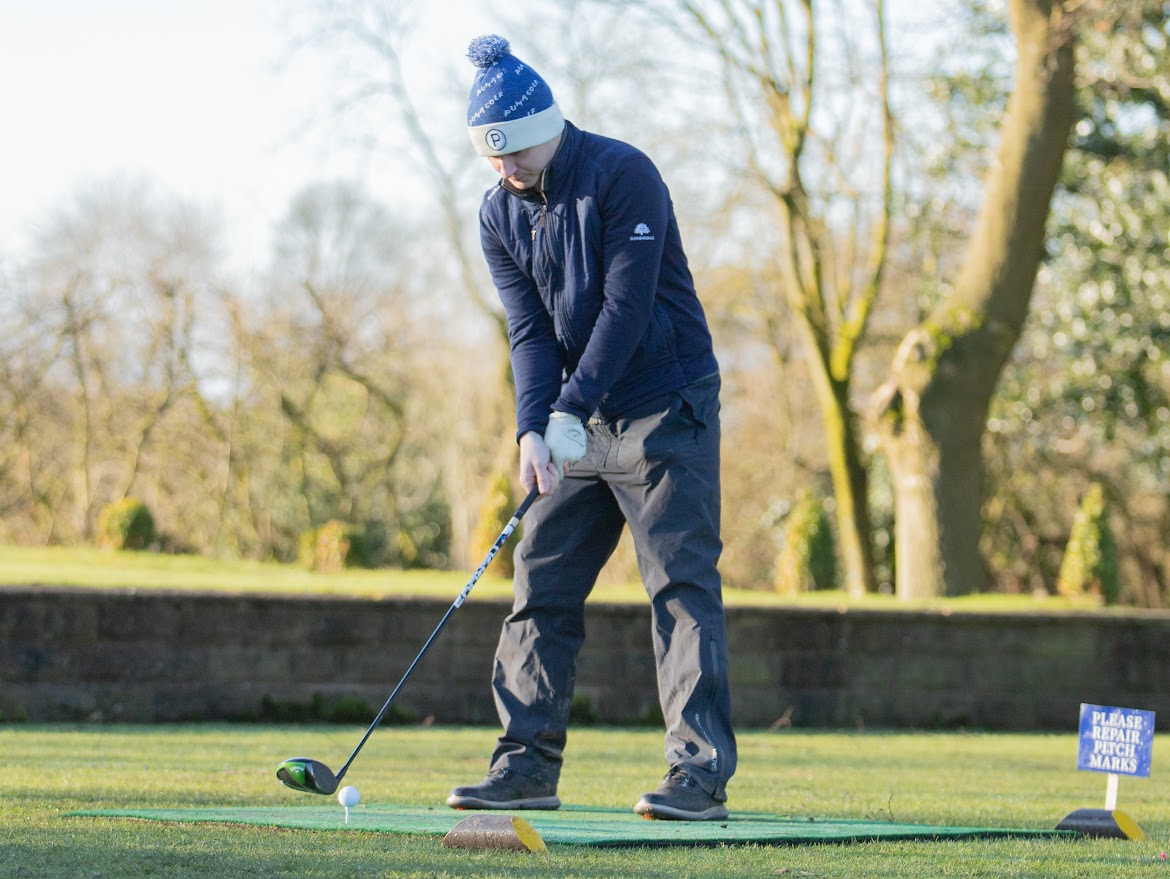
A change of club needed for Paul as the wind started to pick up

Paul was tipped as one of France’s brightest stars as he progressed through the ranks at one of the most prestigious clubs in Europe, Le Golf National. Born just outside of Paris, it only looked like his career was going to end up in the professional game. Sponsors were flooding in, he was ranked top ten amateurs in the country, but his life completely changed just before Christmas in 2021. A tragic car accident led to the passing away of two close family members, and he was forced to move to England to live with his aunt.

He didn’t pick up a golf club for over a year and left his bag back in France as a sort of tribute to who he was before. “No words can ever describe those few months. Everything was in place for me, I almost felt destined to make it. But everything I played for was snatched away from me. The reasons I wanted to succeed were gone. The thought of hitting a shot and not seeing my family on the side of the fairway was tough,” Paul explained.

Paul with a touch of class out of the bunker on hole four

It took him over two years to come to terms with what happened and to get back to reigniting his love for golf. He borrowed a friends set of clubs and started taking himself back to the driving range. “Being at a golf club has always been my safe place, surrounded by my team and people who give up their time for me to get better every day.”

“I almost felt I owed it to my family; they were my biggest fans and they wouldn’t have wanted me to give up the thing that made us all so happy.”

“I just had to reinvent myself and enjoy the peace of a course again. Understand I’m not going to go to the level I was once tipped to be at, but back myself to get back to the best I can be. Once I lost the caring bit, I got the buzz back, and a carefree me on the course is a dangerous one.”

In his first year at Leeds Beckett, he was in and out of the team in the first few months, but the coaches soon realised his potential and he had to be trusted to pick up points. Since then, he’s been a constant in the purple and black for the past three years, picking up 30 wins in 34 games and playing a crucial part in a different role as leader for what could be the team’s most successful season to date. 

Watching Paul lead by example as he teed off, in the pure silence and serenity of the first, was impressive to say the least. A shot that never changed trajectory, almost on a rope down the middle of the fairway. As the first group got underway, the magnitude of this game could really be felt. Leeds Beckett and Liverpool had some fiercely contested matches earlier on in the season, with it one a piece on aggregate, so the chance of progressing to a final where the venue is a former Open course, Royal St George’s, wasn’t one to be passed by.
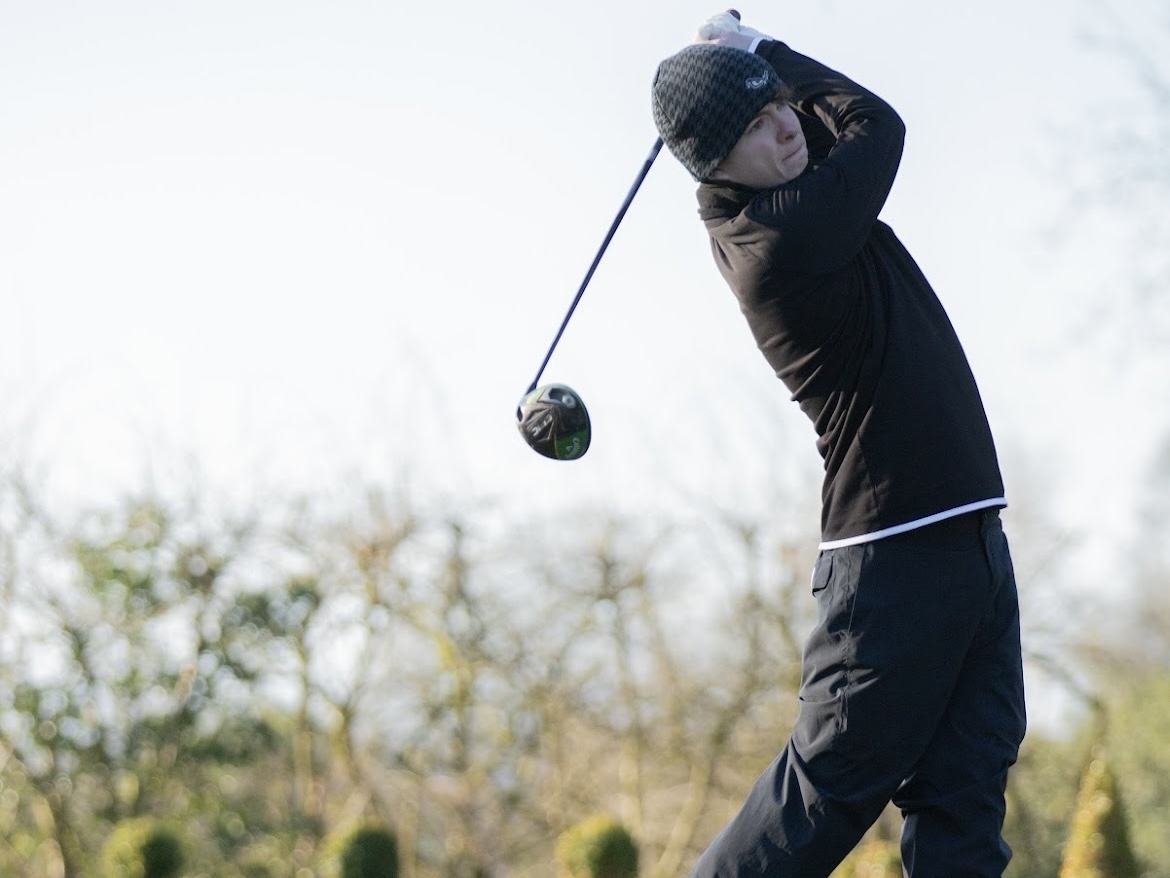
Paul nailing his driver, splitting the fairway in half

Beckett were under the cosh early in the round with their opponents starting quicker and carrying this momentum through until the turn. With the score currently 4-2 down after nine, a moment of magic by Josh Donaghey holeing out from 170 yards out, proved to be the trigger for Beckett’s comeback, as an outpouring of emotion towards his teammates echoed across the neighbouring holes. The side in purple started turning the tide back in their favour and went on a nearly perfect five-hole stretch, eventually coming out victorious in a monumental 5-1 win. 
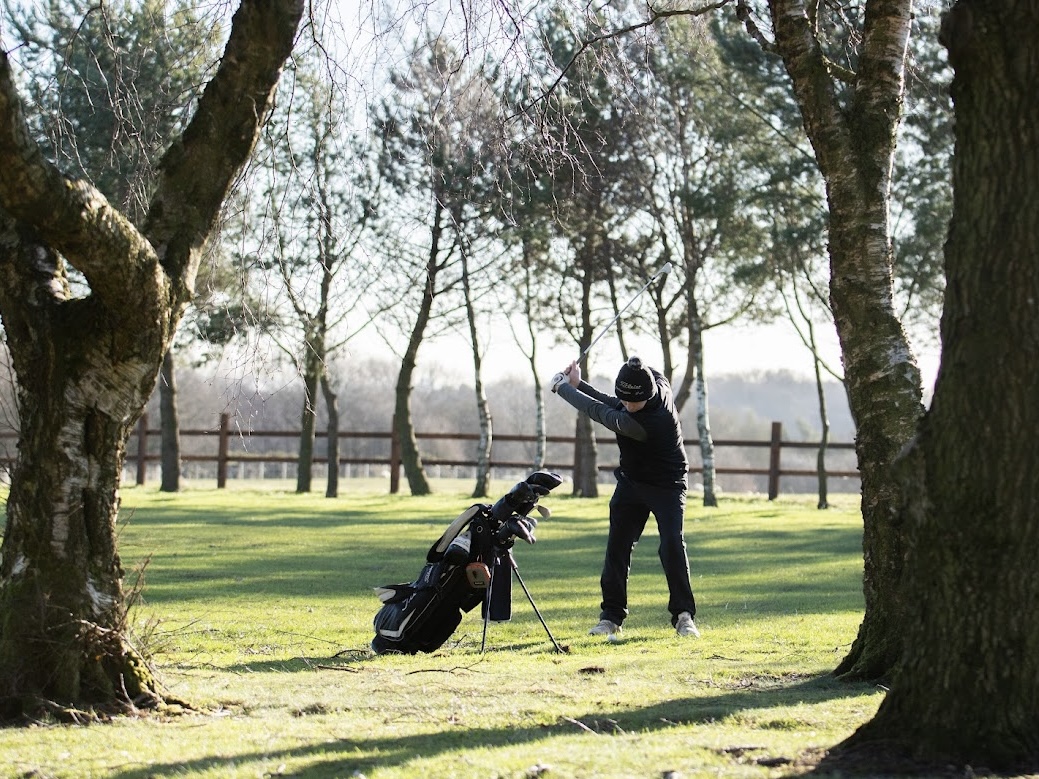
Josh with a moment of magic making a crucial eagle from 170 yards

It has been a long season for Beckett, having travelled hundreds of miles up and down the country, leaving in the early hours of the morning through bleak winter to showcase their skills. A few shock losses earlier on in the league campaign hampered the chances of a double and took its toll on the players. The pressure was increased tenfold, and with being the favourites to win the league it meant people were looking at the side with doubts.

As much as golf is an individual game and only the player can change the outcome of their match, the team aspect is just as important. “We play for ourselves, of course, but an individual point contributes to the bigger outcome. You don’t want to be the player who makes other players’ victories meaningless.” Paul explained.

With university golf, a big difference is that mixed teams (both males and females) can compete in the same competitions, and one player from Beckett has taken to playing against the men with no issues.

Ellie Bailey joined the team this season. She was born into a golf-oriented family with all three older sisters competing at a national level. Then her father is a PGA-qualified coach who has taught some A-list celebrities and several players now on scholarships across the globe. So, it was inevitable that picking up a club was only a matter of time. “My earliest memories were on a golf course, it felt like most of my childhood was spent at St Andrews in the tropical Scottish climate it’s so renowned for! Ellie jokingly said, and it wasn’t long before, instead of people watching her siblings they wanted to watch her play.

Ellie keeping a close eye on where the ball was heading

Ellie started playing competitive golf at the age of 12, playing for her home club, Kirby Muxlow. But quickly, coaches realised she was progressing at an impressive rate, and at 16 got picked for England squads, playing on a national stage and following in her siblings’ footsteps. 

But this was the issue. Ellie loves golf, but she never loved it that much that she wanted to dedicate her life to it. The endless hours spent on the driving range, all the social events missed with friends at school, and she felt lost in her sisters’ shadows after all they’d achieved. 

“I wasn’t enjoying it at all. I was a teenager, and I felt that golf was taking over my life. My dad pushed and pushed me, but the fear of disappointing him meant I never said how I truly felt. People knew me for my sisters, and it was like no one recognised the work I was putting in but thought the success I was having had just been handed to me.”

Ellie explained the turning point four years ago: ‘I broke my arm falling off the monkey bars at the park, and don’t get me wrong, it was the most painful thing, but I couldn’t help but be relieved it gave me a break from the game.”

A year later, Ellie was able to swing a club fully again, pain-free, but it wasn’t without hours of rehab and physio on it. However, one bad competition and a harsh talking to from her dad were just too much. “I couldn’t do it anymore, I snapped. I had all intentions of never picking up a golf club ever again. I was sick of the game and had no love for it anymore.”

Coming to university, Ellie felt she needed to be part of a society to get the best experience possible. At first, there was a real reluctance to start playing again due to the overriding emotions a tee box brings back. But the golf was never the issue, it was the playing with pressure that was.

“I decided to go to trials with a sort of what have I got to lose attitude. The biggest pressure was meeting new people and fitting into a tight-knit group. I was the only girl, but I let my abilities do the talking, and quickly I felt extremely comfortable with everyone. I think the fact I beat a few of them helped!”

An up and down from Ellie with a delicate chip to take her match back to all square

Apart from the recurring injury issue with her arm, Ellie has had an almost faultless season with only one loss so far. “I lost my first match, and I thought am I cut out for this level, but I came back with something to prove the week after and haven’t looked back since.”

“Being able to play with freedom is what I’ve always wanted, and I feel very grateful for the team to make me feel like a key part, but in a positive way. Being a woman in a male-dominated environment can be hard, but being able to play in big semi-finals like today makes it worthwhile.”

Both Paul and Ellie agree that despite periods when you fall out of love with golf, there must be a reason why it always brings you back. “When it’s all you’ve known, you can forget what made you enjoy it in the first place, and sometimes it takes a bit of adversity and a break to reflect on that.”

“It can be draining, it’s a sport you can’t neglect and balancing life and work with it can be tough. But when the sun is shining, you’re focused on just where that ball is going next. Nothing else in the world seems to matter at that point, and that disconnect from normal life gives us something not many other things can.” Explained Paul and Ellie.

Sam Bernard and Jonny Underdown in discussion about what a big win it would be

Beckett finished runners up in the Northern Tier Premier and still have a piece of silverware up for grabs, but for a team with a new look this season, the exciting thing is the potential it has for the next few seasons and where the players could end up after that. 

Ellie’s and Paul’s stories highlight that unless told, people won’t know their reasoning for playing the game. But that with a good group of people and a supportive environment, it allows people to thrive again.

By Joe Parsons

Progress Updates

This week was quite a productive week in terms of progress for my final project. On Wednesday I went and started to capture some practice shots from a golf match taking place at Horsorth. I went into it trying to make sure I got a variety of shots that both are of high quality and progress the story I’m wanting to tell. I really enjoyed testing out different settings on a camera and am glad I went home to get a family members cannon camera as its a lot easier to quickly capture momments than a phone.

I found actually I took some shots I’m really pleased with and can start to work on the post production processes. I just needed to remember about taking shots in landscape rather than portrait so I’m going to have to back and crop some of them to fit the online format.

When I was looking at the best examples of sports photography they capture momments from all types of areas and distances rather than just straight on down the barrel. Perspective enhances images so I think there’s a real mix.

To do in the next week: 1) Go through and delete images I’m not using 2) Start using photoshop to start editing and creating photos that are ready 3) Start putting them in an order to how I want my piece to flow.

I think once I’ve finalised my 8-12 pictures I can start adding the text and my interviews to them meaning I’m on track for the deadline of the 6th.

Progress Update 2

This week has been a positive week in terms of progress. I’ve decided on the 8-12 pictures I think I’m going to use for my piece and have started adding text to the body of it. I’m about 500 words in and feeling positive about the directions its heading. I was a bit worried about how it would come together as a story before but once I started writing I quite like the flow of it and feel my photos do fit in well and add to the text.

Before next week my main focus is going to finish 1000 words off and then focus on post production of my photos and a bit of colour correction as feel like the brightness of them could be brought down a little bit.

Progress Update 3

So far week 3 has been most productive. I’ve finished writing 1500 words of my article with the introduction and first main interview done. I’ve started to place the pictures in order of where they’re going to be placed within the story. One thing I’m a bit dissapointed with is the amount of pictures for each interviewee I got as I think the ones I got for Paul had more choice than the ones I had for Ellie but I’m really happy with the quality of all of them.

I also need to start writing up some captions for my images that help progress the story as when looking through examples of good sports articles alongside images on sky sports and bbc etc they all do this really well.

Trying to shift my focus between photojournalism and journalism project has been a challenge as there’s so much going on but I focussed on this piece this week and feel its been productive.

I genuinely think my photographs would be publishable at a good company and considering I wasn’t familiar with camera before I picked one up and started playing around until I got the best outcome I’m pleased.

I’ve also added a feature image that links well with the title and that’s one thing I’m brain storming about how to end as i’ve got the start of it.

In the next week or so I’m aiming to upload all my finished photos and write up the last few hundred words so I can read back through and just make sure I’m finally happy with it.

Week 5 – Shutter speed (and ISO)

For the first picture I took a picture of Ellis in action with minimal blur. Taking this photo in burst mode meant I got 9 pictures of the movement to choose from. This frame froze the moment and came out pretty crisp despite the quite face paced movement of Ellis on the swing. We use a fast shutter for fast action and sports shots where we want to see all the details in sharp focus. With a fast shutter, the camera might struggle to properly expose the scene even with a fully open aperture. If this is the case then the only thing you can do is increase the ISO. The aim should still be to use the lowest ISO setting you can get away with.

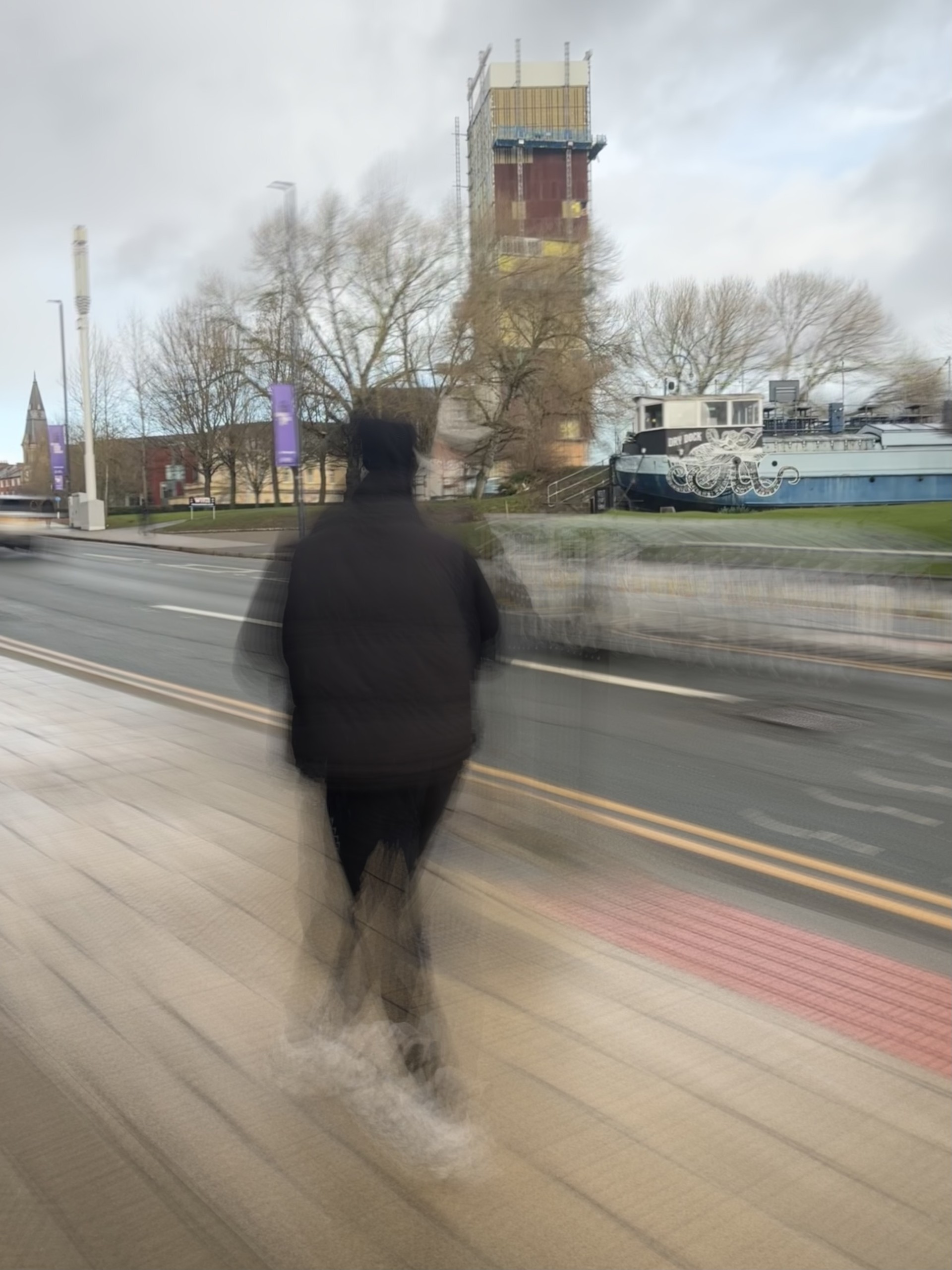
The live photo effect had a option to change it to long exposure and this is the result. A perfect picture using this affect needs a balanced shutter speed, aperture, and ISO settings as well as a steady hand (usually a tripod is used) to avoid added unnecessary movement. The use of slow shutter speed allows for more movement in the photo as shown by me walking and the still buildings in the background and using a slow shutter speed speed to sharply capture the stationary elements of images while blurring, smearing, or obscuring the moving elements is becoming more popular. The intent is to create a photo that somehow shows the effect of passing time and I think I’ve captured that.

If I were to take action shots of players playing golf the higher the shutter speed the better the image may look as I could capture the ball in shot as well as the player. But also a slow shutter speed could allow me to have other players in action blurred in the background whilst the main subject is still.

Extra Research:

Shutter speeds are measured in fractions of a second and seconds. 1/250, 1/60, 1/8, etc. The faster the shutter speed, the less time light has to get in. The slower the shutter speed, the more time light has to get in.

Just like aperture, shutter speed does affect the amount of light coming in your camera. However, shutter speed also controls how your camera captures motion. Shooting with fast shutter speeds freezes motion. This is the best option when photographing busy people or any situation where things may be moving and you want to freeze the motion.

Shooting with slower shutter speeds allows more motion or movement in your photos. This means that you will get motion blur in your images. While some photos benefit from motion blur and that is the intention of the photographer for creative purposes, typically you want to avoid it in regular day to day photos.

Week 6 – Post Production Task

I have decided to use and edit these photographs as they are ones that I have taken previously and feel that can be improved upon. Post Production is an essential stage for finalizing images because it can change the quaility of an image completely. These adjustments improve the overall aesthetic, making the image more professional and visually appealing.

Before Editing
After Editing

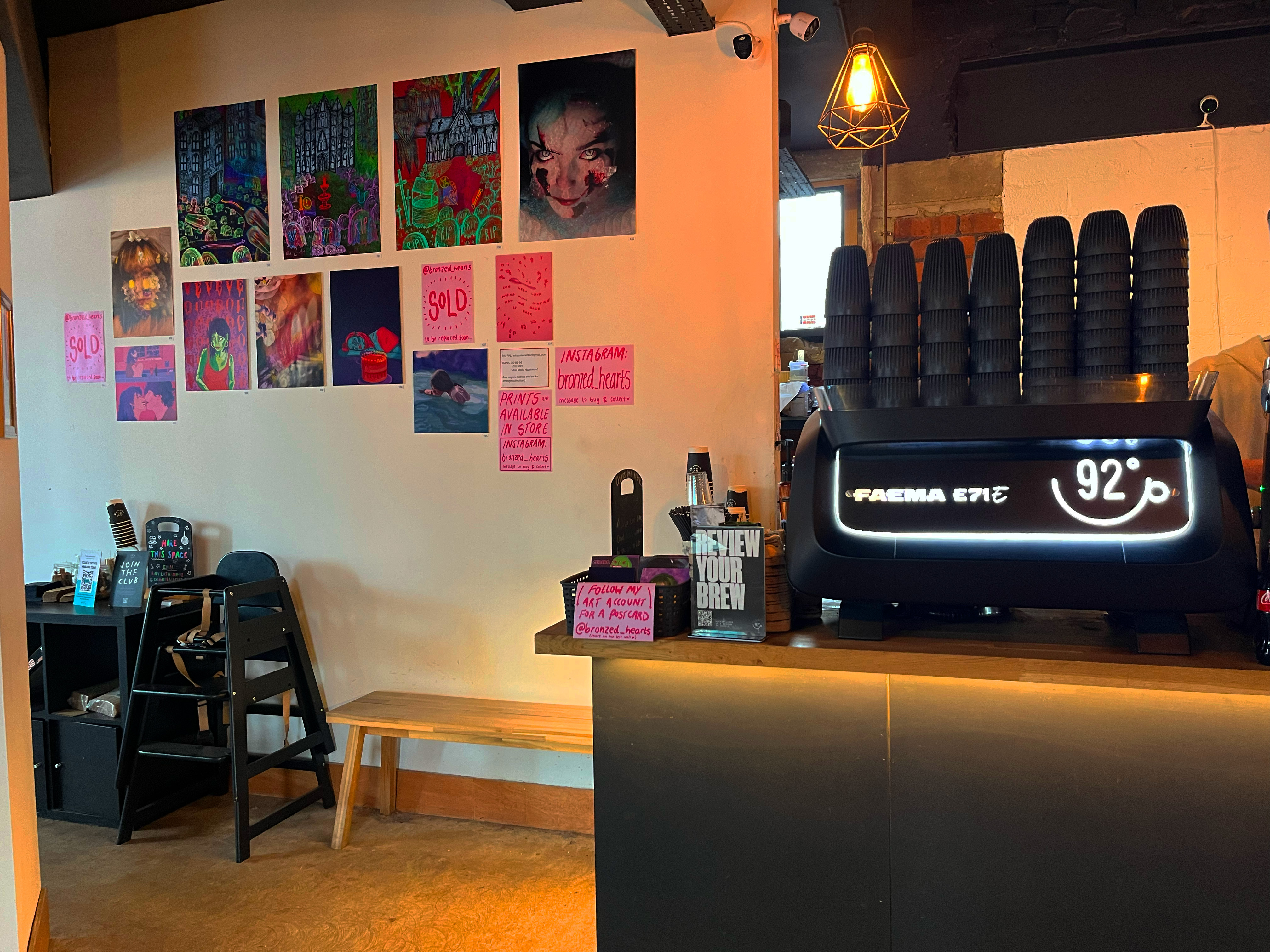
For the image above I felt it would be a good image to edit as the original just felt a bit cold and dim. If I saw a picture of the first photo online it wouldn’t feel very appealing or give me that urge to visit this coffee shop so on photoshop I decreased the brightness and increased the contrast and saturation to create a warmer feel. Doing this made the light above the machine alongside the companies logo stand out a lot more and contrast the white wall behind it. Overall it just looks like a more polished photo with the outlines of letters and numbers really evident rather than just blending in.

Before Editing
After Editing

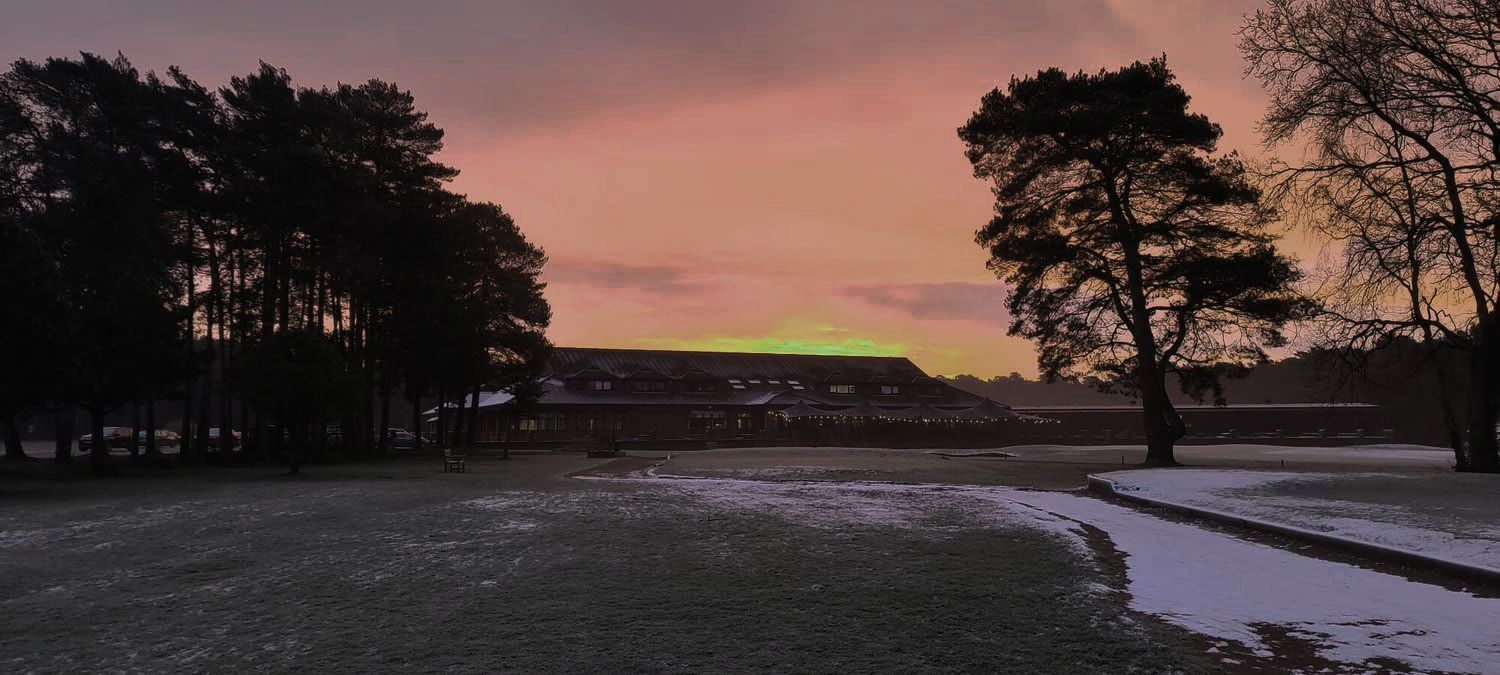
For this image I didn’t feel it needed improving as such but instead just altered to fit a narative I was trying to write in a previous piece. The original picture is of a sunrise over the golf club at home on a day where the course was shut because of the weather so it sort of juxtaposed the mood. But after playing around with the adjustment layers I decreased the saturation and brightness but increased the contrast so it almost now creates an image that looks like the sun is setting. I think it really brings the trees to the forefront of the picture and creates a cleaner looking photo.

Week 7 – Cropping and Amendments

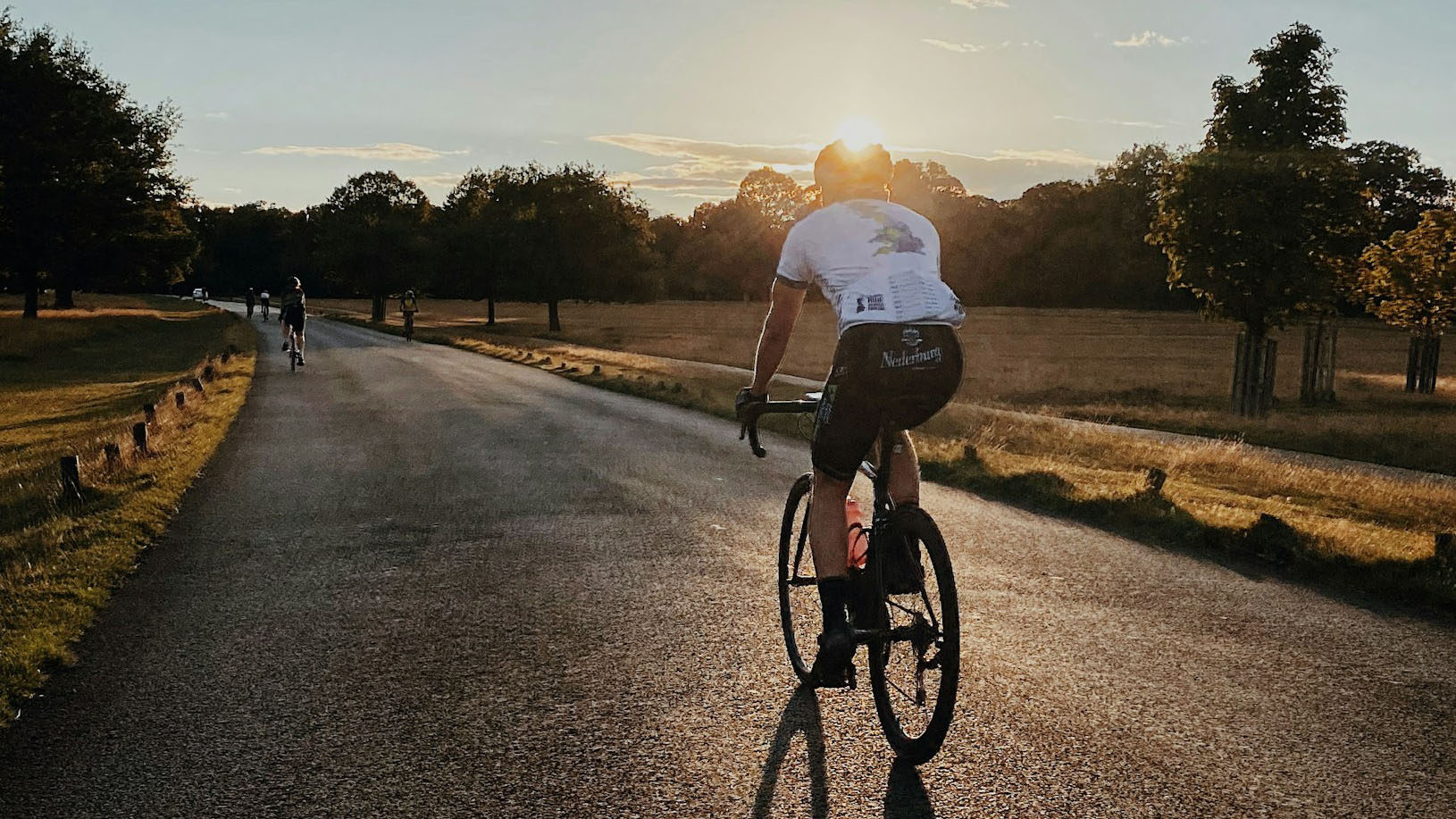
When cropping this image from portrait to landscape it was important not to crop out any of the important elements of the photo that carry the story. Using the rule of thirds the cyclist is still the main aspect of the photo whilst maintaining the feel of the background and horizon. In the portrait image it involved a lot more of the road behind the cyclist and made the cyclist feel a lot further away so cropping it to landscape I feel has improved the image.

For this image using perspective crop I straightened the image to take some of the uneven ceiling of the subway out of the picture as I just felt it was a lot of empty space that didn’t really ad much to the picture. This was also the case for the floor where the main building of the subway should be the focus.

Week 4 Task – F Stop

Picture 2 – F7.1
Picture 3 – F16.1

During this task I tried to find a location where there was good lighting and a background that could really show off the difference in the F-Stop images. When getting the first photo the F-Stop was adjusted to F1.6 so more light was coming in but you can see Ellis is really the focus but looks more like he’s been photoshopped in there. With the background being more a blur than in focus it shows how the depth of field is changed.

The second photo was a mid F- Stop at 7.1 the picture was definitely becoming clearer but not completely in focus and crisp. It starts to bring the background more into the image and isn’t so much in contrast to Ellis but rather adds to the image. On a phone the aperture is fixed at around f/2.  But because the phone sensor is so small, phones still have quite a deep depth of field.

With the depth of field in the last image being very deep and the aperture very small it begins to bring the full image into full focus. Because of the F-Stop being so high less light is let in definitely results in a clearer picture than the lowest F-point but I think a median between mid-high aperture would create the clearest photo.

Extra Task

For this extra credit task, I had to try and take a photo where the object (coffee cup) was the focus and the background was blurred and then do the opposite where the background is the focus of the picture. For the first picture I used a long depth of field and smaller aperture (a higher F-number). For the second shot I used a shallow depth of field and larger aperture.

Town-ing together: Harrogate Town AFC in the Community

Proud to be Town

While football clubs to most fans, rivals, and outsiders are judged purely for what level they play at and how they perform on the pitch, that simply isn’t the full story and certainly doesn’t define success. It’s the side of the game either side of 90 minutes at a weekend that make the difference, with tireless work off the pitch in building a stronger fanbase, forming an identity, and connecting with those in the community. Sky Bet League Two and North Yorkshire side, Harrogate Town are a prime example of a club in the EFL who have fostered a clear community spirit and formed a connection with those who are ‘Proud to be Town’. From behind-the-scenes work of youth development to charity events and sponsorships, uniting people has been a clear goal of the club and has created a positive, more connected Harrogate.

In recent years, The Sulphurites have been recognised for their work picking up many awards such as being voted National League Community Club of the Year in 2020 recognising the club’s impact on schools in the local area to get children involved in sport and making football accessible to everyone. Since then, Harrogate Town have gained an outstanding reputation with its fans and fellow EFL sides by achieving a silver rating in the Family Excellence Award for last season after investing heavily in stadium facilities and being dedicated to provide the best possible matchday experience, ranking them sixth out of 24 League Two clubs. However, it’s not just the club itself receiving the plaudits with year-on-year Harrogate Town becoming a well-established EFL team wouldn’t be possible without the guidance of CEO Sarah Barry who was named Sky Bet League Two CEO of the year in 2023 being praised for “creating a commercial and operational team which is one of the best in League Two… and has laid the platform for a very successful community programme.” Via the Harrogate Town website. So, a year on from those awards, here’s what all those involved at Harrogate Town have got up to in the community this season.

Harrogate Town Player Development Centre (PDC)

One key area that Harrogate Town have shed more focus on this year is the Player Development Centre which since 2014, has been dedicated to bringing up young talent in the local area through their ranks. The PDC offers high quality coaching from experienced professionals as well as past and present players like goalkeeper James Belshaw who has been a key figure in allowing the young players to get a top-tier football education whether that’s to progress as high as they can, or to simply enjoy themselves and have fun. Having teams running all the way through from U9’s to U16’s as well as two training locations at Rossett Sports Centre and St. John Fisher has allowed the club to build a real sense of community with almost 300 boys and girls currently in the training programme this season. Lead PDC coach Ryan Smith outlined his and his coaching team’s goals by saying: “We want to foster a lifelong love of football and the club at the PDC for our players, boys and girls, who attend our sessions… it is our responsibility as a club to take pride in our coaching sessions and maximise their talents.”

Selfie time!

This season has also seen much development for the girls’ PDC after first being launched in 2020, the increased popularity in the women’s game due to the Lionesses success and in particular England forward, Rachel Daly who grew up in Harrogate herself has been a huge inspiration, showing that they can follow in her footsteps and has led to a positive demand in young girls wanting to get involved in football, hence, the club choosing to introduce an extra training session on a Tuesday for U11’s,U12’s and, U13’s. Kate Donnan, Harrogate Town Women First Team Manger said, “We continue to work toward strengthening the girls’ and women’s pathway… and are hopeful this will continue to increase the number of players progressing through the age categories and reaching first team football with us.”  By offering the same opportunities to girls who want to play for the love of the game just like young boys do, Harrogate Town continue to actively show their commitment to all teams and age groups equally.  

International Women’s Day

Harrogate Town proud to support the #hergametoo movement

The promotion of the women’s game at Harrogate Town has taken substantial strides over the course of this season, firstly with the improved academy system but away from football too with the club celebrating International Women’s Day to shed light on gender equality and the empowerment of women in sport.

To celebrate the day on the 8th March 2025, Harrogate Town supporters and the women in the wider community have been dedicated to highlight the achievements of women in the Town by participating in a year-long project called ‘Women Winning’, which includes a range of events such as a walking tour, talks from inspirational women in Harrogate including 101-year-old WWII veteran Shelia Pantin sharing her life story, and film screenings by the football club linking up with the Harrogate Film Society.

On the day itself, the club has organised a special matchday experience as the men’s first team take on bottom of the league Carlisle United at The Exercise Stadium. Female fans and those supporting the project are invited to have exclusive tours of the stadium, meet-and-greet with players, and participate in halftime entertainment, creating an inclusive atmosphere that will bring all women in the community together.

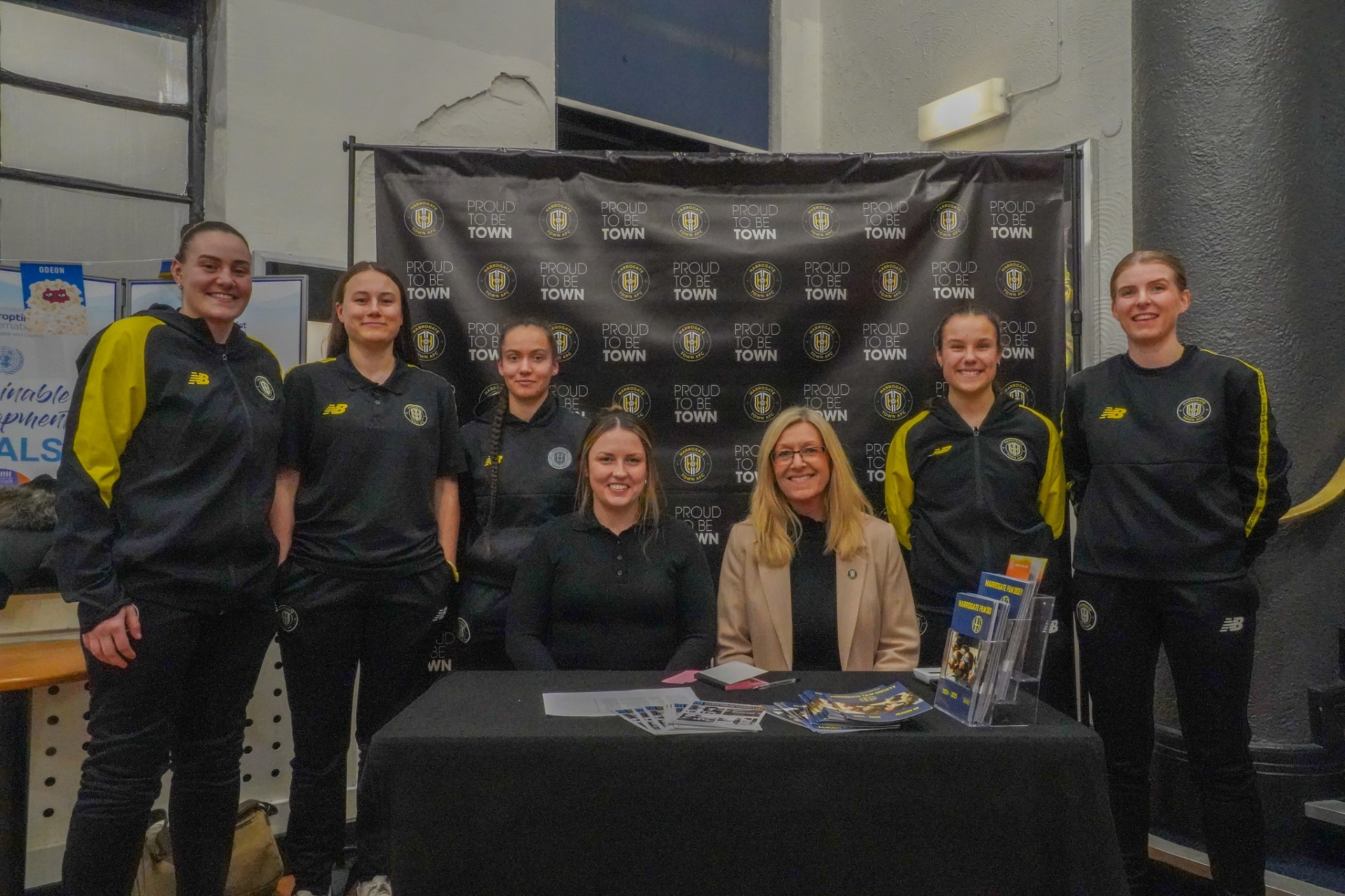
Kate Donnan (centre left), Sarah Barry (centre right), introducing the Copa 71 film night

As part of the ‘Women Winning’ project, Harrogate Town partnering up with the Harrogate Film Society have put on a pre-launch event at the local Odeon cinema on 3rd March, screening the documentary ‘Copa ’71 The Forgotten Women’s World Cup’ which remembers the groundbreaking first Women’s World Cup held in Mexico in 1971, 20 years before the first official tournament. Barry and Donnan from Harrogate Town were there at the event to introduce the film and answer any questions, Donnan said in the lead up to the event, “By celebrating the history and achievements of women’s football by showcasing the film, we hope to inspire the next generation of female players and highlight the importance of equality in sport… It’s essential that young girls see the possibilities that lie ahead of them.”

EFL Rainbow Ball Campaign

EFL Rainbow Ball being used from the 6th-17th February

On the theme of diversity and promoting unrepresented people in football, for the second year running, The EFL Rainbow Ball campaign in celebration of the LGBTQ+ community is an initiative aimed at promoting diversity, inclusion, and equality. After donating over £16,000 last year to a LGBTQ+ Fans for Diversity Fund and supporter groups, The EFL seeks to remind people that ‘football is for everyone, everywhere.’

Harrogate Town has taken the campaign into the local community by partnering with schools and community groups to deliver educational workshops with the aim of creating a lasting impact by encouraging young people to embrace and celebrate differences.

The players and club have played a crucial role in the campaign’s success by wearing rainbow-colored armbands and having rainbow coloured corner flags, demonstrating their support for the cause. By embracing the campaign’s message and actively engaging with the community, Harrogate Town has made a significant impact in the fight for diversity and acceptance in football.

Harrogate Army College Foundation

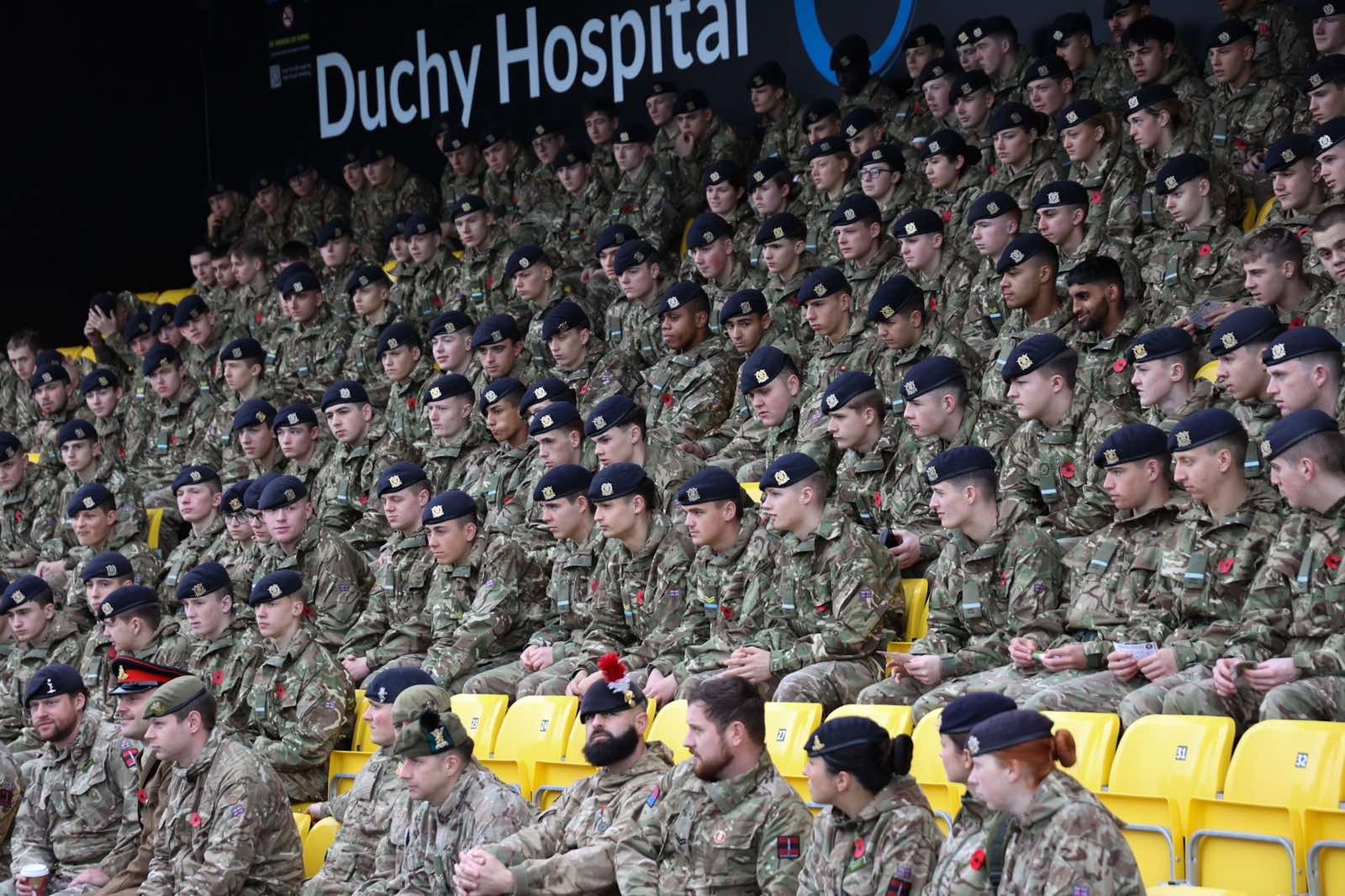
Harrogate Army College Foundation in support against Morecambe

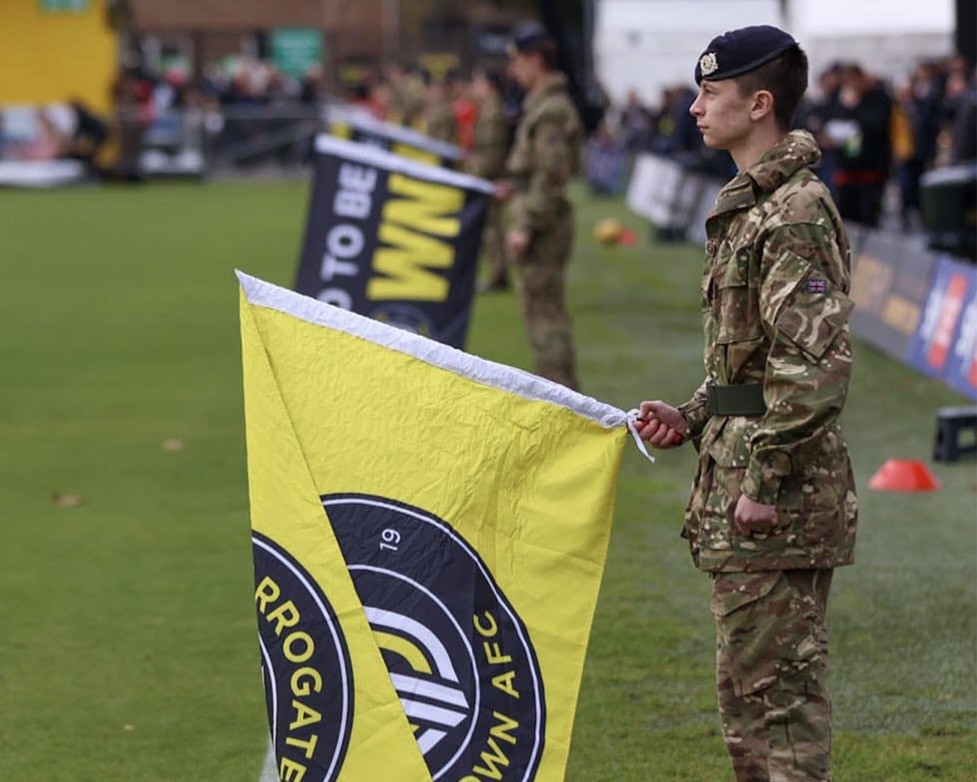
On 9th November 2024, Harrogate Town welcomed the Army Foundation College based in Harrogate as special guests for their fixture against Morecambe in which they were on the receiving end of a 2-1 defeat following a 96th minute winner from Harvey Macadam. Aside from the football, the connection between the football club and the College has allowed the Town to bring together their community and whilst also promoting the wider message of remembering those fallen war soldiers as part of Remembrance Sunday. The day itself was marked by the traditional laying of wreaths, rendition of The Last Post, and a minute’s silence prior to the game, giving the recruits the chance to develop team-building skills whilst also enjoying a day out at the football. As for Harrogate Town’s role, they continue to focus on creating positive experiences for all on a matchday, and bring together different elements of the North Yorkshire Town.

Soldiers playing their role as flag bearers

In the build up to kick-off a group of the soldiers from the College had the role of being flag bearers, holding the flags and leading the teams onto the field. Being a flag bearer is historically seen as a gesture of pride and honour, so by Harrogate Town giving them the responsibility was a significant moment which allowed them to represent the College whilst also contributing to the atmosphere on the day. Speaking to the young soldier in the image above, he said, “It’s a really special day for the College… having the opportunity to be a part of the matchday by being a flag bearer today was a real privilege. It was my first time watching Harrogate Town, so it’s been a fun experience while remembering those who sacrificed before us at the same time.”

Support of Local Charities and Initiatives

Another way in which Harrogate Town have kept close ties with the community this season has been by using their platform on social media and loyal support on matchdays to support local causes by the players wearing pre-match warm up t-shirts that raise awareness for charities and initiatives. The club throughout the season have been committed to giving back to their community and support those in need like The Yorkshire Air Ambulance, Unite For Access for disabled sports fans, and the NHS talking therapies for anxiety and depression. It’s been a powerful way for Harrogate to show their solidarity in making a positive impact beyond just football and reinforces what it means being ‘Proud to be Town.’

Media manager at the club Hal Boxhall said, “It’s important to us as a club to highlight these causes on our socials as it’s where we can highlight the causes to our audience, and take this further by using hashtags to reach other fanbases so they can like, share, and repost… We’re in the privileged position by having thousands of followers to use our voice… seeing the positive response from people online is what makes our support worthwhile.”

‘Proud to be Town’ is more than a slogan

Harrogate Town throughout this season have shown their fans, locals in the Harrogate area and all those involved with the club truly what it means to be ‘Proud to be Town.’ Although what happens on the pitch may be every club’s main objective and key to success, Harrogate Town have had a lasting impact on its community for many seasons now. From nurturing their young talent through the ranks via the PDC, to shedding light on the fantastic work of charities in the North Yorkshire area, one of the key aims has been to make a positive difference to many lives in Harrogate, whether that’s getting people involved in sport on a small scale or helping to promote raising money for life-saving causes.

The club’s efforts to promote the message of inclusivity and diversity has been an area of their community engagement that has allowed the club to build a real family-like atmosphere on matchdays. At the 2023 Football Business Awards, Barry said, “To put Harrogate Town on the map when we are one of the smallest clubs in the league proves you don’t have to be the biggest to be the best.” With events such as The EFL Rainbow Ball campaign and the celebration of International Women’s Day, everyone is welcome at Harrogate Town and has shown that football is more than a game. As the club continues grow their fanbase year on year, the close connection with their local community has allowed everyone to feel a part of the club which has embodied what it means to be ‘Proud to be Town.’

Stepping forward: How running is becoming more prominent in the fitness world. 

Kieran running with focus and determination on his comeback journey.

In 2024, the London Marathon ballot broke a world record with an incredible 578,374 applicants, a clear reflection of running’s growing popularity.  

In recent years, there has been a noticeable surge in people taking up running, a trend many links back to the COVID-19 pandemic. With lockdowns keeping people indoors in 2019 and 2020, running became one of the few ways to stay active and escape the four walls of home. 

But beyond the statistics lies a deeper question: what keeps people lacing up their trainers? 

From a newcomer finding their stride, to a first-time marathoner chasing a lifelong goal, and a seasoned runner rebuilding after injury. These three personal journeys reveal how running offers far more than just fitness. In a world where health and wellness are constantly evolving, their stories highlight the physical, mental, and emotional power of simply putting one foot in front of the other. 

Beginner Runner – First Steps

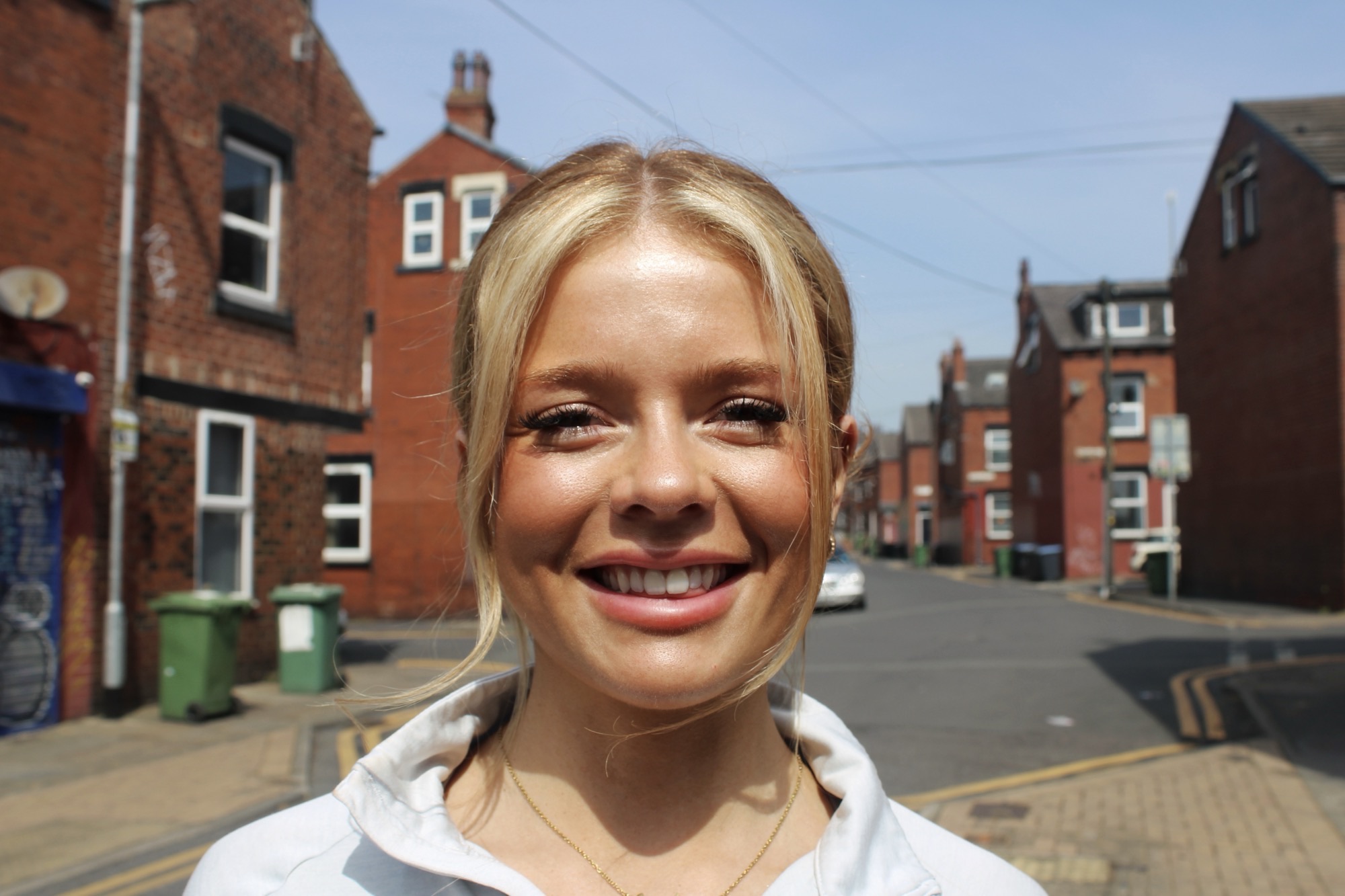
Sadie smiling before going on her run
Sadie smiling before going on her run.

Beginner runner Sadie Waite-Burnell opened up about what first inspired her to lace up her trainers. As the weather began to improve, she felt the urge to get outside and make the most of it, but it was social media that gave her the final push. “Seeing people posting their runs, vlogging their journeys, and talking about how good they felt afterwards. I wanted to experience that runner’s high for myself,” she said. 

She vividly remembers her first run, a moment that felt more frustrating than fulfilling. “I felt good, but honestly, it felt quite short and a bit pointless at the start,” she admitted. “Running is definitely mind over matter.” Like many beginners, she started slow, and she admitted to the real struggles, but she kept at it, reminding herself that improvement would take time, “I knew I had to be patient, it’s a marathon, not a sprint.” 

I knew I had to be patient, it’s a marathon, not a sprint.

Sadie Waite-Burnell
Sadie ties her laces, ready to hit the road for another run.
Sadie tying her laces, ready to hit the road for another run.

Eventually, that patience paid off. “The first time I ran for 15 minutes straight, I was so proud of myself. Progress is easy to track with running, even if you run just one minute longer than last time, you can feel it and see it. That’s what kept me going.” She shared. 

But with progress came many challenges, the thought of staying consistent and learning the dos and don’ts before going on a run, such as what sorts of foods to eat and staying hydrated, to reduce cramping and stitch.  

She spoke about the mental battles just as much as the physical ones, how motivation can dip and how hard it can be to get out the door, especially when the weather’s bad or life gets in the way.  

She added “Alot of the time it is down to mindset, I’ll be running and I’ll think I could really easily stop right now but it’s checking in with myself and being is it I want to stop or do I need to stop because realistically it’s the effort you’re putting in for yourself and your health and well-being.” 

Tired but accomplished — Sadie after finishing her run.

Despite the hurdles, she’s continued running, learning to listen to her body, celebrate the small wins, and keep going at her own pace. She shared that “everyone should just go for it, give it a good try because it is definitely more a mental challenge rather than a physical one and it will definitely be worth it for the feeling you get after.” 

First time marathon runner – pushing limits

Olivia smiling before going on her run.

Olivia Flanagan is set to run the London Marathon on April 27, 2025, for the charity Age UK. When asked why she signed up, she shared her personal motivation: “For myself. When I was 18, I was very ill, and my body would never have carried me 26.2 miles. But this one will.” She also added with a smile: “And honestly, the fear of the ‘what’s a fun fact about yourself’ question, I never had one, but now I will.” 

When I was 18, I was very ill, and my body would never have carried me 26.2 miles. But this one will.

Olivia Flanagan

Having been a runner since she was 16, Flanagan wanted to take on a challenge that would push her and ultimately give her something to be proud of. While this journey has been incredible, it hasn’t been without its struggles. She opened up about the highs and lows of marathon training.

“I’ve had to sacrifice other aspects of my life. I don’t have much of a social life anymore, and I’ve become a lot more introverted. I’m tired outside of running, so I don’t have the energy to go out and be sociable. Mentally, it’s such a challenge, but I’m fortunate to have a great support system around me. I remind myself that it’s only temporary.” 

Flanagan shared insights into her training routine and the schedule she follows in preparation for the marathon: “I’m a very logical thinker, so if I’ve followed a plan, everything should go according to it.” 

As a dedicated runner, she has always run three to four times a week, typically covering distances of 10-15km. This solid foundation has certainly helped as she ramped up her training for the big event. 

Digital fitness communities have played a significant role in the growing popularity of running. Social media platforms like Instagram and TikTok have turned running into a trend, with users regularly sharing their routes, progress, and personal milestones. This visibility has inspired others to lace up their shoes and also fueled the rise of fitness-tracking apps like Strava, which hit 120 million registered users globally in 2024. 

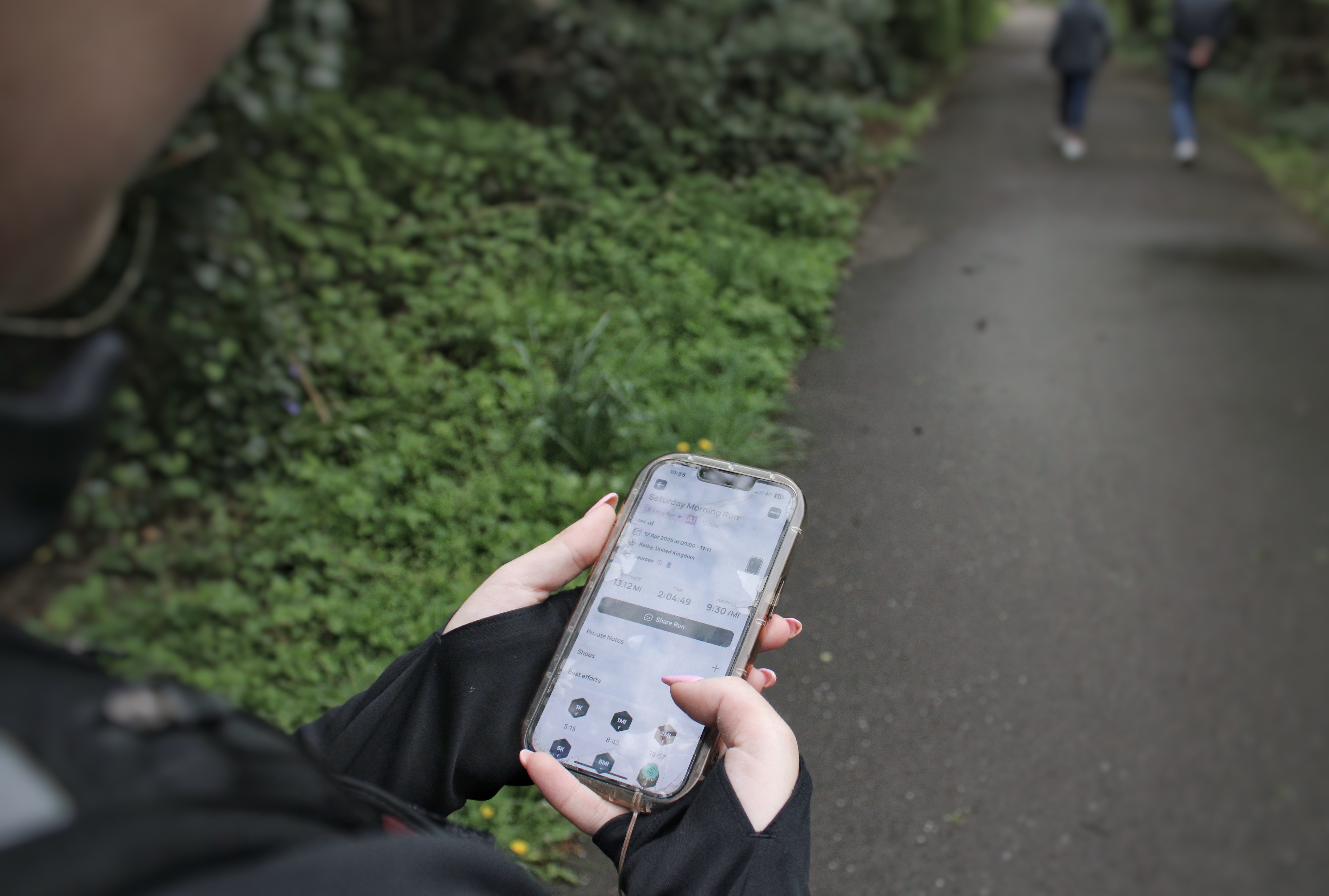
To keep her training on track, Flanagan relies on apps like Strava and RUNNA: “I use them to curate my marathon training plan, which includes a mix of easy runs, interval training, tempo runs, and long runs four times a week. My weekend long runs typically increase by 2 miles each week, though I do have some deload weeks slotted in, those are heaven.” 

Olivia checking her progress on the RUNNA app after finishing her run
Olivia checking her progress on the RUNNA app after finishing her run.

When it comes to her diet, Flanagan explained that it hasn’t changed much despite the increased training intensity. “I don’t focus on calories, carbs, fats, or protein for personal reasons. However, I do try to be mindful in the days leading up to and the morning of my long runs, opting for more carb-dense meals. If I were to run a marathon again, I’d probably put more focus on a tailored meal plan alongside the physical training.” 

As the big day approaches quickly, Flanagan reflects on the emotional weight of the marathon. With months of training behind her, she’s aware of the challenges still to come, but also the deep sense of accomplishment that awaits her at the finish line. “That I am capable of hard things. Running is so mental. Physically, I’ve been fit enough for years, but I think I’ve used this training to ‘train’ my brain to believe I can do it.” 

While the marathon will undoubtedly be a monumental challenge, Flanagan already has plans to celebrate the achievement. She recognises that the journey has been as much about personal growth as it has been about reaching a physical goal. 

“I can’t wait to see my girls and my boyfriend at the finish line and give them all the biggest squeeze. I wouldn’t have gotten through the tough parts of training without them.” she laughed as she added on: “And I absolutely will make it my whole personality for the next week or so.” 

Olivia completing her run before taking on the marathon.
Olivia completing her final run before taking on the marathon.

Advanced runner – bouncing back

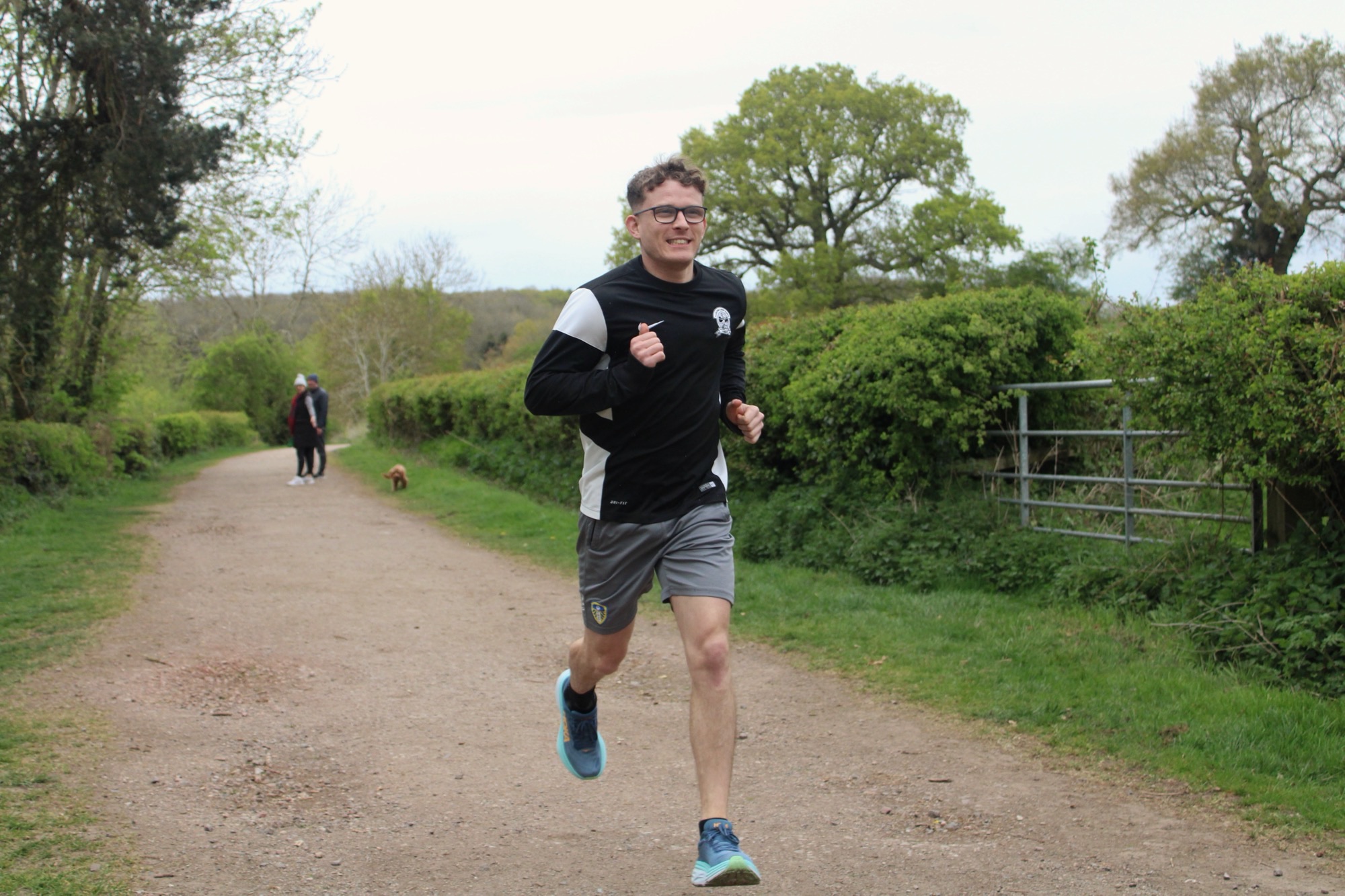
Kieran smiling before going on a run.

For many runners, setbacks come in many forms and for Kieran Gethins, it was an unexpected injury that derailed his marathon ambitions. What seemed like a routine Sunday football match turned into a painful reminder of how quickly things can change. 

While playing football, the injury occurred during a tough 50/50 challenge. After winning the ball in the first tackle, the ball bounced into another 50/50 with a second player. As he went in for the second challenge, that’s when the injury happened. 

Kieran's x-ray of his broken ankle.
Kieran’s x-ray of his broken ankle.

“Initially, I knew there was some damage, but I wasn’t sure if it was a break or just ligament damage. After going to the walk-in center and getting an X-ray, I was told it was a broken medial malleolus.” 

The doctor explained that the heavy impact from the first tackle, followed by the second, made the ankle more vulnerable to breaking due to the double force within such a short time frame. 

Gethins opened up about his initial reaction when he realised his injury would sideline him from his passions. “I was absolutely devastated, to be honest. Missing out on playing football, which is my number one passion, and running as well was a tough blow.” 

Despite the setback, he maintained a positive mindset. “I try not to dwell on things or focus too much on the negative. I saw it as a huge obstacle, but also as something I could work towards. Of course, I was devastated, but I embraced it and didn’t let it get me down. I focused on how I would get back as soon as possible.” 

Gethins is now 13 months down the line since the initial break and is still seeing physio weekly and doing rehab strengthen work, the process has been severely, long and he didn’t think it would take this long, but he soon realised the damage was so bad that it will take a long time to get back into it.   

He spoke about the physical and mental challenges he’s faced in returning to running after the injury. “Physically, the biggest hurdle was the lack of ankle mobility and weakness in my right side; my calf, hamstring, glutes, and quads just weren’t at the level they were before the injury.” 

Mentally, it was about accepting the reality that he couldn’t run at the same pace or comfort level as before.  

“The hardest part was accepting that I had to start from scratch and build myself back up. Even now, I’m still not at the level I was pre-injury, and mentally, it’s tough knowing that every week, every month, there’s still work to do.” 

Kieran warming up before his run.

As a result, he’s had to adjust his training plan, dedicating more time to warming up, stretching, and improving mobility. “What the injury has taught me is that it’s no longer as simple as just getting out of bed and lifting weights or going for a run and being fine. Because of the injury, I now have to make sure I do my warm-up properly and spend more time on it, or I risk causing more damage or aggravating the injury.” 

It was never something I had to worry about but now I do

Kieran Gethins

The injury deepened his appreciation for running, a passion he had always enjoyed. “I’ve always loved running for the freedom it gives me, and how great it makes me feel mentally and physically. But not being able to even go for a walk at one point really made me realise how much I missed it. It’s definitely made me appreciate running even more, both for the mental clarity and the physical benefits it provides. 

Kieran running with focus and determination on his comeback journey.

Running holds a deeper significance beyond physical fitness. While it undoubtedly helps maintain physical health, it also offers numerous mental and emotional benefits. As demonstrated by these three runners, each of them started from a different place, set personal goals, and faced various obstacles along the way.  

Despite these challenges, they never gave up, continually improving and setting new targets for themselves 

Whether it’s pushing through an injury, overcoming self-doubt, or simply striving to achieve a personal goal, running provides a platform for transformation. Despite these challenges, they never gave up, continually improving and setting new targets for themselves. Running, in its many forms, offers a deeper connection to oneself and a reminder that no goal is too distant as long as you keep moving forward. 

Oliver Jackson-Bolton: Depth of field

A bin with a bench and the backdoor of a shop in the background

The first photo had the aperture set to the lowest value, f/1.4. This means the most amount of light is being let in. The background of the photo is very soft due to this. All the photos were taken on an IPhone 14.

The next photo had the f value set to 5.6, the middle of the scale, the background still has a softness to it and the bin retains most of its sharpness. However, the background can be made out more clearly than in the initial photo.

The final photo of the bin has the f value set to the maximum f/16, this has sharpened up the whole image, there is no more softness in the image and all the details can be made out. The bin no longer pops out of the image as everything is the same sharpness.